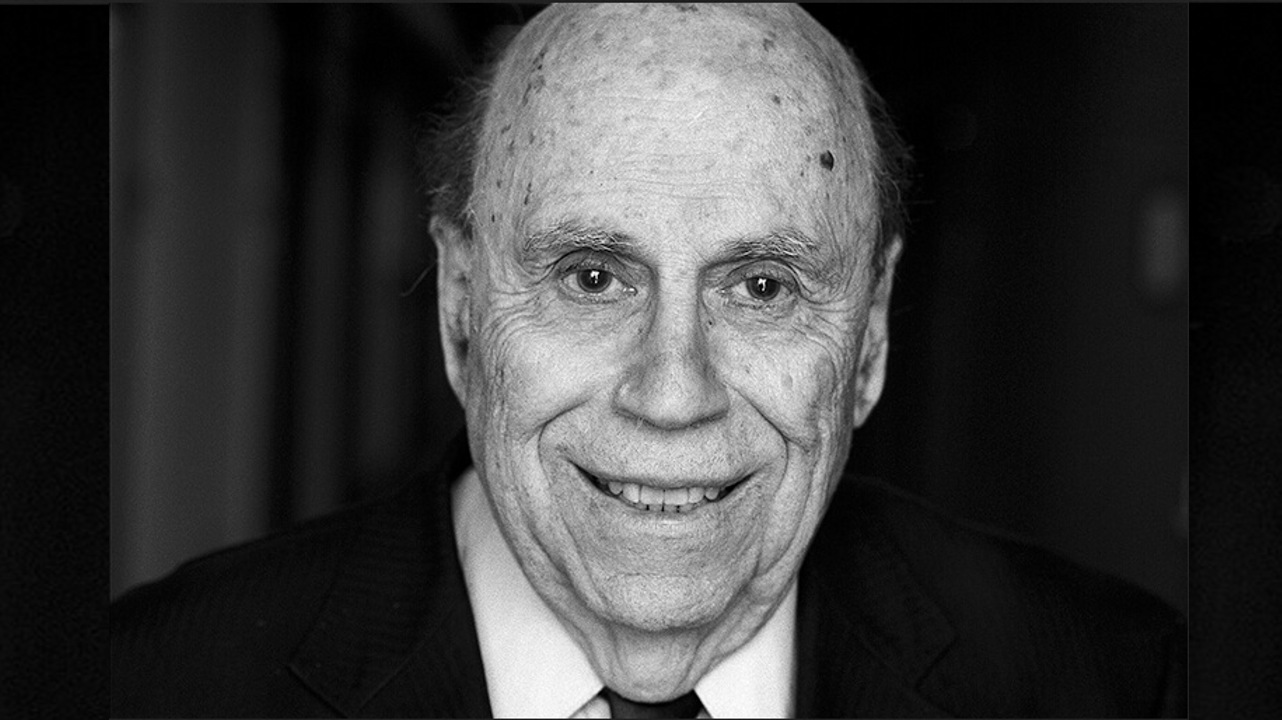
Michael O. Rabin
 Israel
computer scientist•mathematician•cryptographer
Also known as: Michael Rabin, Michael Oser Rabin
Birthday
September 1, 1931
Birth Sign
Virgo
Birthplace
Breslau, Germany (now Wrocław, Poland)
Age
Died at 94
About
Michael Oser Rabin was a Polish-born Israeli computer scientist and mathematician whose work reshaped theoretical computer science. He shared the 1976 ACM Turing Award with Dana Scott for their foundational contributions to computational complexity and nondeterministic machines, work that underpins modern algorithm analysis. Rabin also co-invented the Rabin cryptosystem, developed the Miller–Rabin primality test, and introduced the concept of randomized algorithms, now essential in fields from cryptography to machine learning. He passed away on April 14, 2026, at the age of 94, in Jerusalem.
Over a career spanning more than six decades, Rabin held professorships at Hebrew University in Jerusalem and Harvard University, and he was a member of the Institute for Advanced Study. His honors include the Dan David Prize in 2010 and the EMET Prize in 2004. He is remembered as a pioneer of Israeli computer science and one of the most versatile thinkers in his field.
Early Life & Background
Michael Oser Rabin was born on September 1, 1931, in Breslau, Germany, a city that is now Wrocław, Poland. His father, a rabbi, moved the family to Mandatory Palestine in 1935, fleeing the rising Nazi threat. Growing up in Jerusalem, Rabin showed an early aptitude for mathematics, a subject he pursued with intensity through his school years.
He went on to study at the Hebrew University of Jerusalem, where he earned his bachelor's and master's degrees. For his doctorate, Rabin crossed the Atlantic to Princeton University, completing a Ph.D. in Mathematics in 1957. His time at Princeton proved pivotal; he worked under Alonzo Church, a giant in logic and computability theory. This training laid the groundwork for his later breakthroughs in automata theory and computational complexity.
After his doctorate, Rabin returned to Israel and joined the faculty at Hebrew University, where he would remain a central figure for decades. He also spent time at the Institute for Advanced Study in Princeton in 1958, deepening his connections with the leading minds of the era.
Career Growth
Michael Rabin's breakthrough came in the late 1950s and 1960s when he and Dana Scott published their landmark papers on nondeterministic finite automata. Their work, which introduced the concept of nondeterminism and the famous Rabin–Scott theorem, became a cornerstone of theoretical computer science. In 1976, the Association for Computing Machinery recognized this achievement with the Turing Award, the field's highest honor.
Rabin didn't stop there. In 1979, he proposed the Rabin cryptosystem, one of the first public-key cryptosystems, based on the difficulty of factoring integers. Around the same time, he developed the Miller–Rabin primality test, a probabilistic algorithm still widely used today to test large numbers for primality. His 1976 paper on randomized algorithms introduced the idea that algorithms could use randomness to solve problems more efficiently, a concept that now pervades machine learning and cryptography.
His later career included professorships at Harvard University, where he was the Gordon McKay Professor of Computer Science, and continued work at Hebrew University. He received the EMET Prize in 2004 and the Dan David Prize in 2010, sharing a $1 million award. Rabin remained active in research well into his eighties, collaborating with younger scientists and publishing on topics like proof verification and secure computation.
Career Timeline
Public Image & Style
In the academic world, Michael Rabin was revered as a brilliant and approachable figure. Colleagues described him as having a "singular combination of intellectual power, impeccable taste, and personal warmth," in the words of Turing laureate Leslie Valiant. He was known for giving lucid lectures that made complex topics accessible. In Israel, he was celebrated as a founding father of the country's computer science community, helping to establish the field at Hebrew University and beyond. His legacy is one of rigorous thinking combined with a genuine passion for teaching.
Fame & Fandom (iFAMOUS Rankings)
Michael O. Rabin never courted the adulation reserved for pop stars or athletes. His audience consisted of mathematicians, cryptographers, and computer scientists who revered his work in silence rather than shouting it from rooftops. There is no organized fanbase, no dedicated subreddit, and no annual convention where followers gather to celebrate his birthday. The cultural mythology surrounding him exists entirely within lecture halls and academic journals, built on the sheer weight of his contributions to theoretical computer science. He did not cultivate a fandom because his legacy was not about celebrity but about the invisible architecture that powers modern computing. From the nondeterministic finite automata he helped define to the primality tests securing digital transactions, his impact is felt by every device in use today, yet he remained a figure of quiet professional respect rather than public obsession. Tributes poured in from institutions like the Institute for Advanced Study following his death in April 2026, framing him as the godfather of Israeli computer science. These accolades were earned through decades of rigorous research, not viral moments or media campaigns. His story is one of intellectual dominance without the trappings of fame. The iFANN Global Fame Engine has evaluated this person, but they do not currently hold a placement in the published rankings (Global Top 1,000 or a Top-100 scope list). Consequently, Michael O. Rabin is currently unranked in the global hierarchy of fame. His fanbase has no formal name.
Interesting Facts and Legends
Michael Oser Rabin was celebrated for his sharp wit and love of wordplay, often using clever linguistic turns to demystify complex mathematical concepts for his students. An avid hiker, he frequently explored the rugged hills surrounding Jerusalem, finding clarity in the landscape. As a devoted teacher, he mentored dozens of Ph.D. students who went on to become leading figures in their own right within the global computer science community. He also possessed a deep appreciation for classical music and was known to unwind by playing the piano after long days of research. While he never had a pop-culture fandom, his scientific legacy includes the Rabin-Scott algorithm, a foundational concept taught in every computer science curriculum worldwide that converts non-deterministic finite automata into deterministic ones. Another defining chapter of his life involved his family fleeing Nazi Germany for Mandatory Palestine in 1935 when he was just four years old, a journey that shaped his resilience before he ever entered a laboratory. His death in April 2026 marked the end of a six-decade career that earned him the title of the godfather of Israeli computer science. The most legendary moment of his career occurred when he co-authored a seminal paper introducing nondeterministic finite automata, a breakthrough that fundamentally altered the trajectory of computing theory and remains the single most cited story in his field.
Family & Personal Life
Michael Rabin was born to a rabbi and his wife in Breslau, Germany. The family emigrated to Mandatory Palestine in 1935, settling in Jerusalem. Details about his siblings are scarce, but his father's role as a rabbi deeply influenced the family's values. Rabin was married and had children, though specifics about his wife and children are not widely publicized. He maintained close ties to his family throughout his life, and his son, Tal Rabin, followed him into computer science, becoming a noted cryptographer.
Notable Connections
Michael Rabin is most closely associated with Dana Scott, his co-recipient of the 1976 Turing Award. Together they revolutionized automata theory. He also collaborated with and mentored many prominent computer scientists, including David Harel, who interviewed him for the Turing Award video, and Leslie Valiant, who praised his intellect. His work influenced generations of researchers in cryptography and algorithms.
Relationships & Dating History
Michael Rabin was married, but details about his wife and the timeline of their relationship are not publicly documented. He kept his personal life private, focusing public attention on his work. At the time of his death, he was married, though the name of his spouse is not widely known. His son, Tal Rabin, is a computer scientist, indicating a family that valued intellectual pursuits.
- MarriedDetails of marriage and spouse are not publicly disclosed.
Death & Aftermath
Died
April 14, 2026 (aged 94)
Death Place
Jerusalem, Israel
Cause of Death
Unknown
In the quiet of his Jerusalem home, Michael O. Rabin spent his final days surrounded by the city he had called home since childhood, a place where the academic hum of Hebrew University and the stillness of the hills had long defined his existence. He passed away on April 14, 2026, at the age of 94, marking the natural conclusion of a life that reshaped the foundations of computer science. Tributes flowed immediately from peers who recognized his singular intellectual power; Leslie G. Valiant, another Turing Award Laureate, praised Rabin's unique contributions to the field.
Media outlets like Heise Online noted him as the only Turing winner to die that year, while Ynet News hailed him as the godfather of Israeli computer science for his mentorship and algorithmic breakthroughs. Formal statements from Princeton University and the IAS honored his work in automata theory and computational complexity, cementing his legacy within the global academic sphere., the digital halls of mathematics communities like r/math rallied to celebrate his influence. His estate continues to generate royalties from patents and textbooks, ensuring his financial legacy persists alongside his scholarly one.
Net Worth (Estate Value)
$2 Million
iFANN Editorial Team estimate
Per iFANN's editorial analysis, Michael Rabin's net worth at the time of his passing in 2026 is estimated at $2 Million. This figure reflects his academic salary, prize money, and royalties from his patents and textbooks. His Turing Award, Dan David Prize, and EMET Prize brought in significant sums, but Rabin was known for a modest lifestyle. After his death, his estate continues to earn royalties from his published works and patents, managed by his family.
Awards Won (3)
Michael Rabin's most prestigious honor was the 1976 ACM Turing Award, shared with Dana Scott. He also won the 2004 EMET Prize in computer science and the 2010 Dan David Prize, which carried a $1 million award. These recognitions reflect his foundational contributions to theoretical computer science.
1976 · Computer Science
Computational complexity and nondeterministic machines
2004 · Computer Science
Lifetime achievement
Known For
Turing Award for computational complexity
1976 · Co-recipient with Dana Scott
Rabin cryptosystem
1979 · Inventor
Miller–Rabin primality test
1980 · Co-developer
Randomized algorithms
1976 · Pioneer
Keywords
Sources
Quick Facts
- Profession
- computer scientist, mathematician, cryptographer
- Born
- September 1, 1931
- Birthplace
- Breslau, Germany (now Wrocław, Poland)
- Died
- April 14, 2026
- Death Place
- Jerusalem, Israel
- Gender
- Male
- Birth Sign
- Virgo
Personal Details
- Full Name
- Michael Oser Rabin
- Education
- Ph.D. in Mathematics, Princeton University (1957)
Frequently Asked Questions
When and where was Michael O. Rabin born?
What is Michael O. Rabin most famous for?
What were Michael O. Rabin's key contributions to computer science?
When did Michael O. Rabin pass away?
Where did Michael O. Rabin work?
Similar People
Join the community
fans discussing