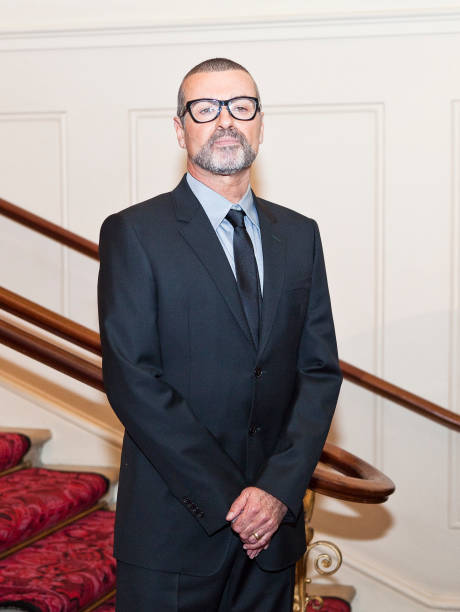
Michael Grätzel
 Switzerland
Also known as: Michael Graetzel
Birthday
May 11, 1944
Birth Sign
Taurus
Birthplace
Dorfchemnitz, Saxony, Germany
Age
82 years old
About
Michael Grätzel is a Swiss chemist and a distinguished professor at the École Polytechnique Fédérale de Lausanne (EPFL) in Switzerland. He currently directs the Laboratory of Photonics and Interfaces at EPFL, a leading research center for innovative materials science. Grätzel is widely recognized for his pioneering contributions to the understanding of energy and electron transfer reactions within mesoscopic materials, especially their applications in optoelectronics. His work has significantly advanced the field of renewable energy, particularly through the development of dye-sensitized solar cells, often referred to as Grätzel cells. His influence on materials science and solar energy conversion is substantial, and he is frequently called the "father of artificial photosynthesis" due to his inventive work.
Early Life & Background
Born on May 11, 1944, in Dorfchemnitz, Saxony, Germany, Michael Grätzel's early academic pursuits laid the groundwork for his eventual scientific breakthroughs. He embarked on his higher education at the Free University of Berlin, where he dedicated himself to the study of Chemistry, successfully completing his degree in 1968. Following this, he pursued advanced studies at TU Berlin, earning his doctorate in Physical Chemistry in 1971. These early years in Berlin were foundational, providing him with a rigorous scientific education and a deep understanding of chemical principles that would later inform his groundbreaking research in energy conversion. This period solidified his analytical skills and fostered his interest in the fundamental processes of chemistry.
After completing his doctoral studies, Grätzel began his academic career, eventually joining the École Polytechnique Fédérale de Lausanne (EPFL) in Switzerland. He arrived at EPFL as an associate professor in 1977, marking a significant step in his professional journey. His initial years at the institution were characterized by dedicated research and teaching, building towards the innovative discoveries that would define his career. This phase of his life was crucial for establishing his research trajectory and connecting him with the scientific community that would support his future endeavors in photochemistry and materials science.
Career Growth
Michael Grätzel's career saw a significant turning point with his appointment as Professor of Physical Chemistry at EPFL in 1981. This position provided him with the platform to expand his research into energy conversion, culminating in his most celebrated invention. In 1988, working alongside Brian O'Regan, he co-invented the dye-sensitized solar cell, now widely known as the Grätzel cell. This innovation in molecular photovoltaics represented a major leap forward, demonstrating an efficient method for converting light into electricity using mesoscopic photosystems. The Grätzel cell quickly gained attention for its potential to offer a relatively inexpensive and versatile alternative to traditional silicon-based solar cells, thanks to properties like flexibility and transparency.
His work since the invention of the Grätzel cell has been prolific and impactful. Grätzel has authored over 1000 scientific publications and two books, contributing extensively to the academic literature in his field. He also holds more than 80 patents, reflecting the practical application and innovative nature of his research. His expertise has been sought globally, leading him to hold visiting professorships at prestigious institutions such as Cornell University, the National University of Singapore, King Abdulaziz University, the University of California, Berkeley, the École normale supérieure Paris-Saclay, and Delft University of Technology. As of 2026, he continues to lead the Laboratory of Photonics and Interfaces at EPFL, driving further advancements in materials science and renewable energy technologies.
Career Timeline
Public Image & Style
Michael Grätzel maintains a public image primarily as a distinguished academic and a highly influential scientist. He is perceived as a leading authority in the fields of renewable energy, materials science, and photochemistry. His persona is characterized by intellectual rigor and a dedication to scientific advancement. Media and the academic community recognize him for his foundational research and practical innovations, particularly the dye-sensitized solar cell. There is no specific public fandom associated with him; instead, his recognition stems from his profound contributions to scientific knowledge and technological development. His public presence aligns with that of a respected researcher whose work has tangible implications for global energy solutions.
Fame & Fandom
Michael Grätzel commands a global audience defined not by celebrity culture but by the rigorous collective of the international scientific community. His influence extends through graduate students, researchers, and policy advocates who treat his life's work as a foundational project for climate mitigation rather than entertainment. This distinct fanbase operates through academic institutions, conferences, and peer-reviewed journals, measuring devotion in citation counts exceeding 540,000 on Google Scholar rather than chart positions or streaming numbers. There are no organized fan campaigns, birthday billboards, or social media movements bearing his name; instead, the community honors him through dedicated special issues in journals like Helvetica Chimica Acta and the widespread adoption of his dye-sensitized solar cell designs. The figure known as the father of solar cells has never cultivated an unofficial moniker for his followers, and no specific fandom name exists within documented records. While he engages with the public through lectures and interviews explaining complex photochemistry, his legacy remains anchored in verified scientific milestones such as the invention of the Grätzel cell and the perovskite revolution. iFANN has evaluated this profile and determined that Michael Grätzel does not currently hold a placement in the published rankings.
Interesting Facts and Legends
Michael Grätzel holds Swiss citizenship despite being born in Germany, a detail often noted in biographical summaries. His research output is exceptionally high, encompassing over 1,000 published articles and two authored books to his name. He is a prolific inventor with more than 80 patents granted for innovations in chemistry and energy, accumulating hundreds of thousands of citations across academic platforms. Beyond these metrics, his scientific career includes the invention of the Dye-Sensitized Solar Cell, a discovery from the late 1980s that mimics photosynthesis to convert sunlight into electricity using dye molecules. This event became a foundational myth in the field, revolutionizing the industry by offering a low-cost alternative to silicon-based panels. In recent years, his lab pioneered the use of organo-lead halide perovskites, transforming them into the most promising candidate for next-generation solar technology. His contributions have also led to frequent speculation regarding the Nobel Prize in Chemistry, with expert analyses placing him as a top contender for the 2025 award.
Family & Personal Life
Michael Grätzel was born to his parents in Dorfchemnitz, Saxony, Germany, on May 11, 1944. Details regarding his parents' names, occupations, or any siblings are not widely publicized in the available biographical information. His early life in Germany provided the initial setting for his academic journey before he relocated to Switzerland for his professional career. Information about his current household, including whether he is married or has children, is not publicly detailed. His professional life at EPFL remains the primary focus of his public profile.
Notable Connections
Michael Grätzel is closely associated with the École Polytechnique Fédérale de Lausanne (EPFL), where he has spent a significant portion of his career as a professor and director of the Laboratory of Photonics and Interfaces. His inventive work is famously linked to Brian O'Regan, with whom he co-invented the Grätzel cell, a pioneering dye-sensitized solar cell. His research also connects him to the broader field of artificial photosynthesis and sustainable energy technologies.
Relationships & Dating History
Public information regarding Michael Grätzel's personal relationships, including any marriages, partnerships, or children, is not extensively detailed in biographical records. His public profile largely focuses on his distinguished academic and scientific career. As of 2026, his relationship status is not publicly reported, and there is no available information about a current partner or a history of significant romantic relationships.
Salary, Net Worth In 2026
$15 Million
iFANN Editorial Team estimate
iFANN currently estimates Michael Grätzel's net worth at $15 Million. This financial standing primarily stems from his long and distinguished career in academia and his significant contributions to scientific innovation. As a highly respected professor at the École Polytechnique Fédérale de Lausanne (EPFL), his salary and research grants form a substantial part of his income. His role as a director of the Laboratory of Photonics and Interfaces also contributes to his financial stability. A significant portion of his net worth is attributed to the commercialization and licensing of his patented inventions, most notably the dye-sensitized solar cell, also known as the Grätzel cell. Holding over 80 patents, these intellectual property assets generate ongoing royalties and licensing fees from companies that adopt or develop technologies based on his work. Furthermore, his extensive publication record, including over 1000 scientific articles and two authored books, contributes to his professional recognition and potential earnings from academic resources. His advisory roles and visiting professorships at various international universities also add to his income streams, reflecting the high demand for his expertise in renewable energy and materials science.
Awards Won (3)
Michael Grätzel has received several prestigious awards recognizing his groundbreaking work in chemistry and energy science. His contributions to the development of new materials and solar energy conversion have been acknowledged by international bodies. Notably, he was honored with the Balzan Prize for the Science of New Materials in 2009 for his invention and advancement of the dye-sensitized solar cell. He also received the King Faisal Prize for his fundamental discoveries in photo-electrochemical systems, and the 13th Frontiers of Knowledge Award in Basic Sciences.
2009 · Science of New Materials
Invention and development of the dye-sensitized solar cell
00Science
Foundational discoveries in photo-electrochemical systems for solar energy conversion
Known For
Grätzel cell
1988 · Co-inventor
Dye-sensitized solar cell
1988 · Co-inventor
Keywords
Sources
Quick Facts
- Profession
- chemist, university professor
- Born
- May 11, 1944
- Birthplace
- Dorfchemnitz, Saxony, Germany
- Gender
- Male
- Birth Sign
- Taurus
- Nationality
- Swiss
- Alma Mater
- Free University of Berlin, TU Berlin
Personal Details
- Full Name
- Michael Grätzel
- Children
- Education
- Free University of Berlin (Chemistry), TU Berlin (Physical Chemistry PhD)
Frequently Asked Questions
Who is Michael Grätzel?
What is the Grätzel cell?
What is Michael Grätzel's net worth in 2026?
Where does Michael Grätzel teach?
When was Michael Grätzel born?
Join the community
fans discussing