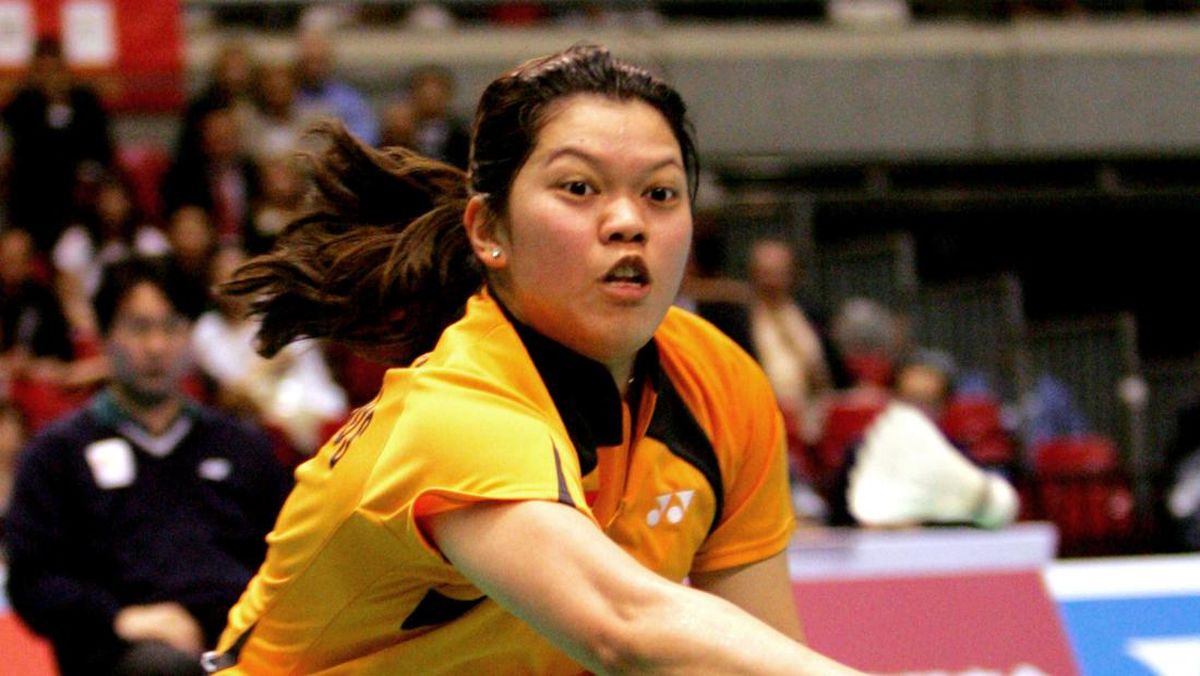
Mia Audina
 Indonesia
badminton player•Olympic competitor
Also known as: Mia Audina Tjiptawan, Mia Audina-Tjiptawan-Lobman
Birthday
August 22, 1979
Birth Sign
Leo
Birthplace
Jakarta, Indonesia
Age
47 years old
Height
5 ft 7 in (1.70 m)
About
Mia Audina Tjiptawan is a former professional badminton player who achieved rare distinction by representing two different nations at the Olympic level. Born in Jakarta to a Chinese-Indonesian father and a Javanese mother, she emerged as a teenage prodigy who helped shatter China's dominance in women's team badminton while playing for Indonesia. Her career trajectory took a historic turn when she relocated to the Netherlands following her marriage, eventually switching her competitive allegiance to compete for the Dutch national team.
She remains one of the few non-Asian players to win an Olympic medal in badminton, securing silver medals in both 2000 and 2004. Audina reached the World No. 1 ranking in 1996 and retired in 2006 after a successful tenure that included multiple titles at prestigious tournaments like the All England Open and the BWF World Grand Prix Finals. Her legacy bridges two sporting cultures, marking a unique chapter in international badminton history.
Early Life & Background
Mia Audina Tjiptawan was born into a family with mixed heritage in Jakarta, where her father was of Chinese descent and her mother was Javanese. Unlike many athletes who begin formal training in their early teens, Mia started playing badminton at just six years old. By the age of ten, she was already competing in national junior tournaments across Indonesia, displaying a level of skill that far exceeded her peers. She balanced rigorous daily training schedules with her education at local schools in Jakarta, showing an intense dedication to the sport from a very young age.
Her breakthrough moment arrived in 1993 when she made her debut for the Indonesian national team. At only fourteen years old, she became the youngest player ever to represent Indonesia in the Uber Cup, the premier women's world team championship. This early entry into senior international competition set the stage for her rapid ascent. The pressure of playing against seasoned professionals did not deter her; instead, it fueled her development into a formidable competitor capable of challenging the best players in the world within just a few short years.
Career Growth
The first phase of Mia Audina's professional career, spanning from 1993 to 1999, established her as a global sensation. In 1994, at the age of fifteen, she played a pivotal role in the Uber Cup final against China. Audina won the decisive match in the rubber series, securing the title for Indonesia and effectively ending China's long-standing monopoly on the event. This victory catapulted her to international stardom and cemented her reputation as a clutch performer under pressure. By October 1996, she achieved the World No. 1 ranking in women's singles, becoming the youngest Indonesian player to reach the top spot at that time.
Her success continued through the late 1990s with victories at the Asian Championships and the BWF World Grand Prix Finals in 1999. She competed in the 1996 Atlanta Olympics, reaching the quarterfinals before moving to the next phase of her career. In 2000, Audina made a controversial but historic move to represent the Netherlands after marrying a Dutch national. Despite the shift in allegiance, she maintained her elite status, winning the silver medal at the Sydney Olympics representing Indonesia before officially switching flags. Under the Dutch banner, she reached the pinnacle of the sport again, winning the silver medal at the 2004 Athens Olympics in women's singles. This achievement made her one of the few non-Asian players to stand on the Olympic podium in badminton. She retired from professional competition in 2006 after a long tenure that included numerous titles at the All England Open and various Superseries events.
Career Timeline
Public Image & Style
Mia Audina is portrayed in the media as a graceful, resilient, and intelligent athlete who navigated complex cultural landscapes with dignity. Her public persona is defined by professionalism and sportsmanship, avoiding the tabloid drama that often surrounds high-profile celebrities. She is respected for her tactical intelligence on the court and her ability to adapt to new environments, whether transitioning from a teenage prodigy in Indonesia to an international veteran in the Netherlands. Her image remains one of quiet strength, characterized by sustained excellence rather than off-court controversy.
Fame & Fandom (iFAMOUS Rankings)
Mia Audina commands a legacy defined by athletic distinction rather than the organized fervor typical of modern pop culture. Unlike contemporary idols who cultivate specific subcultures with dedicated rituals, her support base remains a general audience of badminton enthusiasts who respect her historical significance without forming a named collective. No official fan clubs, charitable campaigns, or viral street demonstrations have ever been documented in her name, and her public interactions remain consistent with standard athlete-fan dynamics rather than celebrity mythology. The absence of a formal fandom identifier underscores her status as a revered figure in sports history rather than a personality driven by commercial popularity.
Regarding her standing in global recognition, iFANN has evaluated her profile against comprehensive worldwide metrics. Mia Audina is currently not ranked within the Global Top 1,000 most famous persons. She does not appear on any Top-100 scope lists for specific categories or regions. This evaluation reflects a landscape where her fame is niche, concentrated among those familiar with international badminton history rather than the broader global populace. The lack of a current placement indicates that while her achievements are legendary within her sport, they do not generate the mass consumption signals required for a broad ranking. Her influence persists through retrospective articles and institutional acknowledgments, such as Badminton Europe's designation of her as a Legend, yet these honors operate within the domain of sporting archives rather than the dynamic churn of global celebrity rankings.
Interesting Facts and Legends
Mia Audina holds the distinction of being the youngest player to win a decisive match for the Uber Cup at just fifteen years old. Her dual citizenship allowed her to legally represent both Indonesia and the Netherlands, a rare feat in international badminton. She was one of the first non-Asian players to reach the Olympic final in women's singles in 2000 and subsequently win a medal in 2004, challenging the traditional Asian dominance of the sport. Her surname sometimes appears as "Lobman" in Dutch records due to her marriage, though she is universally known as Mia Audina in the sports world. In 2020, Badminton Europe formally recognized her contributions by publishing an article titled "Legends: Mia Audina," placing her among the all-time greats of the sport.
Notable Quotes
“I wanted to show that you can succeed anywhere if you have the heart.”
“It was a hard decision, but I had to follow my heart and my new life.”
Family & Personal Life
Mia Audina was born to a father of Chinese descent and a mother of Javanese heritage in Jakarta. She has kept details about her siblings and extended family largely private throughout her life. Her personal life became public knowledge primarily through her marriage to Herman Lobman, a Dutch national, around the year 2000. Following their union, she relocated to the Netherlands, which directly influenced her decision to switch her competitive allegiance from Indonesia to the Netherlands. While she maintains a low profile regarding her home life, reports indicate she has remained married to Lobman since their wedding. There are no widely confirmed reports of children having been born to the couple, and she keeps her family matters out of the media spotlight.
Notable Connections
Relationships & Dating History
Mia Audina's romantic history is relatively private, with public information focusing primarily on her marriage which significantly impacted her career trajectory. There are no widely documented public relationships prior to her union with a Dutch national. Around the year 2000, she met her husband, Herman Lobman, in the Netherlands. Their marriage led to her relocation to the country and a subsequent change in her competitive allegiance from Indonesia to the Netherlands. This partnership facilitated her transition to representing a new nation on the international stage.
Their relationship has remained stable since the turn of the millennium. As of 2026, Mia Audina is considered to be in a stable marital state with her Dutch husband. There are no recent reports of separation, divorce, or new relationships. Her personal life has remained relatively private compared to her public sporting achievements, and there are no widely confirmed reports of children having been born to the couple.
- MarriedHerman Lobman2000 - presentCurrentMet in the Netherlands; marriage led to her switching allegiance to the Dutch national team.
Salary, Net Worth In 2026
$1.2 Million
iFANN Editorial Team estimate
As of 2026, research by the iFANN Editorial Team puts Mia Audina's fortune at around $1.2 million. Her wealth primarily stems from prize money accumulated during her active career between 1994 and 2006, when she competed at the highest levels of international badminton. Earnings from major tournaments like the Olympics, the All England Open, and the BWF World Grand Prix Finals formed the bulk of her income during her playing days. Appearance fees for exhibitions and potential coaching or ambassadorial roles in the Netherlands and Indonesia likely contributed to her financial stability post-retirement.
Unlike some modern athletes who secure massive endorsement deals, Audina's earnings were more modest, reflecting the sponsorship landscape of the 1990s and early 2000s. Real estate holdings in the Netherlands may contribute to her assets, though specific property values remain private. The estimate accounts for her decade-long professional career and subsequent transition into mentorship roles, resulting in a comfortable financial standing that aligns with typical earnings for elite Olympic athletes of her era who did not pursue major commercial ventures.
Awards Won (7)
Mia Audina's trophy cabinet includes two Olympic silver medals, two Uber Cup championships, and two BWF World Grand Prix Finals titles. She also secured a gold medal at the World Junior Championships and multiple medals at the Asian Games. Her contributions to the sport were further honored with a "Legend" designation by Badminton Europe in 2020. These accolades highlight her status as one of the most successful badminton players of the 1990s and early 2000s.
2004 · Women's Singles
Athens Olympics
2000 · Women's Singles
Sydney Olympics
1996 · Team Event
Indonesia National Team
1994 · Team Event
Indonesia National Team
Known For
Olympic Silver Medalist (2000, 2004)
2004 · Badminton Player
Uber Cup Champion (1994, 1996)
1996 · Badminton Player
World No. 1 Ranked Player
1996 · Badminton Player
Keywords
Sources
Quick Facts
- Profession
- badminton player, Olympic competitor
- Born
- August 22, 1979
- Birthplace
- Jakarta, Indonesia
- Gender
- Female
- Birth Sign
- Leo
Personal Details
- Full Name
- Mia Audina Tjiptawan-Lobman
- Height
- 5 ft 7 in (1.70 m)
- Spouse
- Herman Lobman
- Children
- Education
- Local schools in Jakarta
Frequently Asked Questions
Who is Mia Audina?
Why did Mia Audina switch from Indonesia to the Netherlands?
What are Mia Audina's biggest achievements?
Is Mia Audina still playing badminton?
Does Mia Audina have any children?
Social Media
Similar People
Join the community
fans discussing