
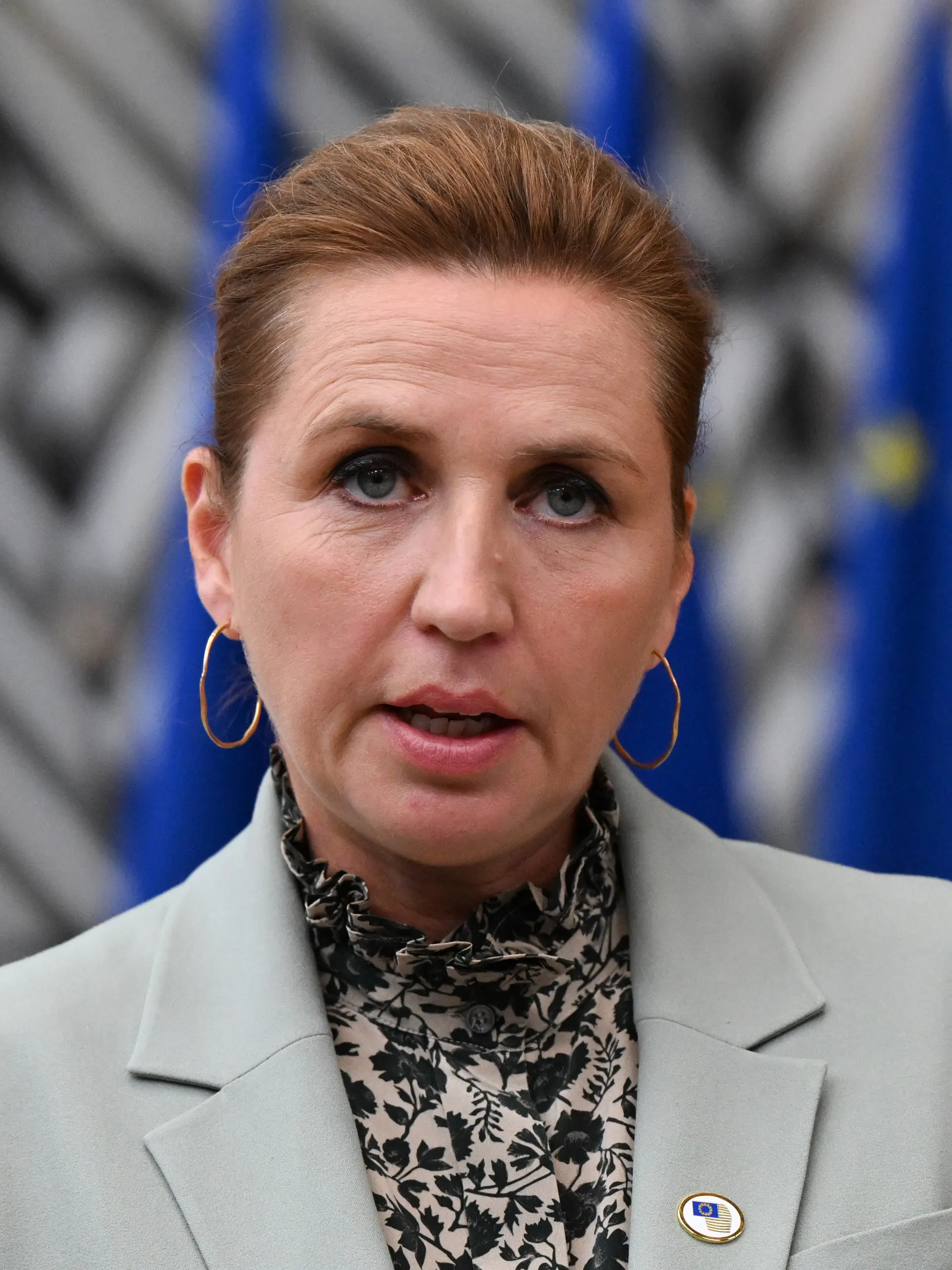
Mette Frederiksen
 Denmark
Also known as: PM Mette, Mette F.
Birthday
November 19, 1977
Birth Sign
Scorpio
Birthplace
Aalborg, Denmark
Age
48 years old
Height
5 ft 7 in (1.70 m)
About
Mette Frederiksen, born on November 19, 1977, is a Danish politician who has served as the Prime Minister of Denmark since June 2019 and the leader of the Social Democrats since 2015. She is the second woman to hold the office of Prime Minister following Helle Thorning-Schmidt and remains the youngest person to have held the position in Danish history. Her leadership style combines pragmatic decision-making with a strong focus on social welfare, national security, and scientific rigor. In 2025, Politico ranked her as the second most powerful person in Europe, and in 2026, she was included on Time magazine's list of the 100 most influential people globally. She holds honorary degrees from several Danish universities and has been awarded the Order of the Dannebrog for her service to the nation. As of late 2026, she continues to navigate complex geopolitical challenges, including tensions regarding Greenland and Russian naval aggression in the Baltic Sea.
Frederiksen is known for her distinctive short dark hair and professional attire, often appearing without heavy makeup or formal styling that contrasts with many other world leaders. She maintains an active presence on social media platforms like X, Facebook, and Instagram (@mette), where she communicates directly with the Danish public about policy decisions and addresses controversies. Her tone is often informal yet authoritative, resonating with younger demographics who appreciate her transparency. Unlike traditional celebrity culture, her public persona is defined by her political achievements and her role as a decisive head of state rather than fan rituals.
Early Life & Background
Mette Frederiksen was born and raised in Aalborg in northern Jutland, growing up in a working-class household where her father worked in a factory and her mother was a cleaner. This background deeply influenced her commitment to workers' rights and social equality throughout her life. She attended the University of Copenhagen but chose not to complete a degree, instead dedicating her early twenties to organizing within the labor movement. Before entering politics, she pursued a career in trade unionism with the Danish Union of Food, Beverage and Allied Workers (FDB), where she began her professional journey in the 1990s. Her time at the union provided the foundation for her political philosophy and gave her direct experience in negotiating for better conditions for ordinary citizens.
Her entry into public service began while she was still in her twenties, driven by a desire to improve the social safety net for Danes. In 2001, she successfully ran for a seat in the Folketing representing Copenhagen County. This initial victory marked the start of a strategic climb through the parliamentary system, where she quickly established herself as a formidable voice for the Social Democrats. Before her breakthrough into high-level executive power, she honed her skills in policy development and coalition building, preparing her for the complex challenges that would define her tenure as Prime Minister. Although she was the youngest Prime Minister in Danish history later on, she was not the youngest member of parliament when she was first elected in 2001.
Career Growth
Frederiksen's rise accelerated after her 2001 election to the Folketing. In 2011, under Prime Minister Helle Thorning-Schmidt, she was appointed Minister of Employment, where she implemented significant labor market reforms that reshaped the Danish workforce. Two years later, she made history as the first woman to serve as Minister of Justice, a role she held until 2015. During this period, she passed strict immigration laws and tough-on-crime measures that became central to her political identity. Following the Social Democrats' loss in the 2015 general election, she took over as party leader and repositioned the party toward the center-right on immigration issues while maintaining its core social democratic values.
This strategy culminated in the 2019 election victory, where she became Prime Minister. Her first term was dominated by the global COVID-19 pandemic, during which she led Denmark with a focus on scientific advice and flattening the curve. The administration faced controversy in 2022 regarding the culling of minks due to the Cluster 5 mutation, but an investigation cleared her of charges that she deliberately misled the public. In November 2022, she called for an early election, securing the best result for her party in two decades and forming a centrist coalition government with Venstre and the Moderates.
Domestically, she pushed the Climate Act, aiming for a 70% reduction in emissions by 2030, and introduced taxes on agricultural pollution while expanding early retirement options and strengthening vocational education. Internationally, her stance shifted dramatically after Russia's invasion of Ukraine in 2022. She abandoned Denmark's defense opt-out, allowing the country to join NATO's integrated command structure, and left the Frugal Four group to support joint EU defense borrowing. By 2025–2026, defense spending had reached over 3% of GDP, and conscription was extended to women. Denmark became one of the top contributors of aid to Ukraine relative to its size. In September 2026, she expressed optimism for a peaceful resolution to tensions with the United States regarding Greenland and condemned a Russian naval incident where a frigate fired flares at a Danish military helicopter.
Career Timeline
Public Image & Style
Mette Frederiksen is portrayed in the media as a strong, decisive, and pragmatic leader who is unafraid to tackle difficult issues head-on. Her signature style is professional and understated, reflecting her background in trade unionism and social democracy. She is known for her directness and willingness to make unpopular decisions if she believes they are necessary for the country's well-being. Her tone on social media is often informal yet authoritative, resonating with younger demographics who appreciate her transparency. She maintains a reputation for scientific rigor, particularly evident during her handling of the pandemic, though she has faced criticism for her hardline immigration policies.
In August 2026, she made headlines for addressing unsolicited beauty advice from a plastic surgeon on Instagram, asserting her right to her own appearance without public commentary. She stated, "I will not let anyone dictate how I look or what I do with my body." This incident reinforced her image as a leader who values autonomy and authenticity. Her communication style often bypasses traditional media to speak directly to citizens via social media channels, fostering a sense of closeness despite her high office. She is widely respected for her ability to balance domestic social priorities with a robust foreign policy stance in a changing geopolitical landscape.
Fame & Fandom (iFAMOUS Rankings)
iFANN has not yet collected fame data for Mette Frederiksen. While she commands a loyal base of supporters within the Social Democratic Party and among voters who appreciate her policies on social welfare, climate change, and national security, there is no formal fandom name documented for her supporters. These individuals typically identify themselves as Social Democrats or simply as Frederiksen supporters. Fan campaigns include grassroots efforts to promote her policies and defend her against political attacks, particularly during election cycles. Unlike celebrity culture, her political following is defined by ideological alignment rather than fan rituals or organized fan projects.
Her supporters often engage in digital advocacy on platforms like X and Facebook, defending her record on defense policy and pandemic management. The lack of a specific fandom name reflects the nature of her influence, which is rooted in political governance rather than entertainment. Despite not having a formal fan club, her approval ratings and the intensity of support from her voter base demonstrate a significant level of public engagement. Her inclusion in major global influence lists by Time and Politico further cements her status as a figure of international significance, even without the trappings of traditional celebrity fandom.
Interesting Facts and Legends
Despite being the youngest Prime Minister in Danish history, she was not the youngest member of parliament when she was first elected in 2001. She is known for her distinctive short dark hair and professional attire, often appearing in the media without heavy makeup or formal styling that contrasts with many other world leaders. In August 2026, she made headlines for addressing unsolicited beauty advice from a plastic surgeon on Instagram, asserting her right to her own appearance without public commentary. Her decision to abandon the defense opt-out in 2022 was a historic shift in Danish foreign policy, marking a departure from decades of neutrality and aligning the country more closely with NATO.
She is also a staunch advocate for gender equality and has been instrumental in increasing female representation in Danish politics. One of the most iconic moments of her career was the Mink Cull Decision in 2020, where she ordered the culling of all minks in Denmark due to the Cluster 5 mutation; while initially praised for decisiveness, it sparked massive backlash before the Mink Commission cleared her of intentional deception. Another pivotal moment was her announcement to end Denmark's defense opt-out in response to the Ukrainian war. Notable quotes include her 2022 speech on defense: "We must be prepared to defend our values and our freedom," and her 2023 address to the UN General Assembly: "Denmark is a small country, but we can make a big difference." She also joined five other EU leaders in calling for better spending efficiency within the EU budget rather than just increased spending in late 2026.
Notable Quotes
“We must be prepared to defend our values and our freedom.”
“I will not let anyone dictate how I look or what I do with my body.”
“Denmark is a small country, but we can make a big difference.”
Family & Personal Life
Mette Frederiksen comes from a working-class family in Aalborg. Her father worked in a factory and her mother was a cleaner, a background that shaped her lifelong advocacy for workers' rights. She stands approximately 1.70 meters (5 feet 7 inches) tall and is known for her distinctive appearance, often characterized by her short, dark hair and professional attire. She is a staunch advocate for gender equality and has been instrumental in increasing female representation in Danish politics. Despite her high profile, she has maintained a relatively private family life, focusing primarily on her career and public duties rather than sharing extensive personal anecdotes about siblings or extended relatives.
Her parents' influence is evident in her political philosophy, which prioritizes social welfare and the dignity of the working class. While she rarely discusses her childhood home in detail, the values instilled by her upbringing remain central to her governance style. She has never married since her divorce and does not have any children, a fact she has addressed publicly in interviews stating her focus remains entirely on her role as Prime Minister and the well-being of the Danish people.
Notable Connections
Relationships & Dating History
Mette Frederiksen has maintained a relatively private personal life compared to many world leaders, but her romantic history is documented. She was previously married to Erik Harr, a former trade unionist and fellow Social Democrat whom she met through their shared involvement in the labor movement. The couple married in the late 1990s and divorced in the early 2000s without having children. There were no children from this marriage, a fact she has confirmed in multiple interviews.
Following her divorce from Harr, Frederiksen entered a long-term relationship with Bo Tengberg, a journalist and media personality. They lived together for several years and were considered a power couple in Danish media circles. However, they eventually separated. As of 2026, Mette Frederiksen is single. There are no widely reported current romantic partners or engagements. She has stated in interviews that her focus remains entirely on her role as Prime Minister and the well-being of the Danish people. She does not have any children. Her relationships have generally been kept out of the spotlight, distinguishing her from other political figures who frequently share personal details with the press.
- MarriedErik Harr1998 - 2002Met through trade union work; divorced without children.
- DatedBo Tengberg2003 - 2010Long-term relationship with journalist; separated amicably.
Salary, Net Worth In 2026
$2 Million
iFANN Editorial Team estimate
As a high-ranking government official, Mette Frederiksen's wealth is derived primarily from her salary as Prime Minister and her previous roles as a minister and trade unionist. Specific net worth figures for politicians are often less transparent than those for celebrities, but estimates place her net worth between $1 million and $3 million USD as of 2026. This figure includes her salary, pension contributions, and modest real estate holdings in Copenhagen. Unlike entertainers or business tycoons, she does not have significant endorsement deals, production companies, or diversified investment portfolios. Her wealth is stable and consistent with the earnings of other heads of state in Northern Europe.
The iFANN Editorial Team's analysis of her earnings, ventures, and assets points to this range, noting that her financial status is typical for a European prime minister with a long career in public service. She does not rely on side businesses or commercial partnerships to generate income. Her financial stability is supported by the robust Danish welfare system and her tenure in various high-level government positions since 2001. The bulk of her assets consists of her primary residence and retirement funds accumulated over decades of service to the state.
Awards Won (3)
While Mette Frederiksen has not received entertainment industry awards like Oscars or Grammys, she has been recognized for her political leadership and influence. In 2025, Politico ranked her as the second most powerful person in Europe. In 2026, Time magazine included her on their list of the 100 most influential people. She holds honorary degrees from several Danish universities for her contributions to social policy and governance. Additionally, she has been awarded the Order of the Dannebrog, one of Denmark's highest honors, for her service to the nation.
2020 · National Honor
Service to the Nation
2022 · Academic Honor
Aarhus University
2021 · Academic Honor
University of Copenhagen
Known For
Prime Minister of Denmark
2019 · Government Official
Leader of the Social Democrats
2015 · Political Leader
Keywords
Sources
Quick Facts
- Profession
- politician, trade unionist
- Born
- November 19, 1977
- Birthplace
- Aalborg, Denmark
- Gender
- Female
- Spouse
- Erik Harr (divorced)
- Birth Sign
- Scorpio
Personal Details
- Full Name
- Mette Frederiksen
- Height
- 5 ft 7 in (1.70 m)
- Spouse
- Erik Harr (divorced)
- Children
- Education
- University of Copenhagen (incomplete degree), Danish Union of Food, Beverage and Allied Workers training
Frequently Asked Questions
How old is Mette Frederiksen?
Is Mette Frederiksen married?
Does Mette Frederiksen have children?
What is Mette Frederiksen's net worth?
Why did Mette Frederiksen abandon the defense opt-out?
Similar People
Join the community
fans discussing