Met Office
 United Kingdom
"The United Kingdom's national weather and climate service"
About
The Met Office serves as the national weather and climate authority for the United Kingdom. Operating as an executive agency and trading fund, it reports to the Department for Science, Innovation and Technology. The organization manages a wide spectrum of responsibilities ranging from hourly forecasts for daily commuters to decadal climate projections that inform government policy on long-term environmental changes.
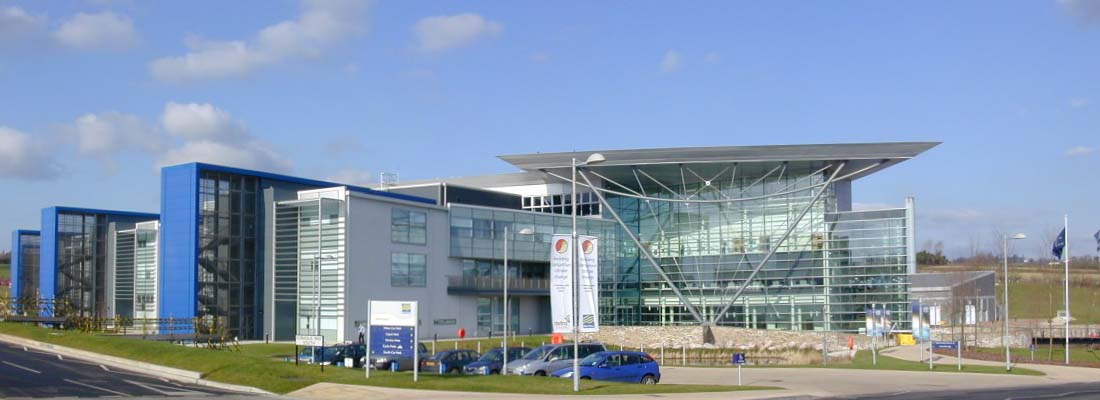
Headquartered in Exeter, Devon, the agency consolidated its operations there in the early 2000s after leaving its previous base in Bracknell, Berkshire. This move brought together forecasting teams around one of the world's largest supercomputer facilities dedicated to weather modeling. The facility supports both public services and commercial contracts with sectors including aviation, energy, retail, insurance, and broadcasting.
Funding derives from a combination of public money and revenue generated through tailored data services. The most visible function for the general public is the issuance of severe weather warnings using a color-coded system of yellow, amber, and red. Since introducing a convention of naming storms in 2015, these alerts have become a regular feature of British news coverage during autumn and winter months.
Mission
The agency provides weather and climate information to support decision-making across government, emergency services, businesses, and the public. Statutory duties include issuing severe weather warnings, maintaining the national climate record, and offering scientific advice to government departments. Commercial activities involve supplying specialized forecasts and data to international partners and domestic industries.
History
Vice-Admiral Robert FitzRoy established the department within the Board of Trade on August 1, 1854. Having commanded HMS Beagle during Charles Darwin's voyage, FitzRoy aimed to improve shipping safety by collecting weather data at sea. He introduced public storm warnings and daily forecasts, coining the term "forecast" in its modern sense despite initial mockery from contemporaries. He served as the first director until his death in 1865.
The organization expanded significantly over the following decades. By the early twentieth century, it had evolved into a scientific institution supporting aviation and shipping. During World War II, forecasting became critical for bombing operations and convoy routing under the Ministry of Defence. The agency operated under the Ministry of Defence for roughly two decades before transferring to the Department for Business, Energy and Industrial Strategy, and later to the Department for Science, Innovation and Technology.
A major operational shift occurred in the early 2000s when headquarters moved from Bracknell to Exeter. In November 2000, the name changed from the Meteorological Office to the Met Office. Penny Endersby became Chief Executive in December 2018, becoming the first woman to hold the post.
Notable People
Penny Endersby
Chief Executive · 2018–present
First woman to lead the Met Office; oversees supercomputing and service transformation.
Robert FitzRoy
Founder and first director · 1854–1865
Established the Meteorological Department at the Board of Trade and pioneered public weather forecasts.
Napier Shaw
Director · 1905–1920
Led the office during its expansion into a scientific institution and advanced meteorological research.
Milestones
1854
Robert FitzRoy establishes the Meteorological Department at the Board of Trade.
1861
The office begins issuing public weather forecasts in newspapers.
2000
The organization rebrands from Meteorological Office to Met Office.
2018
Penny Endersby appointed Chief Executive, the first woman to lead the agency.
Sources
Organization Info
- Founded
- 1854-08-01
- Headquarters
- Exeter, England
- Country
- United Kingdom
- Chief Executive
- Penny Endersby
- Parent
- Department for Science, Innovation and Technology
- Type
- Government
- Employees
- 1,879
Financials
- Employees
- 1879
Official Website
www.metoffice.gov.uk/
Join the community
fans discussing