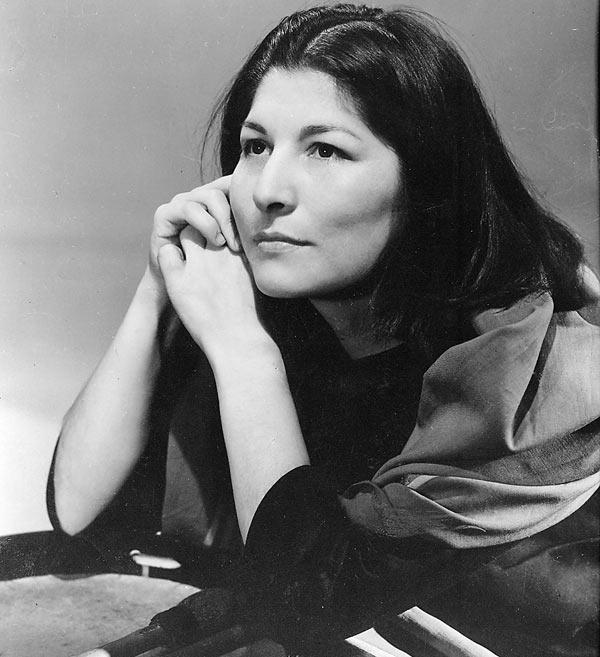
Mercedes Sosa
 Argentina
singer•recording artist•musician
Also known as: La Negra, The Voice of the Voiceless, The Conscience of Latin America
Birthday
July 9, 1935
Birth Sign
Cancer
Birthplace
San Miguel de Tucumán, Argentina
Age
Died at 74
Height
5 ft 5 in (165 cm)
About
Haydée Marta Mercedes Sosa Girón, born July 9, 1935, in San Miguel de Tucumán, stands as a monumental figure in Latin American culture, widely revered globally as "The Voice of the Voiceless" and "The Conscience of Latin America." Her career spanned over six decades, defining the nuevo cancionero movement by blending traditional folk music with lyrics that boldly addressed social justice, human rights, and political oppression. She is celebrated for her powerful, emotive voice and an unwavering commitment to truth that made her a symbol of resistance during the region's military dictatorships. Her impact extends far beyond mere entertainment; she used her massive platform to champion indigenous rights, women's rights, and anti-dictatorship movements, often at great personal risk. Recognized by institutions like UNESCO as a cultural ambassador, she received numerous accolades including a Grammy Award, a Latin Grammy Lifetime Achievement Award, and the Order of the Southern Cross from Brazil. Even after facing exile and bans, she continued to record and tour internationally, cementing her status as one of the most influential artists in history who sold millions of records across Latin America and Europe.
Early Life & Background
Mercedes Sosa was born into a working-class family in San Miguel de Tucumán on July 9, 1935. Her upbringing immersed her deeply in the musical traditions of northern Argentina, where she developed a profound connection to folklore influenced by rural landscapes and local struggles. From a young age, she displayed a natural talent for singing, often performing in community gatherings and local events. At just fifteen years old, she achieved her first major breakthrough by winning first prize in a talent contest held by a local radio station in Tucumán in 1950. This victory marked her first public appearance and launched her professional trajectory. Although she enrolled at the National University of Tucumán, she eventually left her studies to focus entirely on her singing career, which required constant travel and performance across the region. Her early years were defined by a dedication to preserving the authentic sounds of Argentine folk music, particularly styles like the zamba, chacarera, and vidala. By the late 1950s, she had established herself as a prominent local performer before moving to Buenos Aires in 1959 to join the Grupo Cancioneros del Pueblo. Before becoming a global icon, she spent years honing her craft in small venues, building a loyal following among those who valued the raw emotion and cultural authenticity of her performances.
Career Growth
Sosa's career evolved from a local folk performer to an international icon known for her political activism and artistic excellence. In the 1960s, she emerged as a leading figure in the Nueva Canción movement, blending traditional folk with political lyrics that addressed poverty, oppression, and revolution. The 1970s brought significant challenges when the military dictatorship in Argentina forced her into exile. Despite being banned from performing in her homeland, she continued to record and perform abroad, becoming a symbol of resistance. Albums like En Vivo en Francia (1971) and El Grito de la Tierra (1972) are considered landmarks of this era. After the return of democracy in Argentina, she returned to a hero's welcome, releasing acclaimed works such as Cantora (1982) and Homenaje a Violeta Parra (1987). Her later career saw collaborations with major international artists like Joan Manuel Serrat, Joaquín Sabina, and Paul Simon, notably recording the album Mercado Central. In 2000, she won a Grammy Award for Best Folk Album for Alfonsina y el mar, followed by a Latin Grammy Lifetime Achievement Award in 2001. Her final studio album, Cantora 1, was released in 2009 shortly before her death. Throughout her life, she sold millions of records and used her fame to champion causes close to her heart, leaving an indelible mark on Latin American culture. She also received the Premio Konex Diamond Award and honorary doctorates from the University of Buenos Aires.
Career Timeline
Public Image & Style
Mercedes Sosa was portrayed as a humble, fierce, and compassionate figure whose public image was defined by authenticity rather than celebrity glamour. Media outlets frequently described her as the "conscience of Latin America," emphasizing her integrity and dedication to social causes. Her signature style involved simple, elegant stage presence and modest, earth-toned outfits that reflected her connection to the land and people. She stood approximately 1.65 meters (5'5") tall, often wearing traditional Argentine clothing or modest attire that reinforced her grounded demeanor. Unlike many pop stars, she avoided the trappings of high fashion and luxury, preferring to let her music and message speak for themselves. Her presence on stage was commanding yet approachable, making her a beloved figure across generations. She was known for her powerful, emotive voice and her ability to convey deep emotion without pretense. This genuine approach reinforced her reputation as a true advocate for the people, earning her keys to cities across Latin America including Buenos Aires, Santiago, and Lima.
Fame & Fandom (iFAMOUS Rankings)
Fans of Mercedes Sosa often refer to themselves simply as followers of the Nueva Canción movement or as "Los Amigos de Mercedes" (Mercedes' Friends), though there is no single formalized fandom name documented in official records. Fan culture revolves around annual gatherings on her birthday, July 9, and her death anniversary, October 4, where supporters share stories and listen to her music. Streaming drives for her iconic song "Gracias a la Vida" are common on social media, introducing her work to younger generations. Charity events organized in her name support causes related to education and human rights in Latin America, reflecting her lifelong commitment to social justice. Her official YouTube channel and Facebook pages, managed by her estate, continue to garner millions of views for her music videos and tributes. Fans also revere her 1968 concert at the Olympia in Paris, where she captivated a European audience with her raw emotional delivery, effectively launching her international career. The 1979 return to Argentina saw her perform at the Estadio Obras Sanitarias in front of 20,000 fans, an event described as a "homecoming of the soul" where fans wept and chanted her name.
Interesting Facts and Legends
Mercedes Sosa earned the nickname "The Voice of the Voiceless" not merely as a marketing term but as a self-imposed mission. She famously stated, "I sing for those who cannot sing," reflecting her dedication to amplifying marginalized voices. During the 1970s military dictatorship, she refused to compromise her political stance even when it cost her popularity in some sectors, choosing instead to perform only songs of resistance. She recorded the album Mercado Central with Paul Simon, blending Argentine folk with American influences in a unique cross-cultural collaboration. Her rendition of Violeta Parra's "Gracias a la Vida" is considered one of the greatest vocal performances in Latin history and is often played at memorials and cultural events across the continent. Guinness World Records recognized her for having the highest number of albums sold in Latin America by a solo female artist at the time of her peak. She was also honored with the Ariel Award in Mexico for her cultural impact and received the PAHO Champion of Health title in 2009 for her advocacy and influence on public health awareness. Her face became synonymous with the Nueva Canción movement through ubiquitous album covers and posters across the continent.
Notable Quotes
“I sing for those who cannot sing.”
“Music is a weapon of struggle.”
“My voice is the voice of the people.”
“I am not a singer, I am a voice.”
Family & Personal Life
Mercedes Sosa's family values centered on humility and a deep connection to her roots in San Miguel de Tucumán, where she was buried after her passing. She grew up in a household deeply immersed in the musical traditions of northern Argentina, influencing her lifelong artistic direction. Her immediate family included her parents, though specific details about their names remain less documented than her own legacy. The couple remained together until her death in 2009. They had one daughter, María Mercedes Sosa, who occasionally manages aspects of her mother's legacy. While María has stayed largely out of the spotlight compared to her mother's global fame, she plays a key role in overseeing the estate. Mercedes Sosa's family life was characterized by a strong bond between the artist and her child, with María taking on responsibilities to preserve her mother's memory and manage her extensive catalog. The family's connection to their hometown remained a central theme throughout their lives, reflecting the deep roots that grounded Sosa's identity.
Notable Connections
Oscar Matus, Paul Simon, Joan Manuel Serrat, Joaquín Sabina, Violeta Parra
Relationships & Dating History
Mercedes Sosa was married to Oscar Matus, a composer and musician who served as her arranger and collaborator. They met in the early days of her rise to prominence in Tucumán through mutual involvement in folk music circles, establishing a partnership that lasted for decades. Their relationship was both personal and professional, with Matus co-writing several tracks and arranging many of her songs, playing a crucial role in shaping her sound and managing her career logistics during her most active years. The couple remained together until her death in 2009, with no public record of divorce or separation; they were widowed upon her passing. Together, they had one daughter, María Mercedes Sosa, who has occasionally been involved in managing aspects of her mother's legacy. As of 2026, the subject is deceased, having passed away while still married to Matus, leaving him as her widower. There are no documented children from other relationships, solidifying the family unit formed with Matus as the core of her personal life.
- MarriedOscar Matus1950 - 2009Met in Tucumán; husband, arranger, and collaborator until her death.
Death & Aftermath
Died
October 4, 2009 (aged 74)
Death Place
Buenos Aires, Argentina
Cause of Death
Heart attack (myocardial infarction)
Mercedes Sosa passed away on October 4, 2009, at the Sanatorio de la Trinidad hospital in Buenos Aires. She was seventy-four years old and had been under intensive medical care for several days following a deterioration in her health. The official cause of death was a heart attack, specifically a myocardial infarction, confirmed by her family and medical staff. Her passing triggered an immediate and profound outpouring of grief across Latin America and internationally, with tributes pouring in from heads of state including Argentine President Cristina Fernández de Kirchner and fellow musicians who viewed her as a symbol of resistance. The Pan American Health Organization issued a specific tribute highlighting her dual legacy as a champion of music and public health awareness. Her funeral took place in her hometown of San Miguel de Tucumán, where thousands of fans, dignitaries, and artists gathered to pay their respects. The event was described as a homecoming of the soul, reflecting the deep connection she maintained with her roots throughout her life. In the years since her death, her estate has actively managed her legacy through various channels. A documentary titled The Other Voice is currently in production by filmmakers Emiliano Torres and Nicolás Gil Lavedra to further document her life and activism. Her music continues to generate revenue and reach new audiences; notably, her rendition of "Gracias a la Vida" was featured in the 2024 film Project Hail Mary, sparking renewed interest in her catalog. Additionally, remastered editions like the 2025 release of Suiza 1980 ensure her recordings remain accessible to modern listeners while maintaining the integrity of her original work.
Net Worth (Estate Value)
$8 Million
iFANN Editorial Team estimate
As of 2026, the value of Mercedes Sosa's estate is estimated by various sources to be in the range of $5 million to $8 million USD. This figure reflects the ongoing earnings generated by her vast discography, which continues to generate significant revenue through streaming platforms like Spotify and Apple Music, as well as physical sales of her albums. A substantial portion of the estate's income comes from licensing deals, where her music is used in films, documentaries, and commercials. Notably, her version of "Gracias a la Vida" was included in the 2024 film Project Hail Mary, generating renewed interest and revenue. Posthumous releases, such as the 2025 remastering of Suiza 1980, also contribute to the estate's financial growth. Real estate holdings in Argentina owned by the estate provide additional stability to its overall value. The estate is managed by her daughter, María Mercedes Sosa, along with professional managers who oversee licensing and distribution. These efforts ensure that her legacy remains financially viable while honoring her artistic contributions. Merchandise and branding initiatives further diversify the income streams, ensuring the estate's trajectory shows steady growth driven by the enduring appeal of her music and the continued relevance of her message in contemporary society.
Awards Won (5)
Mercedes Sosa received numerous prestigious awards throughout her life, recognizing her artistic and humanitarian contributions. She won a Grammy Award for Best Folk Album in 2000 for Alfonsina y el mar and a Latin Grammy Lifetime Achievement Award in 2001. She also received the Premio Konex multiple times, including the Diamond Konex for lifetime achievement, and the Order of the Southern Cross from Brazil. Her honors include honorary doctorates from the University of Buenos Aires and recognition as a PAHO Champion of Health.
2000 · Best Folk Album
Alfonsina y el mar
2001 · Lifetime Achievement
Career
Known For
Alfonsina y el mar
2000 · Album
Homenaje a Violeta Parra
1987 · Album
Mercado Central
1999 · Album
Gracias a la Vida
1987 · Song
Keywords
Sources
Quick Facts
- Profession
- singer, recording artist, musician
- Born
- July 9, 1935
- Birthplace
- San Miguel de Tucumán
- Died
- October 4, 2009
- Death Place
- Buenos Aires
- Gender
- Female
- Spouse
- Oscar Matus
- Birth Sign
- Cancer
Personal Details
- Full Name
- Haydée Marta Mercedes Sosa Girón
- Height
- 5 ft 5 in (165 cm)
- Spouse
- Oscar Matus
- Children
- María Mercedes Sosa
- Education
- National University of Tucumán (attended but left to pursue music)
Filmography
12
Total
8
Film
4
TV
Frequently Asked Questions
Who was Mercedes Sosa?
When did Mercedes Sosa die?
What was Mercedes Sosa's biggest hit?
Was Mercedes Sosa married?
Did Mercedes Sosa win any awards?
Similar People
Join the community
fans discussing