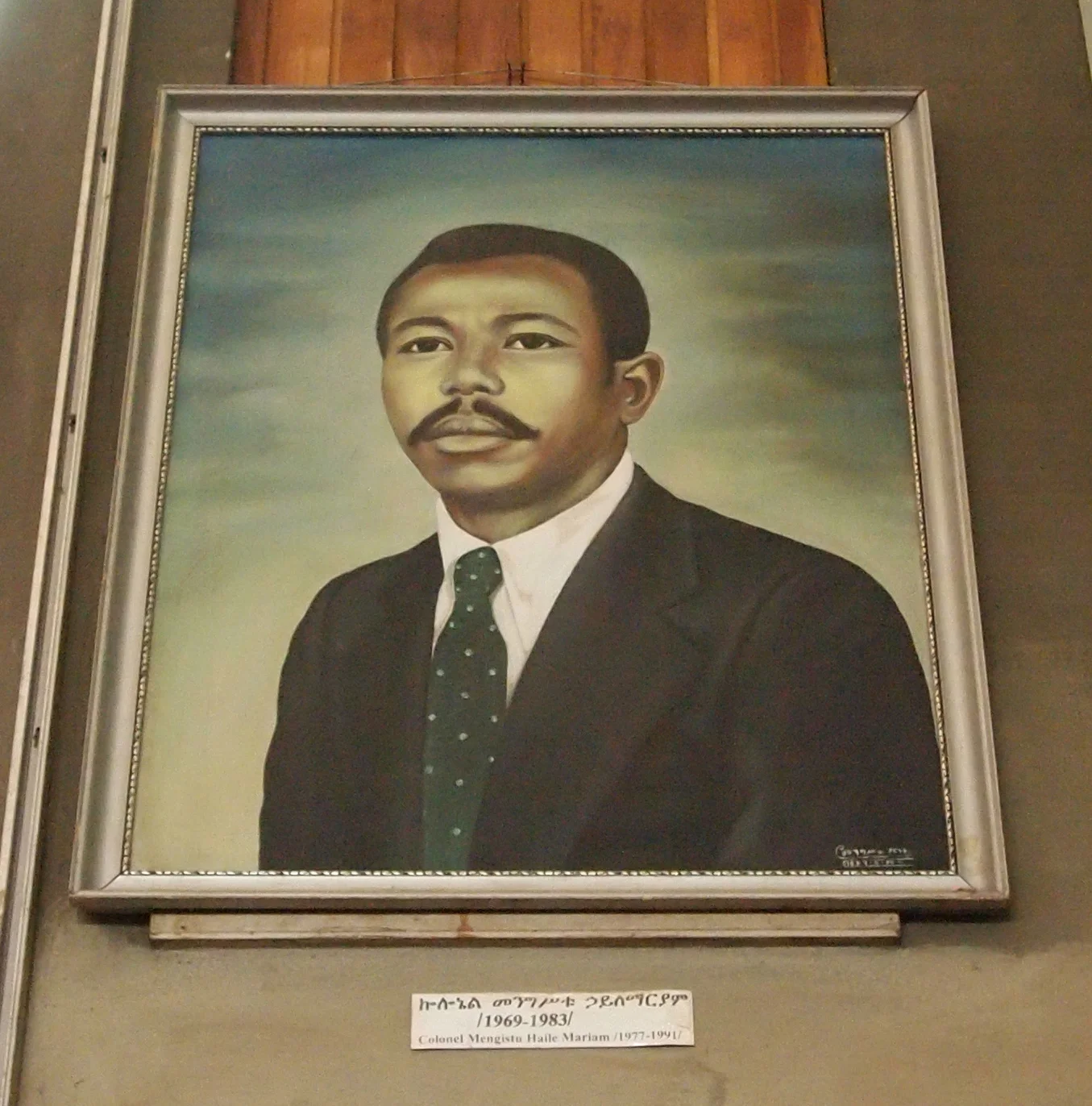
Mengistu Haile Mariam
 Ethiopia
Also known as: Mengistu Mariam, Colonel Mengistu
Birthday
May 21, 1937
Birth Sign
Sagittarius
Birthplace
Wolayita Zone, Galla-Sidamo Governorate, Ethiopia
Age
89 years old
About
Mengistu Haile Mariam was a former Ethiopian military officer and communist revolutionary who served as the head of state of Ethiopia from 1977 to 1991. Born in the Wolayita zone of southern Ethiopia, he joined the Ethiopian Air Force in 1957 and rose through the ranks to become a colonel before leading the Derg junta that overthrew Emperor Haile Selassie in 1974. He consolidated absolute power by eliminating rivals within the military government and declared himself dictator, serving as General Secretary of the Workers' Party of Ethiopia and later as President of the People's Democratic Republic of Ethiopia.
His rule was defined by radical socialist policies, brutal repression, and significant international conflict. The Red Terror campaign of 1977-1978 resulted in an estimated 30,000 to 750,000 deaths following an assassination attempt on Mengistu. He led Ethiopia through the Ogaden War against Somalia and oversaw the catastrophic famine of 1983-1985, during which hundreds of thousands died amidst government mismanagement. His regime fell in May 1991 as the Ethiopian People's Revolutionary Democratic Front advanced on Addis Ababa. On his birthday, May 21, 1991, Mengistu resigned and fled the country, arriving in Harare, Zimbabwe, where he has lived in exile ever since under diplomatic protection.
Early Life & Background
Mengistu Haile Mariam Ayana was born on May 21, 1937, in the Wolayita zone, which was historically part of the Galla-Sidamo Governorate or Kaffa Province in southern Ethiopia. He grew up in a household marked by poverty; his father was a soldier and his mother worked as a farmer. Despite these humble beginnings, he managed to attend primary school, though financial constraints eventually forced him to drop out. This early disruption in his formal education did not halt his ambition, as he sought a different path through the military.
In 1957, at the age of twenty, Mengistu enlisted in the Ethiopian Air Force. His entry into the service provided the structure and discipline that would define his future career. He attended the Ethiopian Air Force Academy, where he trained alongside other young men aspiring to serve in the nation's defense forces. Over the next two decades, he climbed the ranks steadily, demonstrating competence and loyalty that earned him promotion to the rank of colonel. During this period, he remained a relatively unknown mid-level officer, far removed from the corridors of high political power that would soon call him.
The political landscape of Ethiopia shifted dramatically in the early 1970s due to widespread unrest, economic hardship, and dissatisfaction with the imperial rule of Emperor Haile Selassie. In 1974, a group of junior officers formed the Coordinating Committee of the Armed Forces, Police, and Territorial Army, known as the Derg. Mengistu quickly aligned himself with this movement, leveraging his position within the military to gain influence. By late 1974, he had maneuvered to eliminate key rivals, including the initial chairman Aman Andom, and began consolidating control over the committee. This rapid ascent set the stage for his eventual takeover of the state apparatus, transforming him from a colonel into the de facto ruler of Ethiopia.
Career Growth
Mengistu Haile Mariam's rise to total power began in earnest after the 1974 coup that ended the Solomonic dynasty. Within months, he orchestrated the execution of Chairman Aman Andom in November 1974, clearing the path for his own leadership of the Derg. By 1977, he had eliminated all remaining internal opposition and assumed the title of Chairman of the Provisional Military Administrative Council, effectively becoming the dictator of Ethiopia. That same year, he launched the Red Terror, a violent purge targeting members of the Ethiopian People's Revolutionary Party (EPRP) and other leftist groups, which resulted in tens of thousands of deaths.
Externally, his administration faced the Ogaden War from 1977 to 1978, a conflict with Somalia over the Ogaden region. With substantial military aid from the Soviet Union and combat troops from Cuba, Mengistu secured a decisive victory, securing Ethiopia's borders and strengthening his alliance with Moscow. However, his domestic policies proved disastrous during the Great Famine of 1983-1985. His government's refusal to acknowledge the severity of the crisis initially, combined with the diversion of resources to the war effort, exacerbated the suffering of millions. International condemnation mounted as images of starvation spread globally, yet Mengistu maintained his grip on power.
In 1984, he became the General Secretary of the newly formed Workers' Party of Ethiopia, further institutionalizing his one-party rule. A new constitution in 1987 formalized his position as President of the People's Democratic Republic of Ethiopia. Despite efforts to stabilize the economy and suppress dissent, the regime crumbled under the pressure of civil war. In May 1991, as the Ethiopian People's Revolutionary Democratic Front (EPRDF) closed in on the capital, Mengistu resigned and fled to Zimbabwe. In 2008, an Ethiopian court sentenced him to death in absentia for genocide and crimes against humanity, a verdict that remains in effect despite his continued residence in Harare.
Career Timeline
Public Image & Style
Media portrayals of Mengistu Haile Mariam consistently depict him as a symbol of totalitarianism, brutality, and failed socialism. His public image is inextricably linked to military parades, red flags, and the scars of the civil war that ravaged Ethiopia. He is rarely discussed with nuance in modern Ethiopia, where he is viewed primarily as a criminal responsible for mass death. The imagery associated with his rule includes scenes of him addressing crowds during times of crisis, often appearing detached from the human cost of his policies. His legacy is one of infamy rather than admiration, serving as a cautionary tale of authoritarian excess in African history.
Fame & Fandom (iFAMOUS Rankings)
Global attention for Mengistu Haile Mariam remains a subject of intense historical scrutiny rather than popular adoration, tracked by the iFANN Global Fame Rankings across decades of media coverage and consumption signals worldwide. Current data from September 2026 confirms he holds a specific position in global notoriety, standing as the 3rd most famous person from Ethiopia, a placement that reflects his enduring status as a defining figure of modern African history. This ranking highlights his visibility within his region of origin but does not equate to contemporary celebrity culture. Research indicates no documented fandom name exists for Mengistu Haile Mariam; his legacy is defined by political memory and legal condemnation rather than the rituals of worship typical of public figures with dedicated supporters. While some political sentiments regarding order persist in niche discussions, these do not constitute an active fan movement, and there are no records of fan-funded projects, birthday tributes, or interactive campaigns. The absence of a named community underscores the unique nature of his fame: one rooted in the gravity of historical events rather than the vibrancy of pop culture.
Interesting Facts and Legends
Mengistu Haile Mariam fled Ethiopia on his own 54th birthday, May 21, 1991, marking a symbolic end to his reign. He is the only Ethiopian leader to be sentenced to death in absentia by his own country's court for genocide. Despite being a dictator, he was fluent in English and Russian, languages that facilitated his critical alliances with Western powers and the Soviet bloc respectively. His regime was known for its use of secret police units, often operating without public oversight, to enforce compliance. The image of him inspecting troops during the famine years remains one of the most controversial visual legacies of his rule, often cited as evidence of his detachment from the suffering of his people.
Notable Quotes
“We must cut off the heads of the snakes.”
“I am leaving to save the country from chaos.”
Family & Personal Life
Details regarding Mengistu Haile Mariam's private family life remain largely opaque compared to Western leaders. Public records do not document a spouse, fiancé, or long-term romantic partner, nor are there confirmed reports of children born to him outside of official state narratives. While some sources suggest he may have maintained a hidden family unit during his rule, no names or details have been made public. This secrecy was typical for high-profile dictators who operated their domestic affairs behind closed doors to avoid scrutiny. Unlike many politicians who leverage family connections for political gain, Mengistu kept his personal relationships strictly away from the public eye throughout his time in power.
Notable Connections
Aman Andom, Haile Selassie, Fidel Castro, Leonid Brezhnev, EPRDF
Relationships & Dating History
Unlike many public figures whose personal lives are extensively documented, Mengistu Haile Mariam's private relationships remain shrouded in mystery. There are no credible reports in open-source media detailing a spouse, fiancé, or long-term romantic partner. His biography focuses heavily on political alliances and purges rather than marriages or engagements. Some sources suggest he may have had a family unit that remained hidden from public view during his rule, but no names or details have been confirmed. As of 2026, Mengistu Haile Mariam is considered single in terms of public record, residing in Harare, Zimbabwe, without any reported current partner. The absence of a documented family life in public domains is typical for high-profile dictators who operated in secrecy regarding their domestic affairs.
Salary, Net Worth In 2026
$0
iFANN Editorial Team estimate
Mengistu Haile Mariam currently resides in exile in Harare, Zimbabwe, where he lives under diplomatic protection. As of 2026, there is no verifiable net worth data available because he lacks access to the vast state assets he once controlled during his tenure as head of state. His wealth is effectively frozen or confiscated by the Ethiopian government, and he relies on the hospitality of the Zimbabwean government for his daily needs. He does not possess a commercial brand, endorsement deals, or active business ventures. Any assets he may have accumulated personally were likely seized or lost following his flight from Ethiopia in 1991. Consequently, his financial status is best described as non-existent in liquid form, with no reported income streams or investments contributing to a measurable fortune. The iFANN Editorial Team estimates his current net worth at approximately $0 based on the lack of accessible financial records and the confiscation of state resources.
Awards & Accolades
Known For
The Red Terror
1977 · Perpetrator
Ogaden War
1977 · Commander
Ethiopian Famine
1983 · Head of State
Keywords
Sources
Quick Facts
- Profession
- politician, military personnel
- Born
- May 21, 1937
- Birthplace
- Wolayita Zone, Ethiopia
- Gender
- Male
- Birth Sign
- Sagittarius
Personal Details
- Full Name
- Mengistu Haile Mariam Ayana
- Children
- Education
- Primary school; Ethiopian Air Force Academy
Frequently Asked Questions
Who is Mengistu Haile Mariam?
Where is Mengistu Haile Mariam now?
Is Mengistu Haile Mariam dead?
Why was Mengistu Haile Mariam sentenced to death?
Did Mengistu Haile Mariam have children?
Similar People
Join the community
fans discussing