“The Hughes brothers have made a movie that is so real, so raw, and so powerful that it feels less like a film and more like a documentary from the trenches of the ghetto.”
Roger Ebert
Chicago Sun-Times
 United States
"This is the truth. This is what's real."
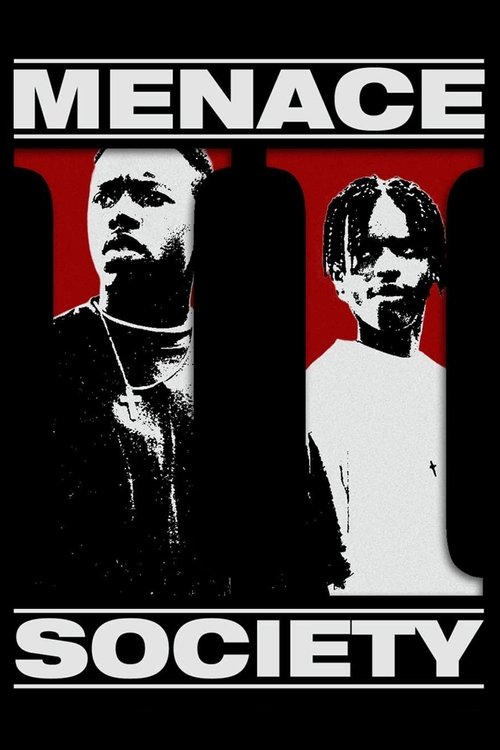
Caine Lawson dreams of leaving the South Central streets of Los Angeles behind, but the pull of his environment proves stronger than his resolve. Released in 1993, Menace II Society captures this struggle with unflinching intensity. Director Albert Hughes, working alongside his brother Allen, crafted a gritty drama that feels less like a movie and more like a documentary from the trenches. The film stars Tyrin Turner as Caine, supported by a cast including Larenz Tate as the volatile O-Dog, Jada Pinkett Smith as his girlfriend Ronnie, and Samuel L. Jackson in a memorable role as Caine's father.
Produced on a modest budget of $3.5 million, the project became a sleeper hit, grossing nearly $28 million at the box office. Its raw depiction of gang violence and drug culture resonated deeply with audiences, earning it a solid 7.5 rating from viewers who appreciated its honesty over Hollywood gloss. This independent spirit set the stage for a wave of urban cinema that followed, proving that stories rooted in specific communities could achieve universal recognition without softening their edges.
Availability and pricing can change. Confirm on the provider's site before purchasing.
The narrative opens with a chilling prologue set in the present day. An older version of Caine sits across from a social worker, recounting his life as a cautionary tale before fading away. The story then flashes back to 1991, introducing twenty-year-old Caine "Kaydee" Lawson living in the Watts neighborhood of Los Angeles. He resides with his mother Karen and younger brother Anthony, yet he spends his days hanging out on street corners or running errands for local dealers. His mother pleads with him to focus on school and avoid the criminal lifestyle, but Caine finds himself trapped between her hopes and the immediate demands of survival in his community.
Caine works as a lookout for his friend Pernell, a small-time drug dealer. While he tries to keep his head down, his involvement deepens when he begins dating Ronnie, a woman hoping for a stable future. Their relationship introduces a potential path to normalcy, but it is constantly threatened by the chaos surrounding them. A central figure in this turmoil is Kevin, known as O-Dog. This character embodies pure unpredictability and violence, viewing everyone around him as either tools or obstacles. His erratic behavior creates a constant undercurrent of danger that makes any attempt at peace feel fragile.
Tensions rise as Caine navigates a series of escalating confrontations. After a botched robbery attempt involving Pernell and a tense standoff with rival gang members, Caine is forced to make choices that compromise his moral compass. He finds himself caught between loyalty to his friends and the growing fear of the consequences of their actions. His father, Tat Lawson, appears intermittently to deliver harsh truths about the futility of trying to escape one's destiny in Watts. These interactions highlight the generational divide and the weight of expectation placed upon young men in the neighborhood.
The pressure mounts as Caine attempts to distance himself from the gang lifestyle, even planning a new life with Ronnie and their unborn child. However, the code of silence and the inevitability of violence create a suffocating atmosphere where trust is a luxury few can afford. Every step forward seems to trigger a reaction from the past, forcing Caine into a corner where he must defend his life against those he once called friends. The narrative builds toward a breaking point where the stakes become undeniably life-or-death, leaving the audience wondering if Caine can truly break free from the cycle or if he will be consumed by it.
Menace II Society (1993) Original Trailer [FHD]
Critical Consensus
A visceral, unflinching portrayal of life in the Watts ghetto, distinguished by its raw energy and refusal to sanitize the harsh realities of gang violence. Directed with a documentary-like intensity by the Hughes brothers, the film features powerhouse performances that ground its gritty narrative in emotional truth, making it a landmark of 1990s urban cinema.
“The Hughes brothers have made a movie that is so real, so raw, and so powerful that it feels less like a film and more like a documentary from the trenches of the ghetto.”
Roger Ebert
Chicago Sun-Times
“A tough, no-nonsense look at youthful black life in Watts... The Hughes brothers have created a film that is both a tragedy and a warning.”
Janet Maslin
The New York Times
“This is a movie that hits you like a punch in the gut. It's angry, aggressive, and absolutely necessary.”
Peter Travers
Rolling Stone
Tyrin Turner
Caine 'Kaydee' Lawson
Larenz Tate
Kevin 'O-Dog'
Jada Pinkett Smith
Ronnie
Samuel L. Jackson
Tat Lawson
Glenn Plummer
Pernell
Khandi Alexander
Karen Lawson
Reginald Ballard
Clyde
Brandon Hammond
Five Year Old Caine
Jullian Roy Doster
Anthony
Samuel Monroe Jr.
Little Boogie
Directors
Allen Hughes, Albert Hughes
Writers
Tyger Williams, Allen Hughes, Albert Hughes
Composer
Quincy Jones III
Cinematographer
Lisa Rinzler
Producer
Darin Scott
Chicago Film Critics Association Awards (1993)
Best Actor: Nominated
Independent Spirit Awards (1994)
Best First Feature: Nominated
NAACP Image Awards (1994)
Outstanding Motion Picture: Nominated
Join the community
fans discussing