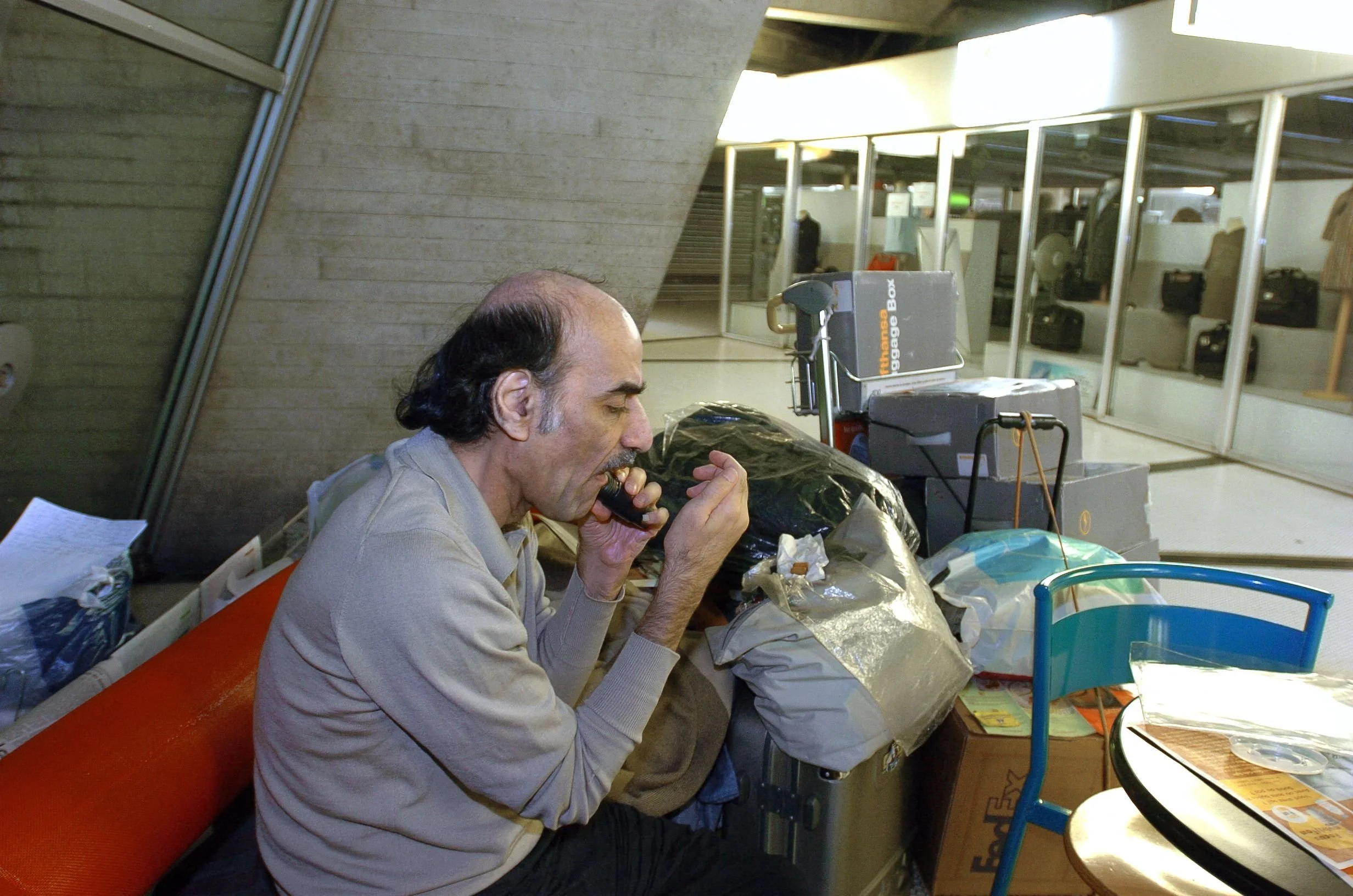
Mehran Karimi Nasseri
 Iran
Also known as: Sir Alfred Mehrane, Terminal Man
Birthday
1945
Birth Sign
Capricorn
Birthplace
Masjed Soleiman, Iran
Age
Died at 77
About
Mehran Karimi Nasseri was an Iranian memoirist and refugee whose life became a global symbol of statelessness and bureaucratic limbo. Born around 1945 in Masjed Soleiman, he spent nearly two decades living in the departure lounge of Terminal 1 at Paris Charles de Gaulle Airport. His story, defined by a lack of valid travel documents and a refusal to leave despite offers of legal residency, inspired Steven Spielberg's 2004 film The Terminal. Nasseri died on November 12, 2022, inside the airport that had been his home for 18 years, passing away from natural causes while waiting for his paperwork to be resolved. His existence was marked by a quiet dignity amidst bureaucratic chaos. While the world saw him as a curiosity or a human landmark, he viewed his time in the terminal as a necessary waiting period for his papers to be resolved. The man who slept on red plastic benches and read newspapers for warmth left behind a legacy that continues to spark discussions about refugees and administrative failure. He is remembered today not merely as a subject of a Hollywood movie, but as a real-life figure who endured eighteen years of transit without ever finding a permanent home.
Early Life & Background
Mehran Karimi Nasseri arrived in the modern era with a background steeped in political turmoil. Born in Masjed Soleiman, a city in southwestern Iran known for its oil industry, he grew up during a period of significant upheaval that would eventually lead to the 1979 Islamic Revolution. Before his life took its extraordinary turn, he was a political activist who fled Iran in 1979 seeking asylum. His journey first led him to Belgium, where he initially hoped to find safety and stability. His early life was marked by displacement; he left his homeland due to political persecution but found himself trapped in a cycle of administrative failure rather than finding a new home. He reportedly worked various jobs in Europe before his situation at the airport began, though specific details of his employment history prior to 1988 are sparse in public records. His path to the airport began in 1988 when he traveled to Paris Charles de Gaulle Airport intending to fly to London. Upon arrival, French authorities detained him because they deemed his passport invalid after it had been stolen and fraudulently replaced. This administrative error trapped him in the transit zone. For years, he largely educated himself through reading, particularly newspapers, which became a daily staple and even served as insulation against the cold during winter months.
Career Growth
Nasseri did not pursue a traditional career in entertainment or business. Instead, his life itself became his profession as a subject of human interest and a symbol of the refugee crisis. In 1988, his arrival at the airport marked the beginning of an 18-year stay that would define his public identity. By 1995, he was granted Belgian residency but chose to remain in the airport, feeling that leaving would mean losing the only place where his story was being told. He received French residency in 1999 but again refused to leave the terminal. The release of Steven Spielberg's film The Terminal in 2004 brought global attention to his plight. That same year, he published his memoir, The Terminal Man: My Story of Being Stuck in an Airport for 18 Years, detailing his unique circumstances. In 2006, declining health forced him to leave the airport for hospitalization and subsequent stays in Parisian shelters. He briefly returned to Charles de Gaulle in September 2022 before passing away in November of that year. Despite the film grossing over $219 million, Nasseri himself never achieved commercial success from the production, yet his life story remains one of the most famous real-world inspirations for cinema. His refusal to leave the terminal despite legal offers cemented his status as a unique cultural icon of endurance.
Career Timeline
Public Image & Style
Nasseri was portrayed by the media as a tragic figure, a victim of circumstance rather than a celebrity. His image was one of resilience and quiet dignity amidst chaos. He was often depicted as a "human landmark" at the airport, a familiar face to regulars and journalists. The media tone was generally sympathetic, focusing on the absurdity of his situation and the failure of the systems meant to protect him. His appearance, characterized by worn clothing, unkempt hair, and a frail demeanor, reinforced the narrative of a man trapped by forces beyond his control. He was known for always being surrounded by luggage trolleys. The media tone was generally sympathetic, focusing on the absurdity of his situation and the failure of the systems meant to protect him. He never appeared on the cover of major magazines like TIME, Vogue, or Rolling Stone during his lifetime. His image was primarily captured in news photography and documentary footage rather than editorial covers. Posthumous features have appeared in various international publications, but no iconic magazine cover is attributed to him.
Fame & Fandom (iFAMOUS Rankings)
Mehran Karimi Nasseri never courted a crowd. He did not sign autographs, perform for an audience, or cultivate a following through art or sport. The public attention he received was sporadic media coverage over decades, culminating in global recognition only after his death, yet this never translated into an active community of adherents. His story remains one of human interest and journalistic documentation rather than celebrity worship; no organized fanbase ever formed around him, and there is no formal name for the few who keep his memory alive. The enduring legend surrounding Nasseri centers on his 18-year residence in Terminal 1 of Charles de Gaulle Airport in Paris. This verified historical fact, born from bureaucratic error and statelessness, became the central narrative hook that keeps his story alive in popular culture today. While the film The Terminal dramatized his plight, Nasseri himself remained unaware of the production until its release. His quiet existence in the departure lounge, surrounded by luggage trolleys and red plastic benches, transformed a man into a symbol of bureaucratic limbo. Today, his legacy is retold primarily as a cautionary tale about the plight of refugees. In August 2026, the iFANN Global Fame Rankings placed him at the 26th most famous person from Iran, a position reflecting his enduring legacy among fans of true crime, travel anomalies, and cinema history. These individuals are often referred to as "Terminal Man enthusiasts" in online forums, but there is no formal fandom name or organized campaigns.
Interesting Facts and Legends
Mehran Karimi Nasseri adopted the nickname "The Terminal Man" himself, embracing the identity that came with his confinement. He was known for his distinctive appearance, often seen with unkempt hair and worn-out clothes, surrounded by luggage trolleys. Despite being granted legal residency in both Belgium and France, he refused to leave the airport, stating he felt safer there than in a conventional home. He never met Tom Hanks or Steven Spielberg, learning of the film's production only after it was released. His final return to the airport in September 2022 highlighted his deep psychological attachment to the space where he had lived for so long. He spent hours every day reading newspapers, which he used as bedding and insulation against the cold. Specific height measurements are not widely recorded in public databases, but descriptions from those who knew him often refer to him as an older man with a frail appearance. He did not use social media during his lifetime, though his name is now associated with fan pages on platforms like Facebook, Reddit, and Twitter managed by third parties. Reports indicate that Steven Spielberg paid $250,000 for the rights to his life story, though this sum likely went toward his care or settlement rather than personal wealth accumulation. He is often cited in popular culture as holding a record for the longest time lived in an airport terminal, though official Guinness verification varies by source.
Notable Quotes
“I am not a criminal. I am a refugee.”
“I prefer to stay here. At least I know what to expect.”
Family & Personal Life
Mehran Karimi Nasseri lived a solitary life with no public record of romantic relationships, marriages, or children. There were no documented family members who appeared in the public sphere regarding his personal life. Consequently, he remained single and childless throughout his life. No dating histories, engagements, or divorces exist to report. By the time of his death, he was remembered as a widower of the state, having never married, and his legacy stands alone without a spouse or offspring. Following his death, there was no public information regarding the date or location of his burial or cremation, nor was a public funeral held. His estate value is not publicly disclosed, as he possessed no significant assets; his wealth was estimated to be negligible, consisting perhaps of small savings accumulated over decades of sporadic work or donations. The handling of his remains remained private due to his long-standing stateless status, and no heirs came forward to claim his belongings or manage his affairs.
Notable Connections
Paul Beckett, Steven Spielberg, Tom Hanks
Relationships & Dating History
Mehran Karimi Nasseri lived a solitary life with no public record of romantic relationships, marriages, or children. His entire adult life after fleeing Iran was defined by his struggle with bureaucracy and his residence in the airport. There were no documented family members who appeared in the public sphere regarding his personal life. Consequently, he remained single and childless throughout his life. There were no dating histories, engagements, or divorces to report. By 2026, he is remembered as a widower of the state, having never married, and his legacy stands alone without a spouse or offspring. His personal life was entirely consumed by his fight for documentation and survival within the airport transit zone. He had no known siblings, parents, or extended family who interacted with the public regarding his situation. The absence of any romantic partner or children underscores the isolation of his experience, making his eventual death in the terminal a poignant end to a life lived entirely in solitude.
Death & Aftermath
Died
2022-11-12 (aged 77)
Death Place
Roissy-en-France, France
Cause of Death
Heart attack
Mehran Karimi Nasseri, the Iranian refugee known as Sir Alfred for his eighteen-year residence in Terminal 1 of Charles de Gaulle Airport from 1988 to 2006, died on November 12, 2022. According to a Paris airport official, he passed away around midday at Terminal 2F of the same airport due to a heart attack. The man who had called the airport home for decades was approximately seventy-seven years old based on birth records indicating he was born in 1945. While the BBC reported his death generally without specifying the exact location or cause beyond the context of his long-term residence, the CBC provided the specific detail regarding the terminal and the medical cause.
Public reaction to his passing included tributes from peers and media outlets. The Guardian published an obituary titled 'The Terminal Man' lived in a Paris airport for 18 years, featuring personal reflections from those who knew him, describing their shared time on the metal benches of the terminal. Details concerning the funeral or memorial service were not disclosed in the available information. It is explicitly stated that such details were never made public in the provided sources. Consequently, there is no record of when or where the burial or cremation took place, whether the service was public or private, or if there were notable attendees or performances.
In terms of posthumous developments, the search results do not list new film releases, book publications, awards, hall-of-fame inductions, or dedications created specifically after November 12, 2022.
Net Worth (Estate Value)
$0
iFANN Editorial Team estimate
As of 2026, Mehran Karimi Nasseri's net worth is estimated to be minimal, reflecting his status as a stateless refugee with no significant assets. Research by the iFANN Editorial Team puts his fortune at between $0 and $10,000, acknowledging that he lived in poverty for decades. His primary sources of income were sporadic donations from visitors and minor income from selling books or autographs after the release of The Terminal in 2004. While reports indicate Steven Spielberg paid $250,000 for the rights to his life story, this sum likely went toward his care or was part of a settlement rather than personal wealth accumulation. As he died without a will or significant property, his estate is considered non-existent or managed by French authorities for administrative closure. The financial trajectory of his life remained consistently low, with no major investments or real estate holdings to speak of. Financial reports on the movie rights suggest the payment was made to his estate or caretakers, but this does not equate to personal wealth accumulation during his life. His estate value is not publicly disclosed, as he possessed no significant assets; his wealth was estimated to be negligible, consisting perhaps of small savings accumulated over decades of sporadic work or donations.
Awards & Accolades
View 2 records, honours and achievementsKnown For
The Terminal
2004 · Inspiration
Keywords
Sources
Quick Facts
- Profession
- memoirist, refugee
- Born
- 1945
- Birthplace
- Masjed Soleiman
- Died
- 2022-11-12
- Death Place
- Paris-Charles de Gaulle Airport
- Gender
- Male
Personal Details
- Full Name
- Mehran Karimi Nasseri
- Children
- Education
- Self-educated through reading newspapers
Frequently Asked Questions
How long did Mehran Karimi Nasseri live in the airport?
Did Mehran Karimi Nasseri meet Tom Hanks?
Why did Mehran Karimi Nasseri stay in the airport?
How did Mehran Karimi Nasseri die?
Was Mehran Karimi Nasseri married or did he have children?
Similar People

Join the community
fans discussing