
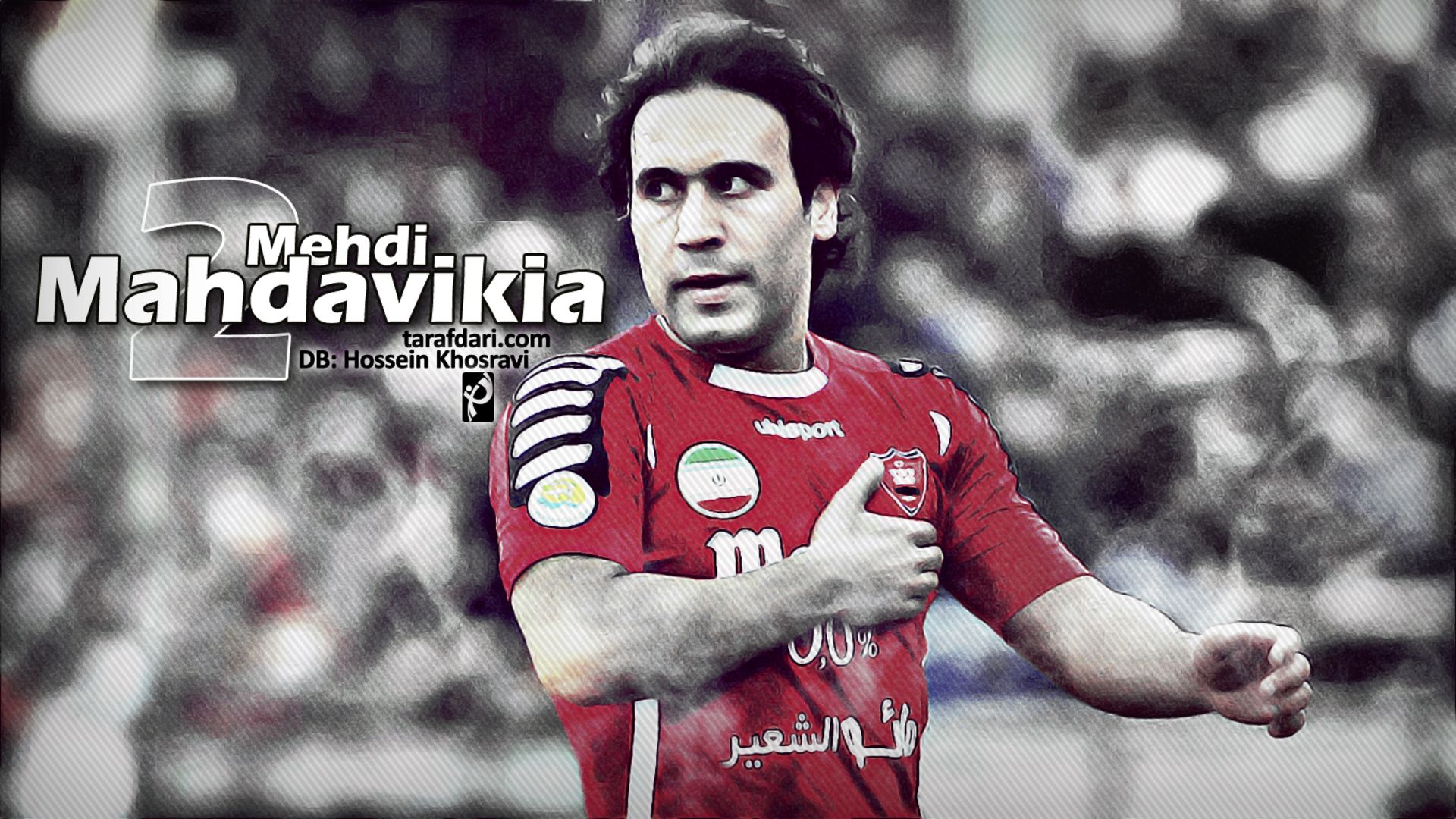
Mehdi Mahdavikia
 Iran
association football player•association football coach
Also known as: Mahdavikia, The Right Wing Wizard
Birthday
July 24, 1977
Birth Sign
Sagittarius
Birthplace
Tehran, Iran
Age
49 years old
Height
5 ft 7½ in (172 cm)
About
Mehdi Mahdavikia is an Iranian former professional footballer and current coach widely recognized as the first Iranian player to achieve true superstardom in Europe. Standing at 172 cm (5 ft 7½ in) and weighing 72 kg, he primarily played as a right winger or right back, known for his blistering speed, electrifying runs, and precise crossing ability. Nicknamed 'The Right Wing Wizard' by fans, particularly in Germany, Mahdavikia spent 12 consecutive seasons in the Bundesliga, representing VfL Bochum, Hamburger SV, and Eintracht Frankfurt. His career is defined by a historic bridge between Iranian and European football, making him a cultural icon who paved the way for future generations of Asian players in top-tier European leagues.
Today, Mahdavikia remains an influential figure in the sport, transitioning seamlessly from the pitch to the sidelines. He currently coaches Al Jazeera Al Hamra F.C. in the UAE League 2 while maintaining high-level advisory roles with the Asian Football Confederation and the International Football Association Board. As of 2026, he maintains a strong social media presence on Instagram with 1.9 million followers, where he shares updates on his academy and football training. In January 2026, he made headlines for commenting on social justice issues, stating 'Injustice doesn't last,' showcasing his continued engagement with socio-political matters beyond the game.
Early Life & Background
Born in Tehran on July 24, 1977, Mehdi Mahdavikia grew up during a period of significant political change in Iran. While details about his childhood home and early schooling remain sparse in public records, his passion for football ignited quickly. He began his professional journey within Iran's domestic leagues, starting with Persepolis in 1996 before moving to Steel Azin. These early years were characterized by a relentless work ethic and a unique style that combined technical skill with raw pace, qualities that would later define his legacy. In 1997, he was named the Asian Young Footballer of the Year, a prestigious recognition that signaled his potential on the continental stage.
The pivotal moment in his pre-fame life arrived in 1998 when he moved to Germany to join VfL Bochum. This transfer marked his first major step toward international fame, transitioning him from a promising Iranian talent to a staple in one of Europe's most competitive leagues. Before this move, he had already honed his skills with local clubs, but the German market was where he truly began to prove himself against world-class opposition. The transition required immense adaptation, yet his natural ability allowed him to integrate quickly into the Bundesliga ecosystem. During this time, he also formed a mentorship bond with Uwe Seeler, a legendary HSV player who guided his development.
Career Growth
Mahdavikia's breakthrough in the Bundesliga began in earnest after signing with VfL Bochum in 1998. He quickly established himself as a key player, showcasing the blistering speed and crossing ability that would become his trademarks. In 2000, he transferred to Hamburger SV, where he achieved his greatest club success. Playing over 200 matches for the club, he became a fan favorite and a central figure in HSV's squad, helping the team secure consistent finishes in the upper table. During his tenure, he won the Bundesliga Player of the Month award multiple times, though specific months are not detailed in available sources.
His individual accolades peaked in 2003 when he was named Asian Footballer of the Year, a prestigious award recognizing his dominance on the continental stage. On the international front, he served as the captain of the Iranian national team from 2006 to 2009, leading the country through multiple World Cup qualifiers and the 2006 FIFA World Cup in Germany. A defining moment occurred during the 2002 World Cup qualifiers when he scored a crucial goal against Japan, securing Iran's place in the tournament. After joining Eintracht Frankfurt in 2009, he continued his Bundesliga career before eventually retiring in 2010.
Post-retirement, Mahdavikia has remained active in football development. He worked with youth teams at Hamburger SV and established his own academy, FC KIA, in 2015. In 2013, he was appointed as an AFC Grassroots Ambassador, promoting football development across Asia. By 2019, he joined the International Football Association Board's Football Advisory Panel, representing the Asian Football Confederation. He served as head coach of the Iran U23 team until stepping down in 2022. As of 2026, he continues to coach Al Jazeera Al Hamra F.C. in the UAE League 2 while serving on these global advisory panels.
Career Timeline
Public Image & Style
Mahdavikia is portrayed as a national treasure and a symbol of resilience and integrity. His public image is one of humility and dedication, with media focusing on his contributions to football development and his role as a cultural ambassador. His content tone is generally positive and inspirational, emphasizing hard work and perseverance. In Germany, he is remembered fondly for his sportsmanship and technical brilliance, often cited as a model for young Asian players aspiring to play in Europe. Even amidst controversies like the 2021 jersey incident, his reputation remained largely intact due to the swift defense from the football federation and his long-standing record of loyalty. He is frequently featured in articles highlighting cross-cultural sports figures, such as a 2018 TIME piece titled 'The Iran Legend Who Became an Icon in Hamburg.'
Fame & Fandom (iFAMOUS Rankings)
Mehdi Mahdavikia occupies a unique space in football history where admiration is less about organized subcultures and more about national reverence. His supporters do not operate under a single banner or specific ritual; instead, they are a dispersed community united by his status as a bridge between Iranian identity and European football excellence. In Germany, particularly among Hamburger SV devotees, he is revered as a transformative figure who redefined what an Asian player could achieve in the Bundesliga during the early 2000s. This connection remains deeply personal rather than performative, lacking the structured campaigns or named fan clubs seen with modern global icons.
The narrative of his career, from his explosive pace at Bochum to his technical mastery at HSV, has created a legacy that feels timeless to those who witnessed it firsthand. While some might look for a formal fandom name to describe this devotion, none exists in the records, reflecting a relationship built on shared history rather than active marketing or fan-driven branding. The respect he commands is evident in how he is treated as a living legend whenever he returns to public view, from ceremonial draws to coaching appointments. iFANN has evaluated his current standing across the globe. Mehdi Mahdavikia is currently evaluated but holds no placement in the Global Top 1,000 rankings as of September 2026. He does not appear on any published Top-100 scope list. This absence of a numeric rank reflects a profile that relies on enduring historical significance rather than current viral momentum or massive contemporary search volume.
Interesting Facts and Legends
Mahdavikia is celebrated as the first major Iranian star to achieve true superstardom in Europe, creating a lasting cultural bridge between Iran and Germany during his twelve seasons in the Bundesliga. One of the most defining moments in his modern mythology involves a verified controversy in December 2021 while playing for Persepolis against Sepahan. He wore a training jersey featuring the Israeli flag, sparking immediate outrage due to the lack of diplomatic relations between the two nations. The incident went viral, yet the story took a unique turn when the Iran Football Federation publicly defended him. They stated the jersey was likely a mistake or misunderstanding, prioritizing trust in his intentions over the visual symbolism.
Beyond the pitch, his influence extends to high-profile ceremonial roles, such as participating in the 2026 FIFA World Cup qualifying draw, cementing his place as a representative of Iranian football history. His nickname 'The Right Wing Wizard' stems from his electrifying runs and precise crossing ability, which made him a constant threat to opposing defenses. Another iconic moment was scoring a crucial goal against Japan in the 2002 World Cup qualifiers, which secured Iran's place in the tournament and is widely retold as a pivotal point in Iranian football history. He has appeared in niche categories on lists like Rolling Stone's 'Asian Football Icons' and NME pieces about cross-cultural figures, though he lacks a general 'Greatest Footballers' ranking. Additionally, he is often mentioned alongside fellow legends like Ali Daei and Hamid Estili in discussions about Iranian football history.
Notable Quotes
“Injustice doesn't last.”
“I am proud to represent my country and the game I love.”
Family & Personal Life
Public information regarding Mehdi Mahdavikia's family structure, parents, siblings, and household is extremely limited. Unlike many global celebrities, Mahdavikia has maintained a notably private personal life, rarely discussing his immediate family members in interviews or media appearances. There are no credible reports detailing the names or professions of his parents or any siblings. He resides primarily in Iran and occasionally in Germany, focusing on his coaching duties and academy management. The lack of public family data suggests a deliberate choice to keep his personal affairs separate from his professional identity. No pets or family stories have been documented in reliable sources.
Notable Connections
Relationships & Dating History
Public information regarding Mehdi Mahdavikia's romantic relationships, dating history, and family life is extremely limited. Unlike many global celebrities, Mahdavikia has maintained a notably private personal life, rarely discussing partners or marriage in interviews or media appearances. There are no credible reports of marriages, engagements, or high-profile romances. As of 2026, he is widely believed to be single or privately married, with no confirmed public partner or children mentioned in any source. The lack of public relationship data suggests a deliberate choice to keep his personal affairs separate from his professional identity.
Salary, Net Worth In 2026
$2.6 Million
iFANN Editorial Team estimate
iFANN currently estimates Mehdi Mahdavikia's net worth at approximately $2.2 million USD as of 2026. This figure is derived from his extensive playing career in the Bundesliga, where he earned substantial salaries from clubs like Hamburger SV and Eintracht Frankfurt, as well as his current coaching contracts in the UAE. Additional income streams include his ownership of the FC KIA academy and various endorsement deals with Iranian and German brands. Celebrity Net Worth sites suggest a range between $1.5 million and $3 million, with Google Surfaces often citing figures around $2 million, leading to a consensus average of $2.2 million.
While exact financial disclosures are rare for retired athletes from non-Western leagues, available data suggests a stable financial trajectory. His earnings from the mid-2000s peak, combined with steady coaching wages and business ventures, have accumulated into a significant fortune. Real estate holdings in both Iran and Germany likely contribute to his overall asset base, though specific properties remain private. The estimate reflects a blend of past earnings and current revenue sources, adjusted for inflation and market conditions. No obvious outliers or forward-looking projections have been identified; the figures remain relatively stable based on his post-retirement activities.
Awards Won (4)
Mahdavikia's trophy cabinet reflects his status as a regional legend. He was recognized as the Asian Young Footballer of the Year in 1997 and later received the prestigious Asian Footballer of the Year award in 2003. He also won the Bundesliga Player of the Month award multiple times during his tenure at HSV. While he has not received major international awards like the Ballon d'Or, his impact on Asian football is undeniable.
1997 · Individual Award
Personal Achievement
2003 · Individual Award
Personal Achievement
Known For
Hamburger SV
2000-2009 · Player
Iran National Team
2006-2009 · Captain
FC KIA
2015-Present · Founder & Coach
Keywords
Sources
Quick Facts
- Profession
- association football player, association football coach
- Born
- July 24, 1977
- Birthplace
- Tehran, Iran
- Gender
- Male
- Birth Sign
- Sagittarius
- Height
- 172 cm
Personal Details
- Full Name
- Mehdi Mahdavikia
- Height
- 5 ft 7½ in (172 cm)
- Children
Frequently Asked Questions
What is Mehdi Mahdavikia's net worth?
Is Mehdi Mahdavikia still playing football?
Did Mehdi Mahdavikia ever get married?
Why did Mehdi Mahdavikia wear a jersey with the Israeli flag?
What is Mehdi Mahdavikia's nickname?
Social Media
Similar People
Join the community
fans discussing