 India
India“The longest-running show in TV history, 'Meet the Press' remains the gold standard for Sunday morning newsmaker interviews, even as the political landscape has grown increasingly fractured.”
Brian Steinberg
Variety
On November 6, 1947, Martha Rountree and Lawrence E. Spivak launched a radio program that would become the longest-running show in American television history. Meet the Press moved to NBC television soon after, pioneering the Sunday morning newsmaker interview format. Each week, a moderator sits down with presidents, cabinet members, senators, and foreign leaders to discuss the most pressing issues of the day. The program has aired continuously for over 77 years, producing more than 3,200 episodes across 79 seasons.
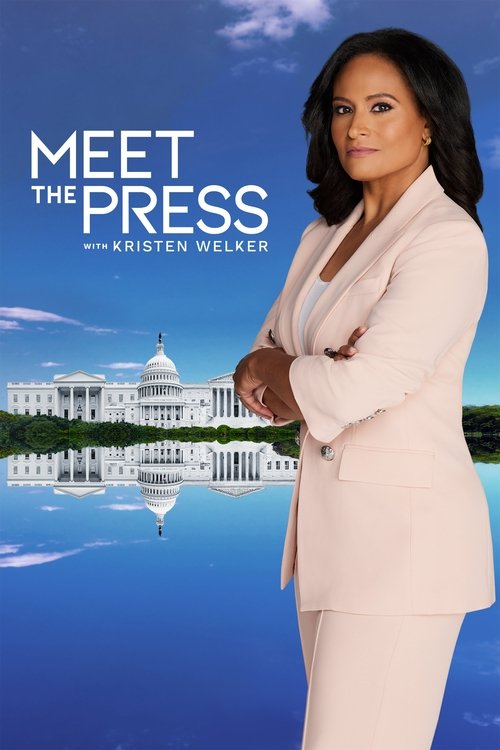
The show has had 11 moderators, each bringing a distinct style. Tim Russert, who hosted from 1991 to 2008, turned the program into a must-watch political event with his whiteboard diagrams and relentless questioning. Kristen Welker became the second woman and first person of color to hold the anchor chair in 2023. The program moved its production to a studio on Capitol Hill in January 2021, becoming the first network Sunday show to broadcast from the legislative branch.
John Williams composed the iconic theme music, The Pulse of Events, which has accompanied the program for decades. The show has won multiple Peabody and Emmy Awards, and every U.S. president since Harry Truman has appeared on it. In recent years, the franchise expanded into a daily podcast, Meet the Press NOW, offering additional analysis throughout the week.
Stream
Free with ads
Availability and pricing can change. Confirm on the provider's site before purchasing.
The central premise of Meet the Press is a weekly confrontation between journalistic inquiry and political power. Each episode typically features a single extended interview with a newsmaker, followed by a roundtable discussion with journalists and analysts. The moderator presses guests on policy decisions, legislative agendas, and national security matters, often challenging evasive answers with follow-up questions and documentary evidence. The show operates in the high-stakes arena of American politics, where every word spoken can shape the news cycle for the coming week.
The program's structure has evolved significantly since its early days, when it was essentially a panel discussion with multiple journalists questioning a single guest. Under Tim Russert, the show expanded to a full hour in 1992, and the moderator's role became more assertive. Russert's famous whiteboard segments during the 2000 and 2004 presidential elections allowed him to illustrate complex political strategies in real time, a technique that influenced political coverage across all networks. The modern format, established in the 2010s, places greater emphasis on a single, lengthy interview followed by a diverse roundtable that includes voices from across the political spectrum.
The world of Meet the Press is defined by its setting: a studio that has moved from NBC's Washington bureau to a purpose-built facility on Capitol Hill. This relocation in January 2021 placed the show at the physical center of legislative power, allowing moderators to book guests who are literally steps away from the floor of the Senate or House. The show's weekly rhythm follows the American political calendar. During presidential election years, the program becomes a central battleground for candidates. In non-election years, the focus shifts to Supreme Court nominations, international crises, and emerging policy debates. Each season typically runs from September through August, with approximately 52 episodes per season.
The main characters are the moderators themselves, each of whom has left a distinct mark on the program. Martha Rountree, the original host, established the show's confrontational tone. Lawrence E. Spivak, who took over in 1953, transformed it into a serious journalistic enterprise. Bill Monroe brought a folksy style during the 1970s. Marvin Kalb, a former State Department correspondent, emphasized foreign policy. Chris Wallace served a brief stint before moving to Fox News. Garrick Utley steered the show through the end of the Cold War. Tim Russert elevated the program to cultural prominence. Tom Brokaw served as an interim host after Russert's death. David Gregory maintained the show's relevance during the Obama years. Chuck Todd, who hosted from 2014 to 2023, emphasized data-driven analysis. Kristen Welker, the current moderator, has brought a sharp, fact-based approach to interviews.
The central conflict that has defined the show across its history is the ongoing tension between the moderator's pursuit of accountability and the guests' efforts to control their message. This dynamic has produced memorable confrontations: Tim Russert pressing Dick Cheney on the Iraq War, David Gregory challenging Eric Holder on drone strikes, and Kristen Welker's tense exchange with Donald Trump in June 2026, which ended with the president walking off the set. The show's ability to generate unscripted, newsworthy moments has kept it relevant even as the media landscape has fragmented.
Critical Consensus
As a live news program, Meet the Press receives more political analysis than traditional critical reviews. Critics generally praise its status as a vital democratic institution and its role in holding power accountable, though some question whether the Sunday morning format remains relevant in the 24-hour news cycle era.
“The longest-running show in TV history, 'Meet the Press' remains the gold standard for Sunday morning newsmaker interviews, even as the political landscape has grown increasingly fractured.”
Brian Steinberg
Variety
“Chuck Todd's departure from 'Meet the Press' marks the end of an era for a program that has served as a weekly barometer of Washington's political weather for generations.”
Michael M. Grynbaum
The New York Times
“Kristen Welker inherits a franchise that has weathered wars, scandals, and presidential impeachments, and now faces the challenge of maintaining relevance in an era of cable news and social media.”
David Bauder
Associated Press
“Tim Russert turned 'Meet the Press' into a must-watch event, transforming the Sunday morning interview from a polite chat into a high-stakes political interrogation.”
James Poniewozik
The New York Times
“When Trump walked off the set of 'Meet the Press' in June 2026, it was a reminder that the show's confrontational format still has the power to produce unscripted, newsworthy moments.”
Tom Jones
Poynter Institute
Kristen Welker
Self - Host
Chuck Todd
Self - Moderator
Director
Rob Melick
Composer
John Williams
Producer
David P. Gelles
Peabody Award (2000)
Excellence in Broadcasting: Won
News & Documentary Emmy Award (2008)
Outstanding Interview: Won
Edward R. Murrow Award (2015)
Overall Excellence: Won
Join the community
fans discussing