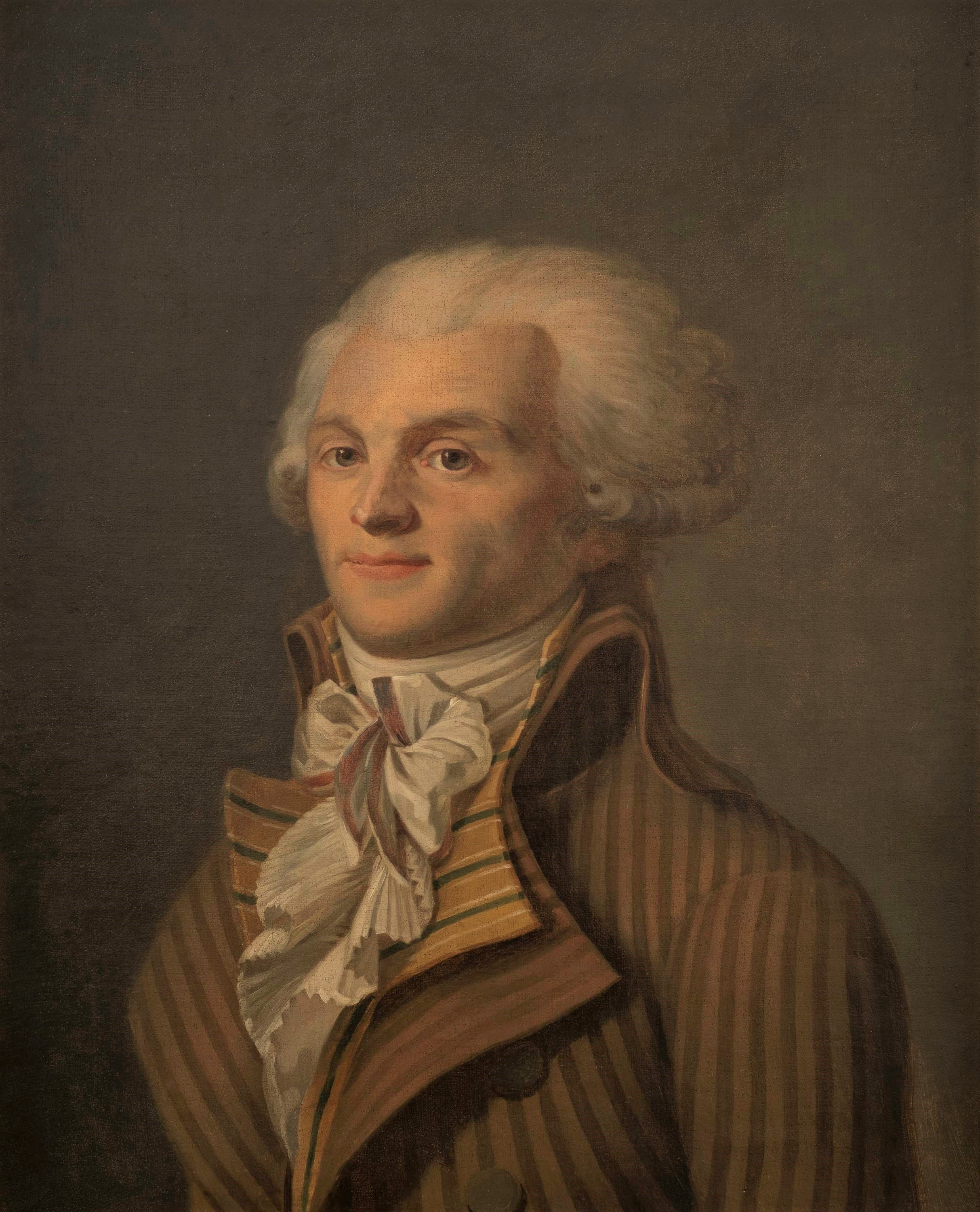
Maximilien Robespierre
 France
Birthday
+1758-05-06
Birth Sign
Taurus
Birthplace
Arras
Age
Died at 36
About
Born in Arras on May 6, 1758, Maximilien Robespierre began his public life as a lawyer and journalist with a strong commitment to Enlightenment ideals. He quickly rose to prominence as a fervent advocate for democratic reform during the tumultuous years leading up to and during the French Revolution. Robespierre championed causes like universal male suffrage, the right to petition, and the abolition of the slave trade, earning him the nickname 'The Incorruptible' for his perceived unwavering dedication to his principles.
Fame & Fandom
Maximilien Robespierre stands as the 47th most famous person from France, a position he has held steady across ranking cycles according to the iFANN Global Fame Rankings. This enduring prominence reflects a global attention that spans centuries of historical analysis and political discourse. While his fame is rooted in the past, the metrics tracking media coverage, search patterns, and cultural consumption worldwide confirm his status as an unyielding figure in French history.
The audience surrounding Robespierre does not operate as a modern fandom with rituals or campaigns. There is no formal name for his fanbase; instead, the group consists of historians, students, and political activists who engage with his legacy through academic study and ideological debate. Modern left-wing groups in France often invoke his democratic radicalism, viewing his values as essential to contemporary struggles against inequality. Online discussions frequently polarize around whether he was a tyrant or a misunderstood idealist, but these are historical arguments rather than fan interactions. His reputation remains that of the "Sea-Green Incorruptible," a legendary archetype of rigid virtue and uncompromising revolution. The narrative of his fall and execution on July 28, 1794, continues to serve as a defining moment in Western political history, remembered for its dramatic finality and the thunderous cheers of the crowd that marked the end of the Terror.
Interesting Facts and Legends
Robespierre earned the nickname "The Incorruptible" due to his refusal to accept bribes and his strict personal austerity. He championed universal male suffrage and the abolition of the slave trade long before these were mainstream political goals. The moniker "the Sea-Green Incorruptible" was coined by historian Thomas Carlyle to describe his pale complexion and moral rigidity. He presided over the Committee of Public Safety during the Reign of Terror, effectively becoming the chief executioner of the Republic despite previously opposing the death penalty. In July 1794, he inaugurated the Cult of the Supreme Being, a civic religion intended to replace Christianity with a state-sponsored deism based on virtue. A recurring theme in modern biographical analysis is how losing his mother at age six and being abandoned by his father shaped his later inflexibility. Recent discussions continue to debate whether he was a villain of tyranny or a cool guy fighting for equality, highlighting his complex legacy.
Death & Aftermath
Died
+1794-07-28 (aged 36)
Death Place
Paris, France
Cause of Death
Execution by guillotine following gunshot wound
Centuries later, Robespierre remains a central figure in historical literature and political discourse, appearing in works ranging from Thomas Carlyle's The French Revolution to modern documentaries, though he is rarely honored with awards or scholarships due to the controversial nature of his role. His immediate end was far less commemorative; following the Thermidorian Reaction on July 27, 1794, he fled to the Hôtel de Ville where National Guardsmen surrounded the building. During the struggle, he suffered a severe gunshot wound to the lower jaw that shattered his bone, leaving him unable to speak and requiring his head to be bandaged loosely to prevent suffocation. While some rumors persisted that this was a suicide attempt, contemporary accounts suggest the shot may have been fired by a fellow revolutionary or gendarme attempting to capture him, an account that was never formally adjudicated.
Taken to the Conciergerie prison overnight, he was transported to the Place de la Révolution the next morning for execution. At the guillotine, executioners reportedly had to hold his head steady with their hands or use a stick to position it under the blade because his jaw remained disfigured. He died shortly after noon on July 28, 1794, in Paris, France. As an outlaw and enemy of the state, his body was not returned to his family for burial but thrown into a common grave at the Madeleine Cemetery alongside thousands of others executed during the Terror. Immediate public reaction in Paris was one of relief and celebration among the populace who had grown weary of the Reign of Terror, while crowds gathered outside the Tuileries Palace cheering the fall of the Jacobins.
Awards & Accolades
Keywords
Quick Facts
- Profession
- politician, lawyer, journalist
- Born
- +1758-05-06
- Birthplace
- Arras
- Died
- +1794-07-28
- Death Place
- Paris
- Gender
- Male
- Birth Sign
- Taurus
Join the community
fans discussing