 Austria
About
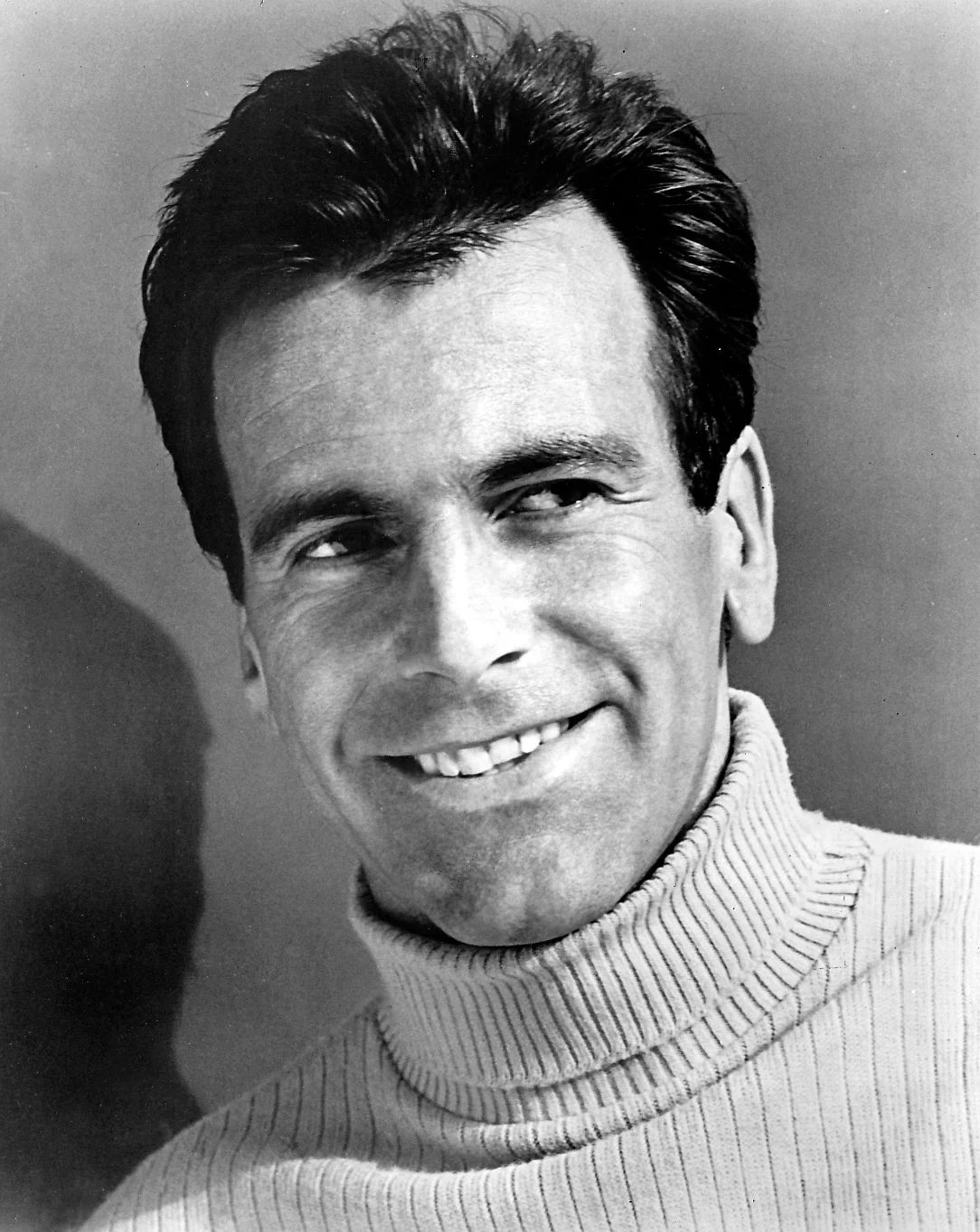
Maximilian Schell was an Austrian-born Swiss actor, director, writer, and producer, widely regarded as the most successful German-speaking actor in English-language films since Emil Jannings. He won the Academy Award for Best Actor for his role as defense attorney Hans Rolfe in Judgment at Nuremberg (1961), a landmark achievement for a non-native English speaker. He earned two more Oscar nominations for The Man in the Glass Booth (1975) and Julia (1977).
Over a career spanning more than six decades, Schell appeared in over 60 films, including Topkapi (1964), The Deadly Affair (1967), Counterpoint (1968), A Bridge Too Far (1977), and Deep Impact (1998). He also directed the 1970 film First Love, which earned him three German Film Award nominations. On television, he won a Golden Globe for playing Lenin in the 1992 HBO telepic Stalin and received two Primetime Emmy nominations. He was equally respected on stage, particularly for his Hamlet, and was also a gifted pianist and conductor who performed with Claudio Abbado and Leonard Bernstein.
Schell died on February 1, 2014, in Innsbruck, Austria, at age 83. His work remains in active circulation, with Judgment at Nuremberg streaming on Prime Video and A Bridge Too Far released in a 4K edition in 2026.
Early Life & Background
Maximilian Schell was born in Vienna, Austria, on December 8, 1930. His father, Hermann Ferdinand Schell, was a Swiss poet, novelist, and philosopher, and his mother, Margarethe Noé von Nordberg, was an Austrian actress. The family fled Austria in 1938 following the Nazi annexation, settling in Zurich, Switzerland, where Schell grew up in a culturally rich household.
He studied at the University of Zurich and later at the University of Basel, where he pursued philosophy and art history before committing fully to acting. His early career began on the Swiss stage in the late 1940s and early 1950s, with his first film appearances in German-language productions in the mid-1950s. These formative years on stage and in low-budget European films honed his craft and prepared him for his international breakthrough.
Career Growth
Schell's breakthrough came in 1961 with his Academy Award-winning performance as defense attorney Hans Rolfe in Judgment at Nuremberg, directed by Stanley Kramer. The film, starring Spencer Tracy, Judy Garland, and Burt Lancaster, remains one of the most acclaimed courtroom dramas about the Holocaust. Schell's win was historic for a non-native English speaker.
He followed with a string of notable films: Topkapi (1964), The Deadly Affair (1967), Counterpoint (1968), and Return from the Ashes (1965). He received his second Oscar nomination for The Man in the Glass Booth (1975) and his third for Julia (1977). In 1977, he appeared in Richard Attenborough's A Bridge Too Far, which saw a 4K + Blu-ray release in 2026. He also directed the 1970 film First Love, earning three German Film Award nominations.
On television, he delivered a Golden Globe-winning performance as Lenin in Stalin (1992) and received Emmy nominations for Miss Rose White (1992) and Stalin (1993). He appeared in the miniseries Peter the Great (1986) and Joan of Arc (1999), and in the blockbuster Deep Impact (1998). Throughout, he balanced film with stage work, notably his Hamlet.
Career Timeline
Public Image & Style
Schell was known for his intense, intellectual approach to acting, often choosing roles that explored moral complexity, guilt, and the aftermath of war. His signature style was characterized by a commanding stage presence, a deep resonant voice, and a preference for psychologically nuanced characters over romantic leads. Media portrayals consistently described him as a serious, cultured artist rather than a Hollywood celebrity.
His fandom is largely composed of classic film enthusiasts and European cinema aficionados who appreciate his contributions to postwar cinema. There is no official fandom name, but his work is frequently discussed in classic film forums and on platforms like Rotten Tomatoes and TMDB.
Fame & Fandom
Maximilian Schell commanded a legacy defined not by the frenetic energy of modern celebrity culture, but by the enduring weight of his artistic achievements. His audience consists primarily of classic film enthusiasts and scholars who appreciate his intellectual approach to roles exploring moral complexity and the aftermath of war. Unlike contemporary stars who cultivate organized fanbases with specific rituals or official names, Schell's supporters operate through critical appreciation and streaming engagement rather than grassroots campaigns. No formal fandom name exists in documentation, nor are there records of birthday billboards, charity drives, or viral moments that transformed his public image into a participatory movement. The narrative surrounding him remains anchored in his historic status as the most successful German-speaking actor in English-language films since Emil Jannings, with his Oscar win for Judgment at Nuremberg serving as the primary cultural touchstone. This victory, marking him as the first Austrian-born actor to receive the Best Actor award, is frequently cited in retrospectives as the defining moment of his career. While recent distribution updates keep his work visible on platforms like Prime Video, these are matters of availability rather than evidence of active fan lore. iFANN has evaluated this figure within its Global Fame Engine framework. Maximilian Schell is currently EVALUATED_UNRANKED in the published rankings, holding no placement in the Global Top 1,000 or any Top-100 scope list. This neutral standing reflects a profile where historical significance does not translate to current algorithmic volume in global fame metrics.
Interesting Facts and Legends
Maximilian Schell was a talented pianist and conductor who performed alongside legendary figures such as Claudio Abbado and Leonard Bernstein. He extended his versatility to directing operas in addition to his extensive filmography. His sister, Maria Schell, was also a major international film star, establishing the Schell siblings as a prominent acting dynasty. Despite his Academy Award win, Schell reportedly preferred stage work and frequently returned to theater between film projects. He spoke multiple languages fluently, including German, English, French, and Italian. A widely retold story anchors his cultural mythology: he became the first Austrian-born actor to win the Academy Award for Best Actor for his role in Judgment at Nuremberg. Joan Crawford presented him with the statuette at the 34th Academy Awards, an event frequently cited in biographies as a landmark achievement for non-native English speakers. This victory remains the central pillar of his legend, distinguishing him from peers through a specific historical distinction in a World War II-themed courtroom drama.
Notable Quotes
“The stage is the truest form of acting. In film, you are a fragment; on stage, you are whole.”
Family & Personal Life
Schell was born into a distinguished artistic family. His father, Hermann Ferdinand Schell, was a Swiss poet, novelist, and philosopher, and his mother, Margarethe Noé von Nordberg, was an Austrian actress. His sister Maria Schell became an internationally acclaimed actress, and his brother Carl Schell also pursued acting.
Schell was married twice. His first marriage was to Russian actress Natalya Andrejchenko in 1985; they had one daughter, Nastassja Schell, born in 1989, and divorced in 1992. His second marriage was to Iva Mihanović, a German-based Croatian opera singer, in 1999; they remained together until his death in 2014.
Notable Connections
Schell frequently collaborated with director Stanley Kramer, and his co-stars included Spencer Tracy, Judy Garland, Burt Lancaster, William Shatner, and Richard Attenborough. His sister Maria Schell was his most frequent family collaborator, and he worked with conductors Claudio Abbado and Leonard Bernstein in his musical career.
Relationships & Dating History
Schell's personal life included two marriages. He married Russian actress Natalya Andrejchenko in 1985; the couple had a daughter, Nastassja, born in 1989, before divorcing in 1992. In 1999, he married Iva Mihanović, a German-based Croatian opera singer, and they remained together until his death in 2014.
Before his marriages, Schell had a long-term relationship with actress Sorcha Cusack in the 1970s, though details remain sparse. He was also romantically linked to several co-stars over the years, including a notable relationship with Jacqueline Bisset in the 1970s, though these were not confirmed as long-term engagements by multiple credible sources.
- DatedSorcha Cusack1970 - 1979Long-term relationship in the 1970s, details largely private.
- MarriedNatalya Andrejchenko1985 - 1992Married in 1985, had daughter Nastassja (b. 1989), divorced in 1992.
- MarriedIva Mihanović1999 - 2014CurrentMarried in 1999, remained together until his death.
Death & Aftermath
Died
February 1, 2014 (aged 83)
Death Place
Zurich, Switzerland
Cause of Death
Unknown
Maximilian Schell spent his final years residing in Zurich, Switzerland, maintaining a quiet life away from the public eye following a career that extended over seven decades. On February 1, 2014, he passed away at his home in that city at the age of 83. Reports from Variety and The Guardian attribute the announcement to family statements rather than an official autopsy report or hospital statement. Consequently, the precise medical cause remains unconfirmed in public records, though no dispute or controversy surrounding the circumstances of his final days was reported as he passed away peacefully.
Public reaction to his death was marked by immediate tributes from major institutions and peers. The Guardian published a detailed obituary highlighting his status as Austrian by birth, Swiss by circumstance, and international by reputation. NPR noted his charisma and heritage, emphasizing his role as the son of a Swiss playwright and Austrian stage actress. Variety highlighted his later television work, specifically his Emmy-nominated performances in Miss Rose White and Stalin. Details regarding the funeral or memorial service for Maximilian Schell were not made public in the available sources, consistent with the private nature of many high-profile European deaths.
Posthumously, Maximilian Schell's estate has been managed through the continued availability of his extensive filmography. His most celebrated work, Judgment at Nuremberg, which earned him the Academy Award for Best Actor, continues to be streamed and released in new formats, including a 4K release of other classics like A Bridge Too Far scheduled for future dates. The handling of his estate was not explicitly detailed beyond the general commercial re-release of his works.
Net Worth (Estate Value)
$10 Million
iFANN Editorial Team estimate
Following Maximilian Schell's passing in 2014, his financial standing is best assessed through the management of his estate. During his lifetime, his wealth accumulated from an extensive career spanning film, television, stage work, directing projects, and musical performances. The estate continues to generate revenue through licensing deals for his classic films, including the scheduled 2026 4K release of A Bridge Too Far and the continued streaming availability of Judgment at Nuremberg on Prime Video. Per iFANN's editorial analysis, the estate is estimated at around $10 million as of 2026, based on ongoing royalties and licensing income. Management is likely handled by his surviving family, potentially including his widow Iva Mihanović and daughter Nastassja Schell, though no official details regarding the administration have been publicly disclosed.
Awards Won (7)
Maximilian Schell won the Academy Award for Best Actor for Judgment at Nuremberg (1961) and a Golden Globe for Stalin (1992). He received two Primetime Emmy nominations and multiple German Film Award nominations for his directing work.
1962 · Best Actor
Judgment at Nuremberg
1961 · Best Actor
Judgment at Nuremberg
1993 · Best Supporting Actor – Series, Miniseries or Television Film
Stalin
1992 · Best Supporting Actor - Series, Miniseries or Television Film
Stalin
1961 · Best Actor - Motion Picture Drama
Judgment at Nuremberg
Known For
Judgment at Nuremberg
1961 · Hans Rolfe
The Man in the Glass Booth
1975 · Arthur Goldman
Julia
1977 · Johann
A Bridge Too Far
1977 · Lt. Gen. Wilhelm Bittrich
Deep Impact
1998 · Jason Lerner
Keywords
Sources
Quick Facts
- Profession
- Actor, director, writer, producer
- Born
- December 8, 1930
- Birthplace
- Vienna, Austria
- Died
- February 1, 2014
- Death Place
- Innsbruck, Austria
- Gender
- Male
- Spouse
- Natalya Andrejchenko, Iva Mihanović
- Birth Sign
- Sagittarius
- Height
- 5 ft 11 in (180 cm)
Personal Details
- Full Name
- Maximilian Schell
- Height
- 5 ft 11 in (180 cm)
- Spouse
- Iva Mihanović
- Children
- 1
- Education
- University of Zurich; University of Basel (philosophy, art history)
Filmography
100
Total
70
Film
30
TV
Frequently Asked Questions
Was Maximilian Schell married?
How many Oscars did Maximilian Schell win?
Did Maximilian Schell have children?
What was Maximilian Schell's net worth at death?
How tall was Maximilian Schell?
Similar People
Join the community
fans discussing