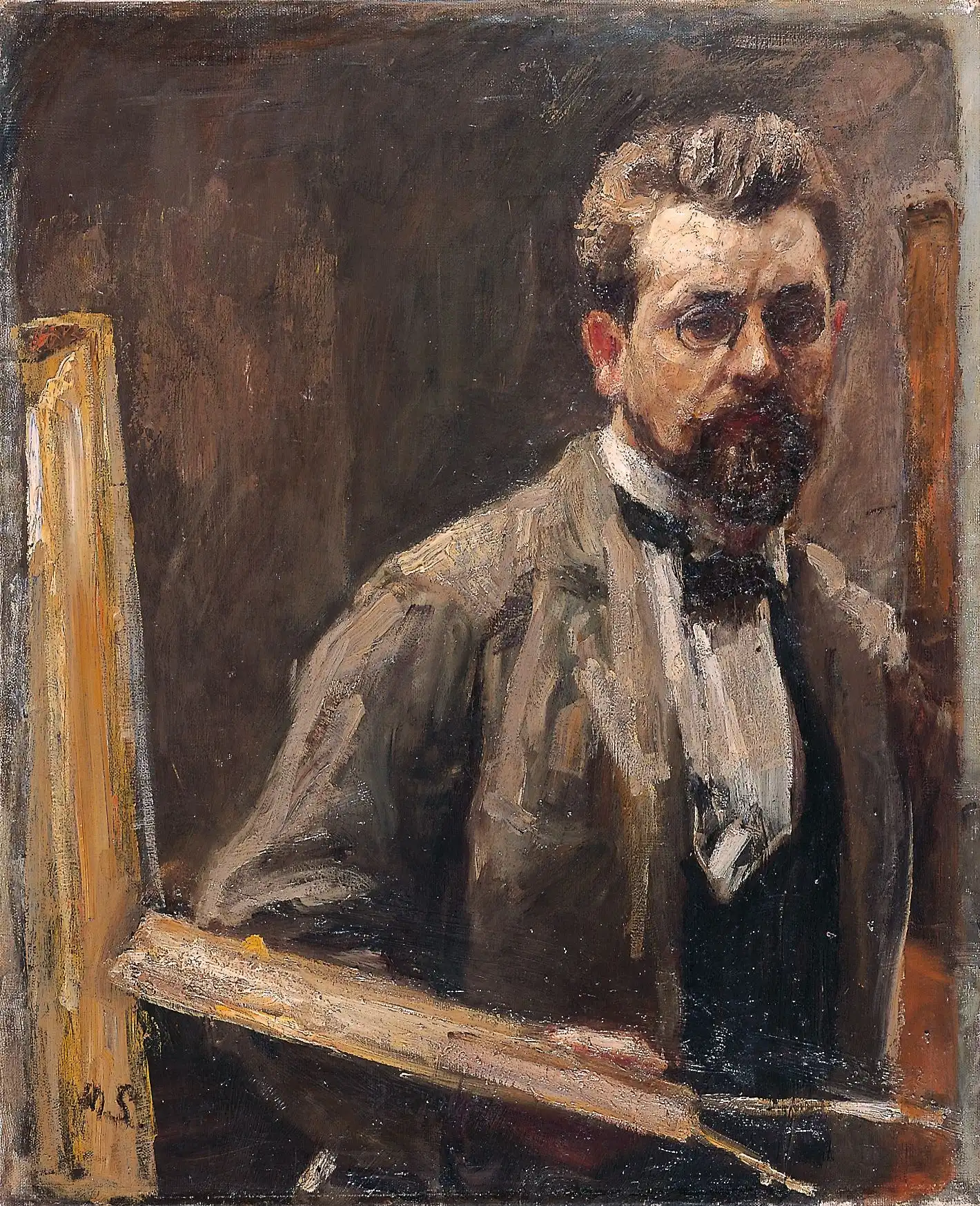
Max Slevogt
 Germany
Also known as: Maks Slefogt, Professor Max Slevogt, Slevogt, slevogt max, m. slevogt, prof. max slevogt, M. Slevogt
Birthday
October 8, 1868
Birth Sign
Libra
Birthplace
Landshut, Germany
Age
Died at 63
About
Max Slevogt was a German Impressionist painter and illustrator, widely regarded as one of the leading figures of the movement in his country. Alongside Max Liebermann and Lovis Corinth, he defined the German response to Impressionism, championing plein air painting to capture the fleeting effects of light and atmosphere. His work spans landscapes, portraits, and illustrations, characterized by bold brushwork, vibrant color, and a dynamic energy that set him apart from his contemporaries.
Slevogt's influence extended beyond his canvases. He was a dedicated teacher, sharing his approach with a new generation of artists. His legacy lives on in major museum collections, including the National Gallery of Art and the Museum of Modern Art, and through recent exhibitions that explore his travels and his place in the history of German art.
Early Life & Background
Born in Landshut, Bavaria, on October 8, 1868, Max Slevogt grew up in a cultured household that encouraged his early interest in art. His father, a lieutenant in the Bavarian army, died when Max was young, and his mother remarried, but the family's support for his artistic ambitions never wavered. He enrolled at the Munich Academy of Fine Arts in 1885, where he studied under Wilhelm von Diez, absorbing the academic tradition while also gravitating toward the looser, more expressive styles emerging from France.
In 1889, Slevogt traveled to Paris, a trip that proved transformative. He immersed himself in the works of the French Impressionists, particularly Manet and Degas, and studied at the Académie Julian. The experience pushed him away from the dark, academic painting he had learned in Munich and toward a brighter palette and freer brushwork. Returning to Germany, he settled in Munich, where he began exhibiting his work and building a reputation as a talented, if unconventional, young painter.
His early career included illustration work for magazines and books, which helped him gain recognition and financial stability. These commissions allowed him to experiment with different styles and subjects, from mythological scenes to everyday life, setting the stage for his later success as a full-time painter.
Career Growth
Slevogt's breakthrough came in the early 1900s when he emerged as a leading voice in German Impressionism. His 1904 portrait of Philipp Freudenberg, a wealthy patron, demonstrated his mature style: confident brushstrokes, a keen sense of character, and a sophisticated handling of light. Commissions like this, along with his participation in major exhibitions, cemented his reputation.
In 1914, Slevogt traveled to Egypt, a journey that profoundly influenced his work. The intense sunlight and exotic scenery pushed him to experiment with even bolder color and simplified forms. Paintings from this period, such as The Egyptian Camel Driver, are among his most celebrated, capturing the heat and vibrancy of the landscape.
Throughout his career, Slevogt also maintained a parallel practice as an illustrator, producing editions of works by Goethe, Mozart's operas, and other literary classics. His illustrations were praised for their liveliness and psychological insight. He also took up teaching at the Munich Academy, where he influenced a new generation of painters. In 1926, he created the etching and aquatint Faust and the Ditchdigging Workers, a work that shows his continued interest in literary subjects and his technical mastery of printmaking.
His later years were marked by recognition and continued productivity. He was a member of the Berlin Secession and exhibited widely across Europe. His works were collected by major museums, and he remained an influential figure in the German art world until his death in 1932.
Career Timeline
Public Image & Style
Slevogt was known among his peers as a passionate and somewhat restless artist, always chasing the next effect of light or the perfect composition. His public persona was that of a modern master who bridged the gap between French Impressionism and a distinctly German sensibility. He was respected for his technical skill and admired for his willingness to experiment. Fans of his work today often point to his ability to infuse landscapes with emotion, making the viewer feel the warmth of the sun or the coolness of a shaded arbor. His style, with its bold brushwork and vibrant colors, remains instantly recognizable, and his paintings continue to attract attention in museums and galleries.
Fame & Fandom
Max Slevogt commands a global audience of art historians, museum curators, and collectors who study German Impressionism rather than the frenzied crowds that chase living celebrities. His legacy is measured in the quiet reverence of gallery visitors and the steady flow of auction results rather than viral social media trends or chart positions. iFANN has evaluated his standing within the modern fame ecosystem, but he does not currently hold a placement in the published Global Top 1,000 rankings or any specific scope list. The evaluation confirms that while his artistic impact remains profound, his metrics do not translate to a ranked position in the current global hierarchy of celebrity. Consequently, no numerical rank or score is assigned to him at this time. The community that champions his work consists of scholars and enthusiasts who gather around exhibitions like After Impressionism: Inventing Modern Art or participate in the restitution efforts for Nazi-looted assets, yet there is no formal moniker or organized fandom name for these admirers. Their rituals involve preserving etchings, studying light effects, and advocating for the return of stolen canvases rather than birthday campaigns or fan-funded projects. This distinct lack of a named fanbase reflects his status as a historical figure whose interaction with the public is entirely mediated through surviving artworks displayed in institutions from Dresden to London.
Interesting Facts and Legends
One of Slevogt's most cherished subjects was the vineyard outside his home in Leinsweiler, which he painted repeatedly across different seasons and lighting conditions, creating a series affectionately known by fans as the 'vine arbor' paintings. He frequently employed a palette knife alongside brushes, a technique that imparted a thick, textured surface to his oils that photographs often fail to capture fully. An accomplished pianist, Slevogt would play for friends after dinner, insisting on the deep connection between music and painting. His 1914 journey to Egypt, funded by a wealthy patron, resulted in over 200 works including sketches and watercolors that documented the landscape. Despite his renown, he never sought to found a school or movement, preferring independent work and encouraging his students to forge their own paths. A defining legend of his life involves his 1907 trip to Egypt with fellow artist Paul Klee, a journey celebrated in the 2014 exhibition To Egypt! The Travels of Max Slevogt and Paul Klee that cemented it as a pivotal moment in his artistic mythology. Another enduring narrative concerns the fate of his work during the Nazi era, where his pieces were labeled 'Degenerate Art' and confiscated, leading to decades of struggle before recent restitutions returned portraits to the heirs of Jewish dealers like Bruno Cassirer in 2025.
Family & Personal Life
Max Slevogt married Antonie Slevogt, and the couple shared a deep bond that supported his artistic career. They lived in Munich and later in Leinsweiler, where they owned a vineyard and a home that became a retreat for artists and intellectuals. The couple did not have children, and Antonie often accompanied Max on his travels, including the pivotal trip to Egypt in 1914. After Max's death in 1932, Antonie worked to preserve his legacy, donating works to museums and helping organize exhibitions.
Notable Connections
Max Slevogt is closely associated with his fellow German Impressionists Max Liebermann and Lovis Corinth, with whom he is often grouped. He also crossed paths with Paul Klee, who traveled to Egypt separately but shared Slevogt's fascination with the region. His portrait subjects included Philipp Freudenberg, a patron, and his work was collected by Eduard Fuchs, whose collection was later seized by the Nazis. The art dealer Bruno Cassirer also played a role in his career, as Slevogt's works were among those confiscated from Cassirer's gallery in 1938.
Relationships & Dating History
Max Slevogt married Antonie Slevogt, and the couple remained together for the rest of his life. They shared a deep partnership, with Antonie supporting his career and accompanying him on travels. They had no children. At the time of his death in 1932, Slevogt was married to Antonie, who survived him by several years and worked to preserve his artistic legacy.
- MarriedAntonie Slevogt? - 1932They remained married until Max's death in 1932.
Death & Aftermath
Died
September 20, 1932 (aged 63)
Death Place
Godramstein, Bavaria, Germany
Cause of Death
Unknown
Max Slevogt died on September 20, 1932, in Godramstein, Bavaria. His final days followed a period of declining health and intense artistic activity. Contemporary accounts describe his passing as a natural event within the private sphere of his home, where he had lived for many years. The public reaction arrived swiftly, characterized by immediate recognition of his status as a titan of German Impressionism. Tributes emerged from peers and institutions acknowledging his pivotal role in developing the movement, particularly his vibrant landscapes and expressive brushwork. The funeral was held shortly after his death in Godramstein, with burial taking place in the local cemetery.
This decision reflected his deep connection to the region where he had established his studio and home. The service likely included fellow artists, students, and local dignitaries, cementing his standing within the community before the wider art world fully processed the loss. In the decades since, Slevogt's legacy has been preserved through the management of his estate by his family and the continued exhibition of his work. Recent exhibitions such as "To Egypt! The Travels of Max Slevogt and Paul Klee" in Dresden (2014) and various retrospectives by the National Gallery of Art have served as long-term tributes to his life.
Notable events include the restitution of a Slevogt triptych to the heirs of Nazi-persecuted collector Eduard Fuchs in November 2024, and the return of stolen portraits to the heirs of Jewish art dealer Bruno Cassirer in March 2025. His name continues to be honored through major shows like the 2023 exhibition "After Impressionism: Inventing Modern Art," highlighting his enduring influence rather than immediate post-mortem gatherings.
Net Worth (Estate Value)
$1 Million
iFANN Editorial Team estimate
As an artist who died in 1932, Max Slevogt's financial legacy is best understood through the value of his estate and the ongoing sales of his works. During his lifetime, he earned a comfortable living from commissions, sales, and teaching, though exact figures are not well documented. In the decades since his death, his paintings have appreciated significantly, with works selling at auction for hundreds of thousands of dollars. For example, in 2024, a Slevogt triptych that was restituted to the heirs of a Nazi-persecuted collector was heading to auction in Munich, expected to fetch a substantial price. The estate is managed by his heirs and various foundations, and revenue streams include auction sales, museum exhibitions, and licensing of his images. Per iFANN's editorial analysis, the estimated net worth of the estate is around $1 Million as of 2026, reflecting the continued interest in his work and the steady market for German Impressionist paintings.
Awards & Accolades
Known For
The Egyptian Camel Driver
1914 · Painting
Weinlaube (Vine Arbor)
· Painting
Keywords
Sources
Quick Facts
- Profession
- painter, illustrator, teacher
- Born
- October 8, 1868
- Birthplace
- Landshut, Germany
- Died
- September 20, 1932
- Death Place
- Leinsweiler, Germany
- Gender
- Male
- Birth Sign
- Libra
- Spouse
- Antonie Slevogt
Personal Details
- Spouse
- Antonie Slevogt
- Education
- Munich Academy of Fine Arts; studied in Paris
Frequently Asked Questions
Who was Max Slevogt?
When and where was Max Slevogt born?
When did Max Slevogt die?
What art movement is Max Slevogt associated with?
What are some of Max Slevogt's notable works?
Similar People
Join the community
fans discussing