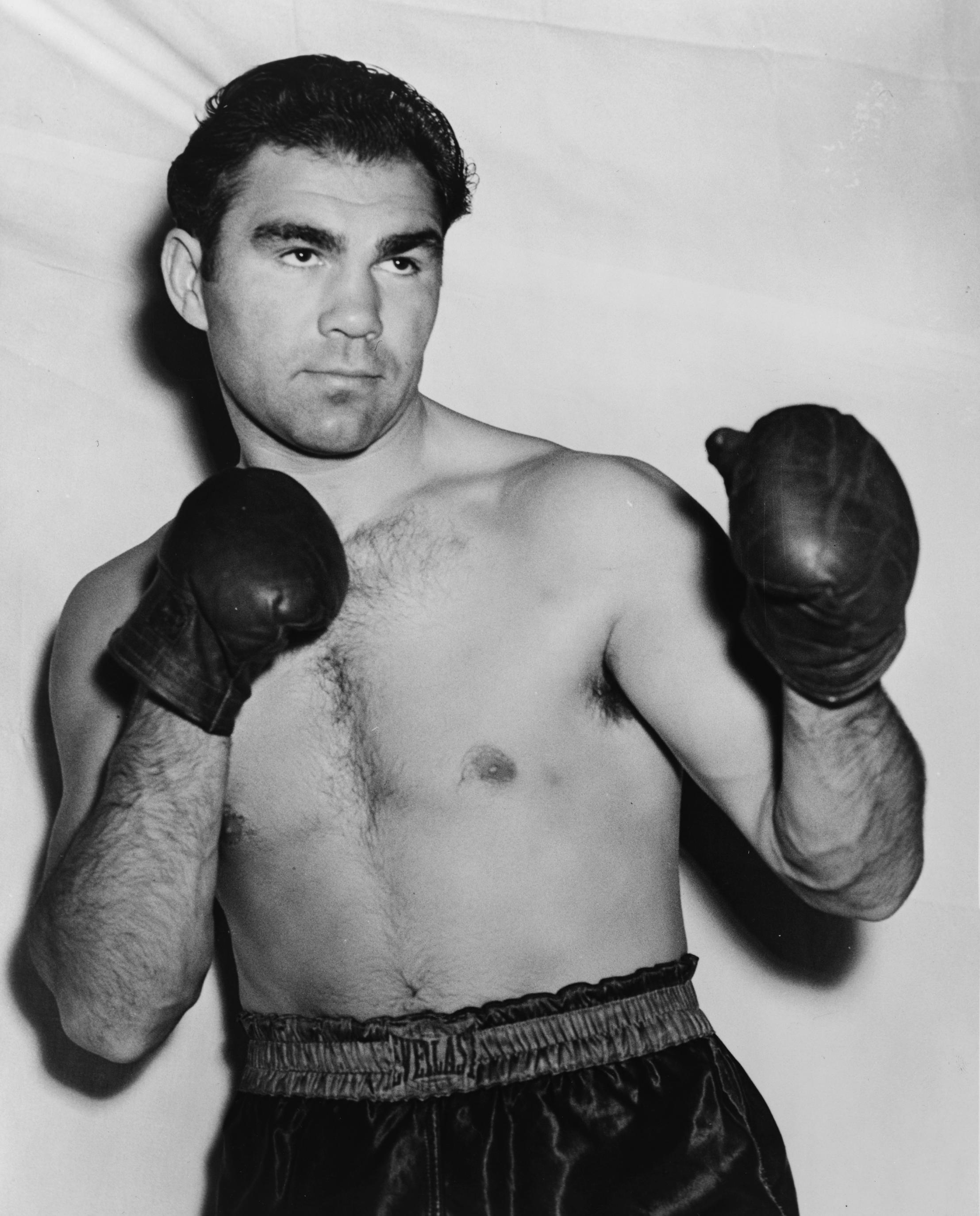
Max Schmeling
 Germany
Birthday
+1905-09-28
Birth Sign
Sagittarius
Birthplace
Klein Luckow
Age
Died at 99
About
Max Schmeling was a German heavyweight boxer who ruled the division from 1930 to 1932, and whose two epic battles with Joe Louis transcended sport to become global cultural flashpoints. Born Maximilian Adolph Otto Siegfried Schmeling on September 28, 1905, in the small village of Klein Luckow, Germany, he began his professional career in 1924. By 1928, he had crossed the Atlantic to the United States, where a ninth-round knockout of Johnny Risko turned him into an overnight sensation. In 1930, he made history by becoming the only heavyweight champion to win the title on a foul, when Jack Sharkey landed a low blow in the fourth round. Schmeling defended the belt successfully against Young Stribling in 1931, then lost it to Sharkey in a controversial split decision the following year. A 1933 defeat to Max Baer led many to write him off as past his prime, just as Adolf Hitler's Nazi regime was tightening its grip on Germany. Schmeling, however, never joined the Nazi Party, and in the same year he married Czech film actress Anny Ondra. Schmeling's legacy is forever tied to his two fights with Joe Louis. In their first meeting in 1936, Schmeling, the underdog, knocked out the undefeated American star in the twelfth round, a victory that was celebrated by the Nazis as proof of Aryan superiority. But in the 1938 rematch, Louis avenged the loss with a devastating first-round TKO at Yankee Stadium, a fight watched by over 70 million people worldwide. After retiring from boxing in 1948, Schmeling worked for The Coca-Cola Company and maintained a deep friendship with Louis that lasted until Louis's death in 1981. Schmeling also served in the German Luftwaffe as a paratrooper during World War II. Long after the war, it came to light that he had risked his life to save two Jewish children from the Nazis in 1938. He died on February 2, 2005, at the age of 99, making him the longest-lived heavyweight champion in history. In 2003, The Ring magazine ranked him 55th on its list of the 100 greatest punchers of all time.
Fame & Fandom
Max Schmeling's legacy does not rest on a modern, organized fanbase with chants or social media campaigns. His audience today consists of historians, boxing purists, and documentary viewers drawn to the moral complexity of his life rather than a collective identity like 'Team Schmeling.' There are no formal rituals or birthday billboards; instead, the reverence for him is sustained through academic study and films that re-examine his role during the Nazi era. The most enduring chapter of his story remains the two heavyweight title fights against Joe Louis, events that transcended sport to become global flashpoints regarding race and politics. The 1936 victory in Berlin shocked the world, while the 1938 rematch at Yankee Stadium saw the stadium erupt as fans fainted and streets shut down. These moments transformed Schmeling from a political pawn into a respected elder statesman who risked his life to save Jewish refugees. His post-war friendship with Louis stands as a verified historical event that symbolized reconciliation. While no specific fandom name exists for this German icon, the narrative of his survival and redemption continues to resonate decades after his final bout. Max Schmeling currently holds the position of the 78th most famous person in MMA & Boxing according to the iFANN Global Fame Rankings, a standing he has maintained steadily through recent cycles.
Interesting Facts and Legends
Born Maximilian Adolph Otto Siegfried Schmeling in Klein Luckow, Germany, he became the only heavyweight champion to win the title via a foul when Jack Sharkey landed a low blow in the fourth round of their 1930 bout. He defended the belt successfully against Young Str before his career spanned decades until 1948. A widely retold legend centers on the fight in Berlin where Schmeling defeated Joe Louis in the first round with a left hook to the jaw. This shock victory was seized by Nazi propaganda to validate Aryan racial superiority, despite Schmeling's later refusal to fully embrace the regime. Another iconic moment occurred two years later, at Yankee Stadium in New York City. Joe Louis knocked out Schmeling in just 1 minute and 4 seconds, causing the crowd to erupt in celebration so violently that the city effectively came to a standstill. Recent documentaries like *The Clash of Nations: Joe Louis vs. Max Schmeling* continue to highlight how Louis's victory ended the argument of Aryan supremacy. Schmeling's character is further defined by stories of him saving the Cohen family and serving as a liaison between U.S. military and German troops to ensure safe passage for civilians.
Death & Aftermath
Died
+2005-02-02 (aged 99)
Death Place
Hollenstedt, Germany
Cause of Death
Natural causes
Max Schmeling died on Wednesday, February 2, 2005, at his home in Hollenstedt, Germany. Born on September 28, 1905, he was 99 years old at the time of his passing. The announcement regarding his death was issued by his foundation, which confirmed he passed away peacefully at his residence.
Tributes poured in immediately from sports institutions and officials worldwide following the news of his passing. He was widely eulogized as one of Germany's biggest sports idols and a gentleman who transcended the political controversies of the Nazi era to become a symbol of reconciliation. His legacy included his enduring friendship with Joe Louis and his role in saving Jewish friends during the Holocaust. While specific details regarding funeral dates, locations, or attendees remain unconfirmed in public records, his status as a national hero suggested that state or sporting honors were likely accorded to the late champion.
In the posthumous period, Schmeling's legacy has been kept alive through various media projects and historical documentaries. A History Channel documentary titled "The Clash of Nations: Joe Louis vs. Max Schmeling" explored the pivotal importance of their fights and their lives. The Max-Schmeling-Halle in Berlin remains a prominent venue named in his honor, continuing to host major sporting events long after his passing. Venues like Füchse Berlin Immortals maintain his name on their jerseys as part of ongoing commemorative use in sports halls and historical retrospectives.
Awards & Accolades
Keywords
Quick Facts
- Profession
- boxer, actor, film actor
- Born
- +1905-09-28
- Birthplace
- Klein Luckow
- Died
- +2005-02-02
- Death Place
- Wenzendorf
- Gender
- Male
- Spouse
- Anny Ondra
- Birth Sign
- Sagittarius
Personal Details
- Spouse
- Anny Ondra
Join the community
fans discussing