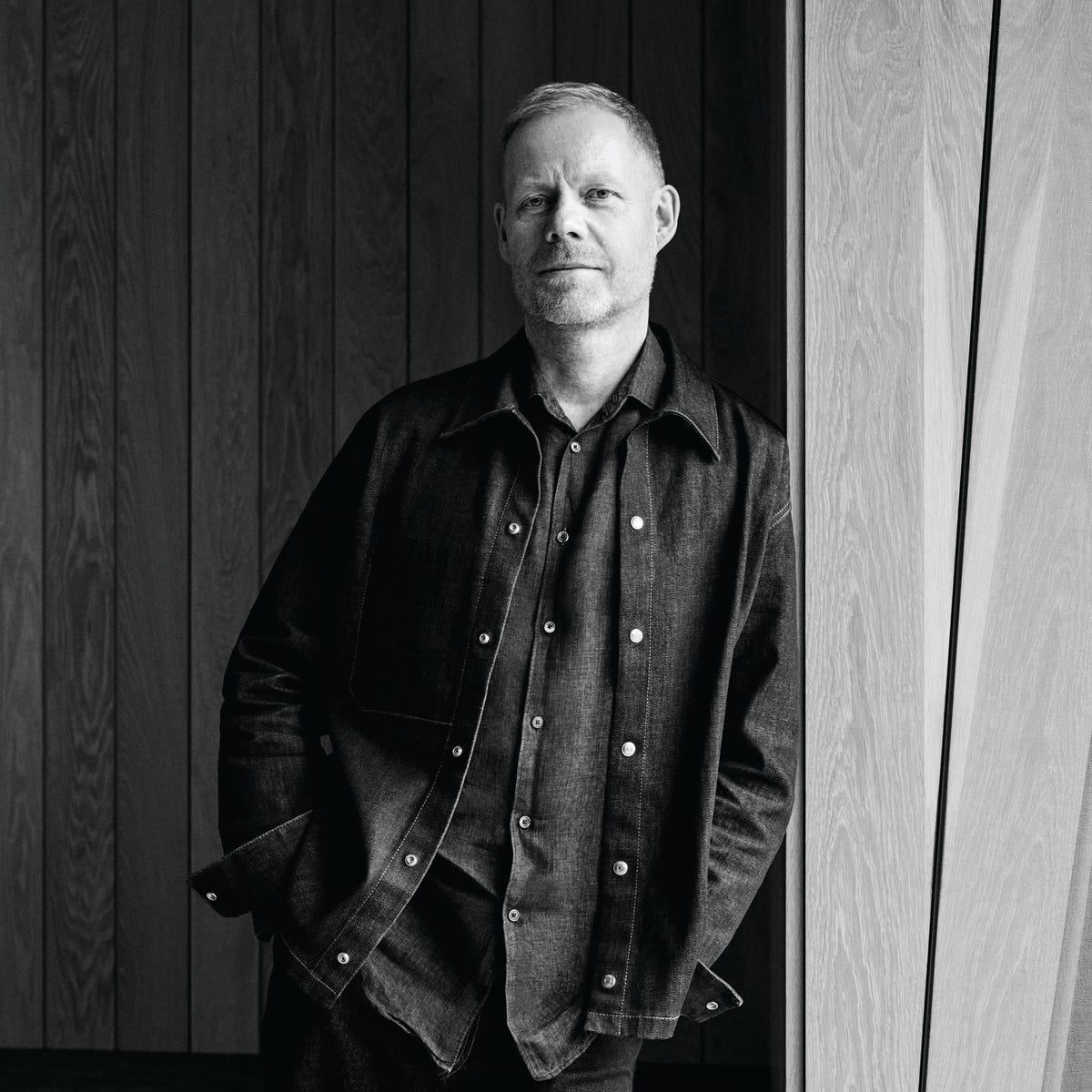
Max Richter
 Germany
composer•pianist•film score composer
Birthday
March 22, 1966
Birth Sign
Aries
Birthplace
Hamelin, Lower Saxony, West Germany
Age
60 years old
About
Max Richter is a German-born British composer and pianist whose work sits at the intersection of contemporary classical and electronic music. Classically trained at the University of Edinburgh and the Royal Academy of Music, he later studied with the avant-garde composer Luciano Berio in Italy. Richter is best known for his deeply emotive, minimalist compositions that blend string arrangements with subtle electronic textures.
His 2004 album The Blue Notebooks, featuring readings by Tilda Swinton, has been called one of the best classical works of the century by The Guardian. The track "On the Nature of Daylight" from that album has become a cultural touchstone, used in films like Martin Scorsese's Shutter Island and Denis Villeneuve's Arrival. His 2015 eight-and-a-half-hour durational piece Sleep has been streamed over a billion times and was named one of the 50 best ambient albums of all time by Pitchfork.
As of 2026, Richter has amassed over three billion streams and sold more than a million albums. He was nominated for an Academy Award for his score to the 2026 film Hamnet. He also hosts a radio show on Apple Music Chill called Songs of a Jumping Universe. His music is widely used in film, television, and ballet, and he is regarded as a major figure in contemporary classical music.
Early Life & Background
Richter was born in Hamelin, West Germany, and moved to Bedford, England, at age four. Growing up, his parents played Bach and Beatles records on a cheap record player that popped out of a suitcase, but they were not musical themselves. They insisted there was no career in music, yet Richter started piano lessons anyway.
When he was 12 or 13, a BBC nature documentary used the opening of Kraftwerk's "Autobahn." The pulsing bass line blew his mind. He wrote a letter to the BBC asking what the music was, and six weeks later he got a reply. That track became the first record he ever bought, and it sparked a deep dive into synthesizers and artists like Tangerine Dream, Klaus Schulze, and Vangelis. Around the same time, the local milkman introduced him to minimalist composers Terry Riley, Philip Glass, and John Cage.
Being a German kid at an English school was tough. He was bullied and called "Sieg Heil," so he ditched his German identity on the outside. He dropped out of school at 16 as an act of rebellion. He later studied at the University of Edinburgh, then the Royal Academy of Music, and finally studied with Luciano Berio in Florence.
Career Growth
Richter co-founded the contemporary-classical keyboard sextet Piano Circus in 1989, performing works by Philip Glass, Steve Reich, and Brian Eno for a decade. He then collaborated with the electronic group Future Sound of London, contributing strings to their 1996 album Dead Cities and working on their Amorphous Androgynous project. He also added strings to Reprazent's Lucky Pressure in 2000.
His solo debut Memoryhouse (2002) focused on the Kosovo conflict. The breakthrough came with The Blue Notebooks (2004), a protest album about the Iraq War. In 2012, his Recomposed By Max Richter: Vivaldi, The Four Seasons topped classical charts in the UK, Germany, and the US, becoming a global hit. His 2015 project Sleep was an eight-and-a-half-hour durational piece designed to be experienced over a full night's sleep, praised by critics and streamed over a billion times.
Richter has scored films including Waltz with Bashir (2008), for which he won the European Film Award for Best Composer; Ad Astra (2019), which earned a Grammy nomination; and Hamnet (2026), which earned an Academy Award nomination. He has composed for HBO's The Leftovers, My Brilliant Friend, and Black Mirror. In 2020, his project Voices, inspired by the Universal Declaration of Human Rights, won a BAFTA for its music video "Mercy." In 2024, he released In a Landscape.
Career Timeline
Public Image & Style
Richter is described as a major figure of contemporary music whose work transcends genres. His signature sound rejects classical music's convoluted flourishes, focusing on emotive, accessible string and piano figures interwoven with electronic sounds. The media portrays him as a groundbreaking, genre-defying composer who blends traditional orchestrations with modern electronic elements. He has influenced a whole school of composers including Nils Frahm, Olafur Arnalds, and Johann Johannsson. No official fandom name is documented. His social media voice is understated and focused on his work.
Fame & Fandom
Max Richter stands as a defining voice in contemporary composition, bridging the gap between orchestral tradition and electronic texture. His influence has rippled through the industry to such an extent that he is currently the 73rd most famous person in Classical, a position that places him just ahead of his previous standing last cycle. This prominence reflects a career built on emotive minimalism rather than grandiose flourishes, earning him a spot among the world's most recognized composers within his specific domain according to the iFANN Global Fame Rankings. While his work commands respect across genres, his audience does not coalesce around a single formalized name like those seen in pop culture. Instead, his fans are a diverse collective drawn to post-minimalist aesthetics and cinematic soundscapes, engaging with his music through standard digital channels rather than organized fan clubs or ritualistic campaigns. The community remains defined by their shared appreciation for his output rather than a unified identity. Recent years have solidified his status through high-profile collaborations and film scores that resonate deeply with listeners worldwide. His score for *Hamnet* sparked intense discussion regarding its emotional impact, particularly after influencing the film's narrative arc following a performance at Southwark Cathedral. A crossover moment in March 2026 further expanded his reach when he performed alongside an orchestra of children for the Maison Margiela SS26 campaign, blending high fashion with classical composition. These moments underscore a career where artistic integrity drives engagement, creating a dedicated following that values the subtle power of his string arrangements and electronic textures over viral spectacle.
Interesting Facts and Legends
Richter's early curiosity about music began at age 12 or 13 when he wrote a letter to the BBC inquiring about a documentary soundtrack and received a reply six weeks later. His childhood was marked by a unique auditory environment; his parents played Bach and Beatles LPs on a record player housed in a suitcase, though his German heritage led to bullying during his school years. In 2008, he released the concept album *24 Postcards in Full Colour*, which was structured entirely around ringtones. His ambitious project *Sleep* runs for 8.5 hours and is specifically designed to be listened to while sleeping. He operates out of Studio Richter Mahr, a solar and heat-pump-powered facility nestled within 31 acres of Oxfordshire woodland. Beyond these established facts, a notable story surrounds his score for the 2026 film *Hamnet*. Actress Jessie Buckley reportedly influenced the final cut of the movie because Richter's music changed the ending, a story that has become part of the film's lore. Another significant moment occurred in February 2026 when the live release *Max Richter: Hamnet Live* hit Apple Music Classical, capturing the searingly emotional atmosphere of his performance at Southwark Cathedral.
Notable Quotes
“I was watching a nature show on TV that had a sequence of some guy going down the Amazon River... And some clever editor decided to do 'Autobahn'... I heard this pulsing bass line with the filter opening up on it, and it blew my mind.”
“It wasn't that easy being a German kid at an English school. I was bullied a lot. It was 'Sieg Heil' and all of that. So I basically ditched the whole German identity, on the outside.”
“Sleep is an attempt to make a piece of music that is as close as possible to a dream.”
“Music is a kind of time travel. It can take you back to a moment in your life, or forward to a place you've never been.”
Family & Personal Life
Richter's parents were not musical; they played Bach and Beatles records but had no career in music for him. He has not publicly named his parents or siblings. He is in a long-term partnership with visual artist Yulia Mahr. Together they co-founded Studio Richter Mahr, a multimedia production studio set in the English countryside in Oxfordshire inside a former farmhouse, powered by solar and heat-pump technology, located within 31 acres of woodland. No children are publicly documented.
Notable Connections
Richter has collaborated with numerous artists across film, music, and fashion. He worked with director Ari Folman on Waltz with Bashir, Denis Villeneuve on Ad Astra and Arrival, and Martin Scorsese on Shutter Island. Tilda Swinton narrated on The Blue Notebooks. He has scored ballets for choreographer Wayne McGregor and fashion shows for designer Kim Jones. He co-founded Studio Richter Mahr with his partner, visual artist Yulia Mahr.
Relationships & Dating History
Richter's only publicly known romantic relationship is with visual artist Yulia Mahr. They are long-term partners and together co-founded Studio Richter Mahr, a multimedia production studio in the English countryside. The start date of their relationship is not publicly documented, but they have been together for many years and built their studio and home in Oxfordshire. As of 2026, they remain in a committed partnership. No prior marriages, divorces, or other public relationships are reported.
- DatedYulia Mahr2000 - presentCurrentLong-term partnership; co-founded Studio Richter Mahr together.
Salary, Net Worth In 2026
$10 Million
iFANN Editorial Team estimate
Per iFANN's editorial analysis, Max Richter's net worth in 2026 is estimated at $10 Million. His financial portfolio relies heavily on album sales, streaming revenue, fees from film scoring, and live performances. By 2019, he had already sold over one million albums and surpassed one billion streams, with his catalogue growing to more than three billion streams by 2026. The 2015 project *Sleep* alone accounts for over a billion streams within this total. Income flows from his work on major productions including *The Leftovers*, *Ad Astra*, and *Hamnet*. He also co-owns Studio Richter Mahr, a multimedia production facility located in the Oxfordshire countryside. Additionally, hosting a radio show on Apple Music Chill contributes to his earnings. His net worth has climbed steadily in recent years, driven by sustained growth in streaming numbers and involvement in high-profile film projects.
Awards Won (13)
Richter has won two major awards: the European Film Award for Best Composer for his score to Waltz with Bashir (2008) and a BAFTA Award for the music video "Mercy" from his Voices project (2020). He has also received multiple nominations, including an Academy Award nomination for Hamnet (2026) and a Grammy nomination for Ad Astra (2019).
2020 · Best Music Video
Mercy (from Voices)
2008 · Best Composer
Waltz with Bashir
Known For
The Blue Notebooks
2004 · Composer
Sleep
2015 · Composer
The Leftovers
2014 · Composer
Ad Astra
2019 · Composer
Waltz with Bashir
2008 · Composer
Keywords
Sources
Quick Facts
- Profession
- composer, pianist, film score composer
- Born
- March 22, 1966
- Birthplace
- Hamelin, Lower Saxony, West Germany
- Gender
- Male
- Birth Sign
- Aries
Personal Details
- Full Name
- Max Richter
- Education
- University of Edinburgh, Royal Academy of Music, studied with Luciano Berio in Italy
Frequently Asked Questions
How old is Max Richter?
What is Max Richter's net worth in 2026?
Is Max Richter married?
What is Max Richter's most famous piece?
Does Max Richter have children?
Social Media
Similar People
Join the community
fans discussing