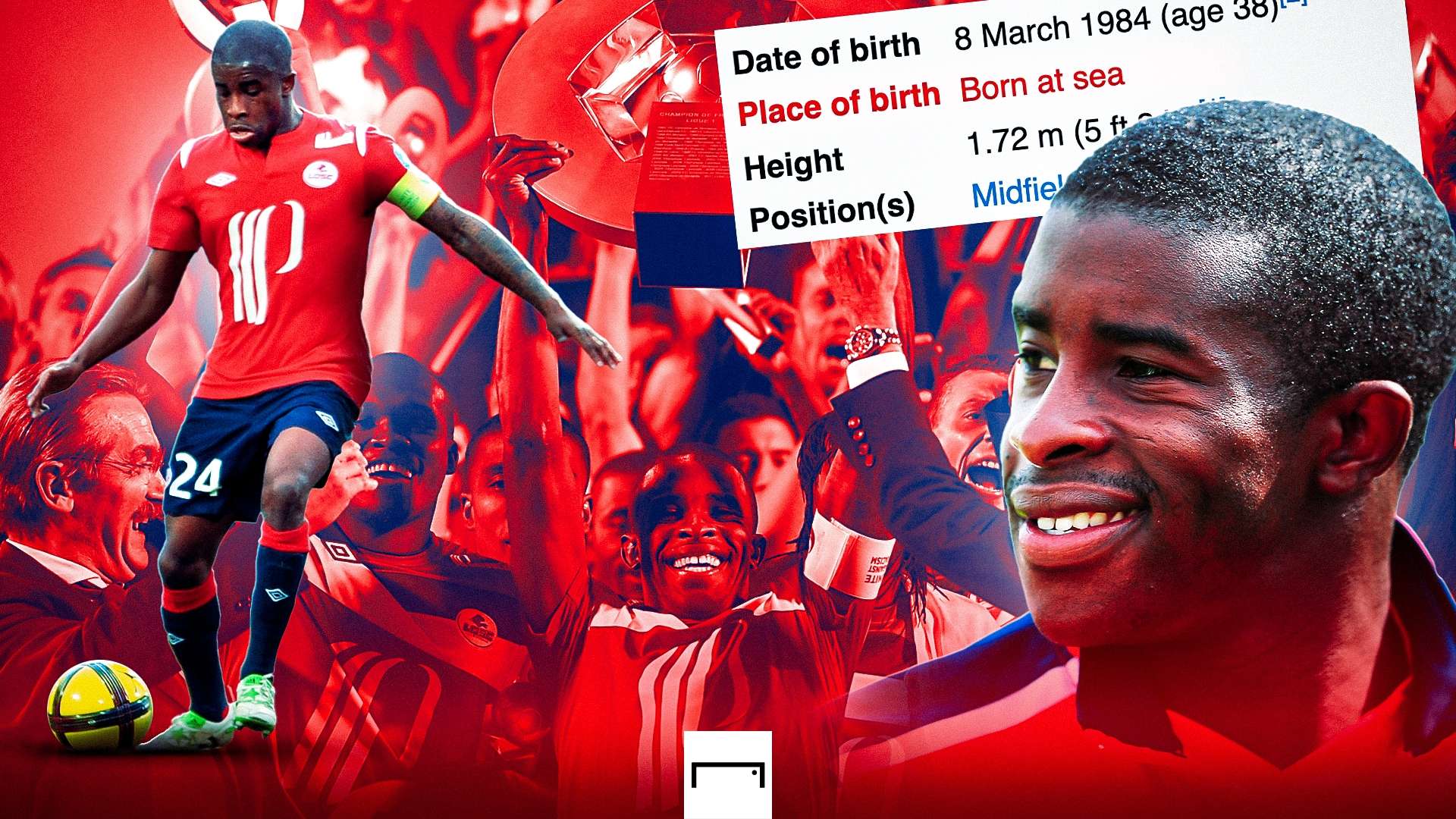
Mavuba Mafuila
 DR Congo
Also known as: Ricky Mavuba Mafuila Ku Mbundu, The Black Sorcerer, Mafuila Ricky
Birthday
December 15, 1949
Birth Sign
Sagittarius
Birthplace
Kinshasa, Zaire (now Democratic Republic of the Congo)
Age
Died at 46
About
Ricky Mavuba Mafuila Ku Mbundu, universally known as "The Black Sorcerer," was a Congolese footballer whose career defined the golden era of Zairean (now Democratic Republic of Congo) football. Born on December 15, 1949, in Kinshasa, he passed away on November 30, 1996, in France. His legacy is anchored not only in his own achievements as a key figure for AS Vita Club and the Zaire national team but also in his lineage; his son, Rio Mavuba, became a French international midfielder, creating a rare father-son connection where both represented African nations at the highest level of the sport. Mavuba played as a forward or attacking midfielder, renowned for his mesmerizing dribbling, agility, and creative playmaking vision that bewildered opponents. He is frequently cited in historical retrospectives as one of the greatest players to represent Zaire, ranking highly among African footballers in historical analyses despite the lack of specific individual award ceremonies cataloged in modern databases.
Early Life & Background
Mavuba Mafuila was born Ricky Mavuba Mafuila Ku Mbundu on December 15, 1949, in Kinshasa, then the capital of the Belgian colony of the Congo, later renamed Leopoldville, and eventually Kinshasa under Mobutu Sese Seko's rule. He grew up in a city that would become the epicenter of Congolese football culture, buzzing with energy and a deep love for the game. From a young age, Mavuba displayed an extraordinary affinity for the ball, developing a playing style characterized by mesmerizing dribbling, agility, and playmaking vision that earned him his enduring moniker, "The Black Sorcerer." This title reflected the mystique surrounding his ability to evade defenders and orchestrate attacks with seemingly supernatural flair. Before achieving international fame, Mavuba honed his skills in the local leagues of Kinshasa. He joined AS Vita Club, one of the most prestigious and successful clubs in Central Africa. His early years were marked by intense competition within the club's ranks, where he quickly rose to prominence. The political landscape of the time, including the transition from colonial rule to independence, influenced the sporting environment, yet Mavuba remained focused on his craft, becoming a cornerstone of the club's dominance in the late 1960s and early 1970s. By the early 1970s, he had established himself as a key player for Zaire's national team, preparing for the international stage that would soon demand his talents.
Career Growth
Mavuba's professional trajectory is defined by his pivotal role in the 1970s, a period when Zairean football achieved unprecedented global recognition. At AS Vita Club, Mavuba won multiple domestic championships. His most significant club achievement came in 1973 when he helped the team reach the final of the African Cup of Champions Clubs (now the CAF Champions League), cementing his status as a continental star. He became a mainstay of the Zaire national team, known as the Leopards. In a historic triumph, Mavuba was instrumental in leading Zaire to victory in the 1974 African Cup of Nations held in Egypt. This remains Zaire's only AFCON title to date, and Mavuba's contributions were central to their success. His career reached its zenith in 1974 when he was selected for Zaire's squad for the FIFA World Cup in West Germany. This tournament marked a historic milestone: Zaire became the first sub-Saharan African nation to qualify for the World Cup group stage. Despite losing all three group matches against Brazil, Yugoslavia, and Scotland, Mavuba's presence on the field symbolized a breakthrough for African football on the global stage. He played as a forward or attacking midfielder, showcasing the technical brilliance that defined his reputation until his retirement.
Career Timeline
Public Image & Style
Mavuba is portrayed in historical archives as a humble yet brilliant athlete who transcended the limitations of his time. Media portrayals emphasize his technical prowess and the dignity with which he carried the hopes of a nation. His image is one of a pioneer who paved the way for future generations of African players. The nickname "The Black Sorcerer" reflected not just his skill but the awe he inspired in opponents and fans alike. He was seen as a man of integrity who represented his country with pride on the world stage. Specific height measurements are not consistently recorded in available statistical databases, but his position as a forward or attacking midfielder and his style known for dribbling, agility, and creative playmaking are well-documented. While he does not hold a specific "Greatest of All Time" ranking in global lists like *Rolling Stone* or *Billboard*, he is ranked highly among African footballers in historical analyses. For instance, he is often listed among the top Congolese players of all time.
Fame & Fandom (iFAMOUS Rankings)
Global attention for Ricky Mavuba Mafuila remains anchored in historical archives rather than the relentless churn of modern celebrity metrics. While his name echoes through African football history, iFANN's Global Fame Engine has evaluated this person, but they do not currently hold a placement in the published rankings (Global Top 1,000 or a Top-100 scope list). This absence reflects a legacy preserved in memory and family lineage rather than active, data-driven visibility in current global pop culture. As of September 2026, the fanbase has no formal name documented in iFANN data. There is no formally organized fandom with a specific name dedicated solely to Mavuba Mavuba. However, he is revered by fans of African football history and specifically by supporters of AS Vita Club and the DR Congo national team. His story is kept alive through oral traditions, documentaries, and articles written about his son. Fan campaigns are generally centered around celebrating the legacy of the Zairean national team rather than individual player memorials. Recent news coverage focuses almost exclusively on his legacy, particularly in relation to his son Rio Mavuba.
Interesting Facts and Legends
The phrase "World Cup in the blood" is often used by sports journalists to describe the unique bond between Mavuba and Rio, noting that both represented African nations at the World Cup level (Zaire in 1974, though Rio represented France, his heritage is deeply rooted in the African experience). The story of Rio being born on a boat while fleeing the Angolan Civil War is a defining piece of family lore that connects the turbulent history of Central Africa to the personal narrative of the Mavuba family. The nickname "The Black Sorcerer" was not just a marketing term but a reflection of his actual playing style, which bewildered opponents with its unpredictability and skill. The most iconic moment in Mavuba's career was his participation in the 1974 World Cup. While Zaire lost all their matches, the mere presence of an African team in the tournament was a cultural earthquake. Mavuba's performance, particularly his ability to control the game despite the overwhelming odds, is remembered as a testament to the talent emerging from the continent. Leading Zaire to their first and only AFCON title is considered a legendary feat. His time at AS Vita Club is legendary among Congolese fans, where he helped the team dominate the domestic league and challenge for continental supremacy. Articles such as "World Cup in the blood: Mafuila and Rio Mavuba" (2014, 2018) highlight the unique father-son dynamic and the historical significance of their careers. These pieces serve as tributes rather than reports on new activities. Mavuba Mafuila does not have an active social media presence. As a figure from the pre-internet era who passed away in the mid-90s, any digital footprint exists solely through archival content shared by fans, historians, or his son's official channels. Follower counts are not applicable to him personally. Specific verbatim quotes from Mavuba Mafuila are not widely recorded in accessible digital archives. Most references to his words come from interviews given by his contemporaries or his son, Rio, describing his character and playing style.
Family & Personal Life
Mavuba's marriage ended with his death in 1996. No other children or extended family members have been widely documented in public records. The family's story is defined by the resilience shown during the civil conflicts and the subsequent success of Rio, who followed in his father's footsteps to become a professional footballer. The circumstances of Rio's birth are legendary in football lore: he was born aboard a boat off the coast of Angola while the family was fleeing the Angolan Civil War. This dramatic event underscores the instability of the region during that decade. The couple had a son, Rio Mavuba, born on August 28, 1984. Their union produced one child, a son named Rio Mavuba. The family's story is defined by the resilience shown during the civil conflicts and the subsequent success of Rio, who followed in his father's footsteps to become a professional footballer.
Notable Connections
Relationships & Dating History
Detailed public records regarding Mavuba's romantic relationships are scarce, a common trait for athletes of his era who operated outside the modern spotlight of celebrity media. However, biographical accounts confirm he had a family life that extended beyond the pitch. Mavuba was married to an Angolan woman. Their union was forged during a tumultuous period in Central African history. The couple had a son, Rio Mavuba, born on August 28, 1984. The circumstances of Rio's birth are legendary in football lore: he was born aboard a boat off the coast of Angola while the family was fleeing the Angolan Civil War. This dramatic birth story underscores the instability of the region during that decade. As Mavuba died in 1996, there are no current dating statuses or recent relationship updates. His marriage ended with his death. No other public romantic partners or high-profile flings have been documented in credible sources. One confirmed child, Rio Mavuba, followed in his father's footsteps to become a professional footballer.
- MarriedAngolan Wife? - 1996Mother of Rio Mavuba; relationship ended with Mavuba's death.
Death & Aftermath
Died
November 30, 1996 (aged 46)
Death Place
France
Cause of Death
Unknown
Ricky Mavuba Mafuila died on November 30, 1996, in France, just two weeks before his 47th birthday. The official cause of death and the specific circumstances surrounding his final days have not been widely publicized or detailed in available records. Some sources suggest he died shortly before his 47th birthday, though the exact location within France is not consistently specified in public databases. There is no record of a formal investigation into his death, nor are there extensive details regarding funeral arrangements or burial sites available in the public domain. The absence of these details marks his departure as relatively quiet compared to his vibrant life on the pitch. Following his death, the football world mourned the loss of a pioneer, but the immediate aftermath was overshadowed by the ongoing civil conflicts in the region. His legacy, however, was preserved through his son Rio, who later achieved success in French football, representing a continuation of the family's contribution to the sport. While there were no grand public memorials reported in major international outlets at the time, the football community in Zaire mourned the loss of one of its greatest pioneers. The absence of detailed burial records means the final resting place remains unknown to the general public. Following his death, his legacy was carried forward primarily through his son, Rio Mavuba, who achieved success in French football. The family's story became a bridge between the turbulent history of the region and the modern era of African players in Europe, keeping Ricky's name alive through oral tradition and sports journalism rather than formal estate management or posthumous awards.
Net Worth (Estate Value)
$0
iFANN Editorial Team estimate
As a footballer active in the 1970s in a developing economy, Mavuba Mafuila did not accumulate wealth in the manner of modern superstars. Specific figures regarding his net worth at the time of death are unavailable. Consequently, there are no verified estimates for his estate value as of 2026. Any figures suggesting a multi-million dollar net worth for him would be speculative or conflated with his son Rio's earnings. The financial legacy of Mavuba is primarily symbolic, represented by the continued respect for his name and the success of his son's career rather than tangible assets or business ventures managed by his estate. There is no record of extensive details regarding funeral arrangements or burial sites available in the public domain, which further complicates any assessment of his immediate post-death financial state. The absence of these details marks his departure as relatively quiet compared to his vibrant life on the pitch.
Awards Won (2)
Mavuba Mafuila was a key figure in Zaire's historic 1974 African Cup of Nations victory, sharing in the team's continental honor. He also helped AS Vita Club reach the final of the African Cup of Champions Clubs in 1973. While individual award ceremonies for him are not extensively cataloged, his contributions are recognized through team successes and historical accolades as one of the greatest players to represent Zaire.
1974 · Team Trophy
Zaire National Team
1973 · Runner-up
AS Vita Club
Known For
Zaire National Team
1974 · Player
AS Vita Club
1973 · Player
Keywords
Sources
Quick Facts
- Profession
- association football player
- Born
- December 15, 1949
- Birthplace
- Kinshasa, Zaire
- Died
- November 30, 1996
- Death Place
- France
- Gender
- Male
- Birth Sign
- Sagittarius
Personal Details
- Full Name
- Ricky Mavuba Mafuila Ku Mbundu
- Children
- Rio Mavuba
Frequently Asked Questions
Who was Mavuba Mafuila?
When did Mavuba Mafuila die?
Who is Mavuba Mafuila's son?
What is Mavuba Mafuila's nickname?
Did Mavuba Mafuila win the World Cup?
Similar People
Join the community
fans discussing