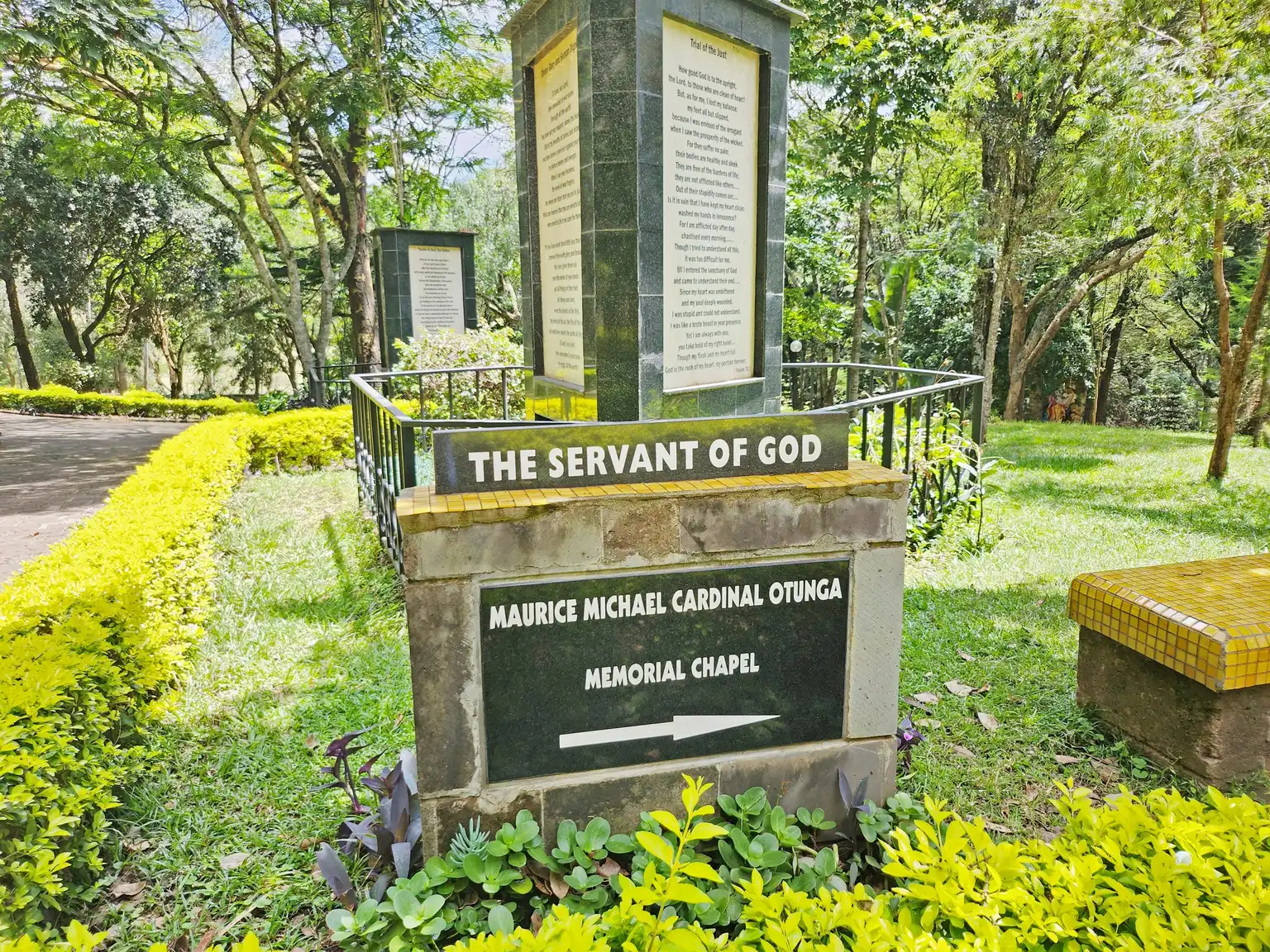
Maurice Michael Otunga
 Kenya
KenyaCatholic priest•Catholic bishop
Also known as: Cardinal Otunga, Maurice Michael Cardinal Otunga, The Servant of God
Birthday
January 31, 1923
Birth Sign
Sagittarius
Birthplace
Chebukwa, Bungoma County, Kenya
Age
Died at 80
About
Maurice Michael Otunga was a Kenyan Catholic prelate who served as the first native Archbishop of Nairobi and the first native Kenyan Cardinal in the Roman Catholic Church. Born in January 1923, he dedicated his life to the church, rising from a rural agricultural background to become the spiritual leader of the capital. He is remembered for his unwavering adherence to traditional Catholic doctrine and his advocacy for African ecclesiastical autonomy. His tenure as Archbishop spanned over two decades, ending only when he retired in 1997.
His journey to the priesthood began after he made a pivotal decision to reject a hereditary position as tribal chief. Instead, he pursued theological studies in Kenya and Rome, eventually earning a doctorate in Sacred Theology. Elevated to the rank of Cardinal by Pope Paul VI in 1973, Otunga became a watershed figure for the African church's standing within the global hierarchy. He passed away in 2003, leaving behind a legacy defined by humility and service, which has since led to his formal recognition as a Servant of God.
Early Life & Background
Maurice Michael Otunga entered the world on January 31, 1923, in the small village of Chebukwa, located in what is now Bungoma County in western Kenya. He was born into a family deeply rooted in local tradition; his father served as a tribal chief, a role that carried significant weight and responsibility within the community. Growing up among the Bukusu people, Otunga absorbed the customs and values of his culture while navigating the early colonial era. His upbringing instilled in him a profound respect for tradition, a trait that would later shape his approach to church leadership.
As a young man, Otunga faced a defining crossroads. The expectations placed upon him were clear: he was destined to succeed his father as the tribal chief, continuing a lineage of secular leadership. However, he felt a different calling. Turning down this hereditary position required courage and conviction, as it meant stepping away from power and prestige within his own community. He chose instead to pursue a life of faith, entering the seminary system. His early education took place at St. Paul's Seminary in Kisii, where he laid the groundwork for his future ministry. Driven by a desire for deeper understanding, he traveled to Rome to attend the Pontifical Urban University. There, he immersed himself in advanced theology, earning a doctorate that bridged his Kenyan heritage with the broader Catholic intellectual tradition.
Career Growth
Otunga's ordination as a priest in 1948 marked the beginning of a historic ascent through the ranks of the Catholic Church. He spent his early years serving in various parishes and educational institutions across Kenya, where he developed a reputation for grassroots ministry and administrative skill. In 1963, he achieved a major milestone by becoming the first Bishop of Kitale, one of the earliest native bishops appointed in Kenya. This appointment signaled a shift toward indigenous leadership within the church structure.
The trajectory of his career accelerated in 1971 when he was appointed Archbishop of Nairobi, succeeding Cardinal Laurean Rugambwa. He held this influential position for twenty-six years, until his retirement in 1997, making him the longest-serving Archbishop of Nairobi during that period. His tenure was marked by active participation in the aftermath of the Second Vatican Council, where he advocated for the inculturation of the Gospel in Africa. In 1973, Pope Paul VI elevated him to the College of Cardinals, creating him Cardinal-Priest of San Girolamo della Carità. This made him the first native Kenyan cardinal, a momentous event that symbolized the growing autonomy of the African church. He was reconfirmed in his cardinalate by Pope John Paul II in 1979. Even after retiring from active duties in 1997, he remained a respected member of the College of Cardinals until his death in 2003.
Career Timeline
Public Image & Style
Cardinal Otunga projected an image of stern authority tempered by deep pastoral care. He was known as a defender of traditional Catholic teachings, often taking firm stances on issues like contraception and abortion that aligned with established Church doctrine. His aesthetic was simple clerical attire, and he avoided the trappings of wealth despite his high office. Media portrayals highlighted his role as a pioneer of African leadership, emphasizing his intellectual rigor and his refusal to compromise on doctrinal matters. He was frequently described as a "father figure" to the Kenyan people, a man who walked among them rather than ruling over them. His public voice was authoritative yet accessible, making him a beloved figure who commanded respect across political and social divides.
Fame & Fandom (iFAMOUS Rankings)
Maurice Michael Otunga commands a devoted following defined not by commercial fandoms or organized campaigns, but by a spiritual network of Catholics and the faithful of the Archdiocese of Nairobi. This community operates as a prayer group dedicated to his cause for sainthood, utilizing platforms like cardinalotunga.org and parish-level initiatives to collect testimonies and promote his virtues rather than driving streaming numbers or purchasing power. While no formal pop-culture moniker exists for this audience, their devotion manifests through liturgical remembrance and charity drives that honor his legacy. The iFANN Global Fame Engine evaluated Maurice Michael Otunga in August 2026 and determined he currently holds no placement in the published rankings, meaning he is not ranked within the Global Top 1,000 or any specific scope list. This absence of a numeric rank reflects a profile where influence is measured in theological impact and historical significance rather than secular consumption metrics. His fame rests on documented milestones, such as becoming the first native Kenyan cardinal, and narratives of personal humility that resonate deeply within the region. Although he does not appear in current global celebrity charts, his status as a Servant of God ensures his name remains prominent in religious discourse and pilgrimage sites, particularly following recent developments like the elevation of his birthplace to a holy place in 2025.
Interesting Facts and Legends
Maurice Michael Otunga earned the nickname "Man of Many Hats" due to his ability to seamlessly transition between roles as a priest, bishop, archbishop, cardinal, and military chaplain. Despite holding the highest offices in the church, he famously rejected displays of luxury. He often walked through the streets of Nairobi without motorcades or guards, choosing to connect directly with the common people. One of the most controversial moments of his career occurred in the 1990s during the AIDS epidemic. He publicly burned boxes of condoms on two separate occasions to protest their use, citing strict adherence to Catholic doctrine against artificial birth control. This act drew international attention but reinforced his image as an uncompromising defender of orthodoxy. Another enduring legend involves his rejection of the chieftaincy; the story of him turning down his father's throne to serve God remains a central tale in Kenyan Catholic lore.
Notable Quotes
“Do not just read this story, let it challenge you.”
“I am burning them because they are against the teaching of the Church.”
“I prefer to walk among the people.”
Family & Personal Life
As a high-ranking cleric in the Catholic Church, Maurice Michael Otunga took vows of celibacy, poverty, and obedience. Consequently, he never married and had no children or romantic partners. His personal life was entirely dedicated to his spiritual vocation, and he viewed the church and the faithful of the Archdiocese of Nairobi as his family. He maintained close ties with his relatives in Bungoma County, often visiting his birthplace and supporting local initiatives. His parents raised him in a devout household, and his decision to enter the priesthood was supported by his family despite the loss of a potential tribal leader. He lived simply throughout his life, residing in church-owned properties and using his stipend primarily for charitable works and the upkeep of the diocese.
Notable Connections
Pope Paul VI, Pope John Paul II, Laurean Rugambwa, Bert Van Megen, AMECEA
Relationships & Dating History
Maurice Michael Otunga was a celibate priest and later a Cardinal. He never married, engaged, or entered into any romantic relationships. His life was defined by his vows of poverty, chastity, and obedience. Therefore, there is no dating history, divorce record, or partner to report. As of his death in 2003, and continuing through 2026, his status remains that of a lifelong celibate servant of the Church. His focus was entirely on his spiritual vocation and the service of the faithful.
Death & Aftermath
Died
September 6, 2003 (aged 80)
Death Place
Nairobi, Kenya
Cause of Death
Natural causes (old age)
Maurice Michael Otunga died on September 6, 2003, in Nairobi at the age of eighty. The cause was attributed to natural complications associated with old age, though specific medical details of his final days were not widely publicized. His passing triggered an outpouring of grief that transcended religious lines, with Kenyan dignitaries and the general populace mourning the loss of a national figure. A state funeral was held in the city, attended by the President of Kenya and high-ranking church officials, reflecting his status as a man of immense national importance.
Following his death, the Archdiocese of Nairobi moved quickly to honor his legacy. In 2009, the Congregation for the Causes of Saints officially opened the process for his beatification, granting him the title Servant of God. This formal step initiated a rigorous investigation into his life and virtues. Recent years have seen a surge in efforts to promote his canonization. In May 2025, his birthplace in Chebukwa village was elevated to a parish and declared a holy place, transforming it into a pilgrimage site. As of 2026, the faithful continue to renew prayers for his sainthood, with organizations like AMECEA urging members to join the campaign. A new biography launched in April 2026 further solidified his story for younger generations, ensuring his witness of humble service remains a central part of Kenya's religious history.
Net Worth (Estate Value)
$0
iFANN Editorial Team estimate
As a Catholic Cardinal and Archbishop, Maurice Michael Otunga lived under a vow of poverty. He did not accumulate personal wealth in the manner of celebrities or business tycoons. He resided in church-owned properties and received a stipend for his maintenance, which he likely used for charitable works and the upkeep of the diocese. The iFANN Editorial Team estimates his net worth at approximately $0, as he rejected ostentatious wealth and lived simply. Upon his death in 2003, his estate consisted primarily of personal effects and religious items, which were bequeathed to the Church or the Archdiocese. There is no public record of a multi-million dollar estate or posthumous earnings from royalties or licensing deals. His financial support came solely from the Church, and his legacy is one of spiritual rather than material accumulation.
Awards Won (2)
While Otunga did not win secular awards, his ecclesiastical career was marked by significant honours. He was created Cardinal-Priest of San Girolamo della Carità by Pope Paul VI in 1973, the highest honour bestowed upon a cleric. He served as Military Ordinary Emeritus for Kenya and was declared a Servant of God in 2009, initiating his cause for beatification. His legacy was further recognized in 2025 when his birthplace was elevated to a holy place.
1973 · Ecclesiastical Title
Appointment by Pope Paul VI
2009 · Beatification Status
Congregation for the Causes of Saints
Known For
Archbishop of Nairobi
1971-1997 · First Native Archbishop
Cardinal of the Roman Catholic Church
1973-2003 · First Native Kenyan Cardinal
Keywords
Sources
Quick Facts
- Profession
- Catholic priest, Catholic bishop
- Born
- January 31, 1923
- Birthplace
- Bungoma County
- Died
- September 6, 2003
- Death Place
- Nairobi
- Gender
- Male
- Birth Sign
- Sagittarius
Personal Details
- Full Name
- Maurice Michael Otunga
- Children
- Education
- St. Paul's Seminary (Kisii), Pontifical Urban University (Rome)
Frequently Asked Questions
Who was Maurice Michael Otunga?
When did Maurice Michael Otunga die?
Is Maurice Michael Otunga a saint?
Why did Maurice Michael Otunga burn condoms?
What happened to Maurice Michael Otunga's birthplace?
Social Media
Similar People
Join the community
fans discussing