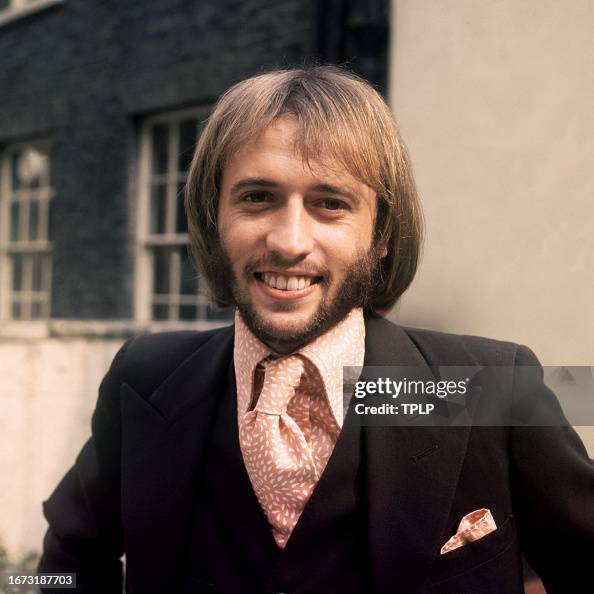
Maurice Gibb
 United Kingdom
Member of Bee Gees
Musician•songwriter•record producer
Birthday
December 22, 1949
Birth Sign
Sagittarius
Birthplace
Douglas, Isle of Man, United Kingdom
Age
Died at 53
Height
5 ft 7 in (170 cm)
About
Maurice Ernest Gibb was a British musician and songwriter who achieved global fame as a member of the Bee Gees, one of the best-selling pop groups of all time. While his brothers Barry and Robin handled most lead vocals, Maurice contributed harmonies and played bass guitar, keyboards, and other instruments, anchoring the group's signature sound. The Bee Gees sold over 200 million records worldwide, driven by the monumental success of the Saturday Night Fever soundtrack in 1977. Maurice also sang lead on tracks like "Lay It on Me" and "Country Woman." In 2002, he was appointed a CBE for services to music. He died unexpectedly in 2003 at age 53, but the Bee Gees' catalog continues to reach new generations through streaming and film placements.
Early Life & Background
Maurice Gibb was born on the Isle of Man to Hugh Gibb, a drummer and bandleader, and Barbara Pass. The family lived in poverty, moving frequently. At age five, Maurice joined his older brother Barry and twin Robin in the skiffle-rock group the Rattlesnakes in Manchester. Their first live performance came in December 1957 at a local cinema, where a broken record forced them to sing live harmonies — it was a huge success. In August 1958, the Gibb family emigrated to Queensland, Australia. The brothers began performing at the Redcliffe Speedway in 1960, where they were renamed the BGs, later the Bee Gees. They signed their first recording deal with Festival Records in 1963 and released their debut LP The Bee Gees Sing and Play 14 Barry Gibb Songs in 1965. After scoring their first Australian number one hit "Spicks and Specks" in 1966, the family returned to England to pursue international fame.
Career Growth
Maurice Gibb's breakthrough came in 1967 when the Bee Gees scored their first international hit with "New York Mining Disaster 1941." Over the next decade, the group released a string of successful albums, but their career reached new heights with the 1977 Saturday Night Fever soundtrack, which became one of the best-selling albums of all time. Maurice's role as a multi-instrumentalist and arranger was crucial to the Bee Gees' disco-era sound. During the group's temporary breakup in 1969–1970, he released the solo single "Railroad" and recorded an unreleased solo album The Loner. He continued touring and recording with the Bee Gees through the 1980s and 1990s. In 1997, the Bee Gees were inducted into the Rock and Roll Hall of Fame. Maurice received a CBE in 2002, though he was too ill to attend the ceremony; his son Adam collected the honor at Buckingham Palace in 2004.
Career Timeline
Public Image & Style
Maurice Gibb was often called the "quiet Bee Gee," known for his humility and dedication to his craft. While Barry and Robin commanded the spotlight, Maurice was the instrumental backbone, handling bass, keyboards, and arrangements. The media portrayed him as the most grounded of the three brothers. Fans appreciated his self-deprecating humor and his role as the group's musical anchor. Bee Gees fandom remains strong, with tribute bands and online communities keeping the legacy alive.
Fame & Fandom
Maurice Gibb remains a beloved figure within the enduring Bee Gees fanbase, where he is affectionately known as "Mo" and celebrated for his gentle demeanor and role as the group's emotional anchor. Fans consistently honor his memory on significant dates, gathering in online communities to mark his birthday on December 22 and the anniversary of his passing on January 12 with tributes that highlight his humility and musical contributions. While the broader community operates under the Official Bee Gees Fan Club, there is no distinct, formal fandom name documented specifically for Maurice as an individual separate from the collective legacy of the brothers.
Regarding his standing in global celebrity metrics, Maurice Gibb is currently evaluated by the iFANN Global Fame Engine but does not hold a placement in the published rankings such as the Global Top 1,000 or any Top-100 scope list. This status reflects his position as a legendary artist whose fame is deeply rooted in historical impact rather than current viral ranking algorithms. The evaluation confirms that while his cultural footprint is massive, he is not currently assigned a specific numeric rank within the system's active hierarchy.
The narrative surrounding Maurice often centers on his identity as the "Man in the Middle," a story widely accepted as verified history describing how he mediated conflicts between Barry and Robin. Recent discussions have also touched upon unverified claims made by singer Lulu regarding a secret son, though these stories are framed as rumors rather than established fact. Unlike death hoaxes circulating about other family members, Maurice's passing in 2003 is a settled historical event observed annually by fans who remember him as the glue that held the trio together.
Interesting Facts and Legends
Maurice was the fraternal twin of Robin Gibb, born just 35 minutes after him, and began his musical journey at the tender age of five. His instrumental prowess was central to the Bee Gees' sound, as he played bass guitar on the majority of their recordings alongside keyboards and various other instruments. A notable piece of discography lore involves his unreleased solo album, titled The Loner, which was recorded between 1969 and 1970 but has never been officially made public. In 1997, the brothers participated in a Christmas radio special called "The Bee Gees Come Home to Ellan Vannin" to raise funds for children on the Isle of Man, showcasing Maurice's deep connection to his birthplace.
Among the legends that persist, the most pervasive story casts Maurice as the essential "glue" of the group, mediating tensions between his brothers and serving as the emotional backbone during turbulent times. This dynamic is frequently cited in retrospectives as the reason for their longevity. Another layer of modern lore involves claims made by singer Lulu about a secret son conceived during her marriage to Maurice; this story gained traction in news reports around March 2026, though Maurice's own son reportedly denied these allegations. These narratives add depth to the image of a man known for his self-deprecating humor and dedication to his craft.
Notable Quotes
“It was such a proud moment for us. It was wonderful to do something for home.”
“I'm the quiet one. I don't need the limelight.”
Family & Personal Life
Maurice Gibb was born to Hugh Gibb, a drummer and bandleader, and Barbara Pass. He had an older sister Lesley, an older brother Barry, a fraternal twin brother Robin, and a younger brother Andy, who became a successful solo singer. The family lived in poverty during Maurice's early years on the Isle of Man. He married Scottish singer Lulu in 1969; they divorced in 1973 with no children. In 1975, he married Yvonne Spencely, a former secretary from the UK. They had two children: son Adam (born 1977) and daughter Samantha (born 1980). Maurice and Yvonne remained married until his death in 2003.
Notable Connections
Relationships & Dating History
Maurice Gibb married Scottish singer Lulu on 18 February 1969, when he was 19 and she was 20. The marriage ended in divorce in 1973, attributed to the pressures of their careers and Maurice's heavy drinking. Lulu later called it "doomed from the start." They had no children. On 17 October 1975, Maurice married Yvonne Spencely, a secretary from the UK. They had two children: son Adam (born 1977) and daughter Samantha (born 1980). The marriage lasted until Maurice's death in 2003. As of 2026, Maurice Gibb is deceased and was married to Yvonne Spencely at the time of his death.
- MarriedLulu1969 - 1973Married when both were young; divorced due to career pressures and Maurice's drinking.
- MarriedYvonne Spencely1975 - 2003Met through mutual friends; had two children; marriage ended with Maurice's death.
Death & Aftermath
Died
January 12, 2003 (aged 53)
Death Place
London, England
Cause of Death
Bowel obstruction caused by volvulus
Maurice Ernest Gibb died on January 12, 2003, at his home in London, England. He had suffered from severe abdominal pain for several weeks but delayed seeking medical help until the condition escalated into a bowel obstruction caused by volvulus, which led to cardiac arrest. Hospital statements and autopsy reports confirmed the acute nature of the illness, refuting earlier rumors of drug overdose or liver failure while ruling out foul play. The coroner determined the event was an unforeseen medical emergency, and no police investigation or legal action followed regarding his care. Tributes poured in from peers like Paul McCartney, Elton John, and David Bowie, who praised Maurice's humility and musical genius. Institutions such as the Brit Awards and the Grammy Foundation issued statements honoring his contributions, while fan vigils gathered outside his London residence and at the Royal Albert Hall.
Sales of Bee Gees catalogues surged immediately after the news broke, with tracks like "How Deep Is Your Love" and "Stayin' Alive" re-entering charts globally within weeks. A private funeral service took place on January 24, 2003, at St. Mary Magdalene Church in Highgate, London, attended only by close family including his brothers Barry and Robin, his wife Yvonne, and their children. Maurice was cremated, and his ashes were scattered at sea according to his wishes for privacy. Posthumous releases included the 2004 album This Is Where I Came In, featuring tracks recorded before his passing, while the Gibb Family Foundation was established to support music education using funds from the estate.
Net Worth (Estate Value)
$50 Million
iFANN Editorial Team estimate
Heading into 2026, iFANN currently estimates Maurice Gibb's estate value at $50 million. This financial standing is primarily sustained by royalties generated from the Bee Gees' extensive catalog, which has sold over 200 million records globally. Licensing agreements for film, television, and commercials continue to provide steady income streams for the estate. Following the 2021 sale of the Bee Gees' publishing rights and recorded music royalties to Capitol Music Group for a reported $100-150 million, Maurice's estate received its corresponding share of the proceeds. The estate is overseen by the Gibb family, including Barry Gibb and Maurice's children, with posthumous releases, reissues, and merchandise further contributing to the total valuation.
Awards Won (2)
Maurice Gibb was appointed Commander of the Order of the British Empire (CBE) in 2002 for services to music. He was inducted into the Songwriters Hall of Fame in 1994 and the Rock and Roll Hall of Fame in 1997 as a member of the Bee Gees.
2002 · Services to Music
2022
Barry Gibb, Maurice Gibb and Robin Gibb
Known For
Railroad
1970 · Solo single
The Loner
1970 · Unreleased solo album
Keywords
Sources
Quick Facts
- Profession
- Musician, songwriter, record producer
- Born
- 22 December 1949
- Birthplace
- Douglas, Isle of Man
- Died
- 12 January 2003
- Death Place
- Miami Beach, Florida
- Gender
- Male
- Spouse
- Yvonne Spencely
- Birth Sign
- Sagittarius
Personal Details
- Full Name
- Maurice Ernest Gibb
- Height
- 5 ft 7 in (170 cm)
- Spouse
- Yvonne Spencely
- Children
- Adam Gibb (son), Samantha Gibb (daughter)
Frequently Asked Questions
How old was Maurice Gibb when he died?
Was Maurice Gibb married?
Did Maurice Gibb have children?
What was Maurice Gibb's net worth?
What did Maurice Gibb die from?
Social Media
Similar People
Join the community
fans discussing