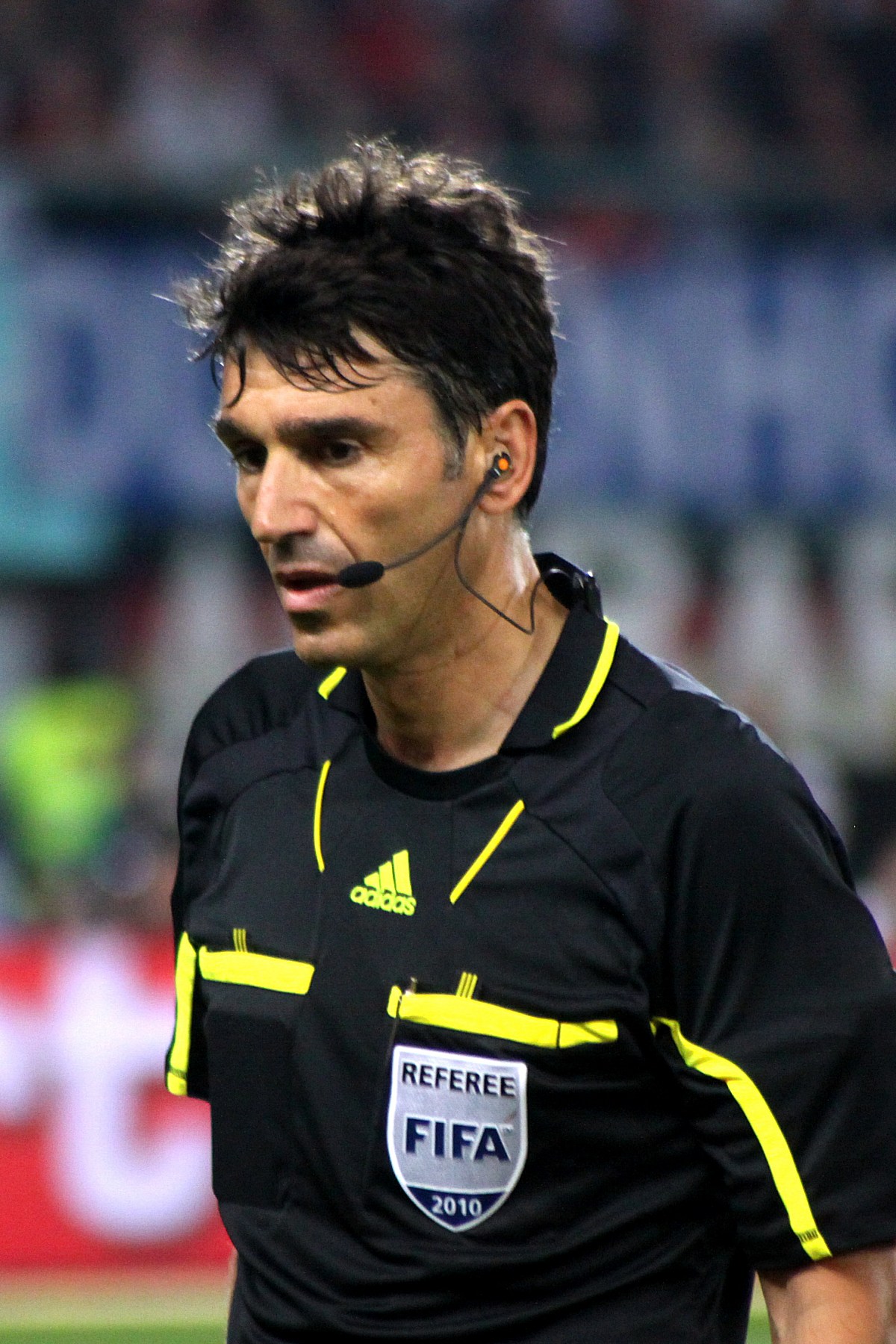
Massimo Busacca
 Switzerland
Birthday
February 6, 1969
Birth Sign
Aquarius
Birthplace
Bellinzona, Switzerland
Age
57 years old
About
Massimo Busacca is a Swiss former football referee who currently serves as FIFA's Director of Refereeing. Born in Bellinzona, Switzerland, he oversaw some of the sport's most high-profile matches before moving into administration. His current role places him at the center of global refereeing standards, where he shapes policy, technology adoption, and the development of match officials.
As of 2026, Busacca remains one of the most influential figures in football officiating, known for his calm authority on the pitch and his steady hand in the executive suite. His career has been defined by a commitment to fairness and innovation, from his time in the middle of Champions League finals to his advocacy for video assistant referees.
Early Life & Background
Massimo Busacca was born on February 6, 1969, in Bellinzona, the capital of the Italian-speaking canton of Ticino in Switzerland. Growing up in this region, he developed a deep connection to football, though details of his early years remain private. He took up refereeing in 1990 at the age of 21, starting in the lower divisions of Swiss football.
The path to the top was gradual. Busacca worked his way through the Swiss league system, officiating hundreds of domestic matches before earning his FIFA badge. This long apprenticeship gave him a thorough understanding of the game's nuances, which later became a hallmark of his refereeing style. By the late 1990s, he was a regular in Switzerland's top flight, and his consistent performances opened the door to international appointments.
Career Growth
Busacca's international career took off in the 2000s as he became a familiar figure in UEFA competitions. In 2009, he reached the pinnacle of club football refereeing when he was appointed to take charge of the UEFA Champions League final between Barcelona and Manchester United in Rome. That same year, the International Federation of Football History & Statistics named him the World's Best Referee, a testament to his outstanding consistency.
He followed that with the 2010 UEFA Super Cup and a spot at the FIFA World Cup in South Africa. However, his most talked-about match came in March 2011, when he sent off Arsenal's Robin van Persie during a Champions League round-of-16 clash against Barcelona. The decision sparked fierce debate, yet just months later, FIFA appointed him as its Director of Refereeing, a role he has held since. In this capacity, he has championed VAR, describing it as a lifeline for referees, and continues to shape officiating standards worldwide.
Career Timeline
Public Image & Style
Throughout his career, Busacca has been perceived as a composed and authoritative referee, known for clear decision-making and a calm on-pitch presence. His handling of the controversial 2011 van Persie red card drew criticism from Arsenal fans, yet he retained the respect of football's governing bodies. As FIFA's refereeing director, he is seen as a modernizer, pushing for technological advancements like VAR and improved referee training. While referees rarely attract fan followings, Busacca is respected within the football community for his integrity and dedication to the craft.
Fame & Fandom (iFAMOUS Rankings)
Massimo Busacca occupies a unique space in football culture where the audience is defined by professional scrutiny rather than adoration. Unlike pop stars or athletes with active followings who engage in birthday billboards or charity drives, Busacca's public profile remains that of a high-ranking administrative official and former referee. His relationship with the "fans" is strictly professional; he has never engaged in direct fan interaction, meet-and-greets, or charitable initiatives funded by supporters. The lack of a formal fandom stems from his role: as a referee, he was often the subject of controversy rather than adoration, and as FIFA Director of Refereeing, he operates behind the scenes of football governance rather than as a celebrity figurehead. Consequently, there are no documented instances of fans calling themselves by a specific name or creating inside jokes centered on his personal life. While his legacy is built on competence and longevity, particularly regarding the 2011 Barcelona–Arsenal semi-final which remains a flashpoint for debates about refereeing standards, this has not translated into a devoted following in the traditional sense. His influence is felt through policy and technology adoption rather than crowd disruption or viral moments. iFANN has evaluated his global standing, but Massimo Busacca does not currently hold a placement in the published rankings (Global Top 1,000 or a Top-100 scope list). This absence of a ranked position reflects his status as an architect of officiating protocols rather than a folk hero with a massive public footprint.
Interesting Facts and Legends
Busacca became a referee in 1990, the same year he turned 21, marking the start of a journey that would see him oversee some of the sport's most high-profile matches. He is one of the few officials to have refereed both the Champions League final and the UEFA Super Cup in consecutive seasons, a feat that cemented his reputation early in his international career. The 2011 Barcelona–Arsenal match remains a case study in refereeing analysis, with Goal.com publishing a decision-by-decision breakdown of his performance during Barcelona's dramatic comeback. Fans still retell the story of how he handled the intense pressure of that night, a moment dissected by pundits for its impact on modern officiating lore. Another significant chapter occurred when he was selected to referee the 2010 UEFA Super Cup between Inter Milan and Atlético Madrid, further adding to his resume of high-pressure events. Beyond the pitch, Busacca has spoken about the sleepless nights that high-pressure matches caused during his career. He resides in Monte Carasso, a small municipality near Bellinzona, rather than a major football hub, preferring a quiet life away from the spotlight even as he shapes global refereeing standards.
Notable Quotes
“I would be losing touch with reality if I set myself the World Cup final as my goal now.”
“VAR is a lifeline for beleaguered referees.”
Family & Personal Life
Massimo Busacca keeps his family life strictly private. There is no public record of a spouse, children, or other family members. He resides in Monte Carasso, a quiet municipality near his birthplace of Bellinzona in the canton of Ticino. This preference for a low-profile personal life extends to his professional interactions, where he rarely discusses matters outside football officiating.
Notable Connections
Busacca has worked closely with his predecessor José María García-Aranda, who held the FIFA refereeing director role before him. He has also mentored Sandro Schärer, the Swiss referee who became the first from the country to officiate at a World Cup in 16 years. On the pitch, his most notable interaction was with Robin van Persie, whose sending-off in 2011 became a defining moment in Busacca's career.
Relationships & Dating History
Massimo Busacca has maintained a remarkably private personal life, and no public relationships have been documented. There is no credible information available about his dating history, marriage, or family. As of 2026, his relationship status remains unknown, and he has not publicly addressed the matter. This level of privacy is uncommon among public figures, but Busacca has consistently kept his focus on his professional responsibilities.
Salary, Net Worth In 2026
$5 Million
iFANN Editorial Team estimate
Massimo Busacca's net worth is not publicly documented, but as FIFA's Director of Refereeing, he commands a substantial executive salary. Prior to this role, he earned match fees from top UEFA and FIFA competitions during his refereeing career. He also receives income from speaking engagements, as he is listed as a speaker by Globe Soccer. While exact figures are unavailable, his financial standing reflects a long and distinguished career in football's upper echelons. Per iFANN's editorial analysis, his estimated net worth is around $5 million as of 2026.
Awards Won (1)
Massimo Busacca's most prestigious accolade came in 2009 when he was named the IFFHS World's Best Referee, an award recognizing the top official in world football for that calendar year. This honor highlighted his exceptional consistency and performance, particularly his handling of the UEFA Champions League final that season.
2009 · Refereeing
2009 season performances
Known For
UEFA Champions League Final 2009
2009 · Referee
UEFA Super Cup 2010
2010 · Referee
FIFA World Cup 2010
2010 · Referee
FIFA Director of Refereeing
2011-present · Director
Keywords
Sources
Quick Facts
- Profession
- association football referee
- Born
- February 6, 1969
- Birthplace
- Bellinzona, Switzerland
- Gender
- Male
- Birth Sign
- Aquarius
- Current Role
- FIFA Director of Refereeing
- Residence
- Monte Carasso, Switzerland
- Net Worth (2026)
- $5 Million
Frequently Asked Questions
Is Massimo Busacca retired?
What is Massimo Busacca's net worth?
How old is Massimo Busacca?
Is Massimo Busacca married?
What matches did Massimo Busacca referee?
Similar People
Join the community
fans discussing