 Saudi Arabia
About
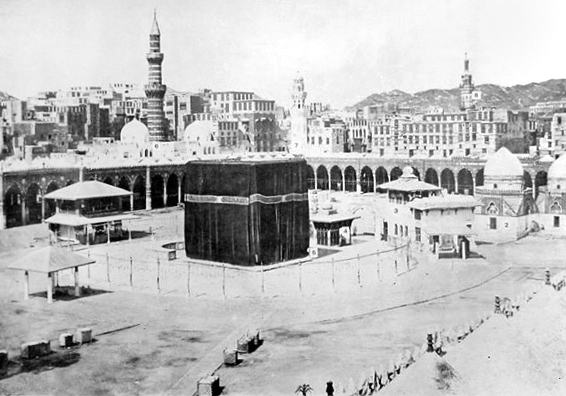
Masjid al-Haram, the Sacred Mosque, stands at the heart of Mecca, Saudi Arabia, as the holiest site in Islam. Every day, millions of Muslims around the world turn toward it in prayer, and each year, millions more make the pilgrimage to its courtyard. The mosque encompasses the Kaaba, the cube-shaped structure that Muslims believe was first built by Abraham and his son Ishmael as a house of worship for the one God. Today, it is the largest mosque in the world, a title it has held for centuries, and it remains the focal point of the Hajj and Umrah pilgrimages.
The current structure is the result of centuries of expansion and renovation, with the latest major projects completed in the 21st century. The mosque is managed by the Saudi government, which has invested billions of dollars to accommodate the ever-growing number of worshippers. As of 2026, it is not only the largest mosque but also the most expensive building ever constructed, with ongoing expansions pushing its capacity to over two million people during peak pilgrimage times.
For Muslims, Masjid al-Haram is more than just a building; it is the spiritual center of their faith. The mosque's significance is deeply rooted in Islamic history and theology, and its role as the destination of the Hajj, one of the Five Pillars of Islam, makes it a place of profound personal and collective meaning. While it is not a film or a television show, its story is one of faith, architecture, and the enduring human desire to connect with the divine.
Mission
Masjid al-Haram serves as the spiritual focal point of Islam, providing a sacred space for Muslims to perform the rites of Hajj and Umrah, the pilgrimage that is one of the Five Pillars. Its purpose is to honor the Kaaba, the house of God built by Abraham, and to welcome millions of worshippers each year, offering them a place for prayer, reflection, and connection to their faith. The mosque also functions as a center for Islamic learning and community, guided by the principles of the Quran and the traditions of the Prophet Muhammad.
History
The story of Masjid al-Haram begins with the Kaaba itself. Muslims believe that Abraham and his son Ishmael raised the foundations of the Kaaba as a house of worship for the one God, commanded by divine revelation. Over the centuries, the structure was rebuilt and expanded by various tribes and rulers. The Prophet Muhammad cleansed the Kaaba of idols in 630 CE, establishing it as the monotheistic center of Islam.
The mosque as it exists today grew through a series of major expansions. The Umayyad caliphs and later Abbasid rulers added arcades and decorations. In the 16th century, the Ottoman sultans undertook significant renovations. But the most dramatic changes came in the 20th and 21st centuries under Saudi rule. King Abdulaziz initiated the first Saudi expansion in the 1950s, and successive kings continued the work. The most recent phase, completed in the 2010s, added vast prayer halls, escalators, and a new ring of buildings around the Kaaba.
In October 2025, Crown Prince Mohammed bin Salman announced a new multi-use development project for the pilgrimage site, designed to add more space for visitors and improve the experience of pilgrims. The project is part of Saudi Vision 2030, which aims to increase the capacity for Umrah and Hajj. The mosque has also seen its share of challenges; in November 2025, Egypt contacted Saudi authorities over an alleged altercation between a pilgrim and a security officer, and in December 2025, a man attempted suicide by jumping from the upper floors, but was dramatically saved by a security officer. Despite these incidents, the mosque remains the beating heart of Islamic worship, drawing 1.7 million pilgrims for the Hajj in 2026.
Subdivisions
Kaaba
The cube-shaped shrine at the center of the mosque, the holiest site in Islam, toward which Muslims worldwide pray.
Black Stone
A sacred stone set into the eastern corner of the Kaaba, kissed or touched by pilgrims during tawaf.
Zamzam Well
A well located within the mosque, believed to have miraculously provided water for Hagar and Ishmael; pilgrims drink from it.
Station of Abraham
A stone said to bear the footprints of Abraham, near the Kaaba, where pilgrims pray after tawaf.
Al-Safa and Al-Marwah
Two small hills connected by the Sa'i ritual, commemorating Hagar's search for water.
Maktabat Makkah al-Mukarramah
A library within the mosque complex housing Islamic manuscripts and historical texts.
Notable People
Kaaba
Sacred shrine
Direction of prayer for all Muslims
Black Stone
Sacred relic
Kissed by pilgrims during tawaf
Zamzam Well
Sacred well
Provides water for pilgrims
Station of Abraham
Sacred site
Site of prayer after tawaf
Al-Safa and Al-Marwah
Sacred hills
Site of Sa'i ritual
Maktabat Makkah al-Mukarramah
Library
Preserves Islamic manuscripts
Milestones
630 CE
Prophet Muhammad cleanses the Kaaba of idols, establishing it as the center of Islamic worship.
1950s
First major Saudi expansion begins under King Abdulaziz.
2010s
Major expansion adds vast prayer halls and modern facilities.
2025-10-15
Crown Prince Mohammed bin Salman announces a new multi-use development project for the pilgrimage site.
2026-05-27
Saudi Arabia reports 1.7 million pilgrims performed Hajj during the 1447 AH season.
Sources
Organization Info
- Headquarters
- Mecca, Saudi Arabia
- Country
- Saudi Arabia
- Type
- Religious
- Largest mosque in the world
- Yes
- Capacity during peak times
- Over 2 million
- Most expensive building ever constructed
- As of 2026
Official Website
www.gph.gov.sa/
Join the community
fans discussing