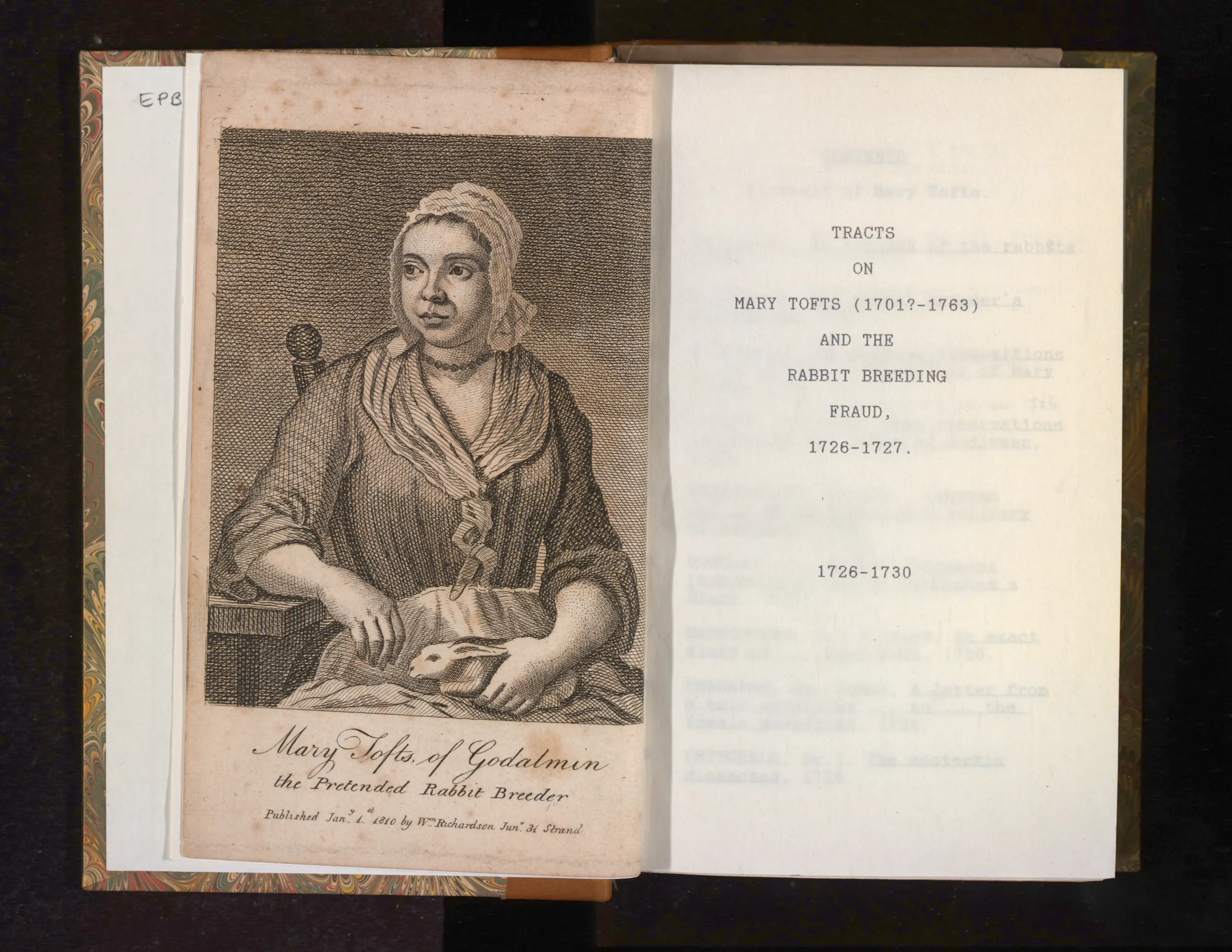
Mary Toft
 United Kingdom
Also known as: Mary Tofts, Mary Denyer
Birthday
February 21, 1703
Birth Sign
Sagittarius
Birthplace
Godalming, Surrey, England
Age
Died at 59
About
Mary Toft (née Denyer; baptised 21 February 1703 – January 1763) was an English woman from Godalming, Surrey, best known for orchestrating one of the most famous medical hoaxes in history. In 1726, she convinced a team of elite physicians and surgeons that she had given birth to rabbits, a claim that captivated the nation before collapsing under scrutiny. Her brief moment of infamy exposed deep-seated anxieties regarding women's bodies, medical authority, and the gullibility of the British elite during the Georgian era.
The affair remains a pivotal case study in the history of medicine and misinformation. While Toft herself lived out the rest of her life in poverty and obscurity after her confession, the scandal caused a crisis of confidence within the medical profession. It led to increased skepticism regarding female patients' testimonies and damaged the careers of those who had been duped. Today, she is remembered not as a celebrity in the modern sense, but as a figure whose deception revealed the fragility of scientific certainty in the 18th century.
Early Life & Background
Mary Toft was born into a poor family in Godalming, Surrey, likely around early 1703 based on her baptism record. Her father, William Denyer, worked as a weaver, and the family lived in modest rural circumstances. Growing up in this agricultural community, Toft received no formal education and remained illiterate throughout her life. Before her rise to infamy, she worked as a domestic servant, a common occupation for women of her social standing in the early 18th century.
On April 25, 1724, at the age of twenty-one, she married James Toft, a shepherd who later worked as a gamekeeper. The couple settled into a quiet life in Godalming and started a family. They had two children: a son who died in infancy and a daughter named Mary, born in 1725. By 1726, Mary Toft was a mother of one living child and pregnant with her third. Her days were filled with the routine labor of household management and childcare, far removed from the public eye until a strange series of events began that summer.
Career Growth
In August 1726, while heavily pregnant, Toft experienced a miscarriage following what she claimed was a frightening encounter with a rabbit. Shortly after this event, she began reporting that she was giving birth to various animal parts, starting with pieces of flesh and eventually claiming to have delivered live rabbits. This claim quickly attracted the attention of John Howard, a local surgeon, who examined her and became convinced of the phenomenon. Howard notified other prominent physicians, including Nathaniel St. André, the surgeon to the Royal Household of King George I.
St. André, along with Cyriacus Ahlers, another surgeon sent by the King, traveled to Godalming and then brought Toft to London to be studied under the watchful eyes of the medical establishment. For several weeks, Toft "delivered" multiple rabbits, which were examined by the doctors. The hoax captivated the nation, with crowds gathering to see the "Rabbit Queen." However, the deception unraveled when Toft was placed under constant surveillance. Unable to produce any more rabbits, she eventually confessed to the fraud in March 1727. It was revealed that she and her husband, along with her brother-in-law, had been stuffing dead rabbits into her vagina to simulate the births.
Career Timeline
Public Image & Style
In the 18th century, Mary Toft was viewed primarily as a fraudster and a spectacle, a figure of ridicule rather than admiration. Her image was constructed by the very men who tried to expose her, painting her as a cunning deceiver who manipulated the medical establishment. Satirists like William Hogarth cemented her reputation as a symbol of foolishness and deceit, depicting her in caricatures that mocked her physical appearance and actions. The public perception shifted from curiosity to scorn once the truth emerged, turning her into a cautionary tale about the dangers of believing in the impossible.
Fame & Fandom (iFAMOUS Rankings)
iFANN has not yet collected fame data for this person. As of the November 2026 rankings, she does not appear in the current published placement lists. She is not featured on the September 2026 iFAMOUS Rankings flagship list. While she does not have a modern fanbase with organized campaigns or rituals, her story continues to attract interest from history enthusiasts and students of medical ethics. The "fans" of Mary Toft today are largely academic readers and those interested in historical anomalies who follow her case through books, documentaries, and online articles rather than traditional celebrity fandom structures.
Interesting Facts and Legends
The number of rabbits Toft supposedly gave birth to varied wildly in different reports, with some accounts claiming she delivered as many as seventeen individual animals. The hoax was so convincing that even the King's own personal surgeons were initially deceived, leading to a massive embarrassment for the medical community. William Hogarth, the famous satirist, created a series of engravings mocking the event, including works like The Rabbits, which ridiculed the gullibility of the doctors involved. Some historians compare the incident to modern cases of Munchausen syndrome by proxy, though the context of 18th-century medicine makes the comparison complex. The scandal also sparked a wave of pamphlets and broadsheets that debated whether such a thing was physically possible, fueling public fascination with the bizarre nature of the case.
Family & Personal Life
Mary Toft came from a working-class background as the daughter of William Denyer, a weaver. She married James Toft, a shepherd and gamekeeper, in 1724. The couple had two children together: a son who died as an infant and a daughter named Mary, born in 1725. Historical records indicate that her brother-in-law was also implicated in the rabbit hoax, suggesting a close-knit family dynamic where relatives participated in the scheme. Despite the scandal ruining their social standing, the couple remained married until Mary's death, though they lived in relative poverty afterward.
Notable Connections
Relationships & Dating History
Mary Toft was married to James Toft, a shepherd and gamekeeper, beginning on April 25, 1724. Their union produced two children, though only their daughter Mary survived infancy. The relationship was deeply affected by the rabbit hoax scandal of 1726-1727, which ruined their social standing and led to James's implication in the fraud. Although they faced public ridicule and imprisonment, there is no record of divorce or separation; they remained married until Mary's death in 1763. James Toft predeceased his wife or they remained together until her passing, as there is no evidence of remarriage on her part. No other romantic relationships are documented in historical records.
- MarriedJames Toft1724 - 1763Remained married until Mary's death despite the scandal.
Death & Aftermath
Died
January 13, 1763 (aged 59)
Death Place
Godalming, Surrey, England
Cause of Death
Natural causes
Following her confession in March 1727 that she had stuffed dead rabbits into her body to deceive the medical community, Mary Toft faced a brief period of imprisonment at Bridewell Prison. The scandal had already shattered the reputations of several prominent surgeons who had vouched for her claims, but authorities released Toft without formal charges. Historians suggest this leniency stemmed from the lack of concrete evidence proving she acted entirely alone and the possibility that she was coerced by her husband James and brother-in-law. After her release, she returned to Godalming where she gave birth to a healthy human child, effectively disproving her earlier supernatural claims.
Toft spent the remaining thirty-six years of her life in relative obscurity, stripped of the notoriety that had once surrounded her. She died in January 1763 at approximately sixty years of age and was buried on January 13 in the parish churchyard of Godalming. No official records detail the specific circumstances of her final days or a cause of death beyond natural aging. Her estate was never formally valued or managed through public channels, leaving no financial legacy behind. In the centuries since, her story has evolved from a source of public mockery into a subject of serious historical analysis regarding women's bodies and medical authority.
Net Worth (Estate Value)
$0
iFANN Editorial Team estimate
Mary Toft lived in the early 18th century when the concept of personal net worth did not apply to individuals of her station. As a poor servant and later a pariah following her confession, she possessed minimal assets that would have dissipated long before her death. There are no estate valuations, posthumous earnings, or royalty streams associated with her name in the way modern celebrities have. Her value today is purely cultural and academic, derived from the enduring interest in her story rather than any financial accumulation. The iFANN Editorial Team estimates her net worth at $0 given her historical status and lack of surviving wealth.
Awards & Accolades
Known For
The Rabbit Hoax
1726 · Perpetrator
Keywords
Sources
Quick Facts
- Born
- February 21, 1703
- Birthplace
- Godalming, Surrey
- Died
- January 13, 1763
- Death Place
- Godalming, Surrey
- Gender
- Female
- Birth Sign
- Sagittarius
Personal Details
- Full Name
- Mary Denyer
- Spouse
- James Toft
- Children
- Mary Toft (daughter)
- Education
- Illiterate
Frequently Asked Questions
Did Mary Toft really give birth to rabbits?
Why did Mary Toft fake the rabbit births?
What happened to Mary Toft after the hoax was revealed?
How did the medical community react to the Mary Toft hoax?
Is there a book about Mary Toft?
Similar People
Join the community
fans discussing