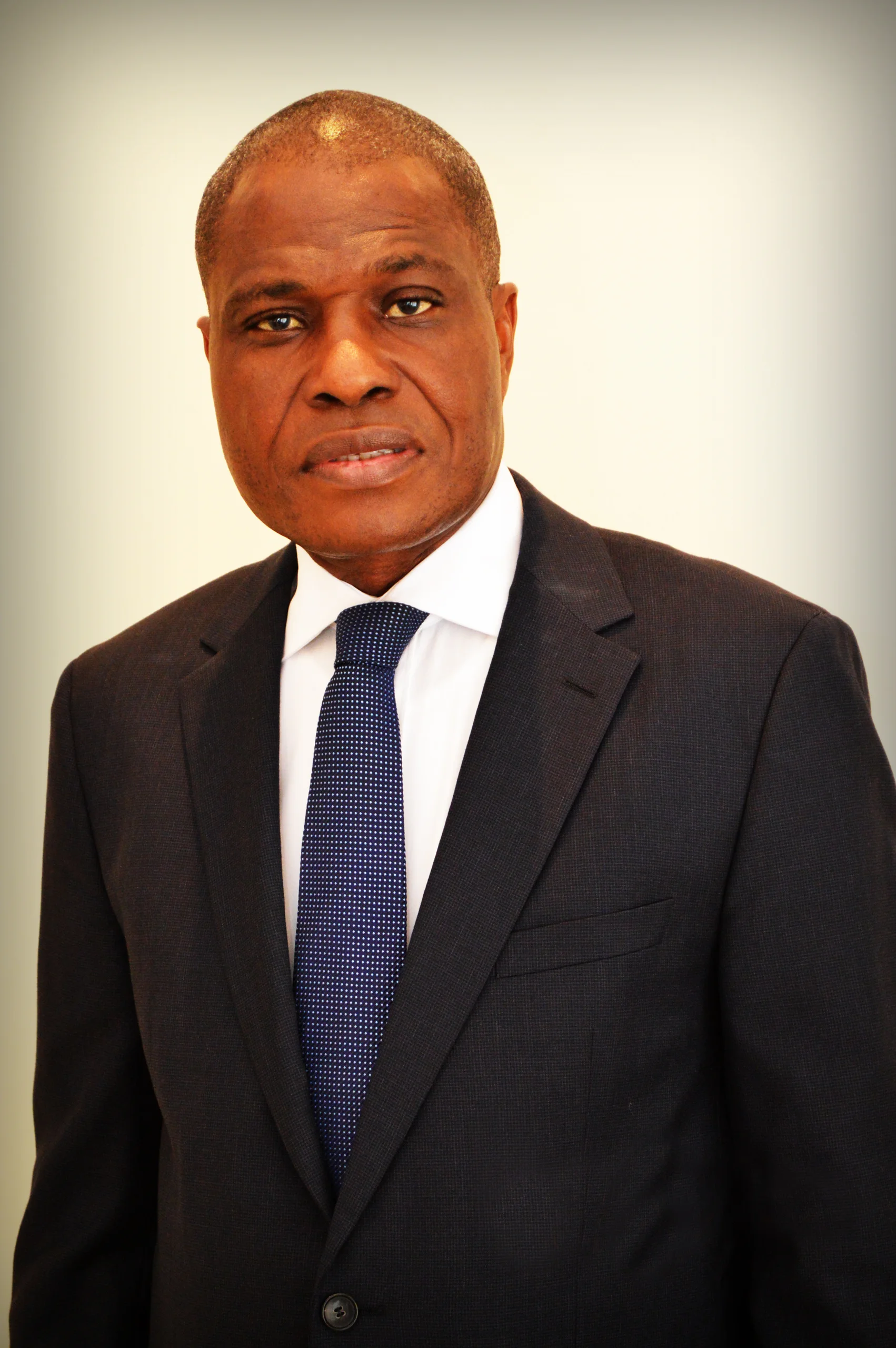
Martin Fayulu
 DR Congo
politician•entrepreneur•president
Also known as: Martin Fayulu Madidi, Martin Madidi Fayulu
Birthday
November 21, 1956
Birth Sign
Scorpio
Birthplace
Kinshasa
Age
69 years old
About
Martin Madidi Fayulu is a Congolese politician and businessman who serves as the president of the Engagement for Citizenship and Development party, widely known by its acronym ECIDE. Since emerging as a leading opposition figure in the Democratic Republic of the Congo, he has become one of the most recognizable faces in the country's political arena. Fayulu ran for president in both 2018 and 2023, and he remains a vocal critic of President Félix Tshisekedi, frequently calling attention to issues of electoral integrity and democratic governance.
Beyond politics, Fayulu has a background in business, which has informed his public image as a pragmatic leader. He is also associated with the Lamuka coalition, a platform that brings together several opposition groups. As of 2026, he continues to organize and participate in protests against constitutional changes that he argues are designed to extend Tshisekedi's hold on power. His political journey has drawn national and international attention, and he maintains an active presence on social media to share his views and rally supporters.
Early Life & Background
Martin Fayulu was born on November 21, 1956, in Kinshasa, the capital of what was then the Belgian Congo. Details about his early childhood and schooling are not widely documented, but he grew up in a country that was undergoing significant political change, gaining independence in 1960. As a young man, Fayulu pursued business interests, and he eventually built a career as an entrepreneur. This business background would later shape his political approach, emphasizing economic development and practical governance.
Fayulu entered the political scene in the 1990s, a turbulent period marked by the fall of Mobutu Sese Seko and the First Congo War. He became involved in civil society and opposition politics, advocating for democratic reforms. Over the years, he held various roles within opposition movements and gained a reputation as a persistent critic of successive governments. By the early 2010s, he had established himself as a prominent voice for change, and in 2014, he founded ECIDE to provide a platform for his political vision. The party's name reflects his focus on civic engagement and national development.
Career Growth
Fayulu's political career reached a turning point in late 2018 when seven opposition leaders selected him as their unified candidate for the presidential election. This coalition aimed to present a strong challenge to the ruling party. However, the alliance unraveled when Félix Tshisekedi and Vital Kamerhe withdrew their support just days before the vote, forming their own pact. Despite this setback, Fayulu ran as the candidate for the Lamuka coalition, and he has since disputed the official results that declared Tshisekedi the winner, citing evidence of widespread irregularities.
In the years that followed, Fayulu continued to lead the opposition, organizing protests and speaking out against government policies. He confirmed his candidacy for the December 2023 election, but again, Tshisekedi was declared the victor. Fayulu has rejected these results and has called for international scrutiny. More recently, in May 2026, he accused Tshisekedi of wanting to "cling to power at any cost" amid debates over a new constitution. He has been a key organizer of "dead city" protests in 2026, and he was reportedly injured during clashes with security forces in Kinshasa in June of that year.
Career Timeline
Public Image & Style
Martin Fayulu is perceived as a determined and principled opposition leader, often seen as a counterweight to President Tshisekedi. His public image is that of a straight-talking politician who is not afraid to challenge the status quo. He is known for his energetic rallies and his ability to mobilize supporters, particularly in urban areas. Fayulu's social media presence, especially on X (formerly Twitter), is a mix of political commentary, calls to action, and updates on his activities. Supporters view him as a champion of democracy, while critics sometimes label him as obstructionist. Regardless of opinion, his influence in Congolese politics is undeniable.
Fame & Fandom (iFAMOUS Rankings)
Martin Fayulu commands a base defined not by leisure or celebrity worship, but by the high-stakes machinery of political resistance. His supporters are members of the Engagement for Citizenship and Development party and the broader opposition coalition, mobilized through rallies and protests rather than streaming campaigns or birthday billboards. The energy surrounding him stems from a singular, enduring narrative: the belief that he won the 2018 presidential election despite official results declaring his rival the winner. This conviction transformed his followers into a movement dedicated to electoral integrity, distinguishing their activism from the rituals typical of pop culture fanbases. While he maintains a sharp digital presence on platforms like X, the interaction remains focused on live updates and political messaging rather than the curated intimacy seen with entertainment stars. His influence fluctuates with the political climate, surging during moments of constitutional crisis or when opposition figures face state pressure. Despite this potent, volatile following, iFANN's Global Fame Engine has evaluated Martin Fayulu, but he does not currently hold a placement in the published rankings (Global Top 1,000 or a Top-100 scope list).
Interesting Facts and Legends
Martin Fayulu is known for his distinctive speaking style, often delivering impassioned speeches in French and Lingala. He is an avid reader of political history and has cited figures like Nelson Mandela as influences. In his youth, he was a competitive swimmer, a fact he rarely mentions in public. Fayulu is also a practicing Catholic and has spoken about how his faith guides his political convictions. He has a reputation for punctuality, often arriving early to meetings and events. A central pillar of his modern legend is the widely held belief among his supporters and international observers that he actually secured a majority in the December 2018 presidential election. Data leaks from the Congolese electoral commission suggested this victory, yet official results declared Félix Tshisekedi the winner. This event transformed Fayulu from a candidate into a symbol of democratic resistance, leading him to refer to himself on social media as the "Président élu." Recent years have added new chapters to this lore, particularly in 2026, where reports indicated he took a clear lead ahead of an election scheduled for August 5. During this period, violence erupted at anti-government protests, with opposition figures injured, reinforcing his role as the primary antagonist to the current administration's plans for a third term.
Notable Quotes
“Tshisekedi wants to cling to power at any cost.”
“We will not accept an election that is not transparent.”
“The future of the DRC depends on respecting the will of the people.”
Family & Personal Life
Information about Martin Fayulu's family is scarce, as he tends to keep his personal life private. He is known to be married, but his wife's name and details about their relationship have not been publicly disclosed. The couple has children, though their names and ages are not widely reported. Fayulu has occasionally mentioned his family in interviews, emphasizing the importance of stability and education for the next generation. He resides in Kinshasa, where he balances his political duties with family time.
Notable Connections
Martin Fayulu is closely associated with the Lamuka coalition, a political platform that unites several opposition parties. He has also worked alongside other opposition figures, including Vital Kamerhe, though their alliance fractured in 2018. Internationally, he has engaged with organizations such as the Atlantic Council and Princeton University's Africa World Initiative, where he has discussed the DRC's political challenges.
Relationships & Dating History
Martin Fayulu is known to be married, but he has kept his personal life out of the public eye. There are no public records of previous marriages, divorces, or high-profile relationships. His spouse's name and the details of their relationship have not been shared in the media. As of 2026, he is reported to be married, though his wife remains out of the spotlight. Fayulu's public life is dominated by his political career, and he rarely discusses his family in interviews.
Salary, Net Worth In 2026
Martin Fayulu's net worth is not publicly documented, and he has not been the subject of typical celebrity net worth estimates. As a businessman and politician, his income likely derives from his entrepreneurial activities and political engagements. However, without credible financial disclosures, it is not possible to provide a reliable figure. His focus has been on political activism rather than personal wealth accumulation.
Awards & Accolades
Known For
Presidential Candidacy 2018
2018 · Opposition Candidate
Presidential Candidacy 2023
2023 · Opposition Candidate
Leadership of ECIDE
2014 · Party President
Keywords
Sources
Quick Facts
- Profession
- politician, entrepreneur, president
- Born
- November 21, 1956
- Birthplace
- Kinshasa
- Gender
- Male
- Birth Sign
- Scorpio
Personal Details
- Full Name
- Martin Madidi Fayulu
Frequently Asked Questions
Who is Martin Fayulu?
What is Martin Fayulu known for?
What is Martin Fayulu's political party?
Did Martin Fayulu win the DRC election?
What is Martin Fayulu's stance on President Tshisekedi?
Social Media
Similar People
Join the community
fans discussing