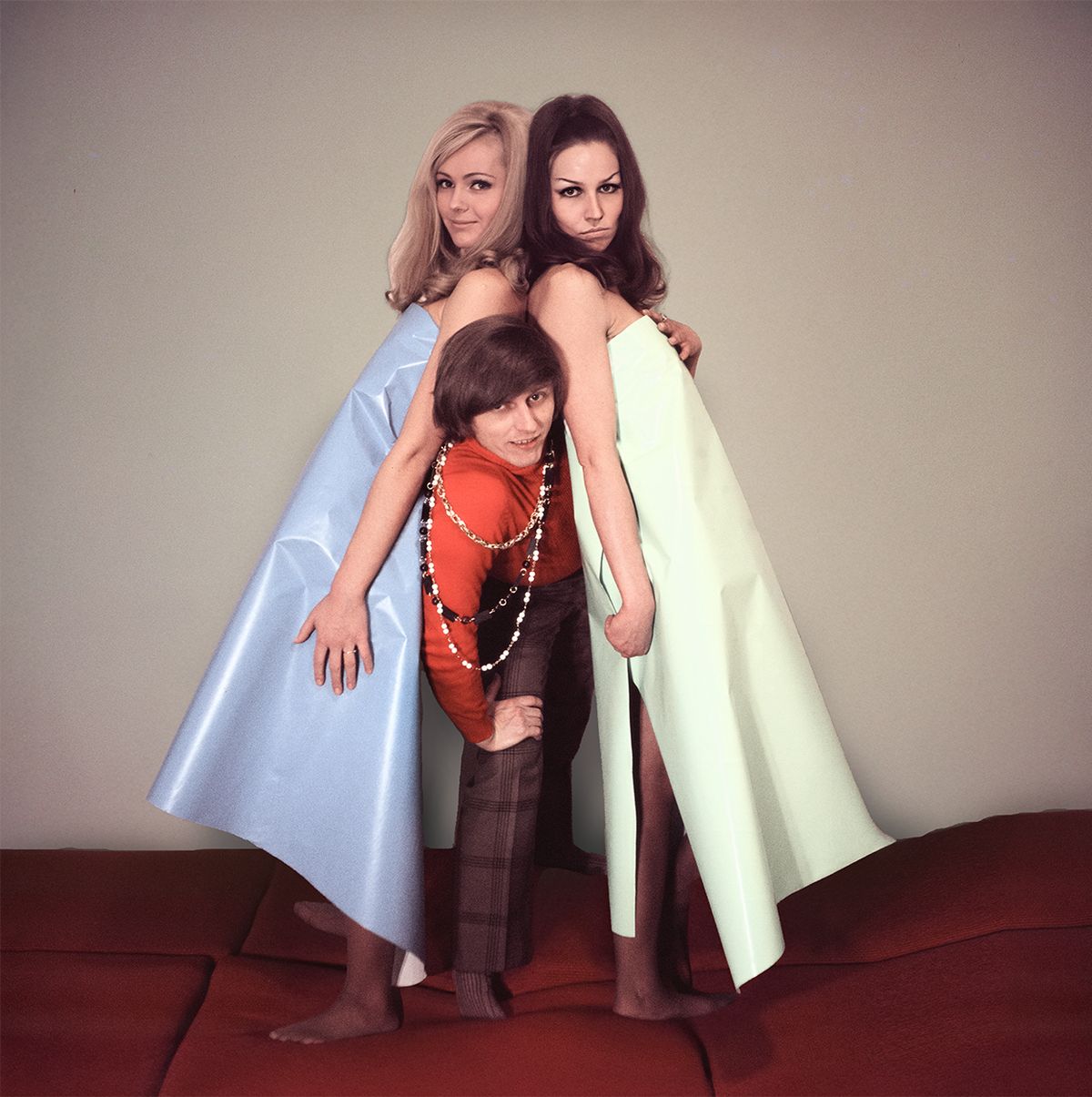
Marta Kubišová
 Czechia
Member of Golden Kids
Singer•actress•political activist
Also known as: Marta Kubisova
Birthday
November 1, 1942
Birth Sign
Scorpio
Birthplace
České Budějovice, Czechoslovakia (now Czech Republic)
Age
83 years old
About
Marta Kubišová is a Czech singer, actress, and former political dissident who became one of the most beloved voices in Czechoslovak music. Born on November 1, 1942, in České Budějovice, she first captured the nation's heart in the 1960s as a member of the pop group Golden Kids, alongside Helena Vondráčková and Václav Neckář. Her 1967 hit "Modlitba pro Martu" (A Prayer for Marta) turned her into a symbol of resistance during the Prague Spring of 1968, and it remains an enduring anthem of Czech defiance.
Today, Kubišová is revered as a national treasure. Her career was brutally silenced by the communist regime in 1970, but she never stopped fighting for freedom, signing Charter 77 and later serving as one of its spokespeople. After the Velvet Revolution in 1989, she made a triumphant return to the stage, and her music has since been reissued and celebrated. In October 2025, she was honored on a special edition of Czech postage stamps, a fitting tribute to a woman whose voice carried a nation through its darkest hours.
Early Life & Background
Marta Kubišová was born on November 1, 1942, in České Budějovice, a city in the South Bohemian Region of what was then Czechoslovakia. Growing up in the aftermath of World War II, she was drawn to music from an early age, though details of her childhood and schooling remain scarce. Her first taste of the spotlight came in the early 1960s, when she began performing in the Czechoslovak pop scene. She quickly caught the attention of audiences with her warm, powerful voice and natural stage presence.
In 1967, Kubišová won the prestigious Zlatý slavík (Golden Nightingale) award, voted by the public as the most popular female singer in the country. That same year, she joined forces with Helena Vondráčková and Václav Neckář to form Golden Kids, a group that would become a phenomenon. Their harmonies and youthful energy made them instant stars, and Kubišová's solo work flourished alongside the group's success. By 1968, she had recorded over 200 singles and was on the verge of international recognition.
Career Growth
Kubišová's career reached its zenith during the Prague Spring of 1968. Her recording of "Modlitba pro Martu" became an unofficial anthem of the reform movement, played across radio stations as Soviet tanks rolled in. The song's emotional power turned her into a symbol of national resistance. In 1969, she released the LP Songy a Balady (Songs and Ballads), but it was immediately banned by the communist authorities.
The regime silenced her in 1970, forbidding her from performing or recording. Undeterred, Kubišová worked behind the scenes, arranging music for films like Dívka na Koštěti (The Girl on a Broomstick) in 1971. She became a signatory of Charter 77 in 1977 and later served as one of its spokespeople, risking her freedom to advocate for human rights. After the Velvet Revolution in November 1989, she made a dramatic comeback, performing "Modlitba pro Martu" to crowds in Wenceslas Square. Her music was finally re-released, including the compilation Lampa. In September 2017, she returned to the studio to record a new version of "Modlitba pro Martu" with friends, and in 2025, she was honored with a special Czech postage stamp.
Career Timeline
Public Image & Style
Kubišová's public image is defined by her dual legacy as both a pop star and a political symbol. In the 1960s, she was Czechoslovakia's sweetheart, with a glamorous style and a voice that resonated across the nation. After 1970, she became a dissident, and her image shifted to one of moral courage and resilience. Today, she is revered as a national treasure, often invoked at moments of national significance. Her signature song "Modlitba pro Martu" remains a cultural touchstone, and she is celebrated for her dignity and integrity. Media portrayals emphasize her role in challenging communism, with Radio Prague International calling her "the great singer and dissident."
Fame & Fandom (iFAMOUS Rankings)
Marta Kubišová commands a global audience defined by deep historical reverence rather than viral trending. Her voice remains a resonant symbol of Czech identity, yet the iFANN Global Fame Engine has evaluated her current standing and determined she does not hold a placement in the published Global Top 1,000 or any Top-100 scope list. She is currently unranked within these specific metrics. The fanbase for Kubišová has no formal name documented in available records. Unlike modern pop phenomena driven by organized streaming campaigns or dedicated charity drives, adoration for the singer emerged from the intense cultural and political climate of the 1960s. Crowds gathered outside venues with a hysteria reminiscent of Beatlemania, though specific rituals or inside jokes among fans have not been preserved in historical archives. Her interaction with supporters was largely mediated through state-controlled media and live performances where her popularity manifested as public emotional outbursts. While no official collective noun exists for her followers, the enduring power of her anthem ensures that any public performance generates profound responses, cementing her legacy without a structured fandom brand.
Interesting Facts and Legends
Kubišová recorded more than 200 SP records during her career, an extraordinary output for the era. She is credited as an actress and publicist, appearing in films such as Bylo ctvrt a bude pul (1968) and Martyrs of Love (1967). Her rendition of "Hey Jude" appears in the film The Unbearable Lightness of Being. She once joked that she "borrowed" the melody for her song "Proudy" from Aretha Franklin, a nod to her musical influences. Despite the ban, she continued to work in the arts, arranging music for films. She is one of the few Czech artists whose work became synonymous with both pop culture and political resistance. A verified historical event surrounds the creation of "Modlitba pro Martu", which became the unofficial hymn of the Prague Spring. The song was banned shortly after release but sung spontaneously by crowds in streets and churches. In 1989, Kubišová performed the song publicly for the first time since the ban, triggering massive emotional reactions. Another iconic moment involves the sheer scale of her popularity in the 1960s, where concerts frequently caused disruptions. Reports indicate her voice had a unique ability to move audiences to tears. By 2010, a rivalry with Helena Vondráčková escalated into a bitter public dispute over royalties and legacy, culminating in court proceedings that ended the long-standing conflict.
Notable Quotes
“I borrowed the song 'Proudy' from Aretha Franklin.”
“The song 'Modlitba pro Martu' was not just a prayer for me, but for the whole nation.”
Family & Personal Life
Kubišová has kept her family life largely private. She was married twice, first to film director Jan Němec, known for works like Diamonds of the Night, and later to Jan Moravec. Both marriages ended in divorce, and she has not publicly discussed the details. She has no known children from either marriage. In recent years, she has lived quietly in Prague, where she continues to be a respected figure in Czech cultural life.
Notable Connections
Relationships & Dating History
Kubišová's romantic life has been marked by two marriages, both ending in divorce. Her first husband was Jan Němec, the acclaimed Czech film director known for Diamonds of the Night and A Report on the Party and the Guests. The marriage, which occurred in the 1960s, did not last, and the couple went their separate ways. Her second marriage was to Jan Moravec, about whom little is publicly known. That union also ended in divorce. As of 2026, Kubišová is not known to be in a relationship, and she has no publicly identified current partner.
- MarriedJan NěmecFirst husband, film director; marriage ended in divorce.
- MarriedJan MoravecSecond husband; marriage ended in divorce.
Salary, Net Worth In 2026
$1 Million
iFANN Editorial Team estimate
As of 2026, Marta Kubišová's net worth is estimated at $1 Million per iFANN's editorial analysis. While no official figures exist for a singer from the state-controlled era, her income stems from royalties on her recordings, particularly "Modlitba pro Martu", which continues to be played and licensed. She also earns from re-releases of her albums and from performances after the Velvet Revolution. Her pension from the Czech state provides a modest base. The estate has not engaged in major commercial ventures, and her earnings reflect a career that was interrupted by political persecution.
Awards Won (1)
Marta Kubišová won the prestigious Zlatý slavík (Golden Nightingale) award in 1967, recognizing her as the most popular female singer in Czechoslovakia. This public-voted honor cemented her status as a leading vocalist and remains a highlight of her career.
1967 · Most Popular Female Singer
Overall career
Known For
Modlitba pro Martu
1968 · Signature song, anthem of the Prague Spring
Songy a Balady
1969 · Solo album
Zlatý slavík
1967 · Award-winning singer
Keywords
Sources
Quick Facts
- Profession
- Singer, actress, political activist
- Born
- November 1, 1942
- Birthplace
- České Budějovice, Czechoslovakia
- Gender
- Female
- Spouse
- Jan Němec, Jan Moravec
- Birth Sign
- Scorpio
- Group
- Golden Kids
Personal Details
- Full Name
- Marta Kubišová
- Spouse
- Jan Němec, Jan Moravec
Filmography
3
Total
3
Film
0
TV
Frequently Asked Questions
What is Marta Kubišová famous for?
Is Marta Kubišová still alive?
What happened to Marta Kubišová's career under communism?
Was Marta Kubišová married?
What is Marta Kubišová's net worth?
Social Media
Similar People

Join the community
fans discussing