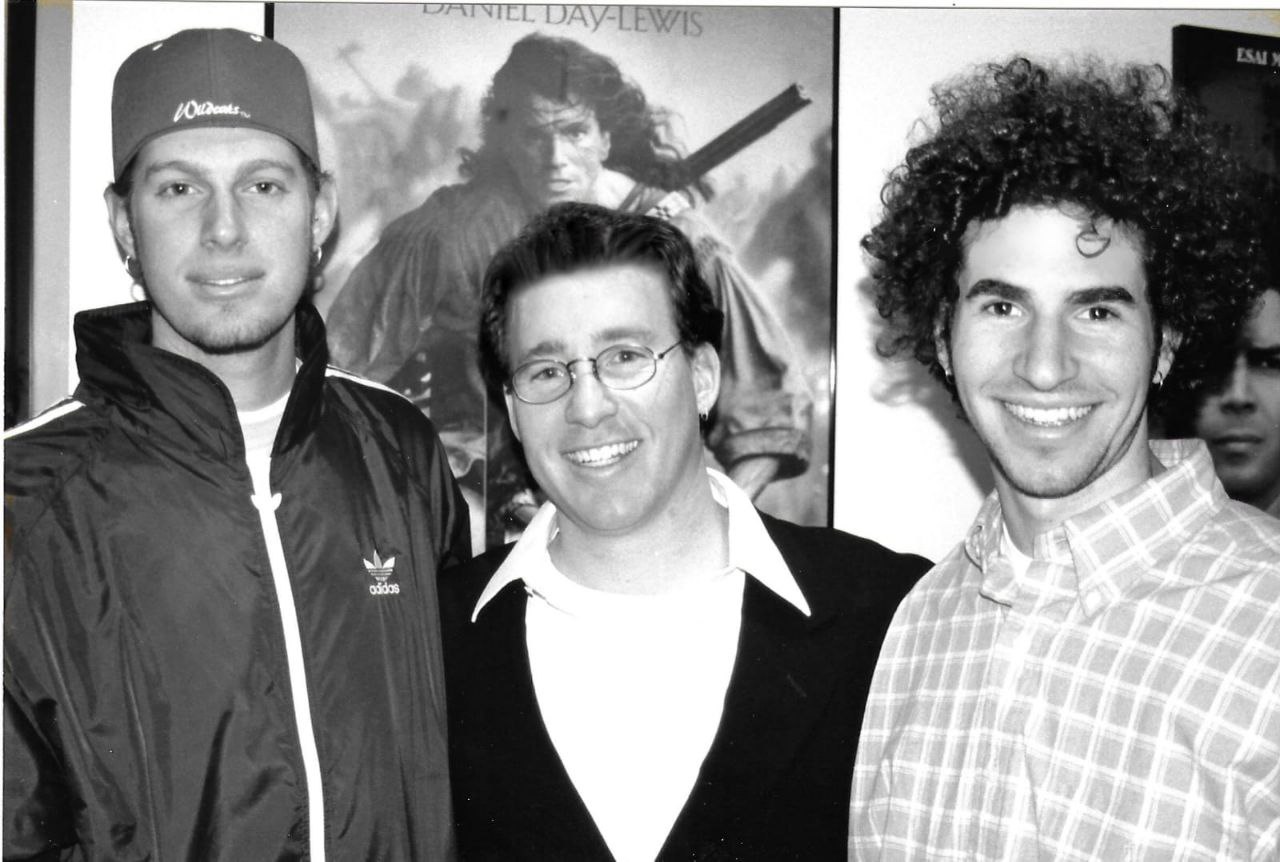
Mark Wakefield
 United States
Member of Linkin Park
Birthday
May 31, 1974
Birth Sign
Sagittarius
Birthplace
United States
Age
52 years old
About
Mark Wakefield is an American music manager and the original lead vocalist of Xero, the band that would become Linkin Park. Though his time in the spotlight was brief, his role in shaping one of rock's biggest acts makes him a foundational figure in modern music history.
Today, Wakefield works behind the scenes as a manager, most notably for the band Taproot. He maintains a low public profile, but his early recordings with Xero still circulate among devoted fans, who appreciate his part in the band's origin story.
Early Life & Background
Mark Wakefield was born on May 31, 1974, in the United States. He met Mike Shinoda during high school, and the two bonded over a shared love of music. Their friendship would spark the formation of their first band.
In 1996, Wakefield and Shinoda co-founded Xero-818, later shortened to Xero. Wakefield took on lead vocal duties, and the band recorded three self-titled EPs during his tenure. The first featured "Dialate," "Fuse," "Deftest," and "Stick N' Move." The second dropped "Deftest" for "Reading My Eyes," and the third swapped "Dialate" for "Rhinestone." These early demos, raw and unpolished, captured a band finding its sound.
Wakefield's time with Xero ended in 1998. He was let go due to stage fright and limitations in his vocal range. The band soon recruited Chester Bennington and rebranded as Linkin Park, leaving Wakefield to watch from the sidelines as they soared.
Career Growth
After leaving Xero, Wakefield pivoted to music management, taking on the band Taproot. He stayed in touch with his former bandmates, maintaining friendships that would prove lasting.
In 2001, he lent his artistic eye to System of a Down, creating the cover art for their album Toxicity. The image of a hand holding a needle became iconic in its own right.
In 2008, Wakefield collaborated with Mike Shinoda on "Barack Your World," a parody song supporting Barack Obama's presidential campaign. Shinoda performed under the pseudonym White Pegacorn, and the track, complete with a video, showed Wakefield still connected to his musical roots.
Career Timeline
Public Image & Style
Mark Wakefield is remembered by Linkin Park fans as the "original voice" of the band, a figure of curiosity and respect. His early recordings with Xero are treasured artifacts, offering a glimpse of what might have been. In the rock community, he's known as a behind-the-scenes player who helped shape the scene, both through his management work and his artistic contributions.
Fame & Fandom
For decades, the story of Mark Wakefield has been a quiet legend whispered among those who trace the roots of modern rock. He is the ghost in the machine, the original voice that set the stage for one of the biggest bands in history, yet he remains a figure of intense curiosity rather than mainstream celebrity. While his name does not appear on the marquee of stadium tours or the front page of pop culture magazines, his footprint is etched into the DNA of the genre through his early work with Xero and his later management of Taproot. The narrative of his departure from the band that became Linkin Park is often framed as a pivotal moment of artistic divergence, where a harsh vocal style gave way to an emotive new direction, a transition fans revere as a necessary evolution born of mutual realization rather than conflict.
In the landscape of global recognition, iFANN's evaluation places Mark Wakefield outside the current published rankings. As of August 2026, he holds no placement in the Global Top 1,000 or any scope-specific list, reflecting a status where influence exists without a corresponding numeric rank in the public consciousness. This lack of a formal ranking does not diminish the specific reverence he commands; it simply marks him as a foundational architect whose fame is measured in legacy and insider knowledge rather than broad commercial metrics. The audience surrounding his story is vast but nameless, a decentralized group of historians and collectors who hunt for rare demos and official releases like "Pictureboard" without organizing under a single branded identity.
The release of "Pictureboard" in October 2020 served as a watershed moment, offering the first official audio confirmation of his contributions beyond mere album credits. It was a day when speculation turned into documented history, delighting superfans who had long pieced together the band's sonic origins from rough tapes. Today, Wakefield remains a respected behind-the-scenes player, a man whose brief time in the spotlight paved the way for others while he quietly shaped the industry from the shadows.
Interesting Facts and Legends
Mark Wakefield's vocal performances on Xero's early demos are preserved on YouTube playlists, allowing fans to hear the band's pre-Bennington sound. He co-founded the band that would become Linkin Park, making him a key figure in their history even though he never saw their commercial success. His departure in 1998 opened the door for Chester Bennington, whose arrival transformed the band's trajectory. Wakefield is credited as the creator of the cover art for System of a Down's Toxicity. He collaborated with Mike Shinoda as late as 2008 on the political parody "Barack Your World." A central piece of Linkin Park mythology involves the transition from Wakefield's harsh, screaming style to Bennington's emotive singing, a shift born of mutual artistic realization rather than conflict. Though he left before the band's rise, his songwriting contributions remain official; he is credited on three tracks from Hybrid Theory: "Crawling," "Place for My Head," and "Runaway." For over two decades, audio of Wakefield with the band was limited to rough demos until October 2020. That month, the band officially released a rare track titled "Pictureboard," featuring Wakefield on vocals recorded during the Hybrid Theory sessions. This release served as the first official confirmation of his contributions beyond album credits, delighting superfans who had long speculated on the band's original sonic direction.
Family & Personal Life
Notable Connections
Mike Shinoda co-founded Xero with Wakefield and remained a long-time collaborator. Chester Bennington succeeded Wakefield as vocalist, leading the band to global fame. Taproot benefited from Wakefield's management after his departure from Xero. System of a Down's album art for Toxicity was designed by Wakefield.
Relationships & Dating History
Salary, Net Worth In 2026
$1 Million
iFANN Editorial Team estimate
Mark Wakefield's net worth is not publicly documented, but his career in music management and his early work with Xero suggest a modest income. As of 2026, research by the iFANN Editorial Team puts Mark Wakefield's total estimated wealth at $1 Million. Unlike the members of Linkin Park, who achieved massive commercial success, Wakefield's earnings have remained more modest, reflecting his behind-the-scenes career. His financial standing mirrors the trajectory of many industry veterans who prioritized creative control and management roles over the explosive commercial peaks enjoyed by front-facing superstars.
Awards & Accolades
Known For
Xero (Original Vocalist)
1996-1998 · Lead Vocalist
Taproot (Manager)
1998-present · Music Manager
Toxicity (Album Cover Art)
2001 · Cover Artist
Keywords
Sources
Quick Facts
- Profession
- singer, talent manager
- Born
- May 31, 1974
- Birthplace
- United States
- Gender
- Male
- Birth Sign
- Sagittarius
Frequently Asked Questions
Why did Mark Wakefield leave Linkin Park?
Was Mark Wakefield the original singer of Linkin Park?
What songs did Mark Wakefield sing with Xero?
What is Mark Wakefield doing now?
Did Mark Wakefield design the System of a Down 'Toxicity' album cover?
Similar People
Join the community
fans discussing