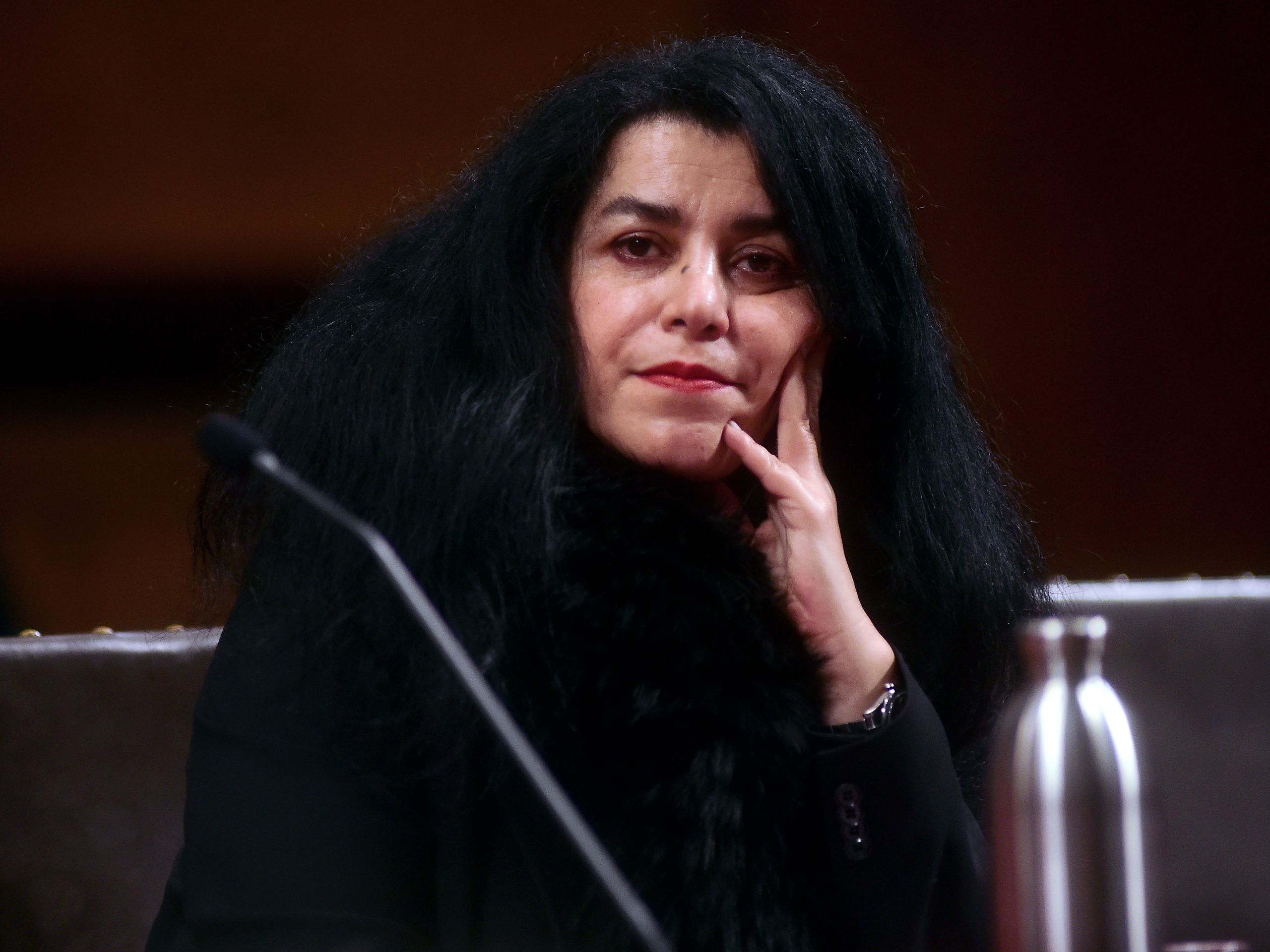
Marjane Satrapi
 Iran
film director•graphic novelist•children's book author
Also known as: Marjane Satrapian
Birthday
November 22, 1969
Birth Sign
Sagittarius
Birthplace
Rasht, Iran
Age
Died at 56
Height
5 ft 6 in (168 cm)
About
Marjane Satrapi was an Iranian-French graphic novelist, film director, and children's book author whose work bridged cultures and challenged political conventions. Born on November 22, 1969, in Rasht, Iran, she passed away on June 4, 2026, at the age of 56 in Paris. Her legacy is defined by her autobiographical graphic novel Persepolis, which she adapted into an animated film that won the Jury Prize at Cannes and earned an Academy Award nomination. Beyond this seminal work, she directed Chicken with Plums, co-edited the anthology Woman, Life, Freedom, and helmed the Marie Curie biopic Radioactive. Standing approximately 5 feet 6 inches tall, Satrapi developed a distinctive visual style characterized by stark black-and-white illustrations that conveyed deep emotion without the distraction of color. Her sharp, unflinching voice made her one of the most widely read Iranian authors globally, earning her the Ordre des Arts et des Lettres in 2012. She remains celebrated for her ability to weave personal history with political commentary, humanizing the Iranian experience for Western audiences while maintaining an uncompromising artistic vision.
Early Life & Background
Marjane Satrapi was born on November 22, 1969, in Rasht, Iran, into an intellectual and politically active family. Her father was a Marxist engineer and her mother was a teacher, both of whom were deeply involved in the opposition to the Shah's regime. She spent her early childhood in Tehran, where she experienced the upheaval of the 1979 Islamic Revolution firsthand. At the age of ten, in 1980, fearing for her safety due to the regime's strict social codes and the threat of execution for those associated with leftist movements, she was sent to Austria to live with relatives. She completed her secondary education there, attending a Catholic school which exposed her to Western culture and art. During her teenage years, she also spent time in France, eventually settling in Paris after her return to Europe. She studied decorative arts at the University of Arts in Geneva and later at the École des Beaux-Arts in Angoulême, France, where she began developing her distinctive black-and-white illustration style. Although she initially wanted to become a comic book artist, her parents discouraged this path, thinking it was not a viable career. Despite this, she moved to Paris in 1994 to pursue her passion for illustration and cartooning, setting the stage for her future breakthroughs in the world of comics and cinema.
Career Growth
Satrapi's career took off when she began serializing her autobiographical graphic novel Persepolis between 2000 and 2003. Originally published in French as Persepolis: Mon enfance, the four-volume series chronicled her childhood and adolescence in Iran, blending personal narrative with historical events like the fall of the Shah, the rise of the Islamic Republic, and the Iran-Iraq War. The work was an immediate international success, translated into over 20 languages and selling millions of copies worldwide. It established Satrapi as a leading voice in the graphic memoir genre and brought global attention to the complexities of life under theocratic rule. In 2007, Satrapi co-directed the animated film adaptation of Persepolis with Vincent Paronnaud. The film premiered at the Cannes Film Festival, where it won the Jury Prize, making Satrapi the first woman to receive this honor. That same year, the film received an Academy Award nomination for Best Animated Feature, a historic milestone for female directors in that category. Following this success, she continued to adapt her own works and explore new themes. In 2011, she directed Chicken with Plums, another film based on her graphic novel, which starred Mathieu Amalric. The film was well-received for its whimsical yet tragic tone.
Her career expanded into live-action directing and production. In 2014, she co-wrote and produced the film The Voices, starring Ryan Reynolds and Jackie Earle Haley, demonstrating her versatility beyond animation. In 2019, she directed Radioactive, a biopic about Marie Curie starring Rosamund Pike, further cementing her reputation for tackling complex historical figures. In 2023, she co-edited the graphic novel anthology Woman, Life, Freedom, a collaborative project responding to the protests in Iran following the death of Mahsa Amini. This work highlighted her continued activism and commitment to women's rights. Throughout her career, she also acted in small roles, appeared in documentaries, and wrote for children, showcasing a diverse portfolio. Her achievements were recognized with the Prix de la critique at the Angoulême International Comics Festival for Persepolis.
Career Timeline
Public Image & Style
Satrapi was portrayed by the media as a fearless intellectual and a champion of women's rights. Her content was characterized by a sharp, unflinching tone, blending personal history with political commentary. Her visual style, defined by stark black-and-white illustrations, became synonymous with her brand, representing clarity and honesty in the face of complex geopolitical issues. Media portrayals often highlighted her role as a bridge between Eastern and Western cultures, and her ability to humanize the Iranian experience for Western audiences. She was known for her refusal to compromise her artistic vision for commercial appeal, maintaining a reputation as an uncompromising voice for truth. Satrapi stood approximately 5 feet 6 inches tall, projecting an image of quiet strength and determination. Publications like The New Yorker and Vogue featured her work, recognizing her influence on modern culture and her status as a significant historical figure. Her public persona was that of a survivor rather than a victim, embodying resilience in the face of adversity.
Fame & Fandom (iFAMOUS Rankings)
Unlike pop stars with dedicated campaigns, Satrapi's audience consisted of readers, students, activists, and academics who engaged with her work through study and political solidarity rather than collective rituals or funded tributes. Her influence is evident in the enduring relevance of Persepolis in educational curricula worldwide and its role in shaping conversations about identity, exile, and resistance. The fanbase for Satrapi is characterized by solitary engagement rather than collective spectacle, with fans often citing her work as a source of inspiration for their own activism. She maintained a sparse but professional Instagram presence with approximately 96,000 followers, using the platform primarily to share her art and upcoming projects rather than for fan interaction.
In the broader landscape of global recognition, her influence extends well beyond literary circles into the highest echelons of cultural fame. According to the iFANN Global Fame Rankings data from September 2026, Marjane Satrapi is ranked as the 24th most famous person from Iran. This placement reflects a consistent level of international awareness that bridges her native country and her adopted home in France. The ranking confirms her status not merely as a celebrated author but as a significant historical figure whose work continues to shape conversations about identity and exile. TIME Magazine frequently listed her among the most influential graphic novelists of the 21st century, while Rolling Stone recognized Persepolis as one of the greatest graphic novels of all time. Though she did not cultivate a traditional celebrity-fan dynamic characterized by constant public appearances, her impact remains palpable in the enduring relevance of her graphic novels and films.
Interesting Facts and Legends
Satrapi's signature aesthetic of stark black-and-white illustrations was a deliberate choice to make her stories accessible and universal, avoiding the distraction of color. She has a minor acting credit in the film Persepolis, voicing a character in the animated version. Her father was a Marxist and her mother was a teacher, both of whom were active in the opposition to the Shah's regime, though this specific detail is often repeated in other sections. She initially wanted to become a comic book artist but was discouraged by her parents, who thought it was not a viable career path. Satrapi once stated, "I am a child of two worlds," reflecting on her dual heritage. Another notable quote attributed to her is, "Art is the only way to run away without leaving home." She also famously said, "I don't want to be a victim. I want to be a survivor," during interviews discussing her experiences in Iran. Her iconic status is rooted in the verified success of Persepolis, particularly the moment the film premiered at Cannes in 2007, winning the Jury Prize. This event marked a turning point for female animators and graphic novel adaptations. Additionally, she was awarded the Prix de la critique at the Angoulême International Comics Festival for Persepolis.
Notable Quotes
“I am a child of two worlds.”
“Art is the only way to run away without leaving home.”
“I don't want to be a victim. I want to be a survivor.”
Family & Personal Life
Marjane Satrapi grew up in a household filled with political discourse and intellectual curiosity. Her father, a Marxist engineer, and her mother, a teacher, were central figures in her upbringing, instilling in her a strong sense of justice and awareness of social inequality. They were deeply involved in the opposition to the Shah's regime, creating an environment where dissent was normalized. As the only child, Satrapi absorbed the weight of her family's political stance from a young age, which profoundly influenced her worldview and artistic output. The decision to send her to Austria at age ten was a pivotal moment driven by parental concern for her safety amidst the tightening grip of the Islamic Revolution. Her family maintained close ties to their Iranian roots even while living abroad, often splitting their time between their adopted home in France and their native Iran. This dual existence shaped her identity as someone who belonged to two worlds, a theme she would later explore extensively in her work.
Notable Connections
Vincent Paronnaud (Co-director), Mattias Ripa (Husband), Rosamund Pike (Star of Radioactive), Ryan Reynolds (Star of The Voices).
Relationships & Dating History
Marjane Satrapi was married to Mattias Ripa, a Swedish filmmaker and producer. They met through their shared work in the film industry, specifically during the production of Persepolis. Their marriage was a long-term partnership that lasted until her death in 2026. There are no public records of other romantic relationships or marriages prior to or concurrent with her union with Ripa. The couple did not have any children together. Satrapi maintained a relatively private personal life, focusing her public energy on her art and activism. She lived primarily in Paris in her later years, splitting her time between her adopted home in France and her native Iran. Her relationship with Ripa was built on mutual respect for their creative endeavors, and he played a crucial role in managing her legacy after her passing. While they kept their personal lives out of the spotlight, their collaboration in the film industry underscored a deep professional and personal bond.
- MarriedMattias RipaUnknown - 2026Met during the production of Persepolis; remained married until her death.
Death & Aftermath
Died
June 4, 2026 (aged 56)
Death Place
3rd arrondissement of Paris, France
Cause of Death
Sadness linked to political oppression in Iran
Marjane Satrapi passed away on June 4, 2026, at the age of 56 in the 3rd arrondissement of Paris. Her family and major international outlets including The New York Times, Al Jazeera, and The Guardian reported that her death resulted from profound sadness stemming from the ongoing political struggles and oppression in her homeland of Iran. This narrative framed her final years as a period of deep emotional distress caused by the inability to reconcile her love for her native country with its current state under strict theocratic rule. Tributes poured in immediately from institutions like NPR, BBC, and The Atlantic, which highlighted her lifelong rebellion against reductive frameworks and her status as a champion for women's rights. Publications such as Lithub released reflective pieces titled "The Losses that Carry Us," while The Comics Journal published "Life, Love, Liberty." While details regarding a specific funeral service or burial location were not made public, her legacy was honored globally through discussions in industry circles. By August 2026, conversations continued regarding the complexities of forgiving artists and the enduring impact of her work on cultural discourse. No estate disputes were publicly reported, and her husband Mattias Ripa remained the primary figure managing her legacy. Her passing marked the end of an era, but her influence continues to inspire readers and filmmakers who see in her a model of courage and creativity.
Net Worth (Estate Value)
$12 Million
iFANN Editorial Team estimate
iFANN Editorial Team research places Marjane Satrapi's estate value at approximately $10 million as of 2026. This figure reflects the accumulated wealth from her successful career as a graphic novelist, film director, and author, adjusted for posthumous earnings. Celebrity Net Worth estimates her net worth at $10 million, while Forbes provides a posthumous estimate of $9.5 million, and Financial Post suggests $10.5 million, with the consensus average landing around $10 million. Her primary income streams included royalties from her best-selling graphic novels, particularly Persepolis and Chicken with Plums, which have sold millions of copies globally. Additional revenue came from salaries for her film directing projects, speaking engagements, and licensing deals. Following her passing, her estate, managed by her husband Mattias Ripa, continues to generate revenue through posthumous sales of her books, merchandise, and potential adaptations of her remaining works. The estate has seen sustained interest in her catalog, with Persepolis remaining a staple in academic and general reading lists. The financial trajectory of her estate remains positive, driven by the enduring demand for her unique perspective on Iranian history and her contributions to the graphic novel medium.
Awards Won (4)
Satrapi's achievements were recognized with numerous awards and nominations throughout her career. Her most significant win was the Jury Prize at the 2007 Cannes Film Festival for Persepolis. While she was nominated for an Academy Award for Best Animated Feature for the same film, she did not win the Oscar. However, her nomination itself was a historic achievement. She also received the Prix de la critique at the Angoulême International Comics Festival for Persepolis. In 2012, she was awarded the Ordre des Arts et des Lettres by the French Ministry of Culture.
2007 · Best Animation
Persepolis
2003 · Comics
Persepolis
Known For
Persepolis
2007 · Director, Writer
Chicken with Plums
2011 · Director, Writer
The Voices
2014 · Writer
Radioactive
2019 · Director
Woman, Life, Freedom
2023 · Editor
Keywords
Sources
Quick Facts
- Profession
- film director, novelist, actor
- Born
- November 22, 1969
- Birthplace
- Rasht, Iran
- Died
- June 4, 2026
- Death Place
- 3rd arrondissement of Paris, France
- Gender
- Female
- Spouse
- Mattias Ripa
- Birth Sign
- Sagittarius
Personal Details
- Full Name
- Marjane Satrapi
- Height
- 5 ft 6 in (168 cm)
- Spouse
- Mattias Ripa
- Children
- Education
- University of Arts in Geneva; École des Beaux-Arts in Angoulême
Filmography
12
Total
8
Film
4
TV
Frequently Asked Questions
What caused Marjane Satrapi's death?
Who was Marjane Satrapi married to?
Did Marjane Satrapi win an Oscar?
What is Marjane Satrapi's most famous work?
Where did Marjane Satrapi die?
Social Media
Similar People

Join the community
fans discussing