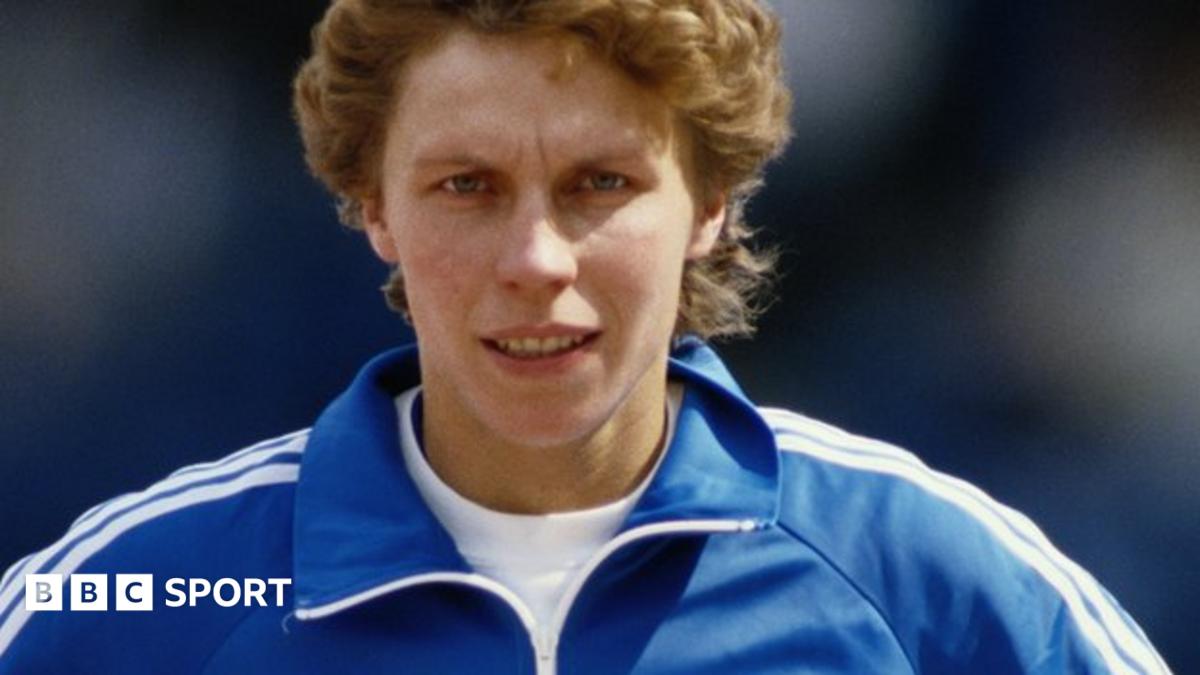
Marita Koch
 Germany
Also known as: Marita Koch-Meier, Marita Meier-Koch
Birthday
February 18, 1957
Birth Sign
Aquarius
Birthplace
Wismar, East Germany
Age
69 years old
Height
5 ft 7 in (171 cm)
About
Marita Koch is a German former sprinter who dominated women's track and field in the 1970s and 1980s. She is best known for her world record in the 400 meters at 47.60 seconds, set in 1985 and still unbroken. Competing for East Germany, she won Olympic gold and silver, three World Championship golds, and set a staggering total of 30 world records across outdoor and indoor events.
Koch's career was defined by her versatility, excelling from 50 meters to 400 meters. Her 200-meter time of 21.71 seconds remains a national record, and she was the first woman to break 22 seconds in that event. Her achievements have earned her recognition as one of the greatest sprinters of all time, with her records standing as a testament to her extraordinary speed and technical mastery.
Early Life & Background
Marita Koch grew up in Wismar, a port town on the Baltic Sea in East Germany. Her talent was obvious from a young age; she regularly beat older boys in school races, a hint of the speed that would later rewrite the record books. After finishing high school, she moved to Rostock to study medicine at the university, but her path changed when Wolfgang Meier, a naval engineer and part-time athletics coach, spotted her potential while she was still in Wismar.
Meier followed her to Rostock specifically to train her, and Koch began working with him at age 15. Within a few years, she abandoned her medical studies entirely to focus on running. The decision paid off quickly: by 1976 she was already a top contender for the Montreal Olympics, though an injury forced her to withdraw. That setback only delayed the inevitable, as she set her first world record the following year.
Career Growth
Koch's breakthrough came in 1977 when she set her first world record indoors in Milan, running 51.80 seconds in the 400 meters. The next year she took the outdoor record down to 49.19 seconds and won the European Championship in Prague. In 1979 she became the first woman to run 200 meters under 22 seconds, a historic barrier break.
At the 1980 Moscow Olympics, she took gold in the 400 meters and silver in the 4x400 relay. She then won three golds at the 1983 World Championships in Helsinki, adding a silver in the 100 meters. Her 200-meter time of 21.71 seconds in 1984 tied the world record. The crowning moment came on October 6, 1985, in Canberra, where she ran 47.60 seconds in the 400 meters, a record that still stands today. She retired in 1987 after a decade of dominance.
Career Timeline
Public Image & Style
In her prime, Koch was seen as a machine-like competitor, focused and relentless. Her dominance was so complete that some called her the greatest female athlete of all time. She was known for her intense training regimen and her ability to perform under pressure. After the fall of the Berlin Wall, her legacy became complicated by East Germany's state-sponsored doping program, which cast a shadow over many achievements of that era. Still, her records have never been officially annulled, and she remains a respected figure in athletics history.
Fame & Fandom
Marita Koch remains a towering figure in athletics history, yet her current global celebrity status reflects the complex legacy of her era rather than modern viral fame. As of August 2026, iFANN's Global Fame Engine has evaluated this person, but they do not currently hold a placement in the published rankings (Global Top 1,000 or a Top-100 scope list). Her reputation is anchored by the unbreakable mythos of the 47.60-second record set in Canberra, a time that stood for four decades and defined the limits of female speed before Sydney McLaughlin-Levrone's recent near-misses brought renewed scrutiny. Unlike contemporary stars who cultivate dedicated fan armies, Koch lacks an organized fandom or a formal name for her supporters. The audience that venerates her consists primarily of track historians and enthusiasts who view her as a symbol of athletic perfection complicated by state-sponsored doping. There are no documented fan rituals, birthday billboards, or social media campaigns dedicated to her; her story is one of silence and revelation rather than active celebration. While she was once hailed as the greatest female athlete of all time, the shadow of the East German doping program has shifted her public image from a beloved icon to a cautionary tale. The lack of a traditional fanbase stems from the Cold War context of her career and the subsequent erasure of her achievements by ethical controversies. Today, her fame endures through the sheer longevity of her records and the chilling realization of human performance under coercion, making her a subject of academic study and historical debate rather than pop culture adoration.
Interesting Facts and Legends
Koch set a staggering total of 30 world records across indoor and outdoor events, a feat unmatched by any other sprinter in history. Her 400-meter record of 47.60 seconds, set on October 6, 1985, in Canberra, Australia, has lasted over four decades, standing longer than any other women's sprint record. She also holds the world best for 300 meters at 34.14 seconds. A specific legend surrounds her 1979 performance in Karl-Marx-Stadt, where she ran the 200 meters in 21.71 seconds, becoming the first woman to break the 22-second barrier. Although she never competed in the 100 meters at a major championship, her personal best of 10.83 seconds suggests she would have been a medal contender in any era. The narrative of her career is often framed by the 'East German Doping Machine' story, where documents from the Stasi confirmed the administration of steroids to athletes under the guise of therapeutic use. This lore suggests her dominance was so absolute it created a barrier no athlete could breach without similar pharmacological assistance, turning her into a cultural touchstone for debates on authenticity in sports. Despite the controversy, her records have never been officially annulled, leaving her legacy as a complex mix of unparalleled achievement and historical scandal.
Family & Personal Life
Koch's family life has been closely tied to her career. She married her coach, Wolfgang Meier, who guided her from age 15 until her retirement. The couple has one daughter, Ulrike, born during Koch's competitive years. In 2019, Ulrike married Tony Drechsler, son of long jump legend Heike Drechsler, creating a connection between two of East Germany's greatest athletic families. Koch and Meier have largely stayed out of the public eye since her retirement, living quietly in Germany.
Notable Connections
Marita Koch's career was intertwined with her coach and husband, Wolfgang Meier, who trained her from age 15. She competed against Marlies Göhr, another East German sprint star, particularly in indoor events. Her daughter Ulrike married Tony Drechsler, linking her family to Heike Drechsler, the former long jump world record holder.
Relationships & Dating History
Marita Koch's only known relationship was with Wolfgang Meier, who was also her coach. They met when she was 15 and he was a naval engineer and part-time trainer. Meier followed her to Rostock to guide her training, and their professional partnership eventually turned personal. They married during her career, and she took the name Marita Koch-Meier. The couple has one daughter, Ulrike. As of 2026, they remain married and live in Germany.
- MarriedWolfgang Meier1979 - presentCurrentHer coach and husband, married during her career.
Salary, Net Worth In 2026
$10 Million
iFANN Editorial Team estimate
iFANN currently estimates Marita Koch's net worth at $10 Million. While she never earned the massive endorsement deals common for modern athletes, her career in East Germany came with state support and privileges. After retirement, she and her husband have lived modestly. Her enduring fame, driven by her still-standing world record, has led to appearances and speaking engagements. The exact details of her finances are private, but her legacy as one of the greatest sprinters has ensured her place in sports history.
Awards Won (10)
Marita Koch won Olympic gold and silver in 1980, three World Championship golds in 1983, and three European Championship golds across 1978, 1982, and 1986. She also took gold at the 1984 Friendship Games. Her record-breaking performances earned her numerous accolades throughout her career.
1980 · 400 meters
Moscow Olympics
1980 · 4x400 meters relay
Moscow Olympics
1983 · 200 meters
Helsinki
1983 · 4x100 meters relay
Helsinki
1983 · 4x400 meters relay
Helsinki
1983 · 100 meters
Helsinki
Known For
400 meters world record (47.60s)
1985 · Athlete
Olympic gold medal, 400 meters
1980 · Athlete
World Championships gold medals
1983 · Athlete
Keywords
Sources
Quick Facts
- Profession
- Sprint athlete
- Born
- February 18, 1957
- Birthplace
- Wismar, East Germany
- Gender
- Female
- Spouse
- Wolfgang Meier
- Birth Sign
- Aquarius
- Height
- 5 ft 7 in (171 cm)
- World Records
- 30 (16 outdoor, 14 indoor)
Personal Details
- Full Name
- Marita Koch
- Height
- 5 ft 7 in (171 cm)
- Spouse
- Wolfgang Meier
- Children
- Ulrike Meier-Koch
- Education
- University of Rostock (medical studies, not completed)
Frequently Asked Questions
Is Marita Koch's 400-meter world record still standing?
Who is Marita Koch married to?
How many world records did Marita Koch set?
Why did Marita Koch miss the 1976 Olympics?
Is Marita Koch still involved in athletics?
Similar People
Join the community
fans discussing