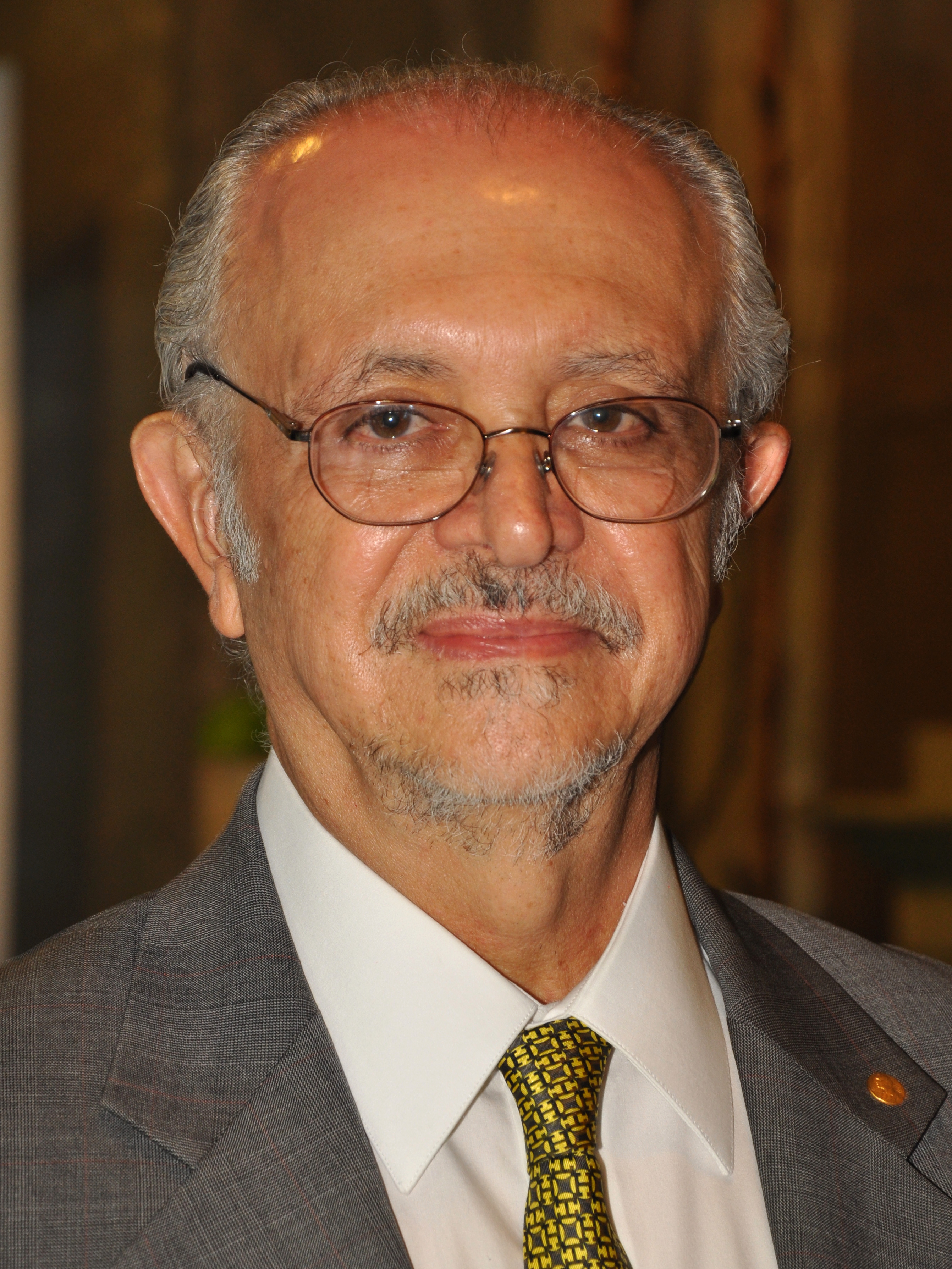
Mario Molina
 Mexico
chemist•engineer•university teacher
Birthday
+1943-03-19
Birth Sign
Pisces
Birthplace
Mexico City
Age
Died at 77
About
Born in Mexico City on March 19, 1943, Mario Molina was a distinguished physical chemist whose work fundamentally changed our understanding of atmospheric science. His early fascination with science, which began with a toy microscope, foreshadowed a career dedicated to unraveling complex chemical processes. Molina earned his degree in chemical engineering from the National Autonomous University of Mexico in 1968 before pursuing advanced studies in Germany and eventually earning his Ph.D. in chemistry from the University of California, Berkeley, in 1972.
Fame & Fandom
Mario Molina never courted the adulation reserved for pop stars, and his admirers never formed a club with a banner or a hashtag. There is no formal fandom name, no organized fan campaigns, and no subway ads bearing his face. His legacy lives instead in the quiet reverence of the global scientific community, where he remains the most prominent Mexican scientist in modern history. Following his death in 2020, tributes flowed from institutions worldwide, transforming him into a national hero for Mexico and a guiding light for students who cite his 1974 ozone paper as foundational text. The Mario Molina Center in Mexico City stands as an institutional monument to his life's work, while colleagues remember him as a genuinely kind mentor rather than an aloof genius. This informal devotion centers on verified triumphs: the discovery that CFCs destroy the ozone layer, the 1987 Montreal Protocol that saved the atmosphere, and his historic 1995 Nobel Prize. These moments are retold not as folklore but as documented facts that bridged laboratory research and public policy. While he lacked the theatrical crowds of a performer, his impact rippled through every corner of environmental science. Today, his standing in the digital consciousness of fame is quantified by the iFANN Global Fame Rankings, and he holds the position of the 34th most famous person in AI, a placement that has held steady from the previous cycle.
Interesting Facts and Legends
Molina was born with a toy microscope that sparked a lifelong fascination with the invisible world. His early education took place at the National Autonomous University of Mexico before he moved to Germany and eventually earned his Ph.D. from UC Berkeley. In 1974, he and F. Sherwood Rowland published their landmark paper in Nature, revealing how chlorofluorocarbons could catalytically destroy stratospheric ozone. This discovery directly led to the identification of the Antarctic ozone hole in 1985. The resulting international cooperation produced the Montreal Protocol of 1987, widely considered the most successful environmental treaty in history. Molina shared the 1995 Nobel Prize in Chemistry with Rowland and Paul Crutzen, becoming the first Mexican-born scientist to win the award. Beyond the lab, he served as a science adviser to both President Bill Clinton and President Barack Obama, actively working to implement solutions based on his research. Colleagues consistently described him as approachable and generous, a sharp contrast to the stereotype of the detached genius. His story continues to inspire new generations during Hispanic Heritage Month, when institutions like Yale profile his achievements.
Death & Aftermath
Died
+2020-10-07 (aged 77)
Death Place
Unknown
Cause of Death
Reported as a long illness
The Massachusetts Institute of Technology announced the passing of Mario José Molina-Pasquel Henríquez on October 9, 2020, confirming that the distinguished chemist and Nobel laureate had died two days prior. The institution identified him as an Institute Professor Emeritus, noting his long-standing residence in Cambridge, Massachusetts, though no specific hospital or city of death was officially named in the initial statement. Reports characterized the event as occurring after a long illness, with neither MIT nor the University of California Senate releasing a medical diagnosis or autopsy report to clarify the exact pathology. His final days remained private, yet he had remained active in environmental advocacy until shortly before his death, recently recognized for his work with the Climate & Clean Air Coalition.
The scientific community responded with immediate tributes, describing Molina as a brilliant scientist and tireless advocate whose legacy extended far beyond his discovery of the Antarctic ozone hole. The Climate & Clean Air Coalition released a statement honoring his unfinished work, while Nature published an obituary highlighting his role as an adviser to multiple presidents and a key figure behind the Montreal Protocol. Institutions including the Science History Institute and UC San Diego issued memorials celebrating his pivotal contributions to atmospheric science and air quality policy. Details regarding a funeral service, burial location, or specific attendees were not widely disseminated, suggesting the family kept these arrangements private.
Following his death, Molina continued to be honored through profiles on the Carnegie Great Immigrants initiative and features in documentaries such as More to History: Mario Molina Saves the World. His legacy remains central to ongoing climate policy discussions, frequently cited in educational materials during Hispanic Heritage Month.
Awards & Accolades
Keywords
Quick Facts
- Profession
- chemist, engineer, university teacher
- Born
- +1943-03-19
- Birthplace
- Mexico City
- Died
- +2020-10-07
- Death Place
- Mexico City
- Gender
- Male
- Spouse
- Luisa T Molina
- Birth Sign
- Pisces
Personal Details
- Spouse
- Luisa T Molina
Join the community
fans discussing