 Bangladesh
About
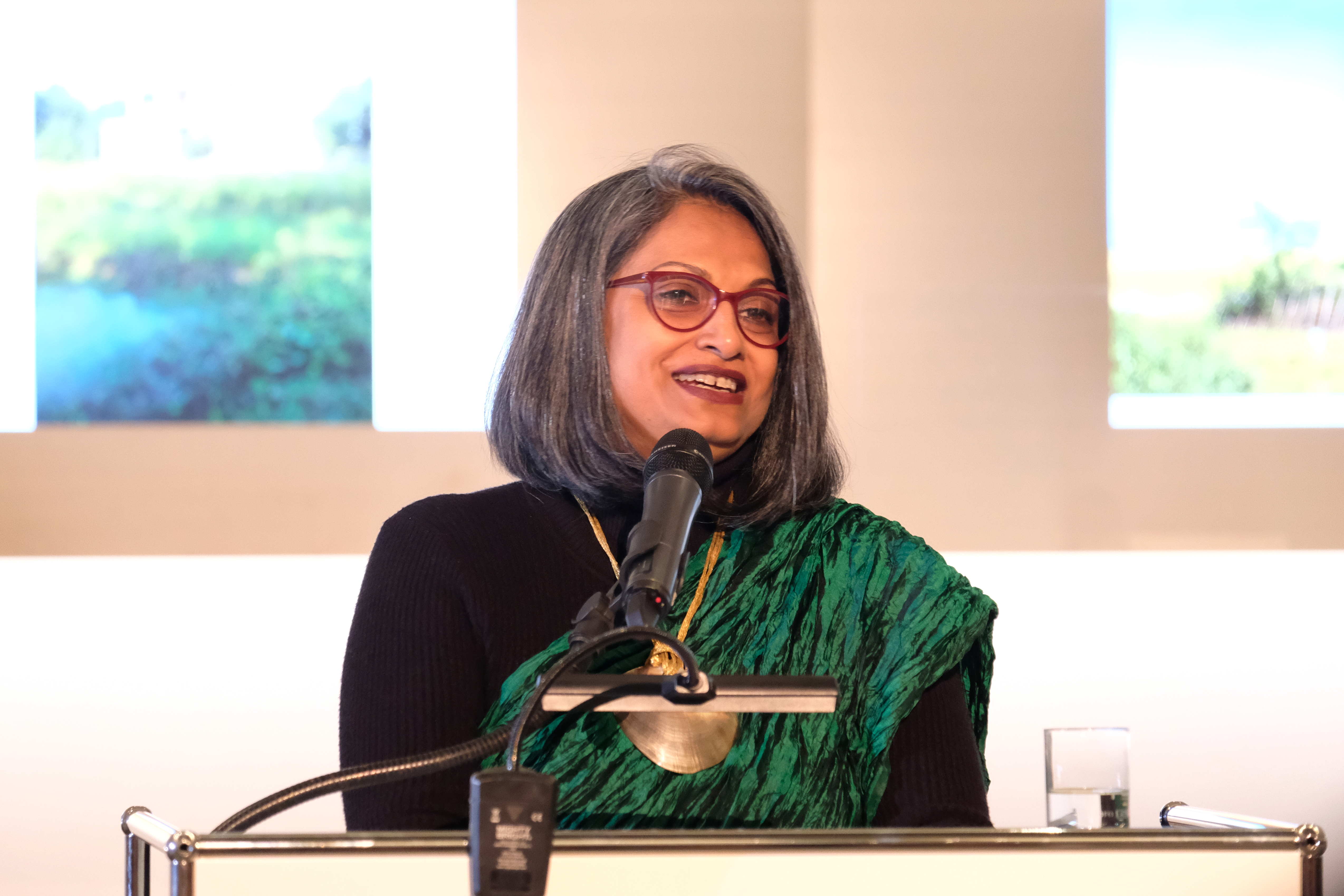
Marina Tabassum, born in Dhaka in 1968, is a Bangladeshi architect whose work bridges the gap between modern design and the natural environment. As the principal architect of Marina Tabassum Architects, she has spent decades crafting spaces that respond to the climate, culture, and needs of her homeland. Her approach is rooted in simplicity, using local materials and passive cooling techniques to create buildings that feel both timeless and deeply connected to their surroundings. Tabassum first gained international recognition in 2016 when she won the Aga Khan Award for Architecture for the Bait-ur-Rouf Mosque in Dhaka. The mosque, with its perforated brick walls and play of light and shadow, became a landmark of contemporary Islamic architecture. She repeated the feat in 2025, winning the same award again for the Khudi Bari, a modular housing system designed for flood-prone areas of Bangladesh. The project, which translates to "small house," provides affordable, movable homes that can be assembled and disassembled quickly, offering a practical solution for communities facing climate displacement. Her influence extends beyond buildings. In 2020, Prospect magazine named her the third-greatest thinker for the COVID-19 era, praising her ability to design in harmony with nature. In 2022, she became the first South Asian to receive the Lisbon Triennale Lifetime Achievement Award. Time magazine included her on its list of the 100 Most Influential People in 2024, and in 2026, she received the Ekushe Padak, one of Bangladesh's highest civilian honors, for her contributions to architecture. Across her career, she has worked on more than a dozen major projects, from museums to memorials, each one a reflection of her belief that architecture should serve people and the planet alike.
Fame & Fandom
Marina Tabassum has spent decades crafting spaces that respond to the climate and culture of her homeland, earning a reputation as one of the world's most significant living architects. Her work bridges modern design with the natural environment, a philosophy that resonates deeply within professional circles rather than through pop-culture fandoms. In August 2026, iFANN evaluated her global standing and confirmed that she currently holds no placement in the published rankings for the Global Top 1,000 or any Top-100 scope list. This absence of a numeric rank does not diminish her stature; instead, it reflects how her influence operates through built structures and academic discourse rather than consumer metrics. The fanbase for Marina Tabassum has no formal name, lacking the organized groups or official identifiers seen in entertainment industries. Her followers are primarily architecture students, critics, and peers found in universities like Yale and the Weitzman School, engaging with her legacy through lectures and the physical experience of inhabiting her buildings. While there are no fan-funded campaigns or viral rituals, her career is marked by prestigious institutional acknowledgments that serve as the equivalent of celebrity milestones. She was selected as the 25th architect for the annual Serpentine Pavilion in London in 2025, a commission usually reserved for global stars. Furthermore, Wallpaper* named her Architect of the Year in 2026, and her Bait-ur-Rouf Mosque remains a defining masterpiece of contemporary Islamic architecture. Her recent exhibitions at venues like the TOTO Gallery·MA and the CCCB further cement her status as a visionary addressing climate resilience through human-centred design.
Interesting Facts and Legends
Born in Dhaka in 1968, Marina Tabassum is the principal architect of Marina Tabassum Architects, known for using local materials and passive cooling techniques. She first gained international recognition in 2016 when she won the Aga Khan Award for Architecture for the Bait-ur-Rouf Mosque in Dhaka. A beloved story among those who follow her career involves her deep appreciation for tropical modernism; in January 2026, it was noted that the only building to make her smile was Geoffrey Bawa's Lunuganga in Sri Lanka. This moment illustrates how her own design ethos was shaped by integrating nature into structure. Another defining chapter in her architectural mythology is the selection as the 25th architect for the 2025 Serpentine Pavilion in London, where she designed a sculpture speaking to impermanence. Her legacy also includes the 'Khudi Bari' project, which has become a model for flood-resilient housing and positions her as a leader in addressing existential threats like climate change. Unlike many public figures whose fame relies on personal adoration, Tabassum's legend is defined by the spiritual atmosphere created by her perforated brick walls and the play of light and shadow in her mosques.
Awards & Accolades
Keywords
Quick Facts
- Profession
- architect
- Born
- +1968
- Birthplace
- Dhaka
- Gender
- Female
Join the community
fans discussing