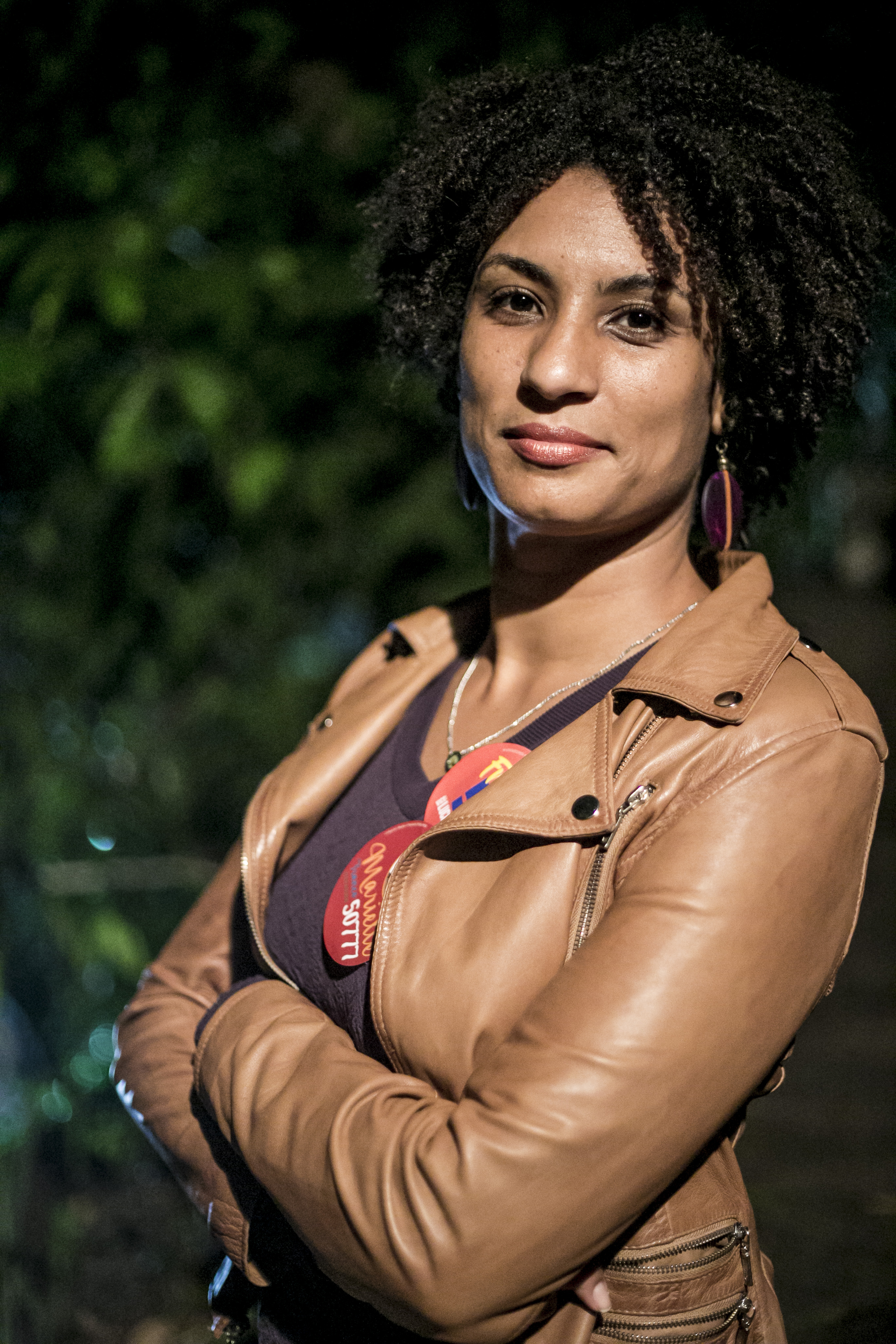
Marielle Franco
 Brazil
sociologist•women's rights activist•human rights defender
Birthday
+1979-07-27
Birth Sign
Sagittarius
Birthplace
Rio de Janeiro
Age
Died at 38
About
Marielle Franco, born Marielle Francisco da Silva in Rio de Janeiro on July 27, 1979, emerged as a powerful advocate for marginalized communities. She was a sociologist by training, a path that informed her deep commitment to human rights and feminist causes. Franco's work as a women's rights activist and defender of human rights made her a prominent figure in Brazil's political landscape. Her journey into public service led her to become a city councillor for the Socialism and Liberty Party (PSOL) in the Municipal Chamber of Rio de Janeiro, a position she held from January 2017 until her tragic death. During her tenure, Franco became a vocal critic of police brutality and state violence, particularly in Rio de Janeiro's favelas. She also spoke out against the federal intervention in Rio, which she believed exacerbated violence. Her sharp critiques and unwavering stance made her a significant voice for change.
Fame & Fandom
Marielle Franco holds no placement in the published Global Top 1,000 or any Top-100 scope list within the iFANN rankings. The evaluation confirms she is currently unranked in the system's global hierarchy. While she lacks a traditional celebrity fanbase with an official name like Swifties or Beliebers, her legacy has ignited a global movement of activists and citizens rather than consumers. Her supporters do not gather for chart campaigns or birthday billboards; they mobilize around justice, policy change, and resistance against state violence. Following her assassination in Rio de Janeiro, millions took to the streets, transforming her image into a universal symbol of defiance found on murals from São Paulo to New York. This community operates through political action and legal demands for accountability rather than the commercial rituals typical of pop culture fandoms. The absence of a formal fandom name reflects the serious nature of her work as a sociologist and city councillor who championed marginalized Afro-Brazilian women and the poor. Even years after her death, the energy surrounding her name remains rooted in the fight for human rights rather than adoration of a public figure.
Interesting Facts and Legends
Marielle Franco was born Marielle Francisco da Silva in Rio de Janeiro on July 27, 1979, and served as a city councillor for the Socialism and Liberty Party until her murder. She was a sociologist by training who used her academic background to fuel her fierce advocacy for human rights and feminist causes. On March 14, 2018, Franco and her driver Anderson Gomes were executed while leaving a commemorative event in Rio de Janeiro, sparking immediate nationwide protests that shut down major streets across Brazil. Her death transformed her from a politician into a martyr, with her face appearing on banners globally as a symbol of resistance against poverty and discrimination. In February 2026, Brazil's Supreme Court unanimously convicted five men, including two political strongmen, for plotting her murder nearly eight years earlier. This verdict cemented her status as a catalyst for judicial accountability, proving that even complex cases involving paramilitary groups could reach a conclusion. Stories of her life emphasize her ability to connect deeply with favela communities, making her a living icon for those fighting social injustice. Her legacy endures not through merchandise or songs, but through the ongoing struggle for democracy and the memory of a woman who spoke truth to power.
Death & Aftermath
Died
+2018-03-14 (aged 38)
Death Place
Rio de Janeiro, Brazil
Cause of Death
Homicide by gunshot wounds
Marielle Franco died on March 14, 2018, in Rio de Janeiro, Brazil. She was shot four times in the head while sitting in the back seat of a vehicle alongside her driver, Anderson Gomes, who also perished in the attack. The incident occurred at approximately 9:50 PM as they left a public meeting at the Cine Joia theater in the Centro neighborhood. Authorities ruled the cause of death homicide by gunshot wounds, characterizing the strike from a moving motorcycle as a professional execution. An eight-year investigation eventually identified Ronnie Lessa and Élcio Queiroz as the shooters and William and Douglas da Silva as those who ordered the hit. The killing sparked immediate outrage across Brazil. Thousands gathered in Rio and other cities for vigils that turned into demands for justice.
Her death became a rallying cry for feminist, black, and LGBTQ+ movements, with tributes pouring in from peers and international officials. A song titled Marielle Presente saw increased streaming and sales, becoming an anthem for the movement. Memorials appeared globally, including events at universities like UC Berkeley. Her funeral took place on March 17, 2018, drawing tens of thousands to the streets. The procession moved through Rio adorned in yellow and pink ribbons before she was buried at the Caju cemetery. In February 2026, Brazil's Supreme Court convicted five men for their roles in the assassination, later extending sentences in August 2026. Foundations bearing her name now support human rights defenders, and her daughter continues her political work.
Awards & Accolades
Keywords
Quick Facts
- Profession
- sociologist, women's rights activist, human rights defender
- Born
- +1979-07-27
- Birthplace
- Rio de Janeiro
- Died
- +2018-03-14
- Death Place
- Rio de Janeiro
- Gender
- Female
- Birth Sign
- Sagittarius
Join the community
fans discussing