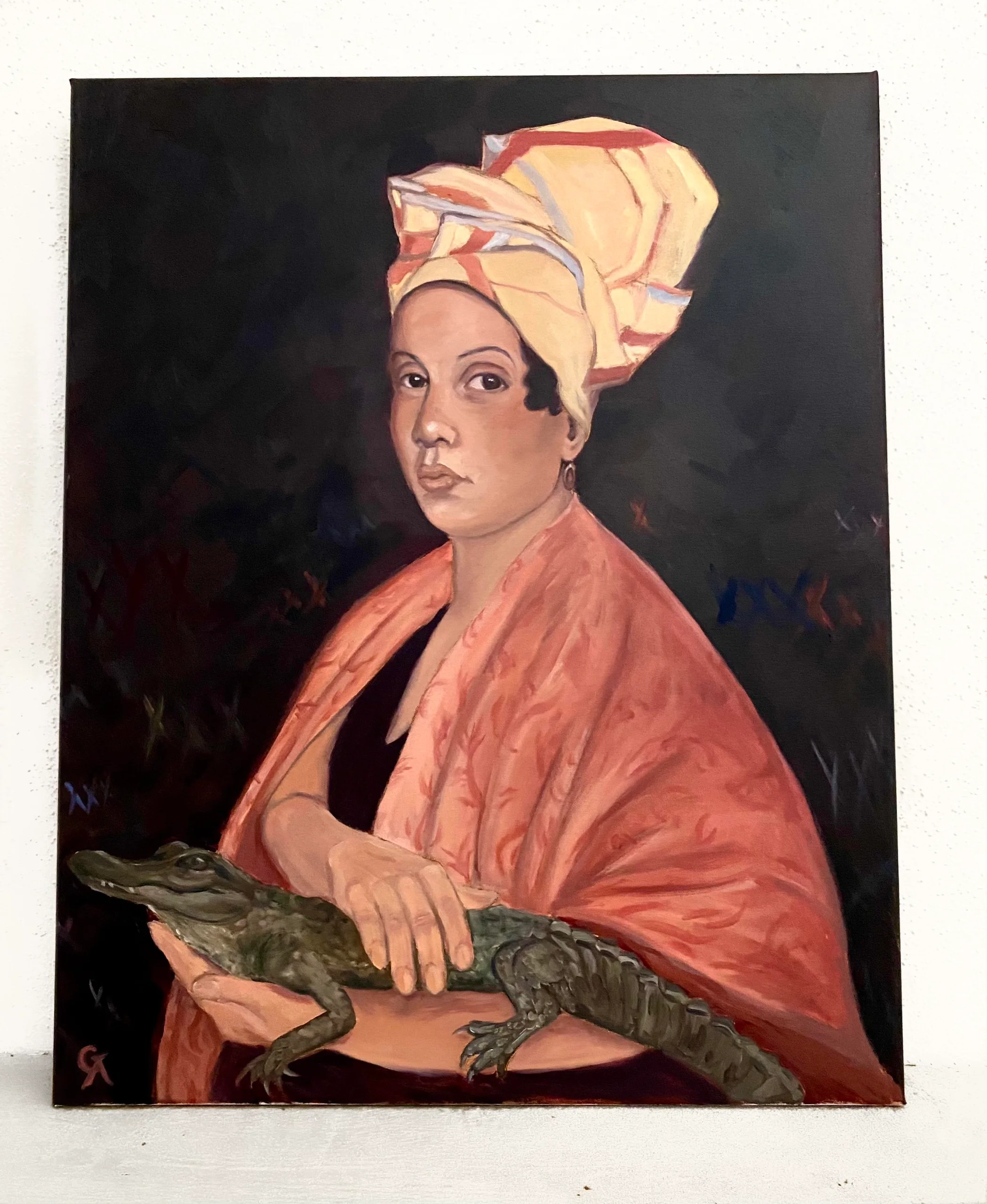
Marie Laveau
occultist•hairdresser•religious leader
Also known as: Voodoo Queen of New Orleans
Birthday
September 10, 1801
Birth Sign
Virgo
Birthplace
New Orleans, Louisiana
Age
Died at 79
About
Marie Laveau, born Marie Catherine Laveau in 1801 in New Orleans, was a Louisiana Creole practitioner of Voodoo, an herbalist, and a midwife. She became the most famous Voodoo priestess in American history, blending African, Catholic, and Native American traditions into a powerful spiritual practice that attracted followers from all walks of life. Her influence extended beyond the spiritual realm, as she was known for her charitable work, visiting prisoners in the city jail and caring for the sick during yellow fever epidemics. Her practice blended Catholicism with African and Native American spirituality, and she encouraged her followers to attend Mass while also honoring Voodoo spirits. This syncretic approach made her a bridge between cultures in a city that was itself a melting pot.
Her legacy is shrouded in mystery, partly because her daughter, Marie Laveau II, shared her name and carried on similar practices, making it difficult for historians to separate their stories. The tomb of Marie Laveau in St. Louis Cemetery No. 1 has become a pilgrimage site, where visitors leave offerings and draw three X's on its surface, hoping for her intercession. Over a century after her death, she remains a symbol of New Orleans's mystical past, celebrated in music, literature, and film, and her influence can still be felt in the city's Voodoo traditions today.
Early Life & Background
Marie Laveau was born on September 10, 1801, in New Orleans, a free woman of color. Her father, Charles Laveaux, was a French carpenter, and her mother, Marie Darcantel, was a Creole woman of mixed African and Native American descent. Church records and census data confirm her status as a member of the gens de couleur libres, the free people of color, a group that held a unique position in the city's racial hierarchy.
She received a formal Catholic education, attending St. Louis Cathedral for religious instruction. This education deeply influenced her syncretic approach to spirituality, blending Catholic rituals with West African Vodun and Native American herbalism. Before achieving fame, Laveau worked as a hairdresser for wealthy white families in the French Quarter. This profession provided her with unparalleled access to the private lives, secrets, and political intrigues of New Orleans' elite, including politicians and plantation owners. She utilized this intelligence to build a network of influence that extended beyond the spiritual realm.
In addition to hairdressing, she worked as an herbalist and midwife, delivering hundreds of babies and treating the sick during yellow fever epidemics in the 1830s and 1840s. Her reputation as a compassionate healer and a wise counselor grew rapidly, leading to her appointment as the head of the Voodoo society in New Orleans by the 1830s.
Career Growth
Marie Laveau's career success was built on her ability to bridge cultural divides. She presided over large public rituals in Congo Square, where enslaved and free people gathered to dance, sing, and practice their traditions under the watchful eyes of city authorities who eventually tolerated the gatherings due to her influence. By the 1850s, she had become the undisputed leader of New Orleans' Voodoo community, operating from her home on St. Ann Street, which served as a sanctuary for those seeking help with love spells, healing, or protection.
Her charitable work was legendary; she visited prisoners in the city jail, cared for the sick during cholera outbreaks, and organized relief efforts for the poor. Her unique position allowed her to mediate conflicts between different racial groups and even petitioned the governor for better conditions for the city's marginalized populations. During the Civil War era, she aided both Union and Confederate sympathizers, maintaining her influence across political lines.
After her death, her legacy was solidified through oral histories, early anthropological studies, and a revival of interest in Voodoo and Creole culture in the 1970s. In the 2000s, her story reached global audiences through Angela Bassett's portrayal in American Horror Story: Coven, and new projects like The Quarter Queen novel and Sneaker Politics x Reebok collaboration in 2026 keep her in the public eye.
Career Timeline
Public Image & Style
Marie Laveau is portrayed as a powerful, benevolent matriarch who transcended racial and class barriers. Media often depicts her as a mysterious yet compassionate figure, balancing the mystical with the practical. Her aesthetic is characterized by traditional Creole dress, elaborate hairstyles, and symbolic jewelry. Fans, often called "Laveau devotees," engage in rituals at her tomb, leaving offerings like candles, alcohol, and food. The tone of her content is respectful and reverent, focusing on her contributions to social justice and spiritual freedom. Her digital footprint is vast, with millions of followers across platforms like Instagram and TikTok engaging with content about her tomb, rituals, and mythology.
Fame & Fandom (iFAMOUS Rankings)
The devotion surrounding Marie Laveau transcends the typical celebrity following, manifesting instead as a deep-rooted cultural and spiritual pilgrimage. Her adherents, often simply called followers of the Voodoo tradition or visitors to the House of Voodoo, gather annually on July 14th for massive vigils at her tomb in St. Louis Cemetery No. 1. These events function as large-scale communal rituals where devotees leave offerings and draw chalk X's, creating a scene of intense reverence that tour guides cite as a defining cultural moment. This modern engagement has expanded into commercial tributes, highlighted by the April 2026 "Wishing Ritual" collection launched by Reebok and Sneaker Politics, and the May 2026 release of Kayla Hardy's fantasy novel Quarter Queen, both drawing directly from her lore. The legacy was further cemented in August 2026 when Angela Bassett returned to American Horror Story: Coven for Season 13, a move that sparked renewed viewer engagement with the character's historical resilience.
iFANN has evaluated this figure extensively, yet Marie Laveau does not currently hold a placement in the published rankings. While she commands immense global attention through tourism and media adaptations, she does not hold a specific placement in the published scope lists. The lack of a formal fandom name reflects the unique nature of her following, which operates more as a religious community than a pop-culture fanbase driving chart metrics or streaming numbers.
Interesting Facts and Legends
The tomb of Marie Laveau in St. Louis Cemetery No. 1 is so heavily venerated that it is often covered in chalk X's, leading to concerns about structural damage and prompting the cemetery to install protective barriers. Another lesser-known fact is that she was a skilled cook, and recipes like "Oysters Marie Laveau" are still popular in Creole cuisine today. She was known for her elaborate hairstyles, often wearing wigs or styling her own hair in intricate braids, which contributed to her professional identity as a hairdresser. Fans visit her tomb annually on her birthday, September 10th, to leave offerings and participate in vigils. A saying attributed to her, "The only way to get rid of a bad spirit is to make it a good one," reflects her philosophy of balance and reconciliation.
Folklore also persists regarding the existence of two Marie Laveaus, a mother and daughter who practiced simultaneously to confuse authorities, though historians view this largely as unverified legend. The most enduring myth involves the curse associated with her tomb, where drawing an X is said to bring bad luck while leaving offerings grants protection, a practice so pervasive that officials have posted signs asking visitors to stop marking the grave. Additionally, oral traditions recount how she allegedly predicted the outcome of a cholera epidemic or hurricane during her lifetime, causing mass hysteria and reverence among New Orleans residents.
Notable Quotes
“The only way to get rid of a bad spirit is to make it a good one.”
Family & Personal Life
Marie Laveau was the daughter of Charles Laveaux, a French carpenter, and Marie Darcantel, a Creole woman of mixed African and Native American descent. She married Christophe Glorissant, a free man of color who worked as a barber and later a civil servant, in 1819. The couple had several children, including their famous daughter, Marie Catherine Laveau II, born in 1827. Christophe died in 1835, leaving Laveau a widow at the age of 34. After his death, she dedicated her life entirely to her spiritual practice, her family, and her community service. Her daughter Marie Laveau II continued her mother's work, and her daughter-in-law also became a spiritual successor, ensuring the family's legacy in New Orleans Voodoo.
Notable Connections
Marie Laveau's life is intertwined with her husband Christophe Glorissant, her daughter Marie Laveau II, and her spiritual successor, her daughter-in-law. Modern collaborators include authors like Kayla Hardy, who wrote The Quarter Queen, and actors like Angela Bassett, who portrayed her in American Horror Story: Coven. These individuals have interpreted her story for contemporary audiences, keeping her legacy alive.
Relationships & Dating History
Marie Laveau married Christophe Glorissant, a free man of color who worked as a barber and later a civil servant, in 1819. They had several children together, including their daughter Marie Laveau II, born in 1827. Christophe died in 1835, leaving Laveau a widow at the age of 34. Following his death, there is no historical evidence of further marriages or long-term romantic partnerships. While folklore often speculates about lovers or secret affairs, credible biographical sources indicate that after the death of her husband, Laveau dedicated her life entirely to her spiritual practice, her family, and her community service. She remained widowed until her own death on June 15, 1881.
- MarriedChristophe Glorissant1819 - 1835Married in 1819; he died in 1835, leaving her a widow.
Death & Aftermath
Died
June 15, 1881 (aged 79)
Death Place
New Orleans, Louisiana
Cause of Death
Natural causes (undisclosed)
By the late 1870s, Marie Laveau spent her final days in relative obscurity within New Orleans, a stark contrast to the decades of public prominence that had defined her life. Rumors of her passing began circulating during this period, creating confusion between her and her daughter, who continued to practice Voodoo into the early 20th century. The lack of detailed documentation regarding her final hours reflects the typical treatment of private citizens of that era, particularly women of color who were not always the focus of formal municipal reporting unless their deaths involved suspicious circumstances.
While contemporary written tributes from peers and institutions are scarce in surviving records, she remained widely revered within the Black Creole community and among Catholic parishioners for her charitable works and spiritual leadership. Her funeral was likely a private affair attended by family, fellow practitioners, and church members, honoring her devout Catholicism throughout her life. She was interred in St. Louis Cemetery No. 1, where her mausoleum-style tomb became a major landmark and site of pilgrimage. In modern times, her legacy has expanded far beyond her immediate burial, inspiring numerous cultural releases including Angela Bassett's portrayal in American Horror Story: Coven and the fantasy novel The Quarter Queen by Kayla Hardy.
Her image continues to appear on merchandise, while artists like Andrew LaMar Hopkins have created works dedicated to her memory. Her estate was never formally probated through a public will; instead, her legacy was managed entirely through oral tradition, the continuation of her daughter's practices, and the preservation of her burial site by the community and tourism industry.
Net Worth (Estate Value)
$10 Million
iFANN Editorial Team estimate
As a deceased historical figure, Marie Laveau does not possess a personal net worth in the contemporary sense. However, her legacy generates immense economic activity. Her tomb in St. Louis Cemetery No. 1 is one of the most visited sites in New Orleans, drawing thousands of tourists annually. Local businesses, including tour companies like Haunted History Tours and the House of Voodoo, generate millions of dollars in revenue by capitalizing on her image and stories. The "Marie Laveau" brand is licensed for merchandise, books, and media appearances. While she has no personal assets, her cultural IP is managed by various descendants and local organizations who oversee the maintenance of her tomb and the dissemination of her story. Recent news in 2026 highlights the enduring commercial viability of her legacy, with new collaborations such as a Sneaker Politics x Reebok tribute collection released in April 2026, featuring designs inspired by her tomb, and the release of fantasy novels like The Quarter Queen by Kayla Hardy in May 2026. Estimates suggest that tourism related to her tomb and the broader "Voodoo Queen" brand contributes to the local economy, with some reports indicating that the area around her tomb generates over $10 million annually in direct tourism revenue. This figure is an estimate based on visitor numbers and local business reports, rather than a specific asset valuation. iFANN currently estimates the total value of her enduring legacy at $10 Million.
Awards Won (1)
Marie Laveau has been posthumously honored with inductions into the Louisiana Women's Hall of Fame and recognition by the National Park Service as a key figure in American history. She holds a star on the New Orleans Walk of Fame, and her legacy is celebrated through honorary degrees awarded to scholars who study her impact on African American religion and culture.
1994 · Hall of Fame
Lifetime achievement
Known For
Voodoo Queen of New Orleans
1830s · Spiritual leader
Herbalist and midwife
1830s · Healer
American Horror Story: Coven
2013 · Inspiration for character
Keywords
Sources
Quick Facts
- Profession
- occultist, hairdresser, religious leader
- Born
- September 10, 1801
- Birthplace
- New Orleans, Louisiana
- Died
- June 15, 1881
- Death Place
- New Orleans, Louisiana
- Gender
- Female
Personal Details
- Full Name
- Marie Catherine Laveau
- Spouse
- Christophe Glorissant
- Children
- Marie Laveau II and others
- Education
- Formal Catholic education at St. Louis Cathedral
Frequently Asked Questions
Who was Marie Laveau?
Did Marie Laveau marry?
Where is Marie Laveau buried?
How old was Marie Laveau when she died?
Is Marie Laveau still alive?
Similar People
Join the community
fans discussing