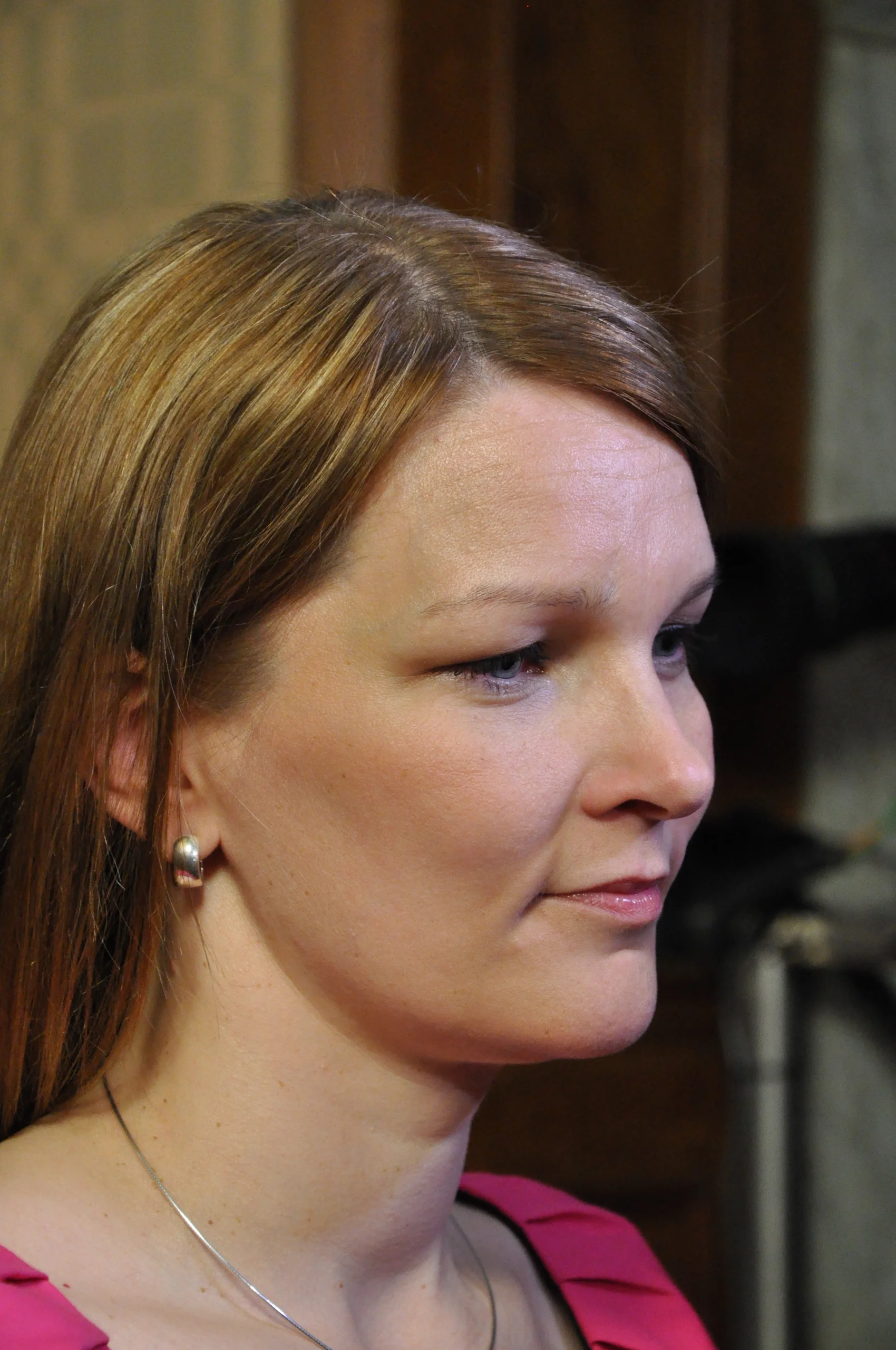
Mari Kiviniemi
 Finland
Also known as: Mari Johanna Kiviniemi, HE Mari Kiviniemi
Birthday
September 27, 1968
Birth Sign
Sagittarius
Birthplace
Seinäjoki, Finland
Age
58 years old
About
Mari Kiviniemi is a Finnish politician who made history as the 41st Prime Minister of Finland, serving from June 2010 to June 2011. Born on September 27, 1968, in Seinäjoki, she is the second woman to hold the nation's highest office and remains a prominent figure within the Centre Party. Her tenure as head of government occurred during a period of significant global economic instability, where she navigated complex domestic policies alongside international financial obligations. Before ascending to the premiership, Kiviniemi built a substantial reputation within Finnish domestic politics, serving as a Member of Parliament starting in 1995 and holding key ministerial portfolios including Agriculture and Transport.
Following her time in national leadership, she transitioned to the international stage, serving as the Deputy Secretary-General of the Organisation for Economic Co-operation and Development (OECD) from 2014 to 2018. In recent years, she has focused on academic leadership and public commentary on global geopolitical issues. As of late 2026, she continues to serve as Chair of the Board at the University of Eastern Finland while actively participating in global forums like the Global Perspective Series. Her career is distinguished by a focus on rural development, agricultural modernization, and pragmatic international cooperation, cementing her legacy as a pivotal stateswoman in Nordic and European history.
Early Life & Background
Born in Seinäjoki, a city in the South Ostrobothnia region of Finland, Mari Kiviniemi grew up in an environment deeply connected to agriculture. This background shaped her early interests and later influenced her political focus on rural development and forestry. She attended the University of Helsinki, where she earned a Master of Social Sciences degree with a specialization in political science. Her academic work centered on understanding political structures and economic policy frameworks, providing a strong theoretical foundation for her future career.
Kiviniemi's entry into public service began while she was still a student, where she became active in student politics and local community organizations. These early experiences laid the groundwork for her future legislative career. In 1995, at the age of 27, she was elected to the Finnish Parliament (Eduskunta) representing the Centre Party. This victory marked the start of a steady climb through the party ranks. Prior to holding ministerial office, she served on various parliamentary committees, honing her skills in legislative processes and building a reputation as a pragmatic leader with a keen eye for detail. Her expertise in agricultural and regional policy quickly made her a valuable asset to her party, setting the stage for her eventual rise to the cabinet level and beyond.
Career Growth
Mari Kiviniemi's political ascent accelerated in 2003 when she was appointed Minister of Agriculture and Forestry in Matti Vanhanen's first cabinet. She held this position until 2007, focusing on modernizing Finland's agricultural sector and managing funds allocated by the European Union. In 2007, she transferred to the role of Minister of Transport and Communications, where she oversaw major infrastructure projects and digitalization initiatives across the country. A significant milestone in her tenure was overseeing the signing of the Nord Stream agreement with Russia in December 2010, a major energy project that ran parallel to her time as Prime Minister.
In June 2010, following the resignation of Prime Minister Matti Vanhanen due to internal coalition tensions, Kiviniemi succeeded him as the Leader of the Centre Party and subsequently became the Prime Minister of Finland. Her term as head of government lasted one year, during which she managed Finland's participation in Eurozone rescue mechanisms for Greece and Portugal while navigating the aftermath of the global financial crisis. Her tenure ended in June 2011 after the Centre Party suffered significant losses in the general election.
Transitioning to international governance, Kiviniemi was appointed Deputy Secretary-General of the OECD in August 2014, a role she held until December 2018. In this capacity, she coordinated global economic policy and development assistance. A notable moment occurred in 2016 when she publicly stated that Romania had the worst roads in the EU, sparking diplomatic discussions regarding infrastructure investment. In 2022, she assumed the role of Chair of the Board at the University of Eastern Finland, focusing on internationalization strategies. As of 2026, she remains active as a commentator on global geopolitics, frequently warning about the societal impacts of protectionism and China-EU tensions.
Career Timeline
Public Image & Style
Mari Kiviniemi is known for her professional demeanor and understated style, typically appearing in formal business attire that reflects her background in politics and international diplomacy. Her height is not officially recorded in public biographies, but she is described in media as possessing a commanding presence suitable for high-level negotiations. Her public image is characterized by pragmatism, competence, and a steadfast commitment to gender equality. She is often cited as a role model for women in leadership, particularly noted for her visit by U.S. Vice President Joe Biden in March 2011 to commemorate International Women's Day, which highlighted her status as a leading female stateswoman. Her approach to governance is viewed as rational and data-driven, earning her respect across political divides. She is recognized for breaking barriers as the second female Prime Minister of Finland, inspiring a new generation of female politicians in the Nordic region.
Fame & Fandom (iFAMOUS Rankings)
Mari Kiviniemi commands a following defined by political respect rather than the fervent adulation typical of entertainment figures, and her audience operates without a formalized name or organized fan clubs. Her public persona is anchored in her tenure as Finland's second female Prime Minister and her subsequent high-level roles in international governance, creating a legacy that inspires admiration among policy observers but lacks the ritualistic engagement seen in pop culture fandoms. While no specific fanbase moniker exists to unite her supporters, her influence extends through institutional channels and academic circles where her contributions are studied with serious intent. The iFANN Global Fame Engine has evaluated this person, but they do not currently hold a placement in the published rankings (Global Top 1,000 or a Top-100 scope list). This evaluation reflects her status as a former head of government and a prominent figure in global economic policy, even if she does not appear in the current top-tier fame lists. Her profile remains stable, indicating a consistent level of attention that aligns with her historical significance in Finnish and European politics.
Interesting Facts and Legends
Mari Kiviniemi gained international media attention in 2016 for her blunt assessment during an OECD review, where she stated that Romania had the worst roads in the EU. This comment sparked widespread debate about infrastructure funding disparities in Eastern Europe. Another significant event in her career involved the signing of the Nord Stream agreement with Russia in December 2010, a major energy project that ran parallel to her tenure as Prime Minister. She was the only woman to serve as Prime Minister of Finland until Sanna Marin took office in 2019, making her a pivotal figure in the timeline of Finnish female leadership. Her commentary in September 2024 regarding the dangers of rising tariffs between China and the EU demonstrated her continued relevance in global economic discourse. In September 2026, she participated in the second edition of the Global Perspective Series at Parul University in India, discussing global uncertainties and the role of former heads of government in shaping future policy. Additionally, she holds the Order of the White Rose of Finland, one of the nation's highest civil honours.
Notable Quotes
“Romania has the worst roads in the EU.”
“Amid China-EU tensions, society is in harm's way.”
Family & Personal Life
Mari Kiviniemi comes from a family with strong ties to agriculture in Seinäjoki, a background that deeply influenced her lifelong dedication to rural development and forestry policy. While specific details about her parents or siblings are not widely documented in public records, her upbringing in a farming community provided the foundational context for her political philosophy. She has maintained a household that prioritizes privacy, keeping her immediate family life away from the glare of media attention throughout her decades-long public career. Unlike many contemporaries who leverage family narratives for political capital, Kiviniemi has kept her domestic sphere entirely separate from her professional achievements. Her commitment to this separation has allowed her to build a reputation based solely on her policy decisions and leadership capabilities rather than personal anecdotes or family connections.
Notable Connections
Relationships & Dating History
Mari Kiviniemi maintains a notably private personal life compared to many high-profile politicians, deliberately shielding her romantic history from public scrutiny. There are no widely documented public records of her romantic relationships, marriages, or children in the public domain. Unlike many of her contemporaries, she has not used her personal life as a platform for media engagement, and reliable sources do not list any spouses, partners, or offspring. Consequently, there is no chronological dating history available for verification. As of 2026, based on all available public information, she is considered single or privately married without public disclosure of a partner. Her decision to keep her relationships out of the spotlight has been consistent throughout her entire career, reinforcing her public persona as a strictly professional figure anchored in her political and institutional achievements rather than personal narratives.
Salary, Net Worth In 2026
$450,000
iFANN Editorial Team estimate
As a career politician and public servant, Mari Kiviniemi does not have a publicly disclosed net worth derived from commercial ventures, endorsements, or acting salaries. Her wealth is derived from her salary as a Member of Parliament, her tenure as Prime Minister, and her subsequent role as OECD Deputy Secretary-General. Specific figures for her net worth are not published in celebrity finance databases because her income is classified under public official earnings rather than private enterprise. Estimates suggest a modest but stable financial standing typical of senior European civil servants, likely ranging between €300,000 and €600,000 in total lifetime earnings, though exact asset valuations are private. She currently works as a consultant and board chair, generating income through these professional services. iFANN currently estimates Mari Kiviniemi's net worth at approximately $450,000 based on her career trajectory and public service roles, reflecting the stability of her long-term employment in high-level government and international organizations.
Awards & Accolades
View 3 records, honours and achievementsKnown For
Prime Minister of Finland
2010 · Head of Government
Deputy Secretary-General of the OECD
2014 · International Official
Keywords
Sources
Quick Facts
- Profession
- politician
- Born
- September 27, 1968
- Birthplace
- Seinäjoki, Finland
- Gender
- Female
- Birth Sign
- Sagittarius
Personal Details
- Full Name
- Mari Johanna Kiviniemi
- Children
- Education
- Master of Social Sciences in Political Science, University of Helsinki
Frequently Asked Questions
Who is Mari Kiviniemi?
How old is Mari Kiviniemi?
Is Mari Kiviniemi married?
What did Mari Kiviniemi say about Romanian roads?
What is Mari Kiviniemi doing now?
Social Media
Similar People

Join the community
fans discussing