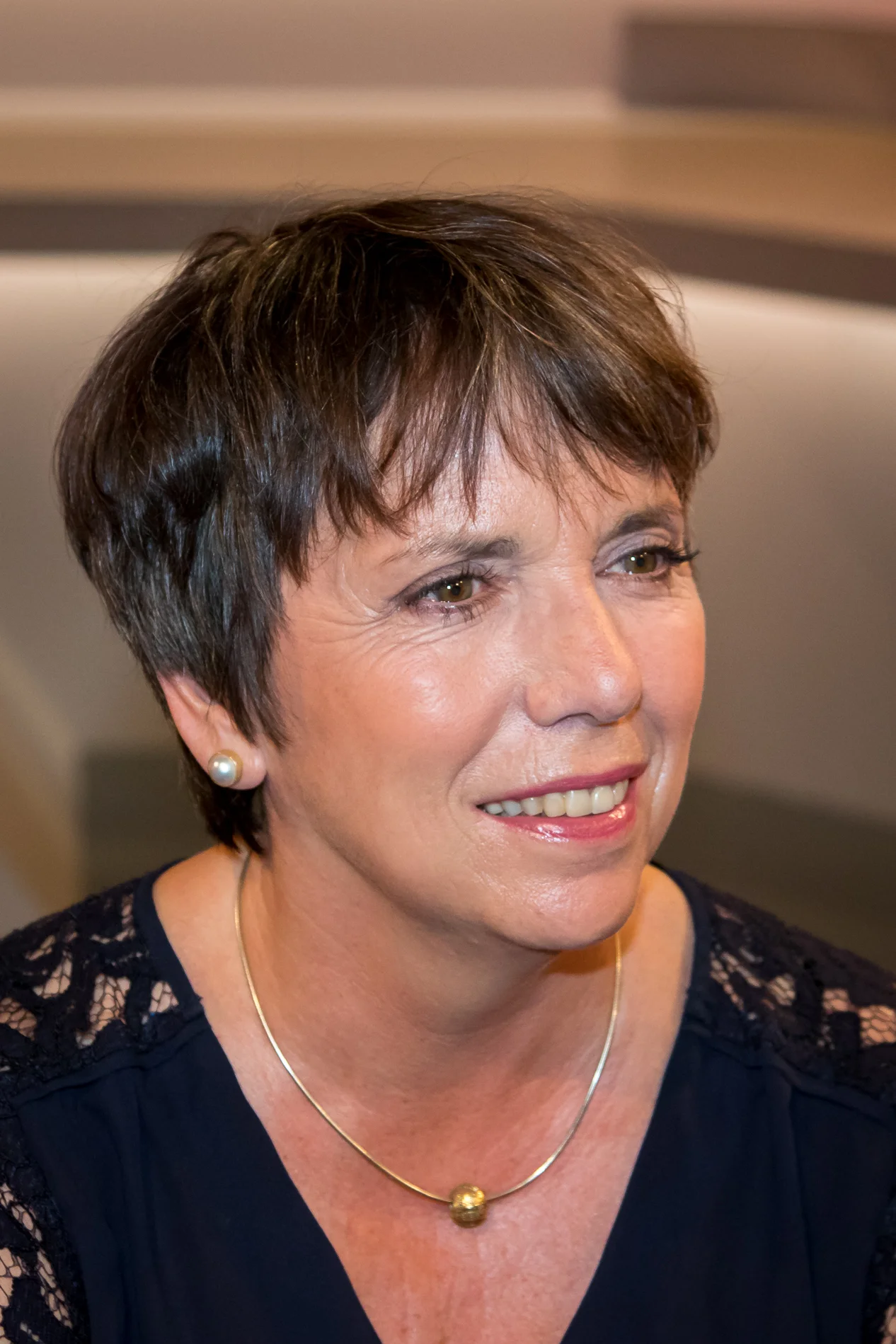
Margot Käßmann
 Germany
Lutheran theologian•former bishop•author
Also known as: Margot Käßmann, Margot Kaessmann
Birthday
June 3, 1958
Birth Sign
Gemini
Birthplace
Marburg, Germany
Age
68 years old
About
Margot Käßmann is a German Lutheran theologian who broke a major barrier in 2009 when she became the first woman to lead the Protestant Church in Germany (EKD). She had already made history a decade earlier as the first female bishop of the Evangelical-Lutheran Church of Hanover. Her leadership style combined intellectual rigor with a warm, accessible public presence, making her one of the most recognizable religious figures in the country.
Since stepping down from her church offices in 2010, Käßmann has remained an active voice in public life. She served as a Reformation Ambassador for the 500th anniversary of the Reformation in 2017 and has continued writing, speaking, and advocating for a more inclusive and socially engaged church. Her influence extends beyond the pulpit; she is a sought-after commentator on ethics, politics, and social justice.
Early Life & Background
Born in Marburg, a university town in central Germany, Margot Käßmann grew up in a family that valued education and civic engagement. Her father was a physician, and her mother was a nurse. She attended school in Marburg, where she showed an early interest in religion and social issues.
Käßmann studied theology at the University of Tübingen, the University of Edinburgh, and the University of Göttingen. During her time in Edinburgh, she was exposed to the ecumenical movement, which shaped her later commitment to church unity. She completed her doctoral thesis in 1989, focusing on the theology of Martin Luther.
Her first professional roles were as a pastor and university teacher. She served as a research assistant at the University of Göttingen and then as a pastor in the town of Schwarmstedt. These early positions honed her preaching and pastoral skills, but it was her administrative talent that caught the attention of church leaders.
Career Growth
Käßmann's rise to the top of German Protestantism was swift. In 1999, she was elected bishop of the Evangelical-Lutheran Church of Hanover, making her the first woman to hold that office in the region. Her election was seen as a sign of change within the church, which had been traditionally male-dominated.
In October 2009, she achieved another milestone when she was elected chair of the Council of the Protestant Church in Germany (EKD). This made her the first woman to lead the federation of 20 regional Protestant churches. Her tenure, however, was short-lived. In February 2010, she was involved in a drink-driving incident, and she resigned from both her bishopric and the EKD chairmanship.
After her resignation, Käßmann reinvented herself as a public intellectual. She wrote several books, including works on faith and ethics, and became a regular columnist for German newspapers. In 2017, she served as the Reformation Ambassador for the 500th anniversary of the Reformation, a role that allowed her to speak on the legacy of Martin Luther. She officially retired from full-time ministry in 2018 but remains a respected voice in theological and social debates.
Career Timeline
Public Image & Style
Käßmann is often described as approachable and charismatic, with a knack for connecting with ordinary people. She is known for her plain speaking and willingness to address controversial topics, such as social justice and environmental stewardship.
Her public image is that of a modern, reform-minded church leader who is not afraid to challenge tradition. She has a significant following among progressive Christians, and her books have sold well in Germany. Despite the scandal that ended her church career, she has maintained a positive reputation as a thoughtful and compassionate voice.
Fame & Fandom (iFAMOUS Rankings)
Her influence extends far beyond the pulpit, anchoring her status in the modern religious landscape with a reach that few can match. Margot Käßmann is currently the 79th most famous person in Pastors, a position she holds following a slight shift from the 76th rank last cycle. This placement reflects her enduring resonance within the iFANN Global Fame Rankings, which tracks global attention across media coverage, search, and consumption signals worldwide. While her career began with historic breakthroughs as the first female bishop of Hanover and later the head of the EKD, her current fame rests on a unique blend of theological rigor and unapologetic public engagement. She navigates complex social debates with a voice that cuts through noise, making her a central figure in German cultural discourse. Unlike pop stars who rely on fleeting viral moments, Käßmann's audience grows through decades of consistent advocacy for gender equality, environmental stewardship, and human rights. Her presence at international forums, such as the 2026 World Summit addressing narratives concerning the regime in Iran, cements her role as a global moral commentator rather than a celebrity. Despite this high profile, there is no organized fanbase with a specific name or ritualistic adoration typical of entertainment icons. Her supporters are best described as an engaged readership and listenership drawn to her podcast, *Mensch Margot!*, and her writings. They follow her not for autographs but for her sharp analysis of life's big questions. The connection is intellectual and spiritual, built on trust rather than hype, proving that authority in the digital age still commands a dedicated following even without a formal fandom structure.
Interesting Facts and Legends
Margot Käßmann is known for her love of hiking and often uses nature as a source of spiritual reflection. She is a passionate advocate for gender equality and has spoken out on the ordination of women in the Catholic Church. In 2010, after her resignation, she received a standing ovation at the German Protestant Kirchentag, a biennial gathering of church members. She has a tattoo of the Christian fish symbol on her ankle, which she got in her 50s. Her favorite Bible verse is from the Gospel of John: 'The truth will set you free.' A widely retold story from her tenure highlights her refusal to stay silent during the 2014 scandal involving her resignation; she faced the press with direct honesty rather than evasion, a moment that defined her character for many observers. Another notable chapter occurred in June 2022 when she publicly stated that weapons do not create peace in the context of the war in Ukraine, drawing both praise and criticism for her stance. These instances represent her ongoing role as a public theologian and commentator rather than moments of legendary fan adoration, yet they remain pivotal to her legacy as a leader who prioritizes truth over comfort.
Notable Quotes
“We need to be a church that is not afraid to speak out for justice.”
“Faith is not a private matter; it has public implications.”
“The church must be a place where all people feel welcome.”
“I have learned that leadership is about serving, not being served.”
“We cannot be silent when people are suffering.”
Family & Personal Life
Margot Käßmann was married to Eckhard Käßmann, a pastor, from 1981 until their divorce in 2000. The couple had four children together. After the divorce, she raised the children largely as a single mother while managing her demanding church career.
Her parents were both in the medical field, which instilled in her a sense of service. She has spoken about how her mother's nursing career influenced her own commitment to caring for others. Käßmann's family has been a source of strength and grounding throughout her public life.
Notable Connections
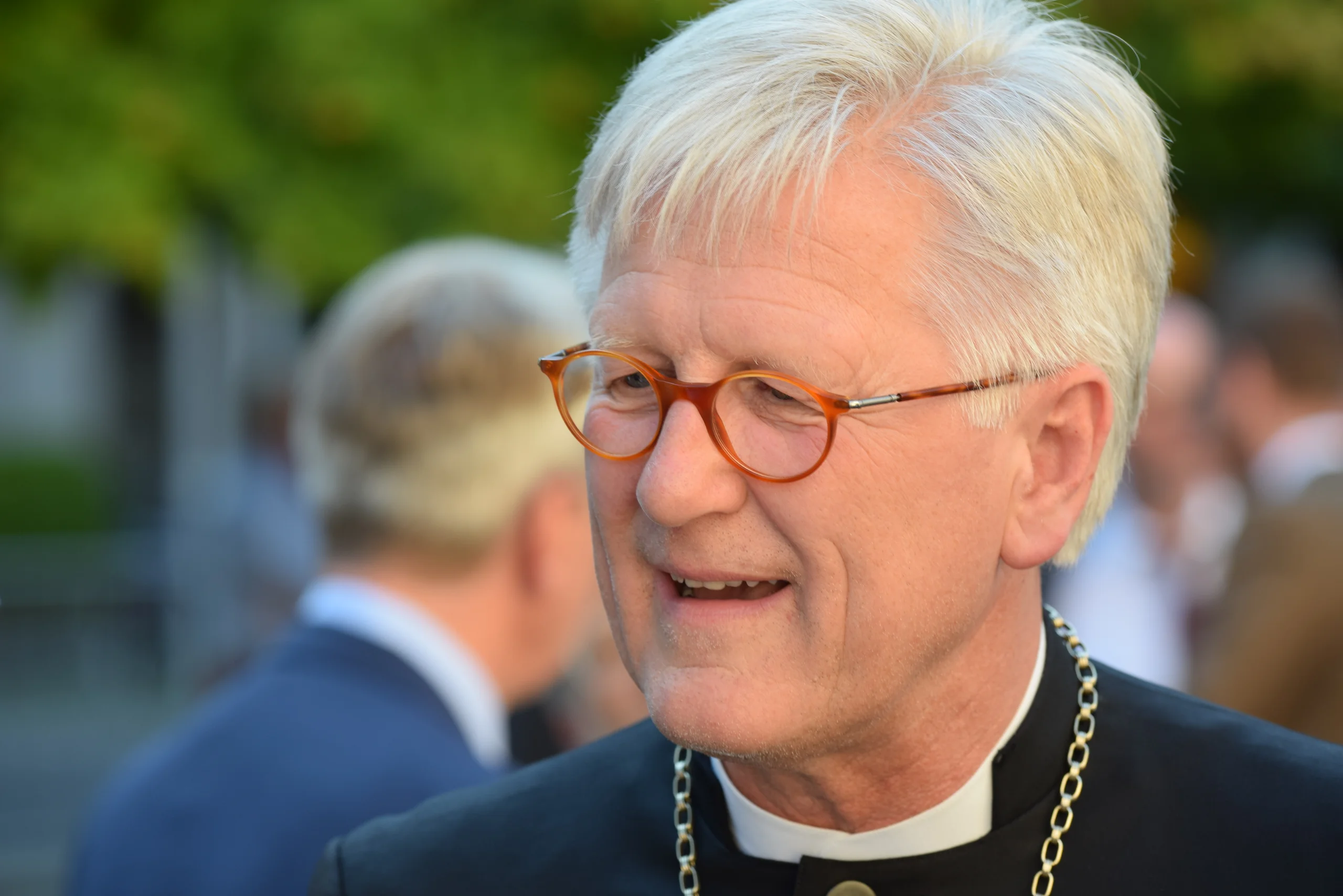
Martin Luther, the Protestant Reformation, and the German Evangelical Church. She is also associated with figures like Heinrich Bedford-Strohm, who succeeded her as EKD chair.
Relationships & Dating History
Margot Käßmann was married to Eckhard Käßmann, a fellow pastor, in 1981. The couple had four children together. Their marriage lasted nearly two decades, but they divorced in 2000. The divorce was attributed to the strains of their demanding careers and the challenges of balancing family life with church responsibilities.
After her divorce, Käßmann did not remarry. She has kept her personal life private, and there are no public records of any subsequent relationships. As of 2026, she remains single and focuses on her family, including her children and grandchildren.
- MarriedEckhard Käßmann1981 - 2000Married for nearly 20 years and had four children together before divorcing in 2000.
Salary, Net Worth In 2026
$5 Million
iFANN Editorial Team estimate
iFANN currently estimates Margot Käßmann's net worth at $5 Million as of 2026. Her income comes primarily from her career as a theologian and author. She has written numerous books, many of which have been bestsellers in Germany, and she earns royalties from her publications. In addition to book sales, Käßmann has received honoraria for speaking engagements and her role as Reformation Ambassador. She also receives a pension from her years of service in the church. While she is not a wealthy celebrity, her financial situation is comfortable, reflecting her long and distinguished career in public service.
Awards & Accolades
View 5 records, honours and achievementsKnown For
First female bishop of Hanover
1999 · Bishop
First female chair of the EKD
2009 · Chair
Keywords
Sources
Quick Facts
- Profession
- Lutheran theologian, former bishop, author
- Born
- June 3, 1958
- Birthplace
- Marburg, Germany
- Gender
- Female
- Birth Sign
- Gemini
- Education
- University of Tübingen, University of Edinburgh, University of Göttingen
- Children
- 4
Personal Details
- Full Name
- Margot Käßmann
- Spouse
- Eckhard Käßmann (divorced)
- Children
- 4
- Education
- University of Tübingen, University of Edinburgh, University of Göttingen (PhD)
Frequently Asked Questions
Who is Margot Käßmann?
What is Margot Käßmann's net worth?
Why did Margot Käßmann resign?
Is Margot Käßmann still active?
What is Margot Käßmann known for?
Similar People
Join the community
fans discussing