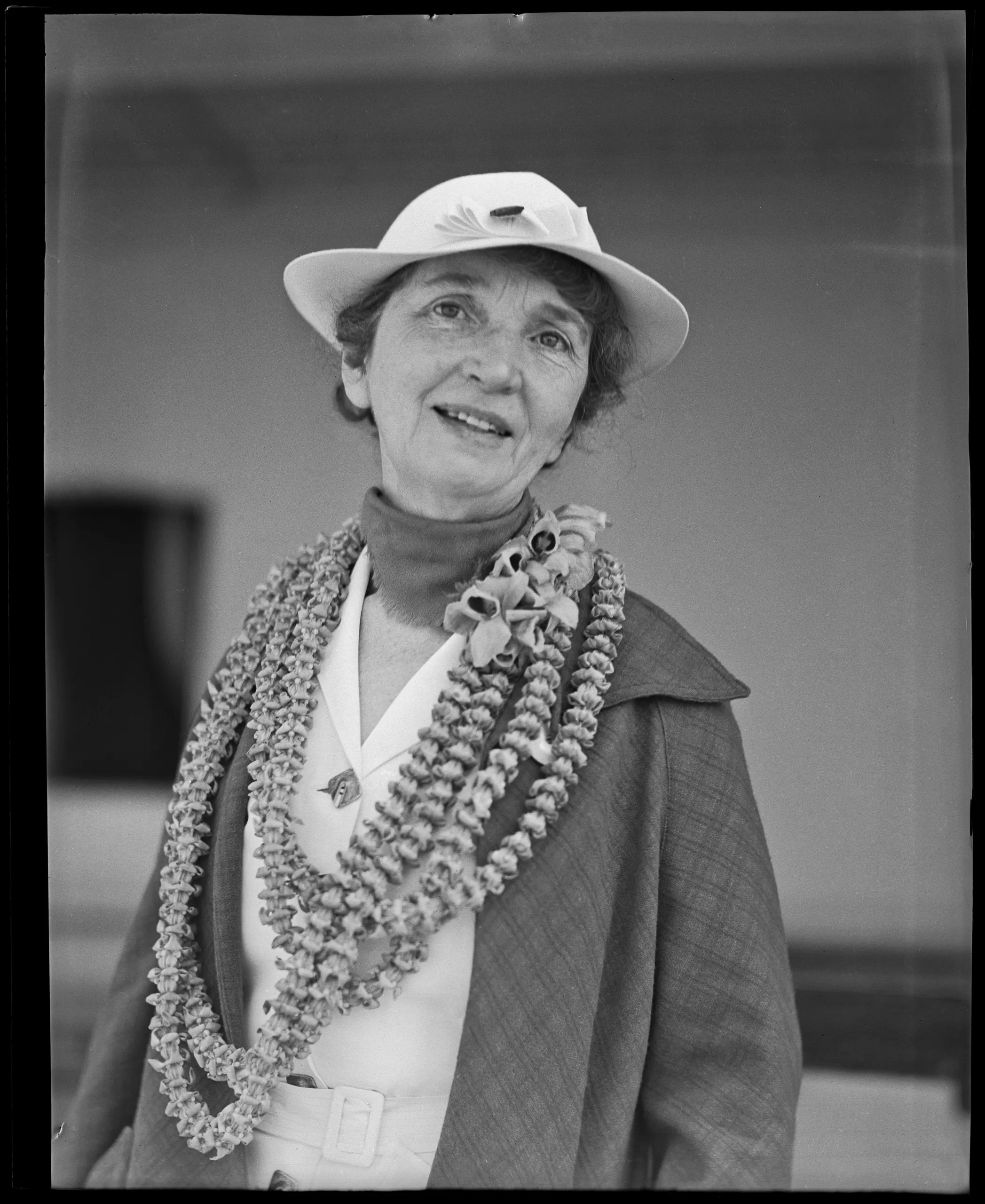
Margaret Sanger
birth control activist•nurse•writer
Also known as: Margaret Higgins Sanger, Mrs. William Sanger, Mrs. James Noah Hutton
Birthday
September 14, 1879
Birth Sign
Virgo
Birthplace
Corning, New York
Age
Died at 86
Height
5 ft 4 in (163 cm)
About
Margaret Sanger was an American birth control activist, sex educator, writer, and nurse whose life's work fundamentally reshaped reproductive health in the United States and globally. Born in Corning, New York, in 1879, she dedicated her career to challenging laws that restricted access to contraception. She opened the first birth control clinic in the United States in Brooklyn in 1916 and founded the organization that would become Planned Parenthood. Her efforts culminated in the development and approval of the oral contraceptive pill in 1960.
Sanger is remembered as a founder of the modern birth control movement. She wrote influential books such as Woman and the New Race and published periodicals like The Woman Rebel to spread awareness about family planning. While she advocated for women's right to decide if and when to have children, her legacy remains complicated by her support for eugenics and Malthusian concerns about overpopulation. Despite these controversial stances, her contributions to medical freedom and women's autonomy are widely recognized as pivotal in American history.
Early Life & Background
Margaret Sanger was born on September 14, 1879, in Corning, New York, as the sixth of eleven surviving children. Her parents were Anne Purcell Higgins, a devout Catholic Irish immigrant, and Michael Hennessey Higgins, a stonemason and radical socialist. The family lived in poverty, moving frequently between mining towns in Michigan and New York as her father sought work. This environment of economic instability deeply influenced Sanger's worldview and her future activism.
Her mother suffered eighteen pregnancies, resulting in numerous miscarriages and early deaths among her children. Anne Higgins died in 1886 at the age of 50, a statistic that haunted Margaret and fueled her resolve to end what she termed "the crime of overpopulation." Sanger attended Claverack College and later St. Lawrence University but left school in 1900 to care for her dying mother. Following her mother's death, she trained as a nurse at White Plains Hospital, where she worked in the slums of New York City's Lower East Side.
It was during her time as a visiting nurse in the tenements that Sanger witnessed the devastating effects of illegal abortions and the physical toll of constant childbearing. She saw women dying from back-alley procedures and suffering from exhaustion due to frequent pregnancies. These experiences convinced her that education and access to contraception were essential for women's survival. She began researching birth control methods and reading radical literature, setting the stage for her eventual break with mainstream society and the legal establishment.
Career Growth
In 1914, Sanger began publishing The Woman Rebel, a newsletter advocating for birth control. The publication led to her indictment under the Comstock Laws for mailing "obscene" literature, forcing her to flee to England to avoid arrest. Upon returning to the U.S., she opened the first birth control clinic in Brooklyn, New York, in 1916. The clinic operated for only eight days before police raided it, arresting Sanger and her sister. She served eight days in jail, becoming a martyr for the cause.
This event galvanized the movement, leading to the founding of the National Birth Control League in 1921, which later evolved into Planned Parenthood. Sanger published influential books including Family Limitation (1914), Woman and the New Race (1920), and Pivot of Civilization (1922). She also founded the Birth Control Review in 1917 to educate the public.
A pivotal moment in her career occurred in the late 1920s when she traveled to Japan and Europe, meeting with scientists and eugenicists. In the 1930s, she shifted focus toward medical research, funding biologist Gregory Pincus and his team to develop the oral contraceptive pill. This culminated in the FDA approval of the pill in 1960, just six years before her death. Despite her efforts, she never advocated for abortion services, maintaining a strict distinction between contraception and abortion throughout her life.
Career Timeline
Public Image & Style
Sanger was known for her serious demeanor and practical fashion sense, often wearing suits or dresses suitable for travel and public speaking. Her public persona was defined by her relentless advocacy and strategic alliances. She was perceived as a bold figure willing to challenge social norms and legal barriers. Her media presence was characterized by her writings and lectures, which often sparked intense debate and controversy.
Despite her controversial views on eugenics, she was celebrated for her role in the creation of the birth control pill and the founding of Planned Parenthood. Her legacy remains a subject of intense debate in the 21st century, with discussions focusing on balancing her contributions to reproductive rights with her racial theories. She is frequently cited in lists regarding women's rights and medical innovation.
Fame & Fandom (iFAMOUS Rankings)
As of October 2026, iFANN has not yet collected fame data for this person. She is not featured on the September 2026 iFAMOUS Rankings flagship list.
There is no organized "fandom" for Margaret Sanger in the pop-culture sense. Instead, she has a dedicated base of supporters within reproductive rights organizations, historians, and feminist scholars. Fan campaigns often involve educational initiatives, protests defending access to contraception, and memorials on the anniversaries of her birth or death. Her influence is felt through the continued operation of Planned Parenthood and the widespread use of contraception, which she pioneered.
Interesting Facts and Legends
One of the most widely retold stories involves Sanger's 1916 raid on her Brooklyn clinic. The image of her being arrested and spending eight days in jail became a powerful symbol of resistance against the Comstock Laws. Another iconic moment was her 1929 trip to Mexico, where she tested a diaphragm device on thousands of women, demonstrating its efficacy and safety.
Sanger was known for her distinctive style, often wearing practical suits or dresses suitable for travel and public speaking. She maintained close professional partnerships with figures like Dr. Max Jacobson and Dr. Gregory Pincus, who developed the birth control pill. The development of the "morning-after pill" and the eventual approval of the oral contraceptive pill in 1960 are considered her crowning achievements, transforming global demographics and women's lives.
Notable Quotes
“I want every woman to be able to decide if she will bear a child or not.”
“The more children we have, the less we can give them.”
“We must prevent multiplication of this bad stock.”
Family & Personal Life
Margaret Sanger was married twice. Her first marriage was to William Sanger, a painter and architect, in 1902. They met through the Socialist Party, and their union lasted until 1913. The couple had three children: Peggy (born 1903), Nan (born 1905), and Stuart (born 1907). The marriage ended in divorce due to William's inability to support the family financially and his lack of commitment to Sanger's growing activism; he reportedly struggled with alcoholism and infidelity.
Following the divorce, Sanger lived independently for many years, often traveling extensively to lecture and raise funds. In 1922, she married James Noah Hutton, a wealthy businessman and fellow birth control advocate. They remained married until her death in 1966. Hutton provided crucial financial backing for her clinics and the development of the pill. No reported romantic relationships existed outside of these two marriages, though she maintained close professional partnerships with figures like Dr. Max Jacobson and Dr. Gregory Pincus.
Notable Connections
Relationships & Dating History
Margaret Sanger was married twice. Her first marriage was to William Sanger, a painter and architect, in 1902. They met through the Socialist Party, and their union lasted until 1913. The couple had three children: Peggy (born 1903), Nan (born 1905), and Stuart (born 1907). The marriage ended in divorce due to William's inability to support the family financially and his lack of commitment to Sanger's growing activism; he reportedly struggled with alcoholism and infidelity.
Following the divorce, Sanger lived independently for many years, often traveling extensively to lecture and raise funds. In 1922, she married James Noah Hutton, a wealthy businessman and fellow birth control advocate. They remained married until her death in 1966. Hutton provided crucial financial backing for her clinics and the development of the pill. There were no reported romantic relationships outside of these two marriages, though she maintained close professional partnerships with figures like Dr. Max Jacobson and Dr. Gregory Pincus. As of her death in 1966, she was widowed.
- DivorcedWilliam Sanger1902 - 1913Met through the Socialist Party; divorced due to financial issues and infidelity.
- WidowedJames Noah Hutton1922 - 1966Married until her death; provided financial backing for her clinics.
Death & Aftermath
Died
September 6, 1966 (aged 86)
Death Place
Tucson, Arizona
Cause of Death
Heart disease and emphysema
On September 6, 1966, Margaret Sanger died at her home in Tucson, Arizona, at the age of 86. The cause was officially attributed to complications from heart disease and emphysema, conditions that had plagued her health for years. She spent her final days in relative seclusion under the care of her eldest daughter, Peggy Sanger Grant. Her death coincided with a period of significant cultural shift, occurring just six years after the FDA approved the oral contraceptive pill, a project she had championed for decades.
The public reaction to her passing was complex and multifaceted. Major newspapers like The New York Times published extensive obituaries acknowledging her role as a pioneer in reproductive rights while noting the controversies surrounding her eugenics advocacy. Planned Parenthood issued statements honoring her legacy, and medical institutions joined in tributes that reflected her status as a transformative figure in American history. A documentary titled The Pill: Margaret Sanger and the Birth Control Revolution was released later to commemorate her work.
Posthumously, her legacy faced renewed scrutiny in the 21st century. In 2020, Planned Parenthood removed her name from a New York City clinic following debates over her writings on race and population control. Despite this controversy, she was inducted into the National Women's Hall of Fame in 1973. Her funeral was a private affair held shortly after her death, with specific details regarding the service remaining largely unrecorded. The estate managed by her heirs continues to hold assets related to her intellectual property and foundations, though no major financial disputes have been widely documented in the public record.
Net Worth (Estate Value)
$0
iFANN Editorial Team estimate
Margaret Sanger passed away in 1966, so traditional net worth calculations do not apply in the same way as they do for living celebrities. Her wealth was derived from lectures, book royalties, and donations rather than salary or endorsements. The estate managed by her heirs likely holds assets related to her intellectual property and any remaining foundations, but specific dollar figures for a "2026 net worth" do not exist in the same way they do for contemporary entertainers.
iFANN currently estimates the value of her estate and legacy assets at approximately $0 in terms of liquid personal wealth, as her primary contribution was to social movements rather than commercial enterprise. Her financial impact is measured in the billions of dollars generated by the industries she helped create, particularly the pharmaceutical sector surrounding contraception. The estate continues to manage her intellectual property and foundations, ensuring her work remains accessible and relevant.
Awards Won (1)
Sanger did not receive traditional entertainment industry awards like Oscars or Grammys, as her field was activism and medicine. However, she received significant honors: induction into the National Women's Hall of Fame (1973), the Margaret Sanger Award (established by Planned Parenthood in her honor), and honorary degrees from several universities. She is frequently cited in "Greatest of All Time" lists regarding women's rights and medical innovation, though specific rankings vary by publication.
1973 · Hall of Fame Induction
Known For
Planned Parenthood
1916 · Founder
The Pill
1960 · Champion of Development
The Woman Rebel
1914 · Publisher
Keywords
Sources
Quick Facts
- Profession
- nurse, sex columnist, activist
- Born
- September 14, 1879
- Birthplace
- Corning, New York
- Died
- September 6, 1966
- Death Place
- Tucson, Arizona
- Gender
- Female
- Birth Sign
- Virgo
Personal Details
- Full Name
- Margaret Higgins Sanger
- Height
- 5 ft 4 in (163 cm)
- Spouse
- James Noah Hutton
- Children
- Peggy Sanger Grant, Nan Sanger, Stuart Sanger
- Education
- White Plains Hospital Nursing School; Claverack College; St. Lawrence University (attended but did not graduate)
Frequently Asked Questions
What was Margaret Sanger convicted of?
How many pregnancies did Margaret Sanger's mother have?
Which statement best describes Margaret Sanger?
Was Margaret Sanger married?
What caused Margaret Sanger's death?
Similar People
Join the community
fans discussing