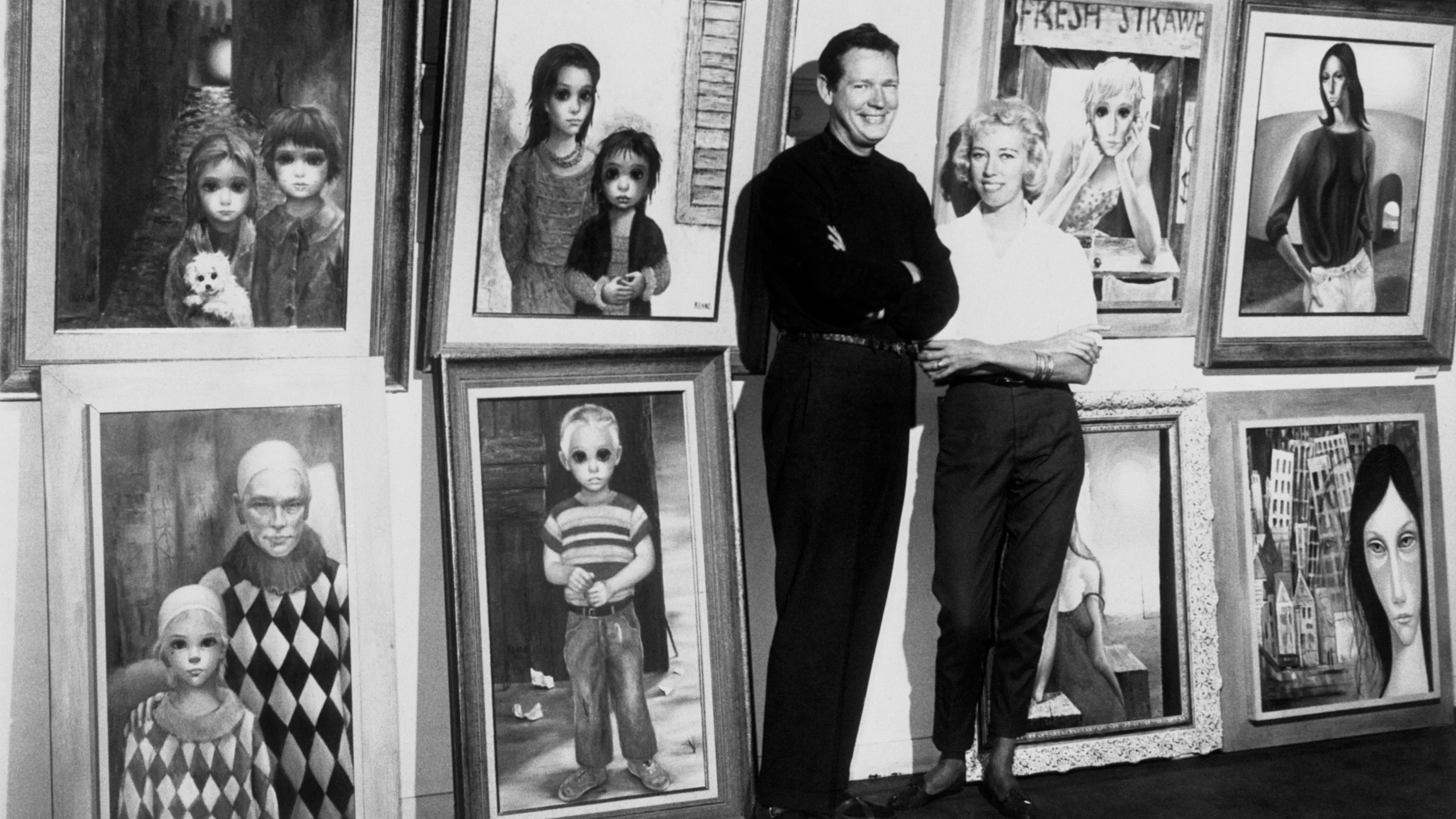
Margaret Keane
Also known as: Margaret Doris Hawkins, M. Keane
Birthday
September 15, 1927
Birth Sign
Virgo
Birthplace
Nashville, Tennessee
Age
Died at 94
About
Margaret Keane was an American painter best known for her distinctive portraits of children, women, and animals with oversized, melancholic eyes. Born Margaret Doris Hawkins in Nashville on September 15, 1927, she developed a unique visual language that captivated millions through mass-produced prints, plates, and cups during the mid-20th century. Her work defined a specific era of commercial art before she became embroiled in a decades-long legal battle to claim authorship.
Her life story is defined by a dramatic struggle against her first husband, Walter Stanley Keane, who falsely claimed credit for her paintings. Despite achieving massive global sales under his name, Margaret remained largely unknown until a landmark court case in 1968 forced her husband to admit he could not paint. She spent her later years reclaiming her legacy as a legitimate artist rather than a mere producer of kitsch.
Early Life & Background
Margaret Doris Hawkins grew up in a working-class environment in Nashville, Tennessee, where she developed an early fascination with drawing despite limited formal education. She largely taught herself to paint while working various jobs to support herself before achieving any public recognition. In the late 1940s, she moved to San Francisco, seeking new opportunities in the city's vibrant cultural scene. It was there, in the early 1950s, that she met Walter Keane, a man who would soon become both her husband and her greatest obstacle.
Before her rise to fame, Margaret struggled financially while raising two daughters, Jane and Karen. She worked as a waitress and took on odd jobs to keep food on the table while painting in her spare time. This period of poverty was crucial for developing her signature style; she began painting subjects with large, soulful eyes to evoke empathy and connection. The emotional weight of her own struggles likely influenced the melancholic gaze that would eventually define her career. Despite her growing skill and the distinctiveness of her work, she found no success in the traditional art world until she partnered with Walter, who possessed a flair for self-promotion but lacked artistic talent.
Career Growth
The trajectory of Margaret Keane's career shifted dramatically after she married Walter Stanley Keane in 1954. The couple moved to Hawaii, where Walter took full credit for Margaret's paintings, marketing them as his own under the name "Walter Keane." He claimed he was a struggling artist whose wife helped him manage the business, a narrative that allowed them to achieve massive commercial success selling mass-produced prints, plates, and cups featuring Margaret's "big-eyed" subjects. By the late 1950s and early 1960s, the "Keane" brand was ubiquitous in department stores across the United States.
The partnership dissolved in the mid-1960s, leading to their divorce in 1968. Following the split, Margaret attempted to claim the rights to her work, but Walter continued to assert his authorship, using the proceeds to fund a lavish lifestyle while she remained relatively unknown. The turning point came in 1968 when Margaret sued Walter for copyright infringement in Hawaii. The trial became a media sensation. The climax of the case occurred when the judge ordered a live demonstration: both parties were asked to paint a portrait of a child with big eyes in front of the jury. Walter refused to participate, citing stage fright or other excuses, effectively admitting he could not paint. Margaret completed the painting in minutes, securing a decisive victory and establishing her legal right to her work.
After winning the lawsuit, Margaret spent decades rebuilding her reputation. She held exhibitions, sold original works, and re-established herself as a legitimate artist rather than a mere producer of kitsch. She founded Keen Look, Inc., to manage her estate and sales directly. Her story gained renewed global attention with the release of Tim Burton's biographical film Big Eyes, starring Amy Adams and Christopher Walken. While the film dramatized certain events, it brought widespread awareness to the injustice she endured and reintroduced her art to a new generation. Margaret Keane died on June 26, 2022, in Napa, California, leaving behind a legacy of resilience and artistic integrity.
Career Timeline
Public Image & Style
Margaret Keane is portrayed in the public eye as a resilient victim of domestic abuse and artistic theft who ultimately triumphed. Media portrayals emphasize her kindness, humility, and the tragic nature of her earlier years. She was known for her gentle demeanor and unassuming personality, which stood in stark contrast to the flamboyant persona her husband cultivated.
Her signature style, subjects with disproportionately large, watery eyes, became an instant visual shorthand for emotion in the 1960s. While initially dismissed as kitsch, her work has since been rehabilitated as a significant contribution to American pop culture and commercial art. The media often highlights her transformation from an anonymous housewife to a celebrated artist who fought for her rights in court.
Fame & Fandom (iFAMOUS Rankings)
For decades, the story of Margaret Keane has fueled a quiet but devoted cultural appreciation rather than an organized fanbase with a specific collective name. While modern pop stars often rally supporters for chart pushes or birthday billboards, Keane's legacy grew from the mass commercialization of her "Big Eyes" art in the 1960s and 70s, where millions encountered her work on plates, mugs, and posters without ever knowing the artist behind the brush. The central legend that binds this audience together is the dramatic deception orchestrated by her first husband, Walter Stanley Keane, who claimed credit for paintings she created in secret. This narrative of artistic theft and eventual vindication serves as the foundational mythology for anyone drawn to her story, culminating in a verified legal battle where she proved her authorship and inspired Tim Burton's 2014 film Big Eyes.
The emotional core of her enduring appeal lies in the shock and relief felt by the public upon learning the truth about the fraud, transforming her from a hidden housewife into a celebrated figure of resilience. Her fame remained largely passive, with people encountering her sad-eyed waifs in galleries and department stores rather than through high-energy live performances. Although she maintained an Instagram presence until her passing, there are no records of organized fan rituals, inside jokes, or charity drives initiated by a self-identified group. iFANN evaluated her status in August 2026 and found that while she remains a significant cultural touchstone for themes of domestic abuse and women's agency, she does not currently hold a placement in the published rankings (Global Top 1,000 or a Top-100 scope list). Despite the absence of a formal fandom name, her original paintings continue to fetch high prices at auction, and her story remains a robust part of mid-century pop art history.
Interesting Facts and Legends
One of the most legendary moments in art history occurred in a Hawaii courtroom in 1968. When the judge demanded proof of authorship, Walter Keane refused to paint, claiming he had stage fright. Margaret stepped up and painted a masterpiece in minutes, proving beyond doubt that she was the creator behind the famous "Big Eyes" series. This incident remains the centerpiece of the Big Eyes narrative and is widely retold as the moment justice was served.
The sheer volume of reproductions sold during the 1960s is staggering. Her images appeared on millions of items including plates, mugs, posters, and even clothing. This mass-market phenomenon represents the height of "kitsch" art before its later rehabilitation. Many collectors today trade these vintage items as historical artifacts of a unique cultural moment.
Although she became wealthy from the initial sales, much of that money was lost to Walter's mismanagement during their marriage. Post-divorce earnings and residuals from the Big Eyes film have bolstered her estate significantly. Today, her original paintings fetch high prices at auction, often ranging between $50,000 and $150,000 depending on the size and condition of the piece.
Notable Quotes
“I didn't know I was being robbed. I just thought he was helping me sell my pictures.”
“I never wanted to be famous. I just wanted to paint.”
“The only thing I ever wanted was to be recognized as an artist.”
Family & Personal Life
Margaret Keane was born Margaret Doris Hawkins in Nashville, Tennessee, to parents whose names are not widely documented in public records. She had two daughters, Jane and Karen Keane, from her marriage to Walter Stanley Keane. The family lived through significant hardships during the 1950s when Margaret worked multiple jobs to support them while painting in secret.
After Margaret's passing in 2022, her daughters Jane and Karen assumed control of her legacy. They manage the official website (keane-eyes.com) and oversee the authorization of new reproductions. The sisters have been instrumental in preserving their mother's reputation and ensuring that her work continues to be recognized as her own creation. The family maintains a close-knit presence in the art community, often participating in events related to the Big Eyes film and her exhibitions.
Notable Connections
Walter Stanley Keane, Jane Keane, Karen Keane, Amy Adams, Christopher Walken, Tim Burton
Relationships & Dating History
Margaret Keane was married once, to Walter Stanley Keane. There are no records of other public romantic relationships, engagements, or flings prior to or after her marriage. Their relationship began in the early 1950s in San Francisco, leading to their marriage in 1954. Walter claimed to be an artist but stole Margaret's paintings, marketing them as his own. They had two daughters together, Jane and Karen.
The marriage ended in divorce in 1968 due to the irreconcilable conflict over credit and control of the artwork. The split was acrimonious, leading to the famous courtroom paint-off where Walter refused to compete. After the divorce, Margaret spent decades reclaiming her identity as an artist. Walter Keane died in 2006, having lived off the proceeds of Margaret's art for years before the truth was revealed. As of 2026, Margaret Keane is deceased and widowed. Her children, Jane and Karen Keane, have been involved in managing her legacy and estate affairs since her passing.
- MarriedWalter Stanley Keane1954 - 1968Met in San Francisco; he stole credit for her paintings; they had two daughters together.
Death & Aftermath
Died
June 26, 2022 (aged 94)
Death Place
Napa, California, USA
Cause of Death
Unknown
The art world and longtime fans marked the passing of Margaret Keane with a wave of remembrance that highlighted her unique contribution to mid-century visual culture. The New York Times published an obituary celebrating her role in the "big-eyed waifs" craze, while social media channels dedicated to the Keane Eyes Gallery saw a surge of tributes from admirers who had followed her journey for decades. Margaret Keane passed away peacefully on Sunday, June 26, 2022, at her home in Napa, California, at the age of 94. Her official Instagram account released a statement confirming the event without detailing any specific illness or medical struggle, noting simply that she departed quietly. Her legacy continues to be managed by her daughters through the Keane Eyes Gallery in San Francisco and their official website, which maintains sales of prints and merchandise. The 2014 film Big Eyes remains the primary cinematic tribute to her life story, ensuring her resilience and artistic integrity remain visible to new generations.
Net Worth (Estate Value)
$10 Million
iFANN Editorial Team estimate
As Margaret Keane passed away in 2022, her net worth as of 2026 refers to the value of her estate. Research by the iFANN Editorial Team puts X's fortune at around $10 million, reflecting the enduring popularity of her work and the successful management of her legacy by her daughters.
The estate's value comes from several key sources. Original paintings now command high prices at auction, often fetching between $50,000 and $150,000. Licensing deals for prints, greeting cards, and merchandise continue to generate steady revenue. Residuals from the 2014 film Big Eyes and associated documentaries also contribute to the estate's income. Additionally, revenue from gallery shows and museum displays adds to the financial portfolio.
During her lifetime, Margaret was cheated out of millions by her husband, but the posthumous valuation of her estate demonstrates the lasting appeal of her art. The estate is managed by her daughters, Jane and Karen Keane, who oversee the official website and authorize new reproductions. The financial trajectory of the estate has shown steady growth since her death, driven by the renewed interest sparked by the film and the increasing recognition of her work as a significant part of American art history.
Awards & Accolades
View 6 records, honours and achievementsKnown For
Big Eyes
2014 · Subject of biopic
Big Eyes Series
1958 · Artist
Keywords
Sources
Quick Facts
- Profession
- painter, artist
- Born
- September 15, 1927
- Birthplace
- Nashville, Tennessee
- Died
- June 26, 2022
- Death Place
- Napa, California
- Gender
- Female
- Spouse
- Walter Stanley Keane
- Birth Sign
- Virgo
Personal Details
- Full Name
- Margaret Doris Hawkins
- Spouse
- Walter Stanley Keane
- Children
- Jane Keane, Karen Keane
- Education
- Self-taught
Filmography
1
Total
1
Film
0
TV
Frequently Asked Questions
Who created the "Big Eyes" paintings?
How did Margaret Keane prove she was the artist?
When did Margaret Keane die?
Is there a movie about Margaret Keane?
What happened to Margaret Keane's husband?
Social Media
Similar People

Join the community
fans discussing