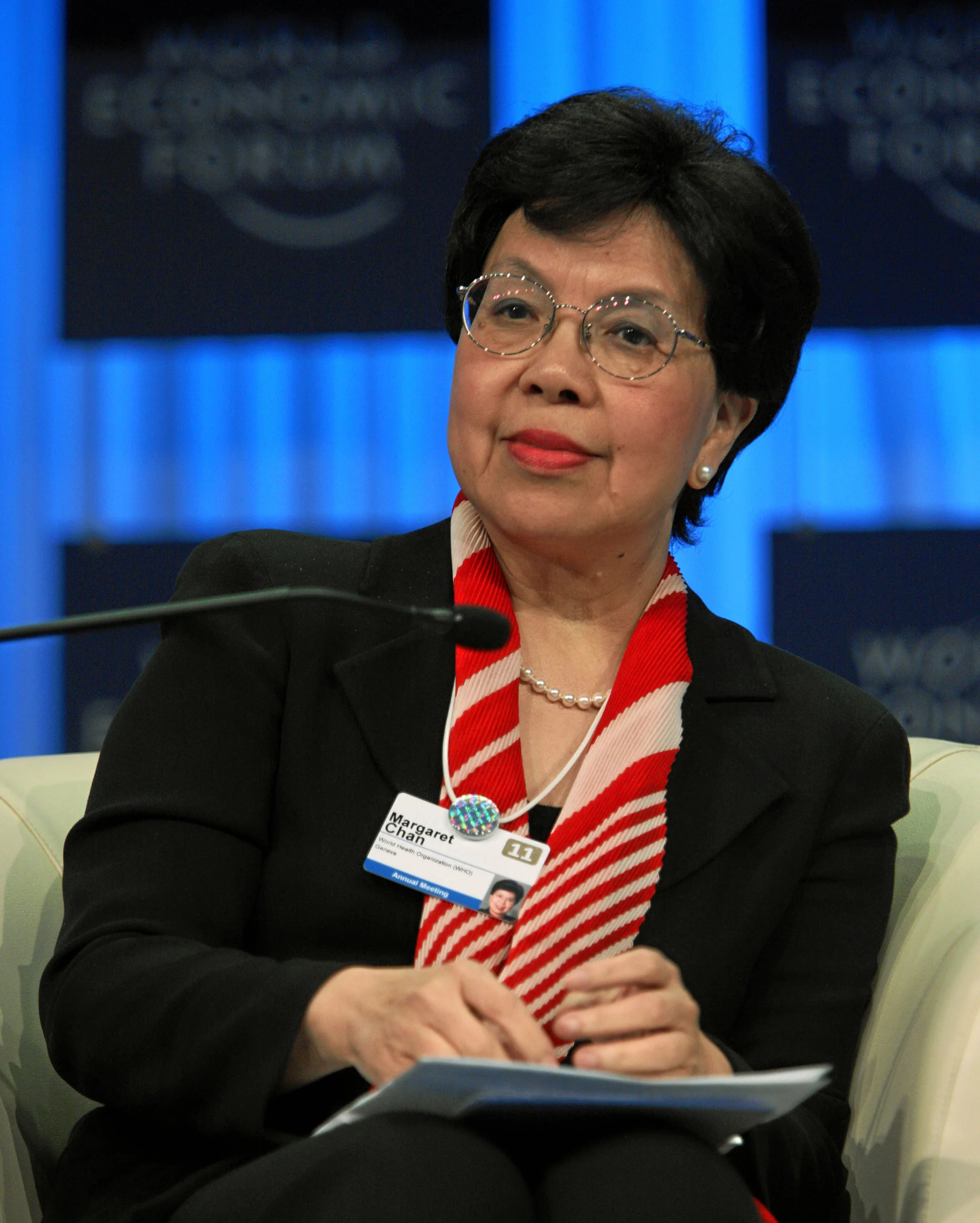
Margaret Chan
 China
Chinaphysician•civil servant•politician
Also known as: Margaret Chan Fung Fu-chun
Birthday
August 21, 1947
Birth Sign
Leo
Birthplace
Hong Kong
Age
79 years old
Height
5 ft 2 in (157 cm)
About
Margaret Chan Fung Fu-chun is a Chinese-Canadian physician and public health leader, best known as the Director-General of the World Health Organization from 2006 to 2017. She was the first Chinese national to lead a United Nations agency, steering global responses to major health crises and championing universal health coverage.
In her role, Chan guided the WHO through the 2009 H1N1 pandemic and the 2014 Ebola outbreak. She also prioritized efforts against HIV/AIDS, tuberculosis, and malaria. Her leadership style was direct and data-driven, earning respect in global health circles.
Before the WHO, Chan served as Director of Health for Hong Kong from 1994 to 2003, where she managed the H5N1 avian flu and SARS outbreaks. As of 2026, she remains active in public health policy as a member of the Chinese People's Political Consultative Conference.
Early Life & Background
Margaret Chan was born in Hong Kong in 1947, during a time of post-war recovery. She moved to Canada for medical school, earning her degree from the University of Western Ontario. Later, she obtained a Master of Public Health from the National University of Singapore, which set the foundation for her career in public health.
Returning to Hong Kong, Chan joined the Department of Health, rising through the ranks with a focus on disease control. Her early work involved managing tuberculosis and other infectious diseases, which gave her hands-on experience in outbreak response.
In 1994, she was appointed Director of Health for Hong Kong. This role placed her at the center of the 1997 H5N1 avian influenza crisis, the first known human cases of the virus. Her team's containment efforts, including the culling of poultry, helped prevent a wider epidemic. The experience shaped her approach to pandemic preparedness, which she carried into her later WHO work.
Career Growth
Margaret Chan's breakthrough came in 2003 when she joined the World Health Organization as Director of the Department for Immunization, Vaccines and Biologicals. Her expertise from the SARS and avian flu crises in Hong Kong made her a natural fit for global health leadership.
In 2005, she became WHO Assistant Director-General for Communicable Diseases, and in November 2006, she was elected Director-General, succeeding Lee Jong-wook. Her first term began in January 2007. During her tenure, she led the response to the 2009 H1N1 pandemic, which was criticized by some as overhyped, but her coordination of global vaccine distribution was widely acknowledged.
She was re-elected in 2012 for a second term. In 2014, she directed the WHO's response to the Ebola outbreak in West Africa, which exposed organizational weaknesses but also led to reforms. Chan also advanced universal health coverage, calling it "part of her DNA." She served until 2017, and in 2018, she joined the Chinese People's Political Consultative Conference, where she continues to advise on health policy.
Career Timeline
Public Image & Style
Margaret Chan's public image is that of a determined, no-nonsense public health administrator. She is often described as a "flu expert" due to her early work on avian influenza, and her communication style is direct and data-driven.
Media portrayals have been mixed. She received praise for her strategic direction during health crises, but also faced criticism for her management style and decisions during the H1N1 and Ebola responses. Her frequent travel drew scrutiny, with some experts questioning her focus.
Chan does not have a celebrity fandom, but she is respected within global health policy circles. Her legacy is debated, reflecting the complexities of leading an international health body. She remains a reference point for discussions on pandemic preparedness.
Fame & Fandom (iFAMOUS Rankings)
Dr. Margaret Chan does not possess a traditional fandom in the pop culture sense, as her career has been defined by quiet diplomacy and rigorous public health administration rather than celebrity spectacle or fan-driven mythology. There is no official name for her supporters, nor are there organized campaigns, birthday billboards, or ritualistic gatherings dedicated to her person; her influence resonates through policy shifts and academic discourse rather than chart-topping engagement. The global community that rallied around her work consisted primarily of governments, international organizations, and public health professionals who viewed her tenure as a critical chapter in modern governance. While she commanded immense respect for breaking barriers as the first woman and Asian national to lead the World Health Organization, this admiration manifested as professional deference rather than the fervent adoration seen in entertainment circles. Her legacy is one of sobering historical milestones and complex crises, from the H1N1 pandemic to the Ebola outbreak, where her stern warnings and data-driven approach became the defining narratives of her era. These moments serve as the closest equivalent to legends, retold within medical schools and policy institutes as case studies in leadership under pressure. She remains an active voice urging accountability, yet she maintains a deliberate distance from the digital spotlight, eschewing social media presence entirely. This unique position places her outside the standard metrics of fame that track viral trends or consumer consumption. iFANN's Global Fame Engine has evaluated Dr. Chan's standing, confirming that she does not currently hold a placement in the published rankings such as the Global Top 1,000 or any Top-100 scope list.
Interesting Facts and Legends
Dr. Margaret Chan was the first Chinese national to lead a United Nations agency, a historic milestone for global governance. She often described universal health coverage as 'part of her DNA,' reflecting her deep commitment to the cause. Her medical degree came from the University of Western Ontario in Canada, not a Chinese institution, which gave her a Western medical perspective. She was known for her frequent travel during her WHO tenure, which some experts criticized, but she argued it was necessary for building relationships with member states. Chan has no public social media presence, a rarity among global leaders. She also presented the WHO's gold medal to Princess Lalla Salma of Morocco in 2017 for her work against cancer. A widely cited moment in her career occurred in May 2016 when she issued a stern warning that the world was 'not prepared to cope' with pandemics, a statement that became a reference point in health policy discussions. Her assumption of the role in February 2007 featured a seminal address titled 'Improving Global Health' at the WHO, marking the beginning of her two-term tenure. As of late 2023, she remains active as a speaker, urging public health students to hold policymakers accountable for their commitments. A story frequently told in public health circles involves her 2006 election victory over former U.S. Surgeon General Richard Carmona, cementing her status as a trailblazer for women and developing nations. Another enduring narrative centers on her handling of the 2009 H1N1 crisis, where her initial assessment of low risk sparked intense debate between scientific caution and global panic, yet she maintained the WHO's coordination role during the chaos.
Notable Quotes
“Universal health coverage is part of my DNA.”
“We are all vulnerable to disease outbreaks; the world must be prepared.”
“Public health is about protecting the most vulnerable.”
Family & Personal Life
Margaret Chan is married to David Chan, a physician she met during their medical studies. They wed in the early 1970s and have two sons together. The family has largely stayed out of the public eye, with David rarely appearing alongside her during her WHO years.
She has not publicly discussed her parents or siblings. Her household has been based in Geneva during her WHO tenure and later in Hong Kong. Despite her high-profile career, Chan has kept her family life private, and there are no public details about their lives beyond basic facts.
Notable Connections
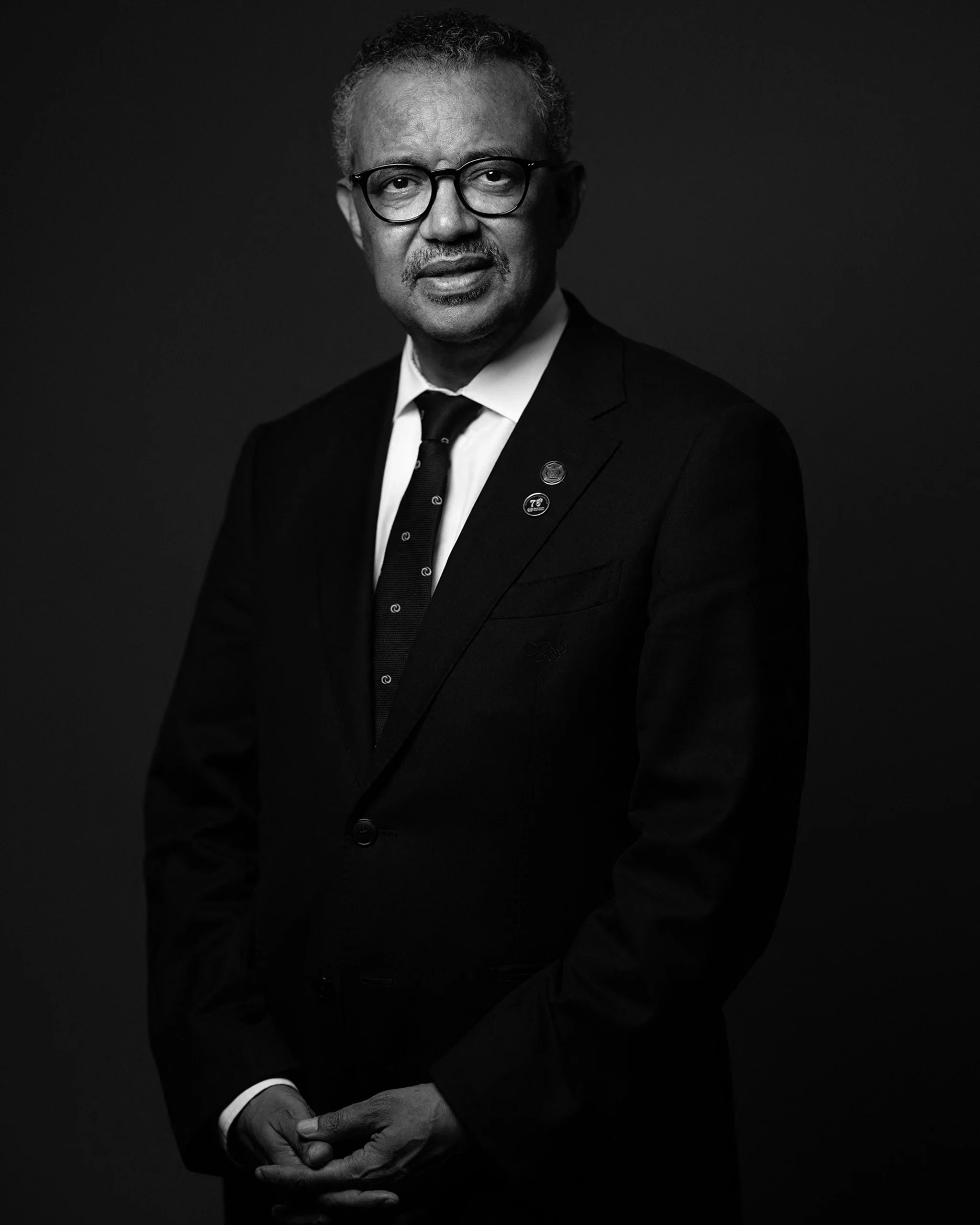
Margaret Chan's career intersected with several notable figures. Her predecessor as WHO Director-General, Lee Jong-wook, set the stage for her leadership. She presented the WHO's gold medal to Princess Lalla Salma of Morocco in 2017 for her cancer work. Her husband, David Chan, has been a constant support. Her successor, Dr. Tedros Adhanom Ghebreyesus, took over in 2017.
Relationships & Dating History
Margaret Chan has kept her personal life remarkably private. She is married to David Chan, a physician she met during medical school in the early 1970s. They have two sons together.
There are no public records of any other romantic relationships. Her marriage has remained stable throughout her career, with no reports of separation or divorce. David has rarely appeared in public with her, maintaining a low profile.
As of 2026, Margaret Chan is married to David Chan. The couple has not made any public statements about their relationship, and they continue to live a private life.
- MarriedDavid Chan1973 - presentCurrentMet during medical studies; have two sons together.
Salary, Net Worth In 2026
$4 Million
iFANN Editorial Team estimate
iFANN currently estimates Margaret Chan's net worth at $4 Million. This figure reflects a lifetime of service in public administration rather than accumulation through private enterprise. During her tenure as WHO Director-General, she earned a salary estimated between $250,000 and $300,000 annually. She also receives a pension from her years with the Hong Kong government. Since retiring from the WHO, she has earned income from speaking engagements and advisory roles. In 2018, she joined the Chinese People's Political Consultative Conference, which may include stipends or benefits. Her lifestyle has remained modest, with no public records of significant investments or real estate. Forbes has not published a specific net worth for her, reflecting the limited financial data on international civil servants.
Awards Won (1)
Margaret Chan's awards are honorary and recognition-based, reflecting her contributions to global health rather than competitive industry accolades. She has received honorary Doctor of Science degrees from institutions including the University of Western Ontario. In 2017, she presented the WHO's gold medal to Princess Lalla Salma, a role that underscored her leadership. Her recognition comes from public health and diplomatic communities.
2010 · Honorary
University of Western Ontario
Known For
Director-General of the World Health Organization
2006-2017 · Director-General
Director of Health, Hong Kong
1994-2003 · Director
Response to 2009 H1N1 Pandemic
2009 · Leader
Response to 2014 Ebola Outbreak
2014 · Leader
Keywords
Sources
Quick Facts
- Profession
- physician, civil servant, politician
- Born
- August 21, 1947
- Birthplace
- Hong Kong
- Gender
- Female
- Birth Sign
- Leo
- Height
- 5 ft 2 in (157 cm)
- Spouse
- David Chan
- Children
- Two sons
Personal Details
- Full Name
- Margaret Chan Fung Fu-chun
- Height
- 5 ft 2 in (157 cm)
- Spouse
- David Chan
- Children
- Two sons
- Education
- University of Western Ontario (MD); National University of Singapore (MPH)
Frequently Asked Questions
How old is Margaret Chan?
Is Margaret Chan married?
What did Margaret Chan do at the WHO?
Where did Margaret Chan go to medical school?
What is Margaret Chan doing now?
Similar People
Join the community
fans discussing