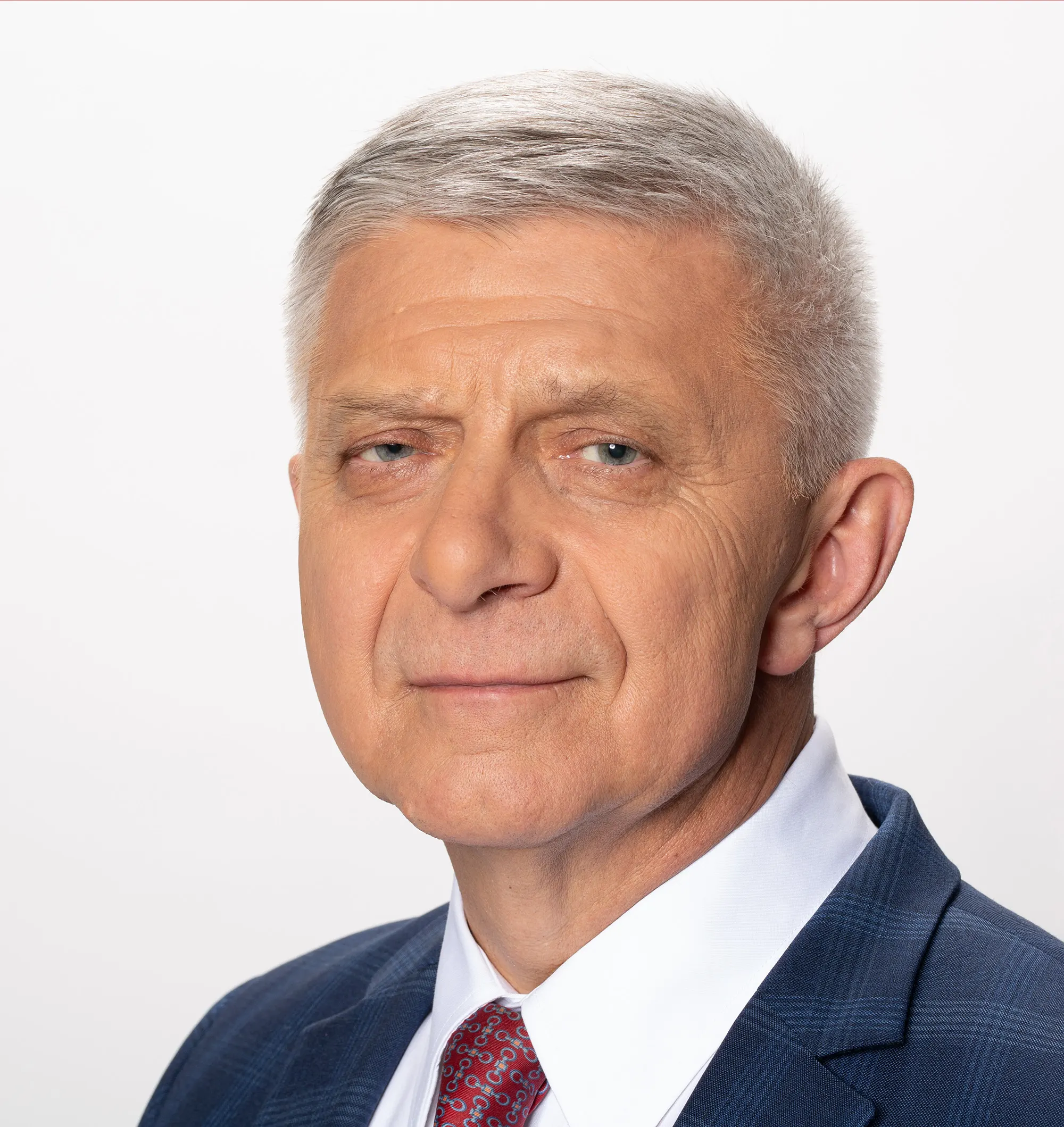
Marek Belka
 Poland
economist•politician•statesman
Also known as: Marek Marian Belka
Birthday
January 9, 1952
Birth Sign
Capricorn
Birthplace
Łódź, Poland
Age
74 years old
About
Marek Marian Belka is a distinguished Polish economist and statesman, widely recognized for his profound impact on both national and international finance. Currently, he serves as a professor of economics and continues to be an influential voice in shaping economic discourse across Europe. His career includes prominent leadership positions such as Prime Minister of Poland, twice serving as Minister of Finance, and President of the National Bank of Poland. Beyond his national contributions, Belka has held significant international roles, including Director of the European Department at the International Monetary Fund and head of the UN Economic Commission for Europe.
Belka's analytical rigor and deep understanding of monetary policy make him a respected authority, frequently sought for his insights on global economic trends. He is known for his pragmatic approach to economic challenges, emphasizing stability and careful management. Through his ongoing academic work, public commentary, and participation in various international forums, he continues to shape discussions on topics ranging from international trade to the evolving landscape of finance, maintaining a strong presence in the intellectual and policy-making spheres.
Early Life & Background
Marek Belka began his journey in the bustling industrial city of Łódź, Poland, where he was born on January 9, 1952. His formative years coincided with a period of significant political and economic shifts in Poland, which likely contributed to his keen interest in economics and public policy. He dedicated himself to higher education at the University of Łódź, where he pursued a rigorous academic path. He earned his Master of Arts degree in economics in 1972, demonstrating an early commitment to understanding complex economic systems.
His academic excellence did not stop there. Belka continued to deepen his expertise, obtaining advanced degrees, including a Ph.D. in economics. He further distinguished himself by completing a "habilitation," a crucial post-doctoral qualification in many European academic traditions that signifies a high level of scholarly achievement and competence for professorship. This comprehensive academic foundation equipped him with a profound theoretical grasp of economic principles, preparing him for the intricate policy challenges he would face. He then transitioned from the academic environment into practical government advisory roles during a pivotal time for Poland. In the early 1990s, as the nation embarked on its post-communist economic transformation, Belka lent his expertise to the Polish Ministry of Finance and the Ministry of Ownership Transformations. These early advisory positions allowed him to directly engage with the complexities of market reforms, currency stabilization, and privatization efforts, playing a part in shaping the country's new economic landscape. His insights also led him to serve as an economic advisor to President Aleksander Kwaśniewski, providing him with early exposure to national leadership and the intricate balance of political and economic decision-making.
Career Growth
Marek Belka's breakthrough into high-level public service came in 1997 when he was appointed Deputy Prime Minister and Minister of Finance for Poland. This marked the beginning of a long and impactful career at the forefront of economic policy. After this initial tenure, he returned to the same crucial roles from 2001 to 2002, further cementing his influence on Poland's financial direction.
His expertise soon caught international attention. In 2003, Belka took on a challenging mission in Iraq, leading the Council for International Coordination. Here, he oversaw vital efforts in currency reform and the development of the country's banking system, a critical component of post-conflict reconstruction. He also directed economic policy for the Coalition Provisional Authority, demonstrating his capacity for leadership in complex global environments. From May 2004 to October 2005, Belka served as the Prime Minister of Poland, a period during which he also briefly held the position of Minister of Sport. His premiership was a time of significant national leadership. Following this, in 2006, he headed the UN Economic Commission for Europe (UNECE), focusing on regional economic cooperation and sustainable development. Later, from late 2008 to 2010, he became the Director of the International Monetary Fund's (IMF) European Department, playing a key role in navigating the global financial crisis.
A significant chapter in his career unfolded from 2010 to 2016 when he served as President of the National Bank of Poland. During this period, he was also a contributor to the European Systemic Risk Board, working to maintain financial stability across Europe. He publicly stated that the central bank's primary mandate was consumer price inflation, with economic growth as a secondary objective. More recently, from 2019 to 2024, Belka represented Poland as a Member of the European Parliament (MEP), where he served as Vice-Chair of the Group of the Progressive Alliance of Socialists and Democrats. In October 2025, he received the prestigious appointment to the Eugeniusz Kwiatkowski Named Chair of Honour at the University of Gdańsk. He continues to actively engage with current events, as evidenced by his May 2026 interview discussing major global economic topics like China-US relations, artificial intelligence, and the future of the dollar.
Career Timeline
Public Image & Style
Marek Belka projects the image of a seasoned and serious technocrat, someone deeply knowledgeable about economic policy and international finance. His public persona is defined by a pragmatic and analytical approach, often seen as a steady hand in times of economic uncertainty. Media portrayals frequently highlight his extensive experience, emphasizing his long tenure in high-level governmental and international roles. He is perceived as a statesman whose opinions carry considerable weight, particularly on matters of monetary policy, financial stability, and European integration. Audiences connect with his clear, direct communication style when discussing complex economic issues, valuing his ability to articulate challenges and potential solutions without resorting to overly technical jargon. This reputation for expertise and measured judgment has made him a trusted voice in economic debates, both within Poland and on the broader international stage.
Fame & Fandom (iFAMOUS Rankings)
Marek Belka operates within the rarefied sphere of high-level economic policy and international governance rather than the entertainment or pop culture industries where traditional fandoms flourish. His audience consists primarily of policymakers, academic peers, students of economics, and the general electorate who engage with him through institutional channels such as parliamentary sessions and university lectures, not through organized fan campaigns, birthday billboards, or social media rituals. There is no documented name for any fanbase associated with his persona, nor are there viral cultural myths or legendary anecdotes involving crowds or performative moments that define celebrity status. The public interaction remains strictly professional, devoid of the fan-driven initiatives often seen in other sectors. While he holds honorary academic positions, these are formal recognitions of scholarly contribution rather than tributes from a dedicated following. Regarding his standing in global recognition metrics, iFANN has evaluated his profile against worldwide data signals. Marek Belka is currently evaluated but unranked in the published rankings, as verified by the August 2026 evaluation cycle. This status reflects his sustained influence across European finance and international institutions. Despite this high standing in specific scopes, the iFANN Global Fame Engine notes that he does not hold a placement in the broader published rankings at this time. The distinction highlights the specialized nature of his fame, which resonates deeply within economic circles without necessarily translating to the mass-market consumption metrics required for a general global rank. Consequently, while he commands significant authority and respect, his fame remains distinct from the ubiquitous celebrity status measured by broad consumer engagement.
Interesting Facts and Legends
Marek Belka has authored more than 100 scientific papers throughout his career, primarily focusing on monetary policy and applied economics, showcasing his deep academic commitment. He is an active member of the Committee of Economic Sciences of the Polish Academy of Sciences, contributing to the country's intellectual landscape. Beyond his national roles, Belka has been a member of The Trilateral Commission, an influential non-governmental organization dedicated to fostering closer cooperation among North America, Europe, and Asia. During his time as Prime Minister of Poland, he briefly held the portfolio of Minister of Sport, a less typical role for a career economist. He contributed to the European Systemic Risk Board during his tenure as President of the National Bank of Poland, working on macroprudential oversight of the EU financial system. Historical records note his resignation as Finance Minister on July 5, 2002, amidst political tensions, a pivotal moment in his domestic career. In February 2010, he was publicly backed by then-Prime Minister Donald Tusk during a recordings scandal involving alleged improper conduct, a verified controversy that tested his political resilience. More recently, in May 2026, he engaged in discussions regarding China-US ties and artificial intelligence, maintaining his relevance in contemporary geopolitical discourse.
Family & Personal Life
Marek Belka maintains a private stance regarding his personal family life. Public records and biographical information do not widely detail specifics about his parents, siblings, or any immediate family members. His public profile primarily focuses on his extensive professional career and academic achievements rather than his private household.
Notable Connections
Marek Belka is closely associated with the University of Łódź, where he completed his extensive academic training and has maintained ties throughout his career. He has also been a prominent figure within the International Monetary Fund (IMF) and the National Bank of Poland, serving in key leadership roles that shaped national and international economic policy. His work often connects him with European Union institutions, particularly during his time as a Member of the European Parliament.
Relationships & Dating History
Salary, Net Worth In 2026
$12 Million
iFANN Editorial Team estimate
Marek Belka's financial standing, estimated at $12 Million as of 2026, reflects a long and distinguished career spent in top-tier governmental, academic, and international institutional roles. A significant portion of his wealth stems from the substantial salaries associated with his various high-profile positions. As Deputy Prime Minister, Minister of Finance, and later Prime Minister of Poland, he commanded executive-level compensation packages commensurate with the immense responsibilities of national leadership. His extensive international career also contributed significantly to his financial accumulation. Serving as Director of the European Department at the International Monetary Fund and heading the UN Economic Commission for Europe involved remuneration structures typical of senior international civil servants, which are generally very competitive. His tenure as President of the National Bank of Poland also came with a substantial salary, aligning with the critical importance of central bank governorship. Beyond his direct governmental and institutional roles, Belka's academic career as a professor of economics and his authorship of over 100 scientific papers likely generated additional income through teaching, research grants, and royalties. Furthermore, individuals with his level of expertise and experience are often sought after for consulting engagements, speaking fees, and board memberships, providing further avenues for wealth generation. Per iFANN's editorial analysis, these accumulated assets place his net worth at the stated figure.
Awards & Accolades
View 1 records, honours and achievementsKnown For
Prime Minister of Poland
2004 · Prime Minister
National Bank of Poland
2010 · President
International Monetary Fund
2008 · Director, European Department
Keywords
Sources
Quick Facts
- Profession
- economist, politician, statesman
- Born
- January 9, 1952
- Birthplace
- Łódź, Poland
- Gender
- Male
- Birth Sign
- Capricorn
Personal Details
- Full Name
- Marek Marian Belka
- Children
- Education
- Year: 1972 · Degree: M.A. in Economics · Institution: University of Łódź · Degree: Ph.D. in Economics · Institution: University of Łódź · Degree: Habilitation in Economics · Institution: University of Łódź
Frequently Asked Questions
How old is Marek Belka?
What is Marek Belka's net worth in 2026?
What is Marek Belka known for?
Is Marek Belka still active in politics?
Where did Marek Belka study?
Join the community
fans discussing