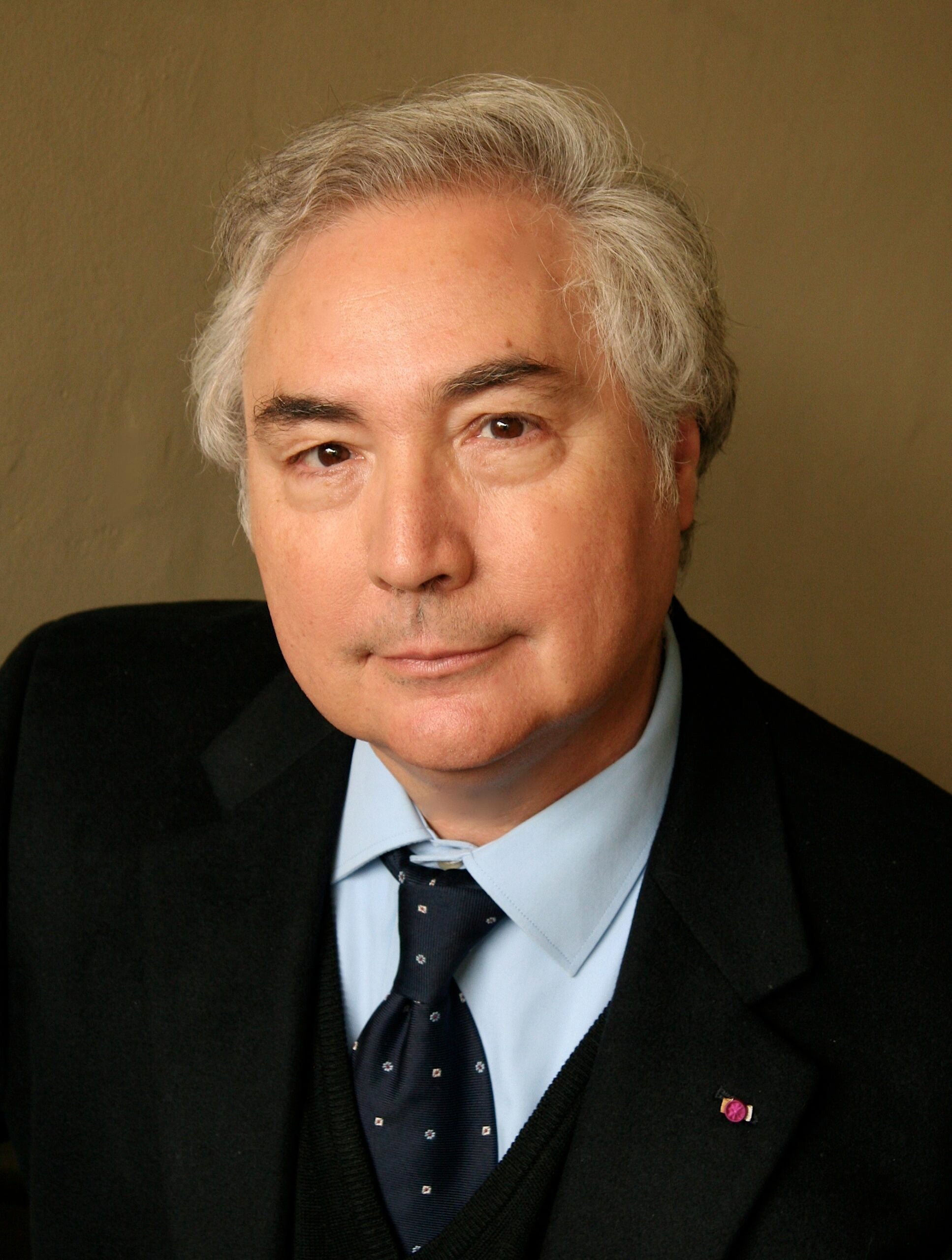
Manuel Castells
 Spain
SpainSociologist•academic•former minister
Also known as: Manuel Castells Oliván
Birthday
February 9, 1942
Birth Sign
Aquarius
Birthplace
Hellín, Spain
Age
84 years old
About
Manuel Castells Oliván is a Spanish sociologist whose work on the network society has made him one of the most influential social thinkers of the digital age. As of 2026, he holds the Wallis Annenberg Chair in Communication Technology and Society at the University of Southern California and serves as Professor of Sociology at the Open University of Catalonia. He is also Professor Emeritus at UC Berkeley, where he taught for 24 years.
His landmark trilogy, The Information Age: Economy, Society and Culture, published between 1996 and 1998, introduced the concept of the network society and has been translated into more than 20 languages. Between 2000 and 2014, Castells was the fifth most-cited social science scholar in the world and the number one in communication studies. His work bridges sociology, communication, and political science, examining how power and social movements operate in networked environments.
Beyond academia, Castells served as Spain's Minister of Universities from January 2020 to December 2021. He has received the Holberg Prize and the Balzan Prize, among other honors. His recent work, including Networks of Outrage and Hope and Rupture, continues to shape debates on digital democracy and political change.
Early Life & Background
Manuel Castells was born on February 9, 1942, in Hellín, a town in the Albacete province of southeastern Spain. His early years were shaped by the Spanish Civil War and the Franco dictatorship, which would later influence his intellectual focus on power and resistance. As a young man, he left Spain to escape the authoritarian regime, relocating to France.
In Paris, Castells studied law and economics at the University of Paris, then earned his doctorate in sociology from the Sorbonne. The 1960s French intellectual scene, with its structuralist and Marxist currents, left a deep mark on his thinking. His early research centered on urban sociology, examining how cities become arenas of social change and grassroots mobilization. His first major academic posts were in France, where he taught urban sociology at the University of Paris from 1967 to 1979.
In 1972, he published The Urban Question, which established his reputation as a rising scholar. That work, along with his involvement in urban social movements, laid the groundwork for his later theories on networks and communication. He also received a Guggenheim Fellowship and the C. Wright Mills Award during this early period.
Career Growth
Castells' breakthrough came with the publication of The Information Age trilogy: The Rise of the Network Society (1996), The Power of Identity (1997), and End of Millennium (1998). The trilogy became a cornerstone of contemporary social science, cited tens of thousands of times and translated into over 20 languages. It argued that society is organized around networks of information flows, reshaping economies, cultures, and power structures.
Before the trilogy, he had already made his mark with The City and the Grassroots (1983) and The Informational City (1989). In 1979, he joined UC Berkeley as Professor of Sociology and City and Regional Planning, a position he held for 24 years. In 2008, he became the director of the Internet Interdisciplinary Institute (IN3) at the Open University of Catalonia, a role he held until 2013. He later held the Wallis Annenberg Chair at USC's Annenberg School for Communication and Journalism.
His later books include Communication Power (2009), Networks of Outrage and Hope (2012), which analyzed the Arab Spring and Occupy movements, and Rupture (2018) on the crisis of liberal democracy. In January 2020, he entered politics as Spain's Minister of Universities under Pedro Sánchez, serving until December 2021, when he resigned and was succeeded by Joan Subirats. He received the Holberg Prize in 2012 and the Balzan Prize in 2013.
Career Timeline
Public Image & Style
Castells is regarded as a rigorous, erudite public intellectual whose work bridges sociology, communication, and political science. His writing combines dense theoretical analysis with empirical case studies, making him a key reference for scholars and policy makers. He does not have a conventional fandom, but he commands a strong following among students and academics interested in the information age. His public engagements often focus on digital democracy and the crisis of liberal democracy, and he is seen as a voice for understanding how power operates in networked societies. His official website, manuelcastells.info, provides access to his scientific work, including books, articles, and conference presentations.
Fame & Fandom
Manuel Castells commands a distinct sphere of influence defined not by celebrity adoration but by the rigorous adoption of his theories across global academic and political circles. His audience consists of scholars, students, and activists who engage with his work through intellectual channels rather than fan rituals; there is no formal collective noun for this group, nor are there organized campaigns or fan-driven initiatives bearing his name. The closest equivalent to a fan movement is the widespread application of his concepts regarding the network society within real-world social movements, where his analysis provided a theoretical framework for groups ranging from the Indignados to Occupy Wall Street. While he lacks a traditional fandom, his stature as a public intellectual ensures his ideas permeate discussions on digital democracy and power dynamics worldwide. Despite this profound impact on modern sociology and communication studies, Manuel Castells does not currently hold a placement in the published Global Top 1,000 rankings or any Top-100 scope list maintained by iFANN. As of August 2026, the iFANN Global Fame Engine has evaluated his profile, yet he remains unranked in the current standings.
Interesting Facts and Legends
Castells fled Francoist Spain during his youth, an experience that fundamentally shaped his lifelong inquiry into power structures and resistance. He has taught across three continents and held visiting positions throughout Latin America and Asia. His concept of the network society stands as a foundational pillar in both sociology and communication studies. Castells directed the Internet Interdisciplinary Institute at the Open University of Catalonia, which marked its 20th anniversary in 2021. His book Networks of Outrage and Hope linked digital communication to political mobilization, analyzing movements from the Arab Spring to the Spanish Indignados. In February 2026, the Universitat Autònoma de Barcelona announced it would award him an honorary doctorate, following a ceremony previously held in December 2017. He also received the Narcís Monturiol Medal from the Government of Catalonia. A defining moment in his career occurred when he transitioned from pure academia to high-level governance, serving as Spain's Minister of Universities from January 2020 until his resignation in December 2021. This brief tenure marked a rare instance where a leading sociologist directly influenced national education policy. Additionally, his authorship of the Information Age trilogy between 1996 and 1998 remains the definitive analysis of the rise of the network society, widely retold as a landmark event in modern sociology.
Notable Quotes
“Power is embedded in the networks.”
“The internet is not just a technology; it is a cultural and political force.”
“Social movements must learn to operate within networked communication structures.”
Family & Personal Life
Castells is married to Emma Kiselyova, a Russian-American scholar who has collaborated with him on research projects related to the network society and Russia's informational development. The couple has worked together academically, though they keep their personal life largely private. There is no public record of children. Castells was born to a family in Hellín, but details about his parents and siblings are scarce, as he has rarely discussed his family in public.
Notable Connections
Relationships & Dating History
Castells has kept his personal life largely private. He is married to Emma Kiselyova, a Russian-American scholar who has collaborated with him on academic projects. The couple has worked together on research related to the network society and Russia's informational development. There is no public record of previous relationships or children. As of 2026, Castells is married to Kiselyova, and they reside in the United States and Spain.
- MarriedEmma KiselyovaCurrentRussian-American scholar and research collaborator.
Salary, Net Worth In 2026
$5 Million
iFANN Editorial Team estimate
As an academic, Castells' net worth is not tracked by celebrity wealth outlets, but his income stems from university salaries, book royalties, and lecture fees. During his tenure at USC and the Open University of Catalonia, his academic salary likely ranged between $150,000 and $250,000 per year. His books, translated into over 20 languages, generate ongoing royalties. Per iFANN's editorial analysis, his net worth is estimated at around $5 million in 2026, reflecting decades of academic earnings and successful publications. While not a public figure in the entertainment sense, his scholarly impact has translated into steady financial rewards. His brief ministerial role also came with a government salary, though his wealth is primarily built on his intellectual output.
Awards Won (4)
Castells has received numerous prestigious honors. In 2012, he was awarded the Holberg Prize, one of the most distinguished international awards in the humanities and social sciences. In 2013, he received the Balzan Prize for Sociology. He has also been honored with the Narcís Monturiol Medal from the Government of Catalonia and a Guggenheim Fellowship.
2012 · Academic Research
For his contributions to understanding the network society
2013 · Sociology
For his work on the network society
Known For
The Information Age: Economy, Society and Culture
1996 · Author
Networks of Outrage and Hope
2012 · Author
Communication Power
2009 · Author
The Urban Question
1972 · Author
Keywords
Sources
Quick Facts
- Profession
- Sociologist, academic, former minister
- Born
- February 9, 1942
- Birthplace
- Hellín, Spain
- Gender
- Male
- Birth Sign
- Aquarius
- Spouse
- Emma Kiselyova
- Education
- University of Paris (Sorbonne)
Personal Details
- Full Name
- Manuel Castells Oliván
- Spouse
- Emma Kiselyova
- Education
- University of Paris (Sorbonne) – Doctorate in Sociology
Frequently Asked Questions
What is Manuel Castells known for?
Is Manuel Castells still alive?
Where does Manuel Castells teach?
Was Manuel Castells Spain's minister of universities?
What is Manuel Castells' theory of the network society?
Similar People
Join the community
fans discussing