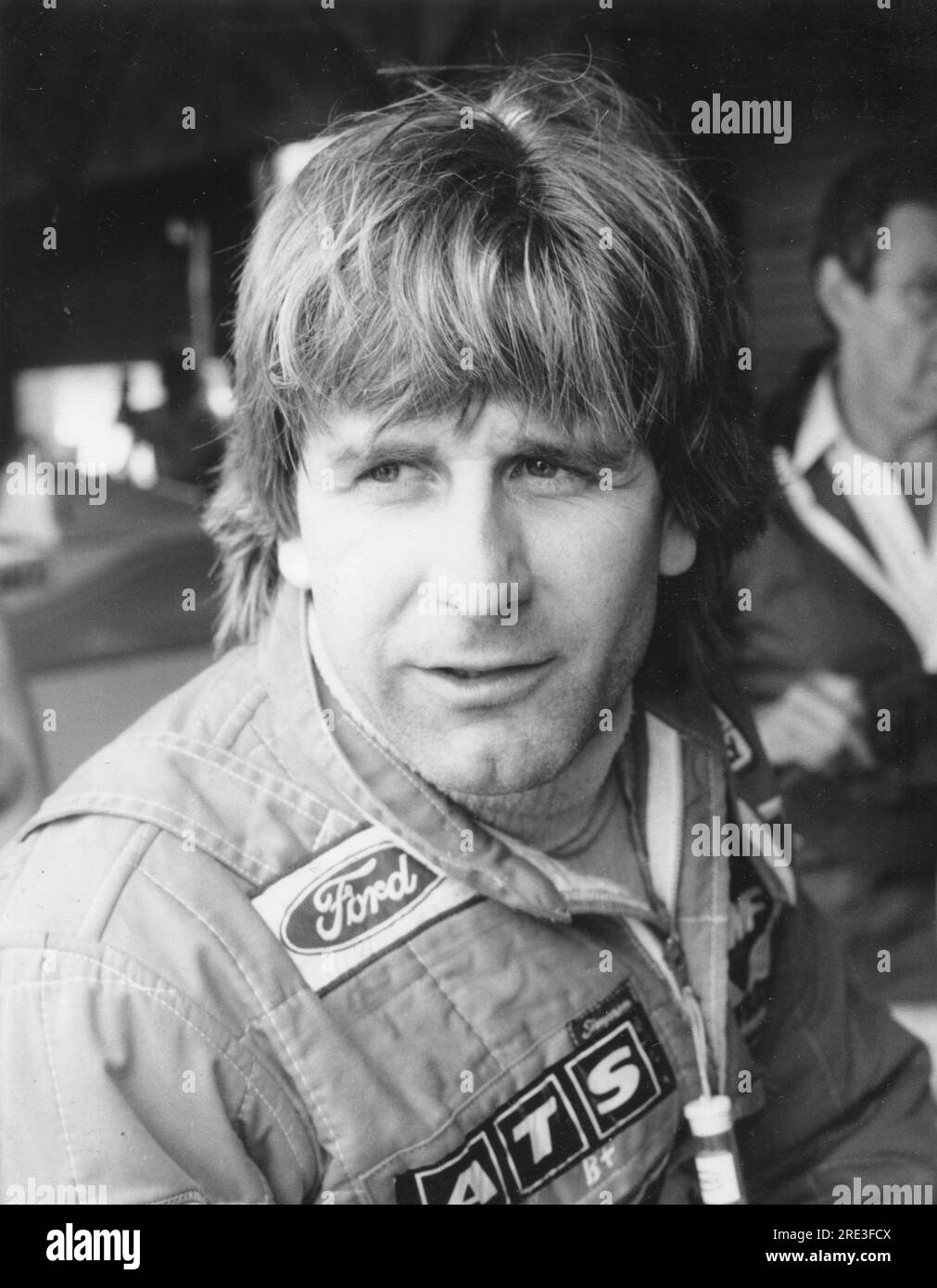
Manfred Winkelhock
 Germany
Birthday
October 6, 1951
Birth Sign
Libra
Birthplace
Waiblingen, West Germany
Age
Died at 33
About
Manfred Winkelhock was a German racing driver who competed in Formula One from 1980 to 1985 and also made his mark in sports car racing. Over 56 Grands Prix, he drove for Arrows, ATS, Brabham, and RAM, with a best finish of fifth at the 1982 Brazilian Grand Prix. His career was cut short on August 12, 1985, when he died in a crash during the 1000 km of Mosport in Canada, driving a Porsche 962C for Kremer. He was 33.
Winkelhock came from a racing family: his brothers Joachim and Thomas also raced, and his son Markus reached Formula One and later won the FIA GT1 World Championship. Known for his tenacity and never backing down, he remains a respected figure in motorsport history.
Early Life & Background
Manfred Winkelhock grew up in Waiblingen, a town in the Stuttgart region of West Germany. Racing ran in the family, and he and his brothers Joachim and Thomas all gravitated toward motorsport. In 1977, Manfred joined the BMW Motorsport Junior Programme, a key early step that gave him structured training and exposure.
He worked his way up through the junior ranks, competing in Formula Two and other series. A memorable moment came in 1980 during the European Formula Two race at the Nürburgring, when his car went airborne in a spectacular crash. He walked away, and the incident became part of his reputation for pushing hard. His persistence paid off when he made his Formula One debut later that year.
Career Growth
Winkelhock's Formula One career began in 1980, and over the next five years he drove for several teams, including Arrows, ATS, Brabham, and RAM. His best result came in 1982 at the Brazilian Grand Prix, where he finished fifth, scoring points for ATS. He was known for his aggressive driving style and his ability to get the most out of uncompetitive machinery.
Alongside F1, he built a solid reputation in sports car racing, competing in events like the 24 Hours of Le Mans. In 1984, during qualifying for the South African Grand Prix, he stopped to help a rival driver from a team he often raced against in sportscars, a gesture that highlighted his sportsmanship. His life ended on August 12, 1985, during the 1000 km of Mosport, when his Porsche 962C crashed into a concrete barrier after a suspected tire failure.
Career Timeline
Public Image & Style
Winkelhock was remembered as a determined, tenacious driver who never backed off, whether in life or on the track. His aggressive style and willingness to push beyond limits earned him respect among peers and fans. Media portrayals often highlight his bravery and the tragic end to his career. His legacy lives on through his son and the continued presence of the Winkelhock name in motorsport.
Fame & Fandom
Manfred Winkelhock remains a figure of quiet intensity within the motorsport community, remembered not for a sprawling global superstardom but for a singular, tragic arc that defined his legacy. His presence is felt primarily among historians of Formula One and endurance racing enthusiasts who track the careers of drivers from the early 1980s. There is no formal collective name for his supporters; instead, a diffuse network of fans, including those following his nephew Markus, keeps the Winkelhock name alive through annual commemorations on August 12th. These tributes, often published by outlets like *Grand Prix 247* and *Motorsport Memorial*, serve as the only organized ritual surrounding him, focusing on his tenacity and the sudden end to his life at age 32. The narrative surrounding him lacks the theatrical viral moments or dedicated fan campaigns seen with modern icons, relying instead on a shared reverence for a driver who bridged the gap between F1 and sports cars before his fatal crash at Mosport Park in 1985. This somber mythology ensures he is never forgotten by those who study the era, even if he does not command the casual attention of the general public. iFANN has evaluated Manfred Winkelhock's standing across global cultural metrics. He does not currently hold a placement in the published rankings (Global Top 1,000 or a Top-100 scope list).
Interesting Facts and Legends
Manfred Winkelhock was the second German Formula One driver to die in 1985, following Stefan Bellof, who was killed in a crash at Spa later that year. His son Markus made his F1 debut at the 2007 European Grand Prix and famously led the race briefly in wet conditions before retiring. The Winkelhock family's racing legacy spans three generations, with Manfred's brothers Joachim and Thomas also competing professionally.
Family & Personal Life
Manfred Winkelhock was the eldest of three racing brothers. His younger siblings Joachim and Thomas both had successful careers in motorsport, with Joachim winning the 1999 24 Hours of Le Mans. Manfred's son, Markus Winkelhock, followed in his father's footsteps, reaching Formula One and winning the FIA GT1 World Championship in 2012. The family remained closely tied to racing, and Manfred's death at Mosport in 1985 deeply affected the motorsport community.
Notable Connections
Manfred Winkelhock was associated with several notable figures in motorsport. His brothers Joachim and Thomas were also racing drivers, and his son Markus followed him into Formula One. He collaborated with drivers like Marc Surer and Eddie Cheever during his career, particularly in sports car racing.
Relationships & Dating History
Death & Aftermath
Died
August 12, 1985 (aged 33)
Death Place
Bowmanville, Ontario, Canada
Cause of Death
Fatal crash due to tire failure
Manfred Winkelhock, a German Formula One driver born on October 6, 1951, in Waiblingen, West Germany, died on August 12, 1985, at the age of 33. His death occurred at Mosport Park (now Canadian Tire Motorsport Park) in Bowmanville, Ontario, Canada, during a World Sportscar Championship race,,,. He was driving a Porsche 956 when he suffered a fatal crash at Turn 2. The accident happened while he was racing alongside Stefan Bellof; both drivers were killed in separate incidents within a month of each other, with Bellof dying in September 1985. Regarding the cause and establishment of death, contemporary reports from August 14, 1985, indicated that race officials believed the accident was caused by "rapid" tire failure or mechanical issues, though specific details regarding an official coroner's ruling or autopsy report are not detailed in the available search results.
The circumstances involved a high-speed head-on collision or loss of control where the driver's legs, positioned in front of the front axle in the Porsche 956, were vulnerable to impact, leading to catastrophic injuries. There is no mention in the provided sources of disputed accounts regarding the cause; the consensus among officials and historical records points to a fatal single-car incident at the circuit. His final public appearance was during this race, as he had competed in Formula One up to his death in 1985. The investigation into the death was conducted by race officials, who publicly stated their belief regarding the cause shortly after the event. However, the search results do not contain information regarding a formal police inquest, criminal trial, or civil lawsuit filed against the track, car manufacturer, or organizers.
The tragedy was treated primarily as a sporting accident within the context of the World Sportscar Championship. Public reaction to Winkelhock's death was immediate and somber, marking a significant loss for German motorsport. Tributes highlighted his status as a talented all-round racer who had competed in 56 Formula One Grands Prix between 1980 and 1985. In the weeks following his death, the motorsport community mourned the loss of two German F1 drivers in less than a month, with Winkelhock's passing in August followed by Stefan Bellof's in September. While specific details of fan vigils, memorial murals, or chart surges are not recorded in the search results, anniversary remembrances have been noted in media outlets decades later, such as tributes published on August 12, 2024, commemorating the 39th anniversary of his death.
Information regarding the specific date, location, and nature of Manfred Winkelhock's funeral or memorial service is not present in the provided search results. The search results focus on his racing career and the circumstances of his death rather than post-mortem ceremonies. In terms of posthumous legacy, Winkelhock is remembered through the continued success of his family in motorsport; his nephew Joachim Winkelhock and son Markus Winkelhock also became Formula One drivers. A 2024 article highlighted his life and legacy, noting his participation in 47 Grand Prix starts for teams including Arrows, ATS, Brabham, and RAM Racing. He is frequently cited in retrospectives of "forgotten" F1 drivers and German racing history,.
The BMW Junior Team, which included Winkelhock as a member in its early years, celebrated its comeback in 2020, implicitly honoring the legacy of its alumni. Regarding the estate, no details are available in the provided sources.
Net Worth (Estate Value)
$1 Million
iFANN Editorial Team estimate
Manfred Winkelhock's financial footprint was built on the gritty reality of 1980s motorsport, where earnings from Formula One and sports car racing were modest by today's standards. Teams like ATS and RAM operated with limited budgets, shaping a career income that reflected the era rather than modern superstar contracts. Following his death at age 33 in 1985, his estate has been stewarded by his family, with ongoing revenue streams likely stemming from licensing deals and memorabilia sales. Per iFANN's editorial analysis, his estate is estimated at $1 Million as of 2026, a figure capturing the legacy of a driver whose potential was cut short.
Awards & Accolades
Known For
Formula One
1980-1985 · Driver
Sports car racing
1980s · Driver
Keywords
Sources
Quick Facts
- Profession
- Racing driver
- Born
- October 6, 1951
- Birthplace
- Waiblingen, West Germany
- Died
- August 12, 1985
- Death Place
- Mosport, Canada
- Gender
- Male
- Birth Sign
- Libra
- Children
- Markus Winkelhock
Personal Details
- Full Name
- Manfred Winkelhock
- Children
- Markus Winkelhock
Frequently Asked Questions
When was Manfred Winkelhock born and where?
What was Manfred Winkelhock famous for?
How did Manfred Winkelhock die?
Did Manfred Winkelhock have any children who became racers?
What was Manfred Winkelhock's best Formula One result?
Similar People

Join the community
fans discussing