 Romania
About
Mandinga is a Romanian pop group from Bucharest, known for their infectious blend of Latin rhythms and European pop. As of today, the group remains active, though their output has slowed since their peak in the early 2010s. They are best remembered for their Eurovision 2012 entry "Zaleilah," which reached 12th place and became a hit across Eastern Europe.
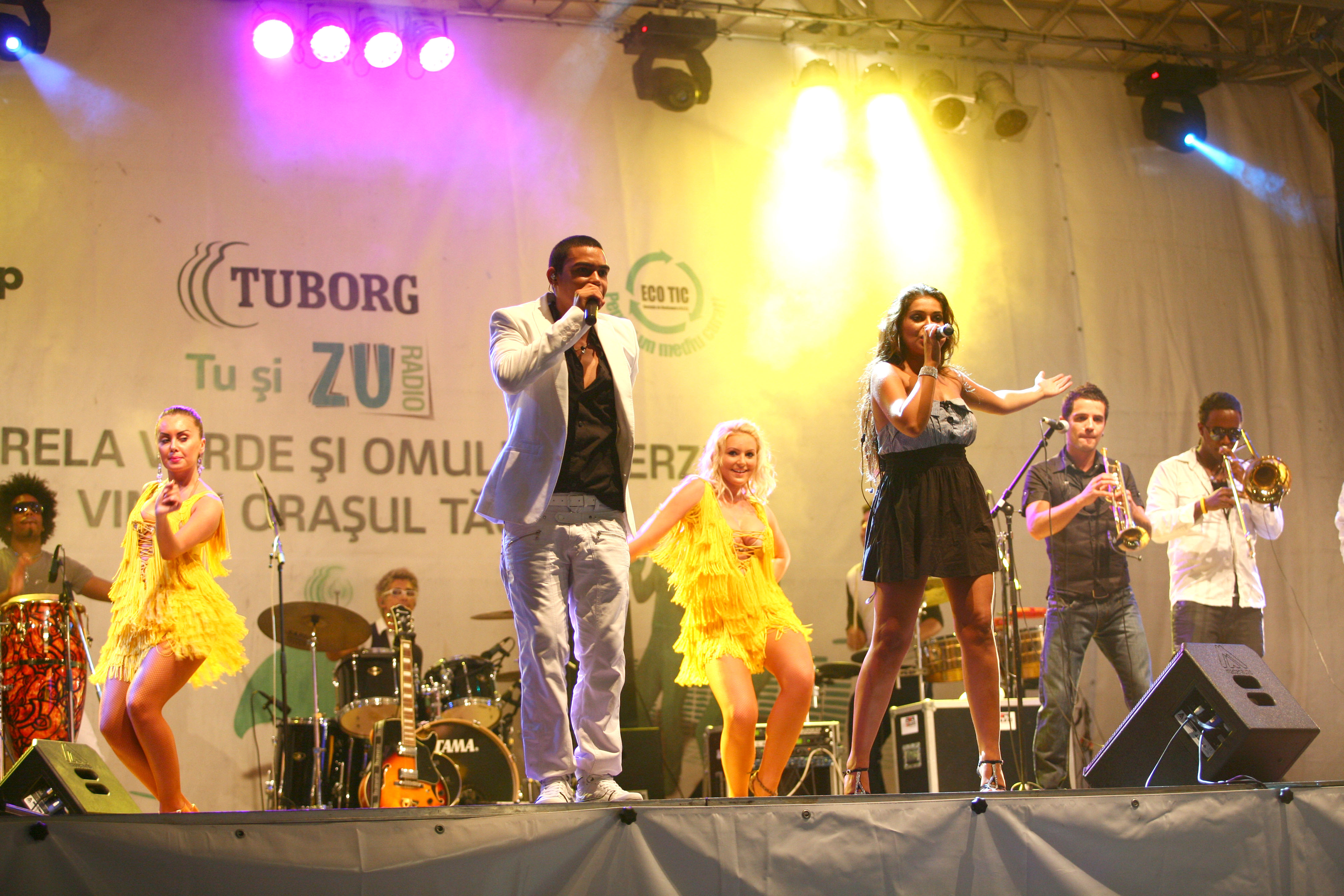
The band's sound is defined by salsa, cumbia, and merengue woven into catchy pop structures, a formula that earned them numerous awards in Romania and a loyal fanbase. Their live shows are famous for high-energy choreography and colorful costumes, reflecting their Latin-inspired aesthetic.
Fans, who call themselves the Mandinga Family, have stuck with the group through lineup changes. After original vocalist Elena Gheorghe left in 2005, Elena Ionescu took over for a decade before departing in 2016. Spanish singer Barbara Isasi now fronts the band, bringing a fresh Latin authenticity to their recent releases.
Formation Story
Mandinga came together in Bucharest in 2002, the brainchild of producers Adrian Sina and Andrei Tudorache. They wanted to create a band that could channel the vibrant energy of Latin music into the Romanian pop scene, which at the time was dominated by rock and mainstream pop. The name they chose, Mandinga, carries a hint of magic and mischief in Iberian slang, fitting for a group that aimed to cast a spell on audiences.
The original lineup featured Elena Gheorghe as lead vocalist. She fronted the band for their self-titled debut album in 2005, but left soon after to pursue a solo career. Gheorghe later represented Romania at Eurovision 2009 with "The Balkan Girls." Her departure could have spelled the end, but the producers quickly found a replacement in Elena Ionescu, a young singer with a powerful voice and a flair for performance.
With Ionescu at the helm, Mandinga began to find their footing. Their second album, Malandro (2008), was a commercial breakthrough, and the single "Arhitectura" became a massive hit, topping charts in Romania and Moldova. The group's popularity soared, and they became a staple at festivals and on television. In 2012, they won the Romanian national selection for Eurovision with "Zaleilah," a song that combined Latin percussion with a catchy pop hook. Their performance in Baku earned them 12th place, a solid result that boosted their international profile.
After a decade of success, Ionescu announced her departure in March 2016 to focus on solo projects. The group took a brief hiatus before returning with Spanish vocalist Barbara Isasi, who brought a new energy and a more authentic Latin sound. Since then, Mandinga has released a few singles and continues to perform at events across Europe, though they no longer dominate the charts as they once did.
Members
Former Members
Musical Style
Mandinga's sound is a fusion of Latin rhythms and European pop, a recipe that has evolved over the years. In their early days, they leaned heavily on salsa and cumbia, with prominent percussion and brass sections. As they gained popularity, they incorporated more electronic elements, making their music more radio-friendly. The 2012 Eurovision hit "Zaleilah" exemplifies this blend, with its infectious beat and sing-along chorus.
The band's lyrics are predominantly in Romanian, but they've also recorded songs in Spanish, English, and Italian, reflecting their international ambitions. Under Barbara Isasi, the group has shifted toward a more authentic Latin sound, releasing tracks like "Perdoname" and "Arquitectura (Salsa Version)" that harken back to their roots.
Production-wise, Mandinga has always prioritized danceability. Their songs are built around rhythmic guitar riffs, horn stabs, and driving percussion, creating a party atmosphere that translates well to live performances. The group's vocalists have each brought their own style, from Gheorghe's powerful belting to Ionescu's sweet tone and Isasi's Latin flair.
Discography
| Title | Year |
|---|---|
| Mandinga | 2005 |
| Malandro | 2008 |
| La Vida Es Un Carnaval | 2010 |
| Arhitectura | 2012 |
| Mandinga | 2018 |
| Zaleilah | 2012 |
| Arhitectura | 2007 |
| La Parte De Atras | 2009 |
| Perdoname | 2024 |
| Arquitectura (Salsa Version) | 2024 |
Tours
Malandro Tour
2008-2009
Eurovision Promotional Tour
2012
Cultural Impact
Mandinga played a key role in bringing Latin music to the mainstream in Romania and Eastern Europe. Before they arrived, genres like salsa and cumbia were niche, mostly heard in dance clubs or among immigrant communities. The group's success helped popularize these styles, inspiring a wave of Romanian artists to experiment with Latin beats.
Their Eurovision participation in 2012 was a milestone for Romanian pop, giving the country a memorable and well-received entry. "Zaleilah" became a summer anthem across the region, and its music video racked up millions of views on YouTube. The group's colorful, theatrical performances also influenced the visual presentation of pop acts in Romania, encouraging more elaborate staging and costume design.
Beyond music, Mandinga fostered cultural exchange between Romania, Spain, and Cuba through collaborations and tours. They helped bridge the gap between Eastern European and Hispanic audiences, and their music remains a staple at weddings and parties throughout the region.
Fandom Culture
Mandinga's fans, often called the Mandinga Family, are a dedicated bunch who love to dance. At concerts, they're known for mimicking the group's choreography, which often includes salsa and cumbia steps. The band doesn't have an official lightstick or fan color, but fans often wear red and gold to match the group's energetic image. Online, the fanbase is active on Facebook and Instagram, sharing concert footage and celebrating the band's milestones. The group's YouTube channel has over 29 million views, with "Zaleilah" being the most popular track by far.
Awards Won (18)
Best Video
for: Zaleilah
Best Dance Act
for: Arhitectura
Best Pop Group
Song of the Year
for: Zaleilah
Best Pop Group
Best Pop Group
Best Performance
Promoting Romanian Music
Milestones
Formation of the group
Release of debut album and departure of Elena Gheorghe
Release of 'Arhitectura', first major hit
Represented Romania at Eurovision with 'Zaleilah'
Barbara Isasi takes over as lead vocalist
Release of new singles, signaling continued activity
Trivia
The name Mandinga comes from Iberian slang for magic or sorcery, not the West African Mandinka people, though the confusion is common.
Elena Gheorghe, the original vocalist, represented Romania at Eurovision 2009 with "The Balkan Girls," a song that didn't do as well as Mandinga's "Zaleilah" three years later.
The band has recorded songs in four languages: Romanian, Spanish, English, and Italian.
"Arhitectura" and "La Parte De Atras" are among the best-selling singles in Romanian history, with multi-platinum certifications.
Mandinga's live shows often feature guest dancers and musicians, making each performance a unique spectacle.
Keywords
Sources
Quick Facts
- Type
- Pop Group
- Formed
- 2002
- Origin
- Bucharest, Romania
- Genres
- Latin pop, salsa, cumbia
- Members
- 1 active vocalist (Barbara Isasi)
- Status
- Active
- Eurovision
- 2012, 12th place
Group Info
- Fandom
- Mandinga Family
- Formed
- January 1, 2002
- Debut
- 2005
- Debut Song
- Mandinga
- Origin
- Bucharest, Romania
- Company
- Roton Music, Global Records
- Label
- Roton Music, Global Records
- Fan Color
- Red and Gold
- Status
- Active
Also Known As
Join the community
fans discussing