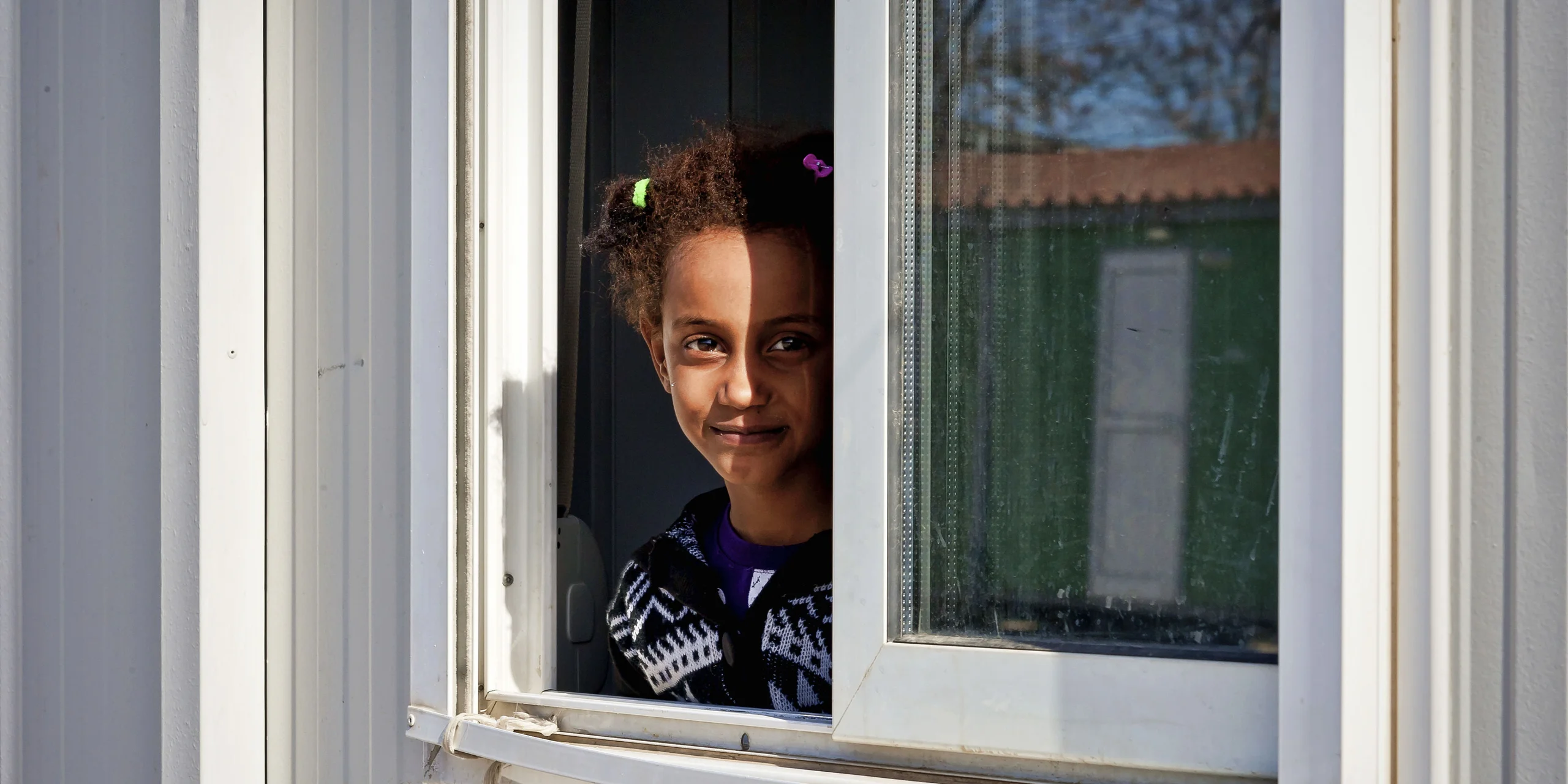
Manal al-Sharif
 Saudi Arabia
writer•activist•computer scientist
Birthday
April 25, 1979
Birth Sign
Sagittarius
Birthplace
Mecca, Saudi Arabia
Age
47 years old
Height
5 ft 4 in (163 cm)
About
Manal al-Sharif is a Saudi writer, activist, and former computer scientist who rose to global prominence for challenging the ban on women driving in Saudi Arabia. Born in Mecca in 1979, she worked as an IT consultant before becoming a central figure in the Women2Drive campaign. Her activism has earned her international recognition, including being named one of Time magazine's 100 most influential people and Glamour's Woman of the Year in 2018.
Despite the legal lifting of the driving ban in Saudi Arabia in 2018, al-Sharif remains in exile in Sydney, Australia. She continues to advocate for human rights from abroad, using her platform to highlight the struggles of women in the region and criticizing government policies that persist despite policy changes.
Early Life & Background
Manal al-Sharif was born into a middle-class family in Mecca, where her father owned a construction company. This background provided her with access to higher education that many women in the kingdom did not have. She attended King Fahd University for Petroleum and Minerals in Dhahran, graduating with a degree in information technology. Her early career took her into the oil and gas sector, where she worked as an IT consultant and project manager in a field dominated by men.
Before entering the public eye, al-Sharif navigated male-dominated corporate environments, which later informed her understanding of gender inequality. She described her childhood as encouraging independence, though societal norms increasingly restricted her freedom as she aged. By the late 2000s, she had established herself as a competent professional in the tech industry, but the restrictions placed on women in daily life, particularly the inability to drive, began to frustrate her and other women in her circle.
The catalyst for her activism came through personal experience and observation of the systemic barriers facing Saudi women. While working in the corporate world, she witnessed how the lack of driving licenses forced women to rely on others for basic mobility. This realization, combined with the broader political climate of the Arab Spring, pushed her to consider more direct action. She began organizing with fellow activists like Wajeha al-Huwaider to challenge the religious and legal prohibition against women driving, setting the stage for a movement that would change the course of her life and the history of women's rights in Saudi Arabia.
Career Growth
Al-Sharif's transition from corporate IT professional to global human rights icon began in May 2011. She co-founded the Women2Drive campaign alongside Wajeha al-Huwaider. On May 17, 2011, she filmed herself driving a car through the streets of Jeddah and uploaded the footage to YouTube and Facebook. This act of civil disobedience became the focal point of the movement, drawing immediate international attention.
Five days after her arrest on May 21, 2011, she was detained by the Committee for the Promotion of Virtue and the Prevention of Vice. She was held without charge for nine days before being released under strict conditions: banned from driving, prohibited from speaking to the media, and ordered not to participate in further political activities. Despite these restrictions, she continued to advocate for women's rights through social media, often using coded language to bypass censorship.
Her activism expanded beyond driving rights to include broader issues such as the treatment of migrant workers and the lack of democratic representation. In 2012, she was named one of Time magazine's 100 Most Influential People. The Oslo Freedom Forum Award followed in 2013, significantly raising her profile on the global stage. She became a regular contributor to major international publications including The New York Times, The Washington Post, and Newsweek.
In 2017, she published her memoir Daring to Drive: A Saudi Woman's Awakening, which detailed her personal struggle and the broader context of women's rights in Saudi Arabia. The book received critical acclaim and became a bestseller. Following the announcement in September 2017 that women would be allowed to drive starting June 2018, al-Sharif was named Glamour's Woman of the Year in 2018. However, despite the policy change, she chose not to return to Saudi Arabia, citing concerns over the safety of other activists and the ongoing suppression of dissent. She currently resides in Sydney, Australia, where she continues to speak at universities and human rights conferences.
Career Timeline
Public Image & Style
Manal al-Sharif is portrayed as a fearless and principled activist who risked everything for the sake of justice. Her public image is one of resilience and determination, often described as a modern-day hero by international media. She is respected for her ability to navigate complex political landscapes while maintaining her moral compass. She typically dresses modestly in accordance with her cultural background, often wearing a hijab in public appearances. Her voice is characterized by clarity and conviction, focusing on universal human rights rather than partisan politics.
Fame & Fandom (iFAMOUS Rankings)
Manal al-Sharif commands a global audience rooted in solidarity rather than the idolatry reserved for pop stars. Her supporters are activists, scholars, and international advocates who mobilize around human rights causes rather than streaming parties or fan-funded billboards. According to the iFANN Global Fame Rankings, Manal al-Sharif is currently evaluated by the engine but not currently in the Top 1,000, reflecting her status as a significant historical figure whose influence extends beyond traditional fame metrics. There is no formal name for this collective; the movement she sparked functions as a political coalition of allies demanding basic freedoms. The energy surrounding her work manifests in academic symposia, op-eds in major newspapers, and the continued advocacy of organizations like Amnesty International, not in organized fan rituals or viral hashtag campaigns.
She remains a symbol of resistance whose legend is built on verified acts of civil disobedience that altered national policy. Her followers champion the cause of women's rights in Saudi Arabia from afar, viewing her as a beacon of hope and a testament to the power of individual courage. The movement she inspired functions as a coalition of allies, with energy manifesting in academic symposia, op-eds, and advocacy efforts by organizations like Amnesty International.
Interesting Facts and Legends
Al-Sharif was the first Saudi woman to be arrested for driving a car in the modern era. Her memoir, Daring to Drive, was translated into multiple languages, including Arabic, French, and German. She has been featured in documentaries and films, including The Kingdom of Women and Saudi Women Who Dare. Despite the driving ban being lifted, she still cannot legally drive in Saudi Arabia due to her exile status. The incident that launched her fame occurred when she drove through Jeddian streets in May 2011 and uploaded the video, a moment now legendary in the history of Saudi women's rights.
Notable Quotes
“I felt like one of my father's songbirds, let out of its cage.”
“They just messed with the wrong woman.”
“We are not asking for anything extraordinary. We just want to live our lives as free citizens.”
Family & Personal Life
Manal al-Sharif is married to a Saudi national who has chosen to remain out of the public eye to protect his identity and safety. They have a son, whom she left behind in Saudi Arabia when she fled to the United States in 2011 and subsequently moved to Australia. Al-Sharif has spoken publicly about the emotional toll of leaving her child behind, describing it as one of the hardest decisions of her life. She has stated that her separation from her son was a necessary sacrifice for the greater cause of women's rights in Saudi Arabia. There are no widely reported romantic relationships prior to her marriage, and she has kept her private life largely shielded from the media to avoid endangering her family.
Notable Connections
Relationships & Dating History
Manal al-Sharif is married to a Saudi national who has chosen to remain out of the public eye to protect his identity and safety. They have a son, whom she left behind in Saudi Arabia when she fled to the United States in 2011 and subsequently moved to Australia. Al-Sharif has spoken publicly about the emotional toll of leaving her child behind, describing it as one of the hardest decisions of her life. She has stated that her separation from her son was a necessary sacrifice for the greater cause of women's rights in Saudi Arabia.
There are no widely reported romantic relationships prior to her marriage, and she has kept her private life largely shielded from the media to avoid endangering her family. As of 2026, she remains married, though separated from her husband and son due to the political situation in Saudi Arabia. Her relationship with her family is defined by the difficult choices she made in pursuit of her activism, and she continues to maintain contact with them from abroad despite the risks involved.
- MarriedSaudi nationalCurrentMarried to a Saudi national who remains out of the public eye; they have a son who remains in Saudi Arabia.
Salary, Net Worth In 2026
$900,000
iFANN Editorial Team estimate
iFANN Editorial Team research estimates Manal al-Sharif's net worth at approximately $900,000 as of 2026. This figure reflects her earnings from book sales, speaking engagements, and media contributions since her rise to prominence in 2011. Her primary income streams include royalties from her memoir Daring to Drive, which has sold hundreds of thousands of copies globally, and fees from university lectures and human rights conferences.
She has also earned income from media appearances and op-ed contributions to major publications like The New York Times and The Washington Post. Unlike many celebrities, al-Sharif does not own significant real estate or engage in high-risk investments, preferring to keep her financial footprint low to avoid scrutiny. Her wealth has grown steadily over the years as her platform expanded, with recent estimates suggesting her total earnings could reach up to $900,000 based on her continued advocacy work and media presence.
Awards Won (4)
Manal al-Sharif has received numerous accolades for her activism, including the Oslo Freedom Forum Award in 2013, the International Women of Courage Award in 2014, and being named Glamour's Woman of the Year in 2018. She was also selected as one of Time magazine's 100 Most Influential People in 2012 and received the Human Rights Watch Global Activist Award in 2013. Her literary contributions were recognized with the PEN/Barbara Goldsmith Recognition.
2013 · Human Rights
Women2Drive Campaign
2014 · Human Rights
Activism for Women's Rights
Known For
Daring to Drive: A Saudi Woman's Awakening
2017 · Author
Women2Drive Campaign
2011 · Co-founder
Time 100 Most Influential People
2012 · Honoree
Keywords
Sources
Quick Facts
- Profession
- writer, activist, computer scientist
- Born
- April 25, 1979
- Birthplace
- Mecca, Saudi Arabia
- Gender
- Female
- Birth Sign
- Sagittarius
Personal Details
- Full Name
- Manal al-Sharif
- Height
- 5 ft 4 in (163 cm)
- Spouse
- Saudi national
- Children
- 1 son
- Education
- King Fahd University for Petroleum and Minerals
Frequently Asked Questions
What did Manal al-Sharif do?
Is Manal al-Sharif still alive?
Where does Manal al-Sharif live now?
How many children does Manal al-Sharif have?
What is Manal al-Sharif's net worth?
Similar People
Join the community
fans discussing