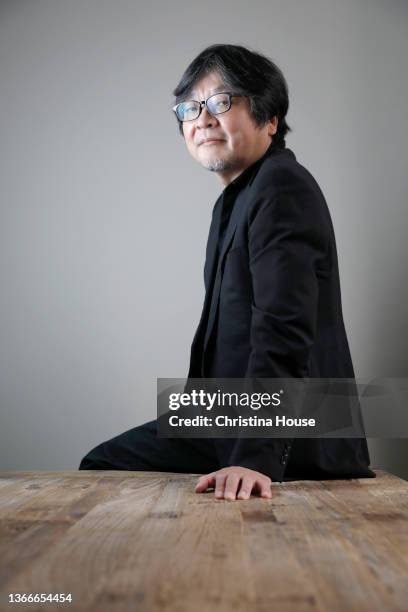
Mamoru Hosoda
 Japan
Japanfilm director•animator•screenwriter
Birthday
September 19, 1967
Birth Sign
Virgo
Birthplace
Kamiichi, Toyama Prefecture, Japan
Age
59 years old
About
Mamoru Hosoda is a celebrated Japanese filmmaker, animator, and screenwriter, renowned for his emotionally resonant animated features that often explore themes of family, memory, and generational bonds. He is a leading figure in modern anime, known for his distinctive visual style and heartfelt storytelling. His seventh feature, Mirai (2018), achieved a significant career milestone by earning an Academy Award nomination for Best Animated Feature. Over a career spanning more than three decades, Hosoda has directed eight feature films and several shorts, blending fantastical digital worlds with grounded family drama. His work consistently explores themes of memory, time, and the bonds between generations, making him one of Japan's most respected animation directors. His films frequently feature strong female protagonists and explore themes of family and connection across different generations.
Early Life & Background
Mamoru Hosoda was born on September 19, 1967, in Kamiichi, Japan. He developed an interest in animation from a young age, reportedly inspired by watching Disney films. After graduating from Kanazawa College of Art with a degree in oil painting, Hosoda initially aimed for a career in traditional art. However, he shifted his focus to animation, joining Toei Animation in 1991 as an animator and director. His early years at Toei were spent honing his craft on various television series and short films, gaining valuable experience in the animation process. A pivotal moment before his widespread fame was his work on the Digimon franchise. He directed the television film Digimon Adventure (1999) and later helmed segments that were compiled into Digimon: The Movie (2000). These projects gave him his first taste of international exposure and laid the groundwork for his later successes.
Career Growth
Hosoda's breakthrough into international recognition began with The Girl Who Leapt Through Time (2006), a critical and commercial success that garnered numerous awards, including the Japan Academy Prize for Animation of the Year, and established his reputation for blending science fiction elements with poignant coming-of-age stories. This was followed by Summer Wars (2009), another highly acclaimed film that explored family dynamics in the digital age and also won the Japan Academy Prize for Animation of the Year. In 2011, he co-founded Studio Chizu with producer Yuichiro Saito, a move that allowed him greater creative control over his projects. His subsequent films continued this trajectory of critical and commercial success: Wolf Children (2012) won the Japan Academy Prize for Animation of the Year and the Asia Pacific Screen Award for Best Animated Feature; The Boy and the Beast (2015) continued his streak of critical success, winning the Japan Academy Prize for Animation of the Year; and Belle (2021), which premiered at the Cannes Film Festival and won the Annie Award for Best Independent Animated Feature.
Career Timeline
Public Image & Style
Mamoru Hosoda is widely regarded as an auteur in the world of anime. His signature style is characterized by vibrant, detailed animation, often blending realistic settings with fantastical elements. Media portrayals consistently highlight his ability to craft emotionally complex narratives that resonate with both younger and adult audiences. The tone of his content is generally earnest, heartfelt, and introspective, focusing on universal human experiences. While there isn't an officially designated fandom name, his dedicated followers are often referred to as fans of Studio Chizu or simply fans of Hosoda's distinct cinematic universe. He maintains a modest presence on social media, primarily sharing news about his films and occasional behind-the-scenes insights.
Fame & Fandom (iFAMOUS Rankings)
Mamoru Hosoda stands as a preeminent figure in global animation, recognized for directing eight feature films that blend fantastical digital worlds with grounded family drama. His career trajectory includes an Academy Award nomination for Best Animated Feature following the release of Mirai in 2018, cementing his status among international auteurs. Despite this widespread critical acclaim and the enduring popularity of works like The Girl Who Leapt Through Time and Wolf Children, the iFANN Global Fame Engine has evaluated this person but they do not currently hold a placement in the published rankings such as the Global Top 1,000 or any Top-100 scope list. This absence from the current tiered hierarchy does not diminish his influence, which is instead measured by the consistent engagement of audiences worldwide who appreciate his emotionally complex narratives. The scale of his reach is evident in major cultural moments, such as the June 2026 opening of The Creative Origins of Mamoru Hosoda exhibition at the Creative Museum Tokyo, which served as a central gathering point for fans to engage with his legacy. While media portrayals consistently highlight his ability to craft heartfelt stories for both younger and adult audiences, there is no evidence of a formal, official fandom name for Mamoru Hosoda within documented records. Unlike idol cultures where organized campaigns define the audience, Hosoda's supporters are typically identified by their appreciation of his filmography, often discussing comparisons to other directors like Hayao Miyazaki and Makoto Shinkai rather than participating in structured rituals. His professional relationship with fans remains focused on interviews and film releases, such as his role as the first featured director in ANIAFF's Director Focus Program in July 2025. Recent discourse surrounding his 2026 film Scarlet, noted for its hybrid animation style and Hamlet-inspired narrative, continues to spark substantial debate within the anime community without coalescing into a singular named movement.
Interesting Facts and Legends
Hosoda was inspired to become an animator after watching Disney films as a child and studied oil painting at Kanazawa College of Art before transitioning to animation. The founding of Studio Chizu in 2011 was a pivotal step for Hosoda, granting him more creative autonomy. He is known for his meticulous approach to storyboarding, often drawing thousands of sketches for each film. He has cited Hayao Miyazaki and Isao Takahata as influences, though his style is distinctively his own. He directed One Piece: The Movie: Dead End Adventure in 2003 and Our Modern Times (also known as Midori-kun no Chousen) in 2005. A defining moment in his lore occurred in March 2026 when The Girl Who Leapt Through Time received 4K screenings in Japan to celebrate its two-decade impact, cementing the film's status as a cornerstone of his career. Another significant milestone was the June 2026 opening of The Creative Origins of Mamoru Hosoda exhibition at the Creative Museum Tokyo, which recapped his entire career and became a central gathering point for fans. His latest film, Scarlet, released around early 2026, generated significant discussion for its themes of online dissonance and unique visual hybridity, sparking substantial debate within the anime community despite mixed critical reception.
Notable Quotes
“I want to tell stories that resonate with people, that make them feel something deeply.”
“The digital world and the real world are not so different. Both are places where we form connections.”
“Animation is a medium that can express anything, from the most realistic to the most fantastical.”
“I try to capture the small, everyday moments that make up our lives.”
“Family is a theme I keep coming back to because it's something everyone can relate to.”
Family & Personal Life
Details about Mamoru Hosoda's family life are not widely publicized. He was born in Kamiichi, Toyama Prefecture, Japan, but information about his parents or siblings is not publicly documented. While specific details about his own family are private, his films frequently explore themes of family, parenthood, and sibling relationships, suggesting a deep personal connection to these subjects. As of 2026, there is no public information about a spouse or children.
Notable Connections
Yuichiro Saito, his long-time producer and co-founder of Studio Chizu, has been instrumental in bringing Hosoda's visions to life. Character designer Sadayuki Murata is a frequent collaborator. Composer Kensuke Ushio scored The Boy and the Beast, Mirai, and Belle.
Relationships & Dating History
Information regarding Mamoru Hosoda's romantic relationships and dating history is not publicly available or widely reported in credible sources. He is a private individual, and his personal life outside of his professional achievements is kept largely confidential. As of 2026, there are no public reports indicating his current marital status or ongoing relationships.
Salary, Net Worth In 2026
Estimates for Mamoru Hosoda's net worth as of 2026 are not readily available from credible financial outlets. His primary source of income stems from his work as a film director, screenwriter, and co-founder of Studio Chizu. This includes directorial fees, profit participation from his films, and potential revenue from merchandising and licensing related to his animated features. Due to the private nature of his financial dealings and the lack of public reporting, a precise net worth figure and breakdown cannot be provided.
Awards Won (14)
Hosoda has won the Japan Academy Prize for Animation of the Year four times: for The Girl Who Leapt Through Time (2007), Summer Wars (2010), Wolf Children (2013), and The Boy and the Beast (2016). Wolf Children also won the Asia Pacific Screen Award for Best Animated Feature. Mirai (2018) earned the Mainichi Film Award, Los Angeles Film Critics Association Award, and National Board of Review Award for Best Animated Film. Belle (2021) won the Annie Award for Best Independent Animated Feature. Several of his films have won Best Animated Feature at the Sitges Film Festival.
2016 · Animation of the Year
The Boy and the Beast
2013 · Animation of the Year
Wolf Children
2010 · Animation of the Year
Summer Wars
2007 · Animation of the Year
The Girl Who Leapt Through Time
2021 · Best Animated Feature Film
Belle
2018 · Best Animated Feature Film
Mirai
2012 · Best Animated Feature Film
Wolf Children
2009 · Best Animated Feature Film
Summer Wars
2007 · Best Animated Feature Film
The Girl Who Leapt Through Time
Known For
The Girl Who Leapt Through Time
2006 · Director
Summer Wars
2009 · Director
Wolf Children
2012 · Director
The Boy and the Beast
2015 · Director
Mirai
2018 · Director
Belle
2021 · Director
Keywords
Quick Facts
- Profession
- film director, animator, screenwriter
- Born
- September 19, 1967
- Birthplace
- Kamiichi, Toyama Prefecture, Japan
- Gender
- Male
- Birth Sign
- Virgo
- Education
- Kanazawa College of Art (oil painting)
- Years Active
- 1991–present
- Studio
- Studio Chizu (co-founder)
Personal Details
- Full Name
- Mamoru Hosoda
- Education
- Kanazawa College of Art (oil painting)
Filmography
10
Total
8
Film
2
TV
Frequently Asked Questions
Who is Mamoru Hosoda?
What is Mamoru Hosoda's net worth in 2026?
Is Mamoru Hosoda still making films in 2026?
What themes does Mamoru Hosoda explore in his films?
How does Mamoru Hosoda compare to Hayao Miyazaki?
Social Media
Similar People

Join the community
fans discussing