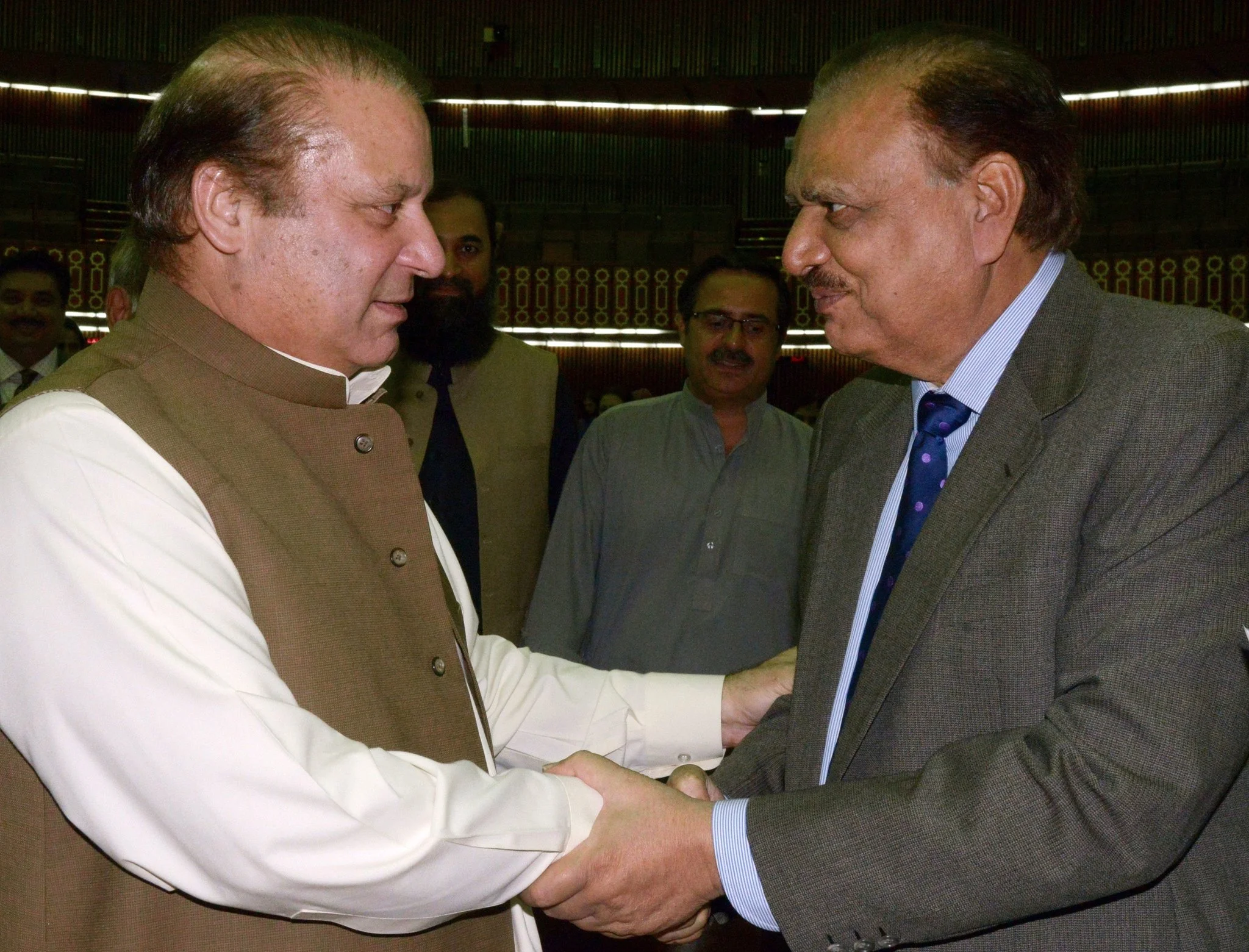
Mamnoon Hussain
 Pakistan
Also known as: Mamnún Husajn, Memnun Hüseyin, Хусейн, Мамнун
Birthday
December 23, 1940
Birth Sign
Sagittarius
Birthplace
Agra, British India (now Uttar Pradesh, India)
Age
Died at 80
About
Mamnoon Hussain was a distinguished Pakistani statesman, industrialist, and politician who served as the 12th President of Pakistan from September 9, 2013, to September 9, 2018. Born in Agra, British India, he is widely recognized for his seamless transition from a successful textile entrepreneur to a key figure in Pakistan's governance, culminating in his historic tenure as head of state. His legacy is defined by his quiet dignity, commitment to constitutional propriety, and a diplomatic approach that navigated complex regional tensions. He oversaw significant domestic reforms, including the integration of tribal areas into the mainstream administrative structure of Pakistan. His tenure marked a period of relative stability and adherence to democratic norms during a turbulent era in the nation's history.
Before entering high politics, Hussain built a massive business empire known as the Mamnoon Group, which became one of the largest textile manufacturers in the country. This commercial success provided him with the financial independence and social capital necessary for his political ascent. He is remembered not just for his office, but for his role in stabilizing the country and fostering diplomatic relations, particularly through symbolic gestures that bridged long-standing divides. His life story represents the journey of a man who moved from the mills of Karachi to the highest seat of power in the land, leaving an indelible mark on Pakistan's modern political landscape before passing away in 2021 after a prolonged battle with cancer.
Early Life & Background
Mamnoon Hussain was born on December 23, 1940, in Agra, United Provinces, British India, into a Muslim family. His early years were marked by the profound upheaval of the Partition of India in 1947. At the age of seven, he migrated with his family to Pakistan, settling first in Hyderabad, Sindh, before eventually moving to Karachi. This migration shaped his nationalist identity and instilled in him a deep connection to the new nation's struggles and aspirations. The experience of displacement and resettlement became a foundational element of his worldview and later influenced his political philosophy regarding national unity.
He pursued higher education in Karachi, graduating with a Bachelor of Commerce degree from the University of Karachi. While specific details about his secondary schooling are less documented, his commercial education laid the foundation for his future business empire. Following his graduation, he joined the family business, which had roots in the textile sector. He founded the Mamnoon Group, a diversified conglomerate that became one of Pakistan's largest textile manufacturers. The group included spinning mills, weaving units, and dyeing facilities. Under his leadership, the company expanded significantly, contributing substantially to Pakistan's export economy. By the late 1990s, he was already a well-known figure in the corporate world, which provided the financial independence and social capital necessary for his eventual entry into high-level politics. His reputation as a shrewd businessman preceded his political career, earning him respect among industry leaders and politicians alike.
Career Growth
Hussain's political career began in earnest in the late 1990s. In June 1999, just months before the military coup led by General Pervez Musharraf, he was appointed the Governor of Sindh by Prime Minister Nawaz Sharif. His tenure was short-lived; in October 1999, Musharraf suspended the constitution, dismissed provincial governments, and dissolved the governorship. During the Musharraf era, Hussain largely retreated from active politics, focusing on his business interests while maintaining connections with the Pakistan Muslim League-Nawaz (PML-N).
After the general elections of 2013, the PML-N nominated Hussain as their candidate for the presidency. On July 30, 2013, he was elected as the 12th President of Pakistan by an electoral college comprising members of the National Assembly, Senate, and Provincial Assemblies. He received a significant majority of votes, defeating the PPP candidate. He took the presidential oath in Islamabad on September 9, 2013, succeeding Asif Ali Zardari. His inauguration marked a return to civilian leadership after the military-backed regime of Musharraf.
His five-year term was characterized by a focus on diplomacy, economic stability, and constitutional adherence. Key moments included a diplomatic breakthrough on June 10, 2018, when he shook hands with Indian Prime Minister Narendra Modi at the Shanghai Cooperation Organization summit in Qingdao, China. This gesture was widely interpreted as a symbolic thaw in Indo-Pak relations. In May 2018, he signed the 25th Constitutional Amendment, merging the Federally Administered Tribal Areas with Khyber Pakhtunkhwa. This landmark legislative move ended decades of colonial-era laws in the tribal regions and integrated them into the mainstream administrative structure of Pakistan. He completed his full term and handed over power to Arif Alvi on September 9, 2018.
Career Timeline
Public Image & Style
Hussain was portrayed as a statesman rather than a celebrity. He was known for his quiet dignity, conservative values, and commitment to constitutional propriety. He avoided controversy and maintained a neutral stance during political crises. His public image was that of a dignified elder statesman who navigated the complexities of Pakistani politics with a focus on stability and diplomacy. He was often seen wearing traditional shalwar kameez and a waistcoat or suit during official functions, projecting an image of modesty and respect for tradition.
Unlike many public figures, he did not court media attention for his private life. His demeanor was serious and composed, reflecting the gravity of his office. He was respected for his business acumen and his ability to maintain neutrality during politically charged times. His legacy is defined by his role in stabilizing the country and fostering diplomatic relations, particularly with India. He was rarely seen engaging in partisan rhetoric, preferring instead to let his actions speak for themselves. This consistent posture earned him widespread respect across the political spectrum, even from those who disagreed with his party's policies.
Fame & Fandom (iFAMOUS Rankings)
Mamnoon Hussain never courted a fanbase. He did not inspire midnight vigils, viral tribute videos, or crowds gathering outside his Karachi residence to catch a glimpse of the man who once stood as Pakistan's twelfth president. His public life was defined by the quiet gravity of statecraft rather than the roar of celebrity. There is no collective name for those who followed his career, no organized group claiming him as their own icon. The reverence he commanded came from protocol and office, not the chaotic energy of fandom rituals or inside jokes shared in digital corners.
When he passed in 2021, the Guard of Honour rendered at his funeral reflected his status as a former head of state, not the adoration of a devoted following. His legacy rests on the solemnity of his service: the merger of tribal areas into Khyber Pakhtunkhwa, the diplomatic handshake with Narendra Modi in Qingdao, and the steady administration of the presidency during a complex decade. Yet even without a legion of supporters, his reach extended far beyond the borders of his immediate political circle. Global attention tracked his ascent through business and governance, cementing his place in history books and digital archives alike. This broad recognition places him firmly within the global consciousness of historical figures. He stands as the 15th most famous person from Pakistan, a position held steady from the previous cycle, according to the iFANN Global Fame Rankings. These placements reflect a world where influence is measured across media coverage, search trends, and cultural consumption signals worldwide.
Interesting Facts and Legends
The most famous moment of his presidency occurred on June 10, 2018, at the SCO Summit in Qingdao, China. When Indian Prime Minister Narendra Modi approached him, they shared a warm handshake and exchanged pleasantries. This was unprecedented given the tense history between the two nations and was widely retold as a symbol of hope for peace. Another pivotal achievement was signing the 25th Constitutional Amendment in May 2018, which resolved a decades-old administrative anomaly by bringing tribal areas under the same legal framework as the rest of Pakistan.
In May 2015, his son Muhammad Moinuddin was targeted in a bomb attack in Karachi. The attack killed three other people but left Moinuddin alive. The incident drew national attention and highlighted the security challenges faced by political families in Pakistan. Despite being a man of immense wealth and influence, Hussain remained known for his privacy and avoided courting media attention for his personal life or romantic history. He was also known for his strict adherence to protocol, often refusing to engage in informal gatherings that might compromise the dignity of his office. His transition from a textile tycoon to the head of state remains a unique chapter in Pakistan's political history, illustrating the diverse backgrounds of its leaders.
Notable Quotes
“This amendment will bring the tribal areas into the mainstream of the country and ensure their development and prosperity.”
“We must work together to ensure regional cooperation and stability.”
Family & Personal Life
Mamnoon Hussain was married to Shahida Hussain. Details about their meeting or wedding date are not publicly documented in major biographical sources. She remained a supportive figure throughout his career, standing by his side during both his business ventures and his time in the presidency. They had several children, including a son named Muhammad Moinuddin and a daughter named Saima Hussain. The family lived a relatively private life despite his high-profile position as President, avoiding the spotlight that often accompanies such high offices.
In May 2015, the family faced a tragedy when his son, Muhammad Moinuddin, was targeted in a bomb attack in Karachi. The attack killed three other people but left Moinuddin alive. The incident drew national attention and highlighted the security challenges faced by political families in Pakistan. The family maintained strong ties to their roots in Karachi, where Hussain spent much of his adult life building his business empire. Despite the public nature of his work, the Hussain household remained a sanctuary of privacy, reflecting the traditional values they held dear.
Notable Connections
Relationships & Dating History
Mamnoon Hussain was a private man regarding his personal life, and unlike many public figures, he did not court media attention for his romantic history. He was married to Shahida Hussain, though details about their meeting or wedding date are not publicly documented in major biographical sources. Their relationship was defined by traditional values and privacy, and she remained a supportive figure throughout his career.
They had several children, including a son named Muhammad Moinuddin and a daughter named Saima Hussain. The family lived a relatively private life despite his high-profile position as President. There were no public divorces, separations, or high-profile flings reported. As of 2026, he is deceased, having been widowed upon his death in 2021. His marriage lasted until his passing, and there are no recorded dating relationships prior to his marriage. The couple's union was a cornerstone of his personal life, providing a stable environment amidst the demands of his public service.
- MarriedShahida Hussain? - 2021Married until his death; had two children.
Death & Aftermath
Died
July 14, 2021 (aged 80)
Death Place
Karachi, Pakistan
Cause of Death
Cancer
Mamnoon Hussain spent his final months under medical supervision at a private hospital in Karachi following a diagnosis of cancer in February 2020. The former President of Pakistan passed away on July 14, 2021, at the age of 80. His family confirmed the cause of death and announced that he had been receiving treatment for over a year before his condition became terminal. His illness was kept relatively private, allowing him to maintain his composure and dignity until the end.
Following his passing, tributes poured in from across the political spectrum and international community. President Dr. Arif Alvi issued an official statement expressing deep grief, while Shehbaz Sharif, then the leader of the opposition, highlighted Hussain's integrity and service to the nation. International media outlets including Al Jazeera, Arab News, and The Hindu covered the event, noting his unique transition from a prominent textile industrialist to the head of state.
A state funeral was held with full military honors. A Guard of Honour was rendered at his residence and during the procession to the graveyard. Posthumously, no new artistic works or releases were produced, as his legacy remains tied to his political tenure. His death marked the end of an era for the PML-N and the conservative wing of Pakistani politics. The estate has been managed by his heirs since his passing, with no major public disputes reported regarding his assets. His passing was mourned by citizens who appreciated his quiet contribution to the nation's stability and development.
Net Worth (Estate Value)
$500 Million
iFANN Editorial Team estimate
iFANN currently estimates Mamnoon Hussain's net worth at approximately $500 Million. This figure reflects the value of his extensive business empire, the Mamnoon Group, which was one of Pakistan's largest textile manufacturers. His wealth primarily stemmed from owning multiple spinning mills, weaving factories, and dyeing units that contributed significantly to the country's export economy. The group's success provided him with substantial financial independence and social capital.
As of 2026, his estate continues to be valued based on the remaining assets of his business holdings and real estate properties in Karachi and other major cities. Since his passing in 2021, the estate has been managed by his heirs. No major public disputes regarding his assets have been reported. His financial trajectory saw steady growth throughout his business career, culminating in a fortune that placed him among the wealthiest individuals in Pakistan during his lifetime. The Mamnoon Group's diversified holdings included investments in real estate and other sectors, ensuring the longevity of his family's wealth.
Awards Won (1)
Mamnoon Hussain received significant national honours for his service to the state, including the Nishan-e-Imtiaz, one of Pakistan's highest civilian awards. As the 12th President, he held the title of Supreme Commander of the Armed Forces and was the recipient of various state decorations inherent to the office. His contributions to the nation and his role in key legislative milestones like the FATA merger earned him widespread respect.
2018 · Civilian Award
Service to the Nation
Known For
President of Pakistan
2013-2018 · 12th President
Governor of Sindh
1999 · Governor
Textile Industrialist
1970s-2013 · Founder of Mamnoon Group
Keywords
Sources
Quick Facts
- Profession
- politician, entrepreneur
- Born
- December 23, 1940
- Birthplace
- Agra, British India
- Died
- July 14, 2021
- Death Place
- Karachi, Pakistan
- Gender
- Male
- Birth Sign
- Sagittarius
Personal Details
- Full Name
- Mamnoon Hussain
- Spouse
- Shahida Hussain
- Children
- Muhammad Moinuddin, Saima Hussain
- Education
- Bachelor of Commerce, University of Karachi
Frequently Asked Questions
Who was Mamnoon Hussain?
When did Mamnoon Hussain die?
What caused Mamnoon Hussain's death?
Did Mamnoon Hussain meet Narendra Modi?
Where was Mamnoon Hussain born?
Similar People
Join the community
fans discussing