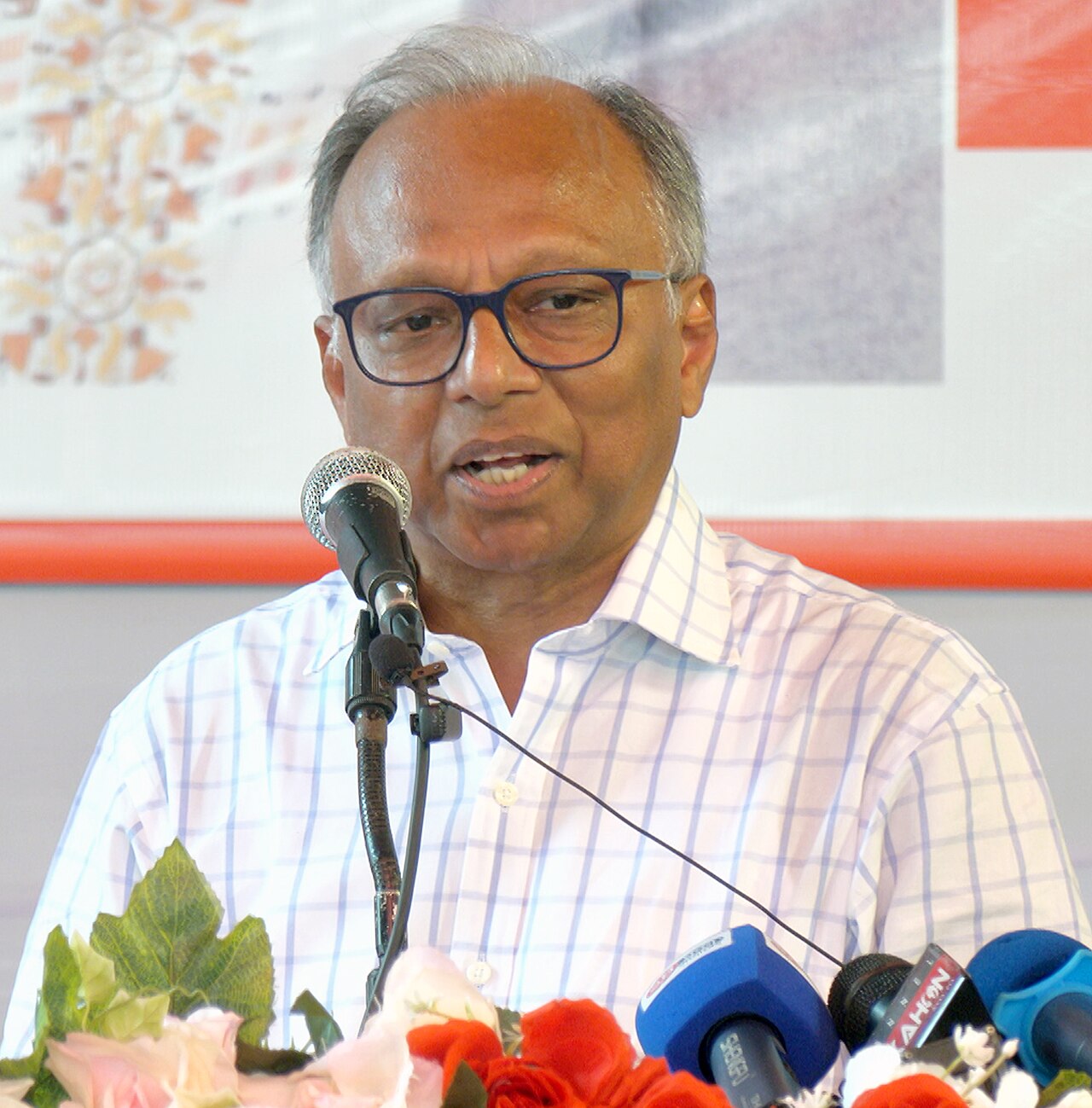
Mahmudur Rahman
 Bangladesh
Birthday
July 6, 1953
Birth Sign
Cancer
Birthplace
Cumilla District, Bangladesh
Age
73 years old
About
Mahmudur Rahman is a Bangladeshi engineer, journalist, and author, best known as the owner and editor of the Bengali daily newspaper Amar Desh. Born in Cumilla District, he has spent decades in public life, building a reputation as a fearless commentator on national affairs. His paper has been a consistent voice for press freedom and accountability in Bangladesh, and Rahman himself has become a symbol of resistance against political pressure on the media.
As of 2026, Rahman continues to edit Amar Desh from Dhaka, though his work remains shadowed by legal battles. He has faced more than 50 defamation and sedition charges since 2008, a record that human rights groups call judicial harassment. He is also the only person ever sentenced for contempt by the Supreme Court of Bangladesh, a distinction that underscores the fraught relationship between the press and the judiciary in the country.
Beyond journalism, Rahman is an author, though his published works are not widely catalogued. His career reflects a persistent commitment to speaking truth to power, and he remains a polarizing figure in Bangladeshi public life.
Early Life & Background
Mahmudur Rahman was born on July 6, 1953, in the Cumilla District of what was then East Pakistan. Details of his early years are scarce, but he pursued engineering, a field that set him apart from many of his later colleagues in the media. He trained as an engineer and likely worked in that profession before turning to journalism, though the exact transition is not well documented.
His entry into the newspaper business came with the founding of Amar Desh, a Bengali daily that would become his platform. The paper's early years were relatively quiet, but Rahman's editorial stance began to sharpen after 2008, when he became a vocal critic of the Awami League government. That decision would define the rest of his career, drawing both admiration and legal trouble.
Rahman's engineering background gave him a methodical approach to problem-solving, which he brought to his editorial work. He seems to have been drawn to journalism as a way to serve the public interest, and his paper quickly gained a reputation for independent reporting. By the time he became a national figure, he had already established himself as a serious and unyielding editor.
Career Growth
Mahmudur Rahman's career as editor of Amar Desh took a dramatic turn in 2008 when he began openly criticizing the Awami League government. His editorials and investigative reports frequently targeted official corruption and human rights abuses, earning him a loyal readership but also powerful enemies. The government responded with a barrage of legal actions: over 50 defamation and sedition charges were filed against him, a number that human rights organizations describe as unprecedented and intended to silence dissent.
In a landmark case, Rahman became the only individual ever sentenced for contempt by the Supreme Court of Bangladesh. The sentence was widely criticized internationally as an attack on press freedom. Despite the legal pressure, he continued to publish, and Amar Desh remained a significant voice in Bangladeshi media.
In recent years, Rahman has also been involved in broader media advocacy. In June 2026, he participated in the observance of "Newspapers Black Day," a protest against restrictions on the press, and called for the establishment of an independent media commission. His role as a journalist has thus expanded to include activism for media freedom, making him a central figure in the struggle for a free press in Bangladesh.
Career Timeline
Public Image & Style
Mahmudur Rahman is perceived in Bangladesh as a tenacious editor who refuses to bow to political pressure. His image is that of a fighter for press freedom, often at great personal cost. Media coverage of him tends to focus on his legal battles and his role as a government critic, painting him as a polarizing figure: admired by those who value independent journalism, vilified by government supporters.
His public persona is understated and serious, reflecting his engineering background. He rarely gives flamboyant interviews, preferring to let his editorials speak for him. Fans of independent media see him as a guardian of truth, while critics accuse him of bias against the ruling party. Despite the controversies, his commitment to his principles has earned him respect across a broad spectrum of society.
Fame & Fandom
Mahmudur Rahman commands a distinct sphere of influence within Bangladesh, recognized primarily for his role as a media proprietor and political commentator rather than as a global pop culture icon. His reach is concentrated in the region where he shapes public discourse through his newspaper, Amar Desh, yet this regional prominence has not translated into a standing position on the international celebrity charts. According to iFANN's Global Fame Engine, Mahmudur Rahman has been evaluated but does not currently hold a placement in the published rankings, such as the Global Top 1,000 or a Top-100 scope list. While he maintains a dedicated readership base that views him as a symbol of press freedom, there is no formal fan organization or documented fandom name associated with his name. The audience surrounding him functions more as a civic constituency engaged with his journalism and legal battles than as a fanbase participating in celebrity rituals or organized campaigns. Unlike entertainers who generate viral moments and chart-topping releases, Rahman's public legacy is defined by serious historical events, including high-profile arrests and health crises, which are discussed in news cycles rather than celebrated in fan lore. The lack of a specific fandom name reflects the nature of his work; his supporters are readers and citizens concerned with accountability, not fans seeking autographs or merchandise. Consequently, while his name carries weight in Bangladeshi political circles, he remains unranked in the broader global fame metrics that track entertainment and cultural consumption.
Interesting Facts and Legends
Mahmudur Rahman's nickname "Manna" occasionally appears in media reports, though it frequently causes confusion with Mahmudur Rahman Manna, a separate politician. As one of the few editors in Bangladesh holding an engineering degree, Rahman brings a unique technical perspective to stories about infrastructure and development. Despite enduring over 50 defamation and sedition charges since 2008, he has never been convicted of a criminal offense, leading many to view the legal proceedings as politically motivated. His newspaper, Amar Desh, has survived government advertising bans by relying heavily on subscriptions and private advertisers. In January 2026, Rahman was hospitalized for chest pain, underscoring the physical toll of his relentless work. A significant moment in his public history occurred in April 2013 when he was arrested on sedition charges following the publication of an unverified letter, an event widely cited by human rights groups as a major crackdown on press freedom. Another notable incident took place in June 2026, when the religious group ISKCON demanded an apology from the editor of Amar Desh, highlighting ongoing tensions between his media house and various societal groups.
Family & Personal Life
Public information about Mahmudur Rahman's family is extremely limited. He has not shared details about his parents, siblings, or children in any accessible forum. His personal life remains private, and he rarely discusses family matters in interviews or public appearances.
What is known is that he lives in Dhaka, the capital of Bangladesh, where he runs Amar Desh. His daily routine is reportedly dominated by his editorial duties, leaving little time for personal pursuits. The lack of public family information is itself notable, as it suggests a deliberate separation between his public role and private life.
Notable Connections
Mahmudur Rahman is closely associated with the National Editors' Council, a body of newspaper editors in Bangladesh. He has worked alongside other editors, such as Shafik Rehman of Jaijaidin, in advocating for press freedom. His name is often linked with journalists who have faced government persecution, and he is considered a senior figure in the Bangladeshi media community.
Relationships & Dating History
There is no public record of Mahmudur Rahman's romantic relationships or marital status. He has kept his personal life private, and no credible sources have reported on his dating history or family. As of 2026, his relationship status is unknown, and he appears to prioritize his work above all else.
Salary, Net Worth In 2026
$5 Million
iFANN Editorial Team estimate
Mahmudur Rahman's net worth is not publicly documented in official filings, but research by the iFANN Editorial Team puts his total assets at $5 Million. This figure is derived from his ownership of Amar Desh, which continues to generate revenue through subscriptions and private advertisements despite facing periodic advertising bans. The newspaper's value constitutes the bulk of his financial portfolio, estimated at several million dollars, while income from his work as an author and occasional speaking engagements provides supplementary earnings. His financial situation has been strained by legal fees from over 50 court cases, which have consumed significant resources over the years. However, the paper's loyal readership has helped sustain it financially, allowing it to operate independently. Rahman's net worth has remained relatively stable, as he has not diversified into other business ventures. His primary asset remains the newspaper, which serves as both his livelihood and his platform for independent journalism.
Awards & Accolades
View 1 records, honours and achievementsKnown For
Amar Desh
· Owner and Editor
Contempt of Court Case
· Sentenced
Media Freedom Advocacy
· Activist
Keywords
Sources
Quick Facts
- Profession
- engineer, journalist, author
- Born
- July 6, 1953
- Birthplace
- Cumilla District, Bangladesh
- Gender
- Male
- Birth Sign
- Cancer
- Known For
- Editor of Amar Desh
Frequently Asked Questions
Who is Mahmudur Rahman?
What is Mahmudur Rahman known for?
How many legal charges has Mahmudur Rahman faced?
Is Mahmudur Rahman still active in 2026?
What is the significance of Amar Desh newspaper?
Join the community
fans discussing