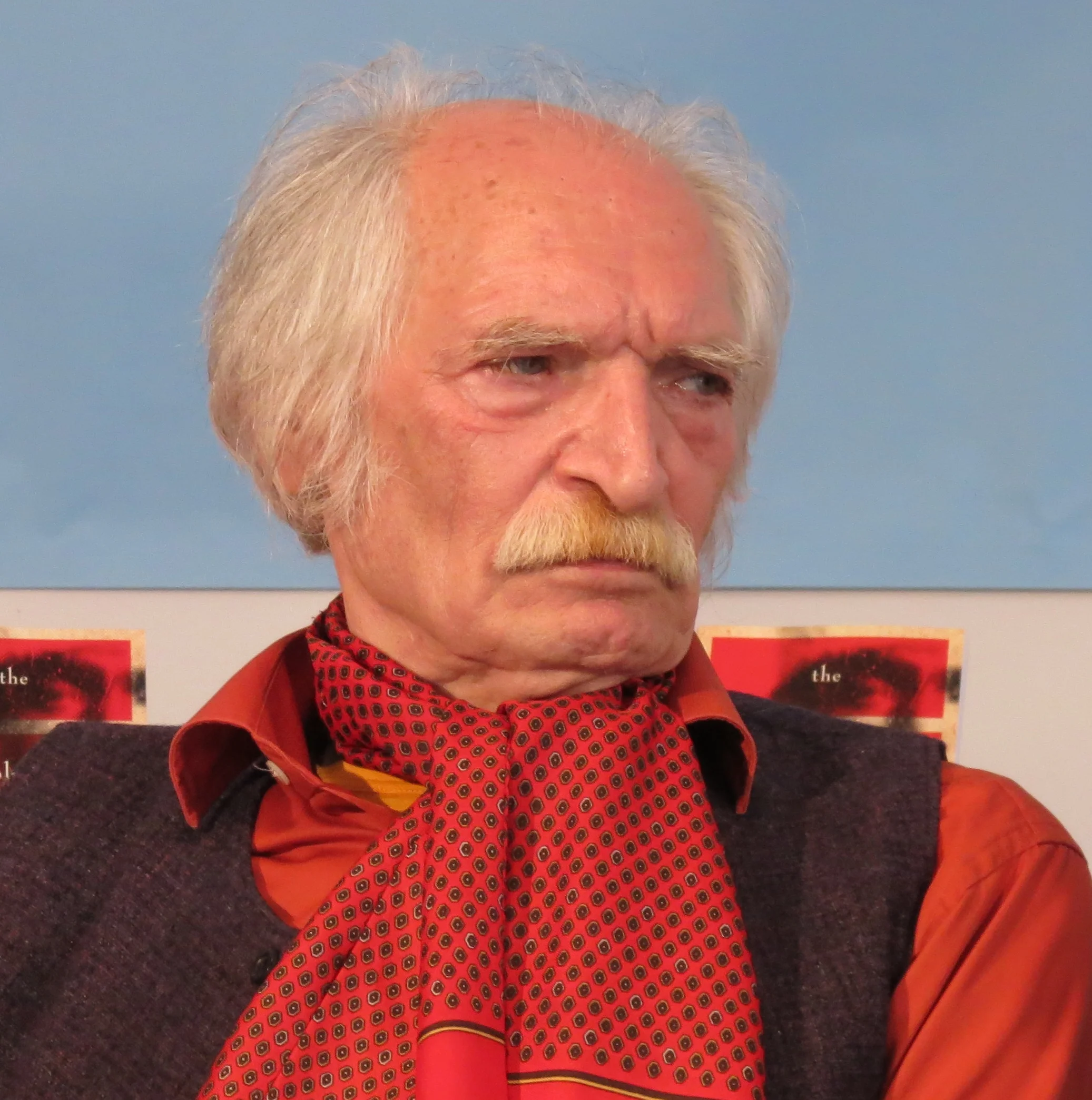
Mahmoud Dowlatabadi
 Iran
IranBirthday
August 1, 1940
Birth Sign
Leo
Birthplace
Dowlatabad, near Sabzevar, Iran
Age
86 years old
About
Mahmoud Dowlatabadi is an Iranian novelist, playwright, and actor, widely regarded as one of the most significant literary voices in contemporary Iran. His work, rooted in the harsh realities of rural life, has earned him international acclaim and a devoted readership. Dowlatabadi's magnum opus, Kelidar, is a monumental epic that chronicles the lives of a Kurdish family over generations, while his novel The Colonel offers a searing look at the aftermath of the 1979 revolution. His prose is often described as unsparing and stark, matching the difficult historical periods he depicts.
As of 2026, Dowlatabadi remains an active and influential figure in Iranian cultural discourse, having publicly engaged with political events such as the 2018 protests. His works have been translated into numerous languages, bringing Iranian stories to a global audience. A documentary about his life, An Owl, a Garden and the Writer, premiered in 2023, cementing his status as a literary icon whose influence extends far beyond the page.
Early Life & Background
Born on August 1, 1940, in the remote village of Dowlatabad near Sabzevar, in the northwestern part of Khorasan Province, Dowlatabadi grew up in a poor family of shoemakers. The poverty and hardship of his childhood in rural Iran would later become the raw material for his fiction, giving his work an authenticity that resonates deeply with readers. He was exposed to the realities of peasant existence, tribal dynamics, and the rigid social structures of rural Khorasan, all of which would appear in his novels and plays.
Before turning to writing, Dowlatabadi began his artistic career as an actor in theater. This background in performance shaped his narrative style and later informed his work as a playwright. In the early 1970s, he transitioned to cinema, working as a writer and actor on films such as The Soil (1973) and Band (1981). These early experiences in the arts laid the foundation for his literary career, allowing him to observe human behavior closely and develop the keen sense of character that would define his novels.
Career Growth
Dowlatabadi's literary career spans more than six decades, encompassing over ten novels, numerous novellas, plays, and screenplays. His breakthrough came with the publication of Kelidar in 1984, a monumental epic based on actual events that follows the Kalmisi family, a Kurdish family, over several generations. The novel, which took years to complete, is considered his masterpiece and has been translated into multiple languages, including Balochi in 2021, highlighting its regional significance.
Another major work, The Colonel, published in English translation in 2011, offers a poignant look at the aftermath of political upheaval in Iran. The novel takes place on a dark and rainy night, when an ex-army officer who once held high rank under the Shah must answer summons to identify and bury his tortured daughter, while confronting the failures of Iran's Left and the brutality of multiple regimes. Critics have praised its historical accuracy, with the character of the Colonel drawing on historical figures. The novel received international attention with major reviews in The New York Times and other outlets.
In 2020, Dowlatabadi contributed to the Art of Peace global project, writing and reciting a piece titled Soldier (Half-Burned Boots). In April 2023, a documentary film about his life, An Owl, a Garden and the Writer, debuted its trailer, executive produced by Iranian filmmaker Amir Naderi. Throughout his career, Dowlatabadi has also been an active voice in discussions about censorship and artistic freedom in Iran, particularly in 2015 and 2018.
Career Timeline
Public Image & Style
Dowlatabadi is portrayed in media as a towering figure of Iranian literature who champions social and artistic freedom. His writing is characterized by a distinctly realist lens, exploring the realities of rural life with authenticity drawn from his own experiences. Critics describe his prose as unsparing and harsh, matching the difficult historical periods he chronicles. He is seen as a subversive writer whose work navigates Iran's censorship regime; in 2015, he was part of a broader movement of Iranian writers turning to the internet to publish their work and avoid state censors. His public statements on political issues, such as the 2018 protests, have reinforced his image as a courageous intellectual willing to speak truth to power. Fans and critics alike regard him as a chronicler of Iranian rural life and political upheaval, and his works are studied and celebrated internationally.
Fame & Fandom
Mahmoud Dowlatabadi stands as a towering figure in contemporary Iranian literature, his influence measured not by viral metrics but by the enduring weight of his prose across generations. His work resonates deeply within academic circles and among diaspora communities, where texts like Kelidar and The Colonel serve as essential references for understanding rural life and political history. Despite this profound cultural impact, iFANN's Global Fame Engine has evaluated his current standing and determined that he does not currently hold a placement in the published rankings, including the Global Top 1,000 or any scope-based list. This absence from numerical charts reflects the nature of his fame, which is rooted in literary legacy rather than the transient signals of modern celebrity culture. While he commands immense respect as a dissident voice and a master of realist fiction, there is no formalized fanbase with an official name, organized rituals, or public campaigns to track. His audience consists primarily of scholars, critics, and dedicated readers of translated literature who engage with his work through study and appreciation rather than collective fandom activities. The mythology surrounding him is built on verified historical events, such as his arrest by Savak in 1974 and his subsequent exile, rather than crowd-disrupting appearances or viral moments. His most iconic status remains tied to the publication of his novels and the recent documentation of his life in the film An Owl, a Garden and the Writer. In a world obsessed with immediate visibility, Dowlatabadi represents a different kind of enduring presence, one that persists through the quiet power of the written word.
Interesting Facts and Legends
Born into a family of shoemakers in a poor rural village, Dowlatabadi began his artistic career as an actor before transitioning to writing, a path that significantly shaped his narrative style. He has been married to Mehr Azar Maher since 1966, a union spanning nearly six decades. His novel The Colonel is celebrated for its historical accuracy, drawing upon actual figures, while Kelidar achieved regional significance when published in Balochi translation in 2021. One of only two leading figures of Iranian arts, alongside filmmaker Asghar Farhadi, to publicly react to the 2018 protests, he remains a symbol of resistance. A defining legend of his life involves his 1974 arrest by Savak, the Shah's secret police, an event that forced him into exile and cemented his reputation as a subversive voice against oppression. This historical trauma is central to the cultural understanding of his work, particularly his stark depictions of political tyranny. Another documented milestone occurred in April 2023, when a documentary titled An Owl, a Garden and the Writer, executive produced by Amir Naderi, debuted its trailer, signaling a continued effort to codify his life story for new generations.
Family & Personal Life
Dowlatabadi was born into a poor family of shoemakers in the village of Dowlatabad, a humble beginning that shaped his worldview and literary voice. He has been married to Mehr Azar Maher since 1966, and the couple has three children together. The marriage has been remarkably stable, spanning nearly six decades. Despite his public literary persona, Dowlatabadi has kept his personal life private, with little public information about his children or extended family. His family's modest origins and his own long-lasting marriage are recurring themes in interviews, reflecting his grounding in traditional values.
Notable Connections
Amir Naderi, the acclaimed Iranian filmmaker, executive produced the documentary An Owl, a Garden and the Writer about Dowlatabadi's life. Asghar Farhadi, another leading figure of Iranian arts, was discussed alongside Dowlatabadi in the context of the 2018 protests. His wife, Mehr Azar Maher, has been a constant presence in his life since their marriage in 1966.
Relationships & Dating History
Dowlatabadi has been married to Mehr Azar Maher since 1966, a union that has lasted nearly six decades. The couple has three children together. There is no public record of any other romantic relationships, prior marriages, or high-profile flings in his life. His personal life has remained remarkably private compared to his public literary persona. As of 2026, Dowlatabadi remains married to Maher, making their marriage one of the longest-lasting in the Iranian literary world.
- MarriedMehr Azar Maher1966 - presentCurrentLong-standing marriage, three children together.
Salary, Net Worth In 2026
$10 Million
iFANN Editorial Team estimate
Per iFANN's editorial analysis, Mahmoud Dowlatabadi's net worth in 2026 is estimated at $10 million, reflecting his decades-long career as a novelist, playwright, and actor. His primary income sources include book royalties from domestic and international translations, with works available in Arabic, German, Spanish, French, Hebrew, Norwegian, Portuguese, Russian, Serbian, Turkish, and English. His involvement in cinema, including writing and acting credits on films like The Soil and Band, has also contributed to his earnings. While exact figures are not publicly disclosed, the steady stream of royalties from his numerous works, including the internationally recognized Kelidar and The Colonel, has provided a stable income. His literary legacy, rather than financial wealth, remains his primary cultural contribution, but his financial standing reflects his enduring success and global reach.
Awards & Accolades
View 3 records, honours and achievementsKnown For
Kelidar
1984 · Author
The Colonel
2011 · Author
Keywords
Sources
Quick Facts
- Profession
- writer, novelist, playwright
- Born
- August 1, 1940
- Birthplace
- Dowlatabad, near Sabzevar, Iran
- Gender
- Male
- Birth Sign
- Leo
- Spouse
- Mehr Azar Maher
- Children
- 3
Personal Details
- Full Name
- Mahmoud Dowlatabadi
- Spouse
- Mehr Azar Maher
- Children
- 3
Filmography
4
Total
4
Film
0
TV
Frequently Asked Questions
What is Mahmoud Dowlatabadi's most famous work?
Is Mahmoud Dowlatabadi still alive?
Who is Mahmoud Dowlatabadi's wife?
What is Mahmoud Dowlatabadi's net worth in 2026?
What is 'The Colonel' about?
Join the community
fans discussing