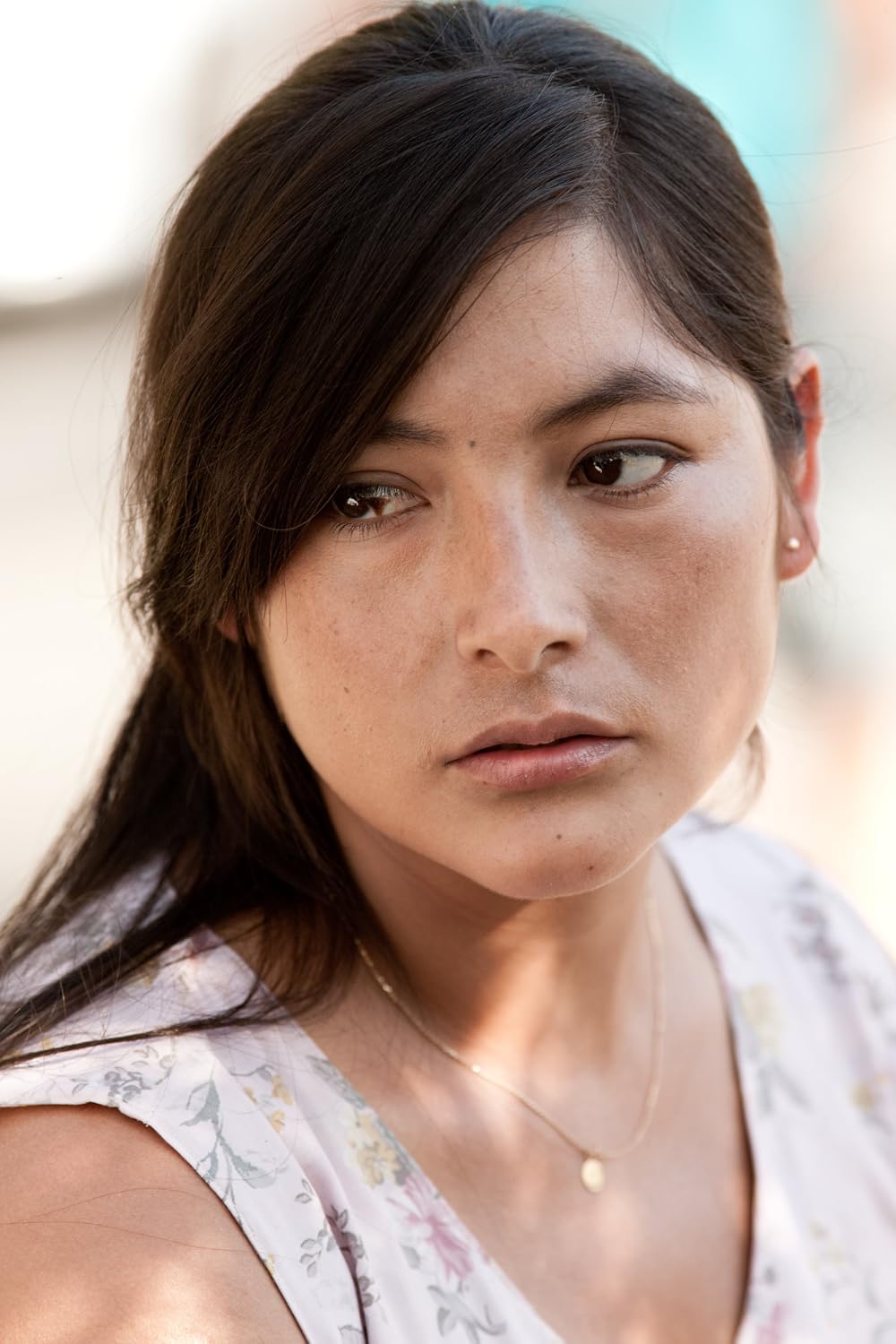
Magaly Solier
 Peru
PeruAlso known as: Oriana Magaly Solier Romero
Birthday
June 11, 1986
Birth Sign
Gemini
Birthplace
Huanta, Ayacucho, Peru
Age
40 years old
About
Magaly Solier is a Peruvian actress and singer-songwriter whose work has put Quechua language and indigenous Andean culture on the international film stage. She first gained attention in Claudia Llosa's Madeinusa (2006) and became a global name with The Milk of Sorrow (2009), which won the Golden Bear at the Berlin International Film Festival and earned Peru its first Oscar nomination. Solier is known for playing women who carry deep emotional and historical weight, often in Quechua, and she has built a career across Peruvian, Spanish, Belgian, and Latin American co-productions.
Beyond cinema, Solier is a cantautora whose music draws on Andean folk traditions. In 2017, UNESCO named her an Artist of Peace for her advocacy of indigenous languages and cultures. She remains a low-key but respected figure in art-house cinema, with a modest social media presence that reflects her focus on craft over celebrity. Her work has been praised for its authenticity and for opening doors for indigenous representation in Latin American film.
Early Life & Background
Magaly Solier grew up in the highland town of Huanta, in Peru's Ayacucho region, speaking Quechua at home. Her family's deep roots in the Andes shaped her from the start, and music was an early passion. In 2003, she won the Festival de la Canción Ayacuchana, a regional song competition, which put her on the radar of filmmaker Claudia Llosa. Llosa was casting for her debut feature and saw in Solier a natural talent. The following year, Solier made her acting debut in Madeinusa, though the film wouldn't premiere until 2006. Her early life in the highlands, surrounded by Quechua traditions and the legacy of political violence in the region, gave her a well of experience she would later draw on in her most powerful roles. She was fluent in both Quechua and Spanish, a skill that would become a signature of her screen work.
Career Growth
Solier's breakthrough came with Madeinusa (2006), which premiered at the Rotterdam Film Festival and established her as a fresh talent in Latin American cinema. But it was The Milk of Sorrow (2009) that made her a name to watch. Her portrayal of Fausta, a young woman haunted by the trauma of violence, earned the film the Golden Bear at the Berlin International Film Festival and a nomination for the Academy Award for Best Foreign Language Film, a historic first for Peru. She followed that with Altiplano (2009), a Belgian-Peruvian drama, and Amador (2010), a Spanish film directed by Fernando León de Aranoa. In 2015, she appeared in Magallanes, and in 2018 she starred in Retablo, which premiered at the Berlinale Generation 14plus strand. Her most recent film, Lina de Lima (2019), directed by María Paz González, tells the story of a Peruvian domestic worker in Chile. Throughout, Solier has balanced acting with a music career, performing Andean folk songs that echo her heritage.
Career Timeline
Public Image & Style
Solier's public image is defined by her indigenous heritage and her advocacy for cultural representation. Media coverage, like NPR's 2011 profile, framed her rise as a sign of changing attitudes toward indigenous people in Peru. Her style blends traditional Andean aesthetics with contemporary performance, and her music draws heavily on Quechua traditions. On screen, she is known for portraying women who carry the weight of historical trauma, often with a quiet intensity. Her social media presence is professional and understated, focused on her work rather than personal content, which has earned her a dedicated following among art-house cinema enthusiasts and supporters of indigenous representation.
Fame & Fandom (iFAMOUS Rankings)
Magaly Solier currently holds no placement in the iFANN Global Top 1,000 or any scope-specific ranking lists. The iFANN Global Fame Engine has evaluated her profile thoroughly, yet she remains outside the published hierarchy of ranked celebrities. This absence reflects a career built on artistic integrity and cultural advocacy rather than mass-market commercial saturation. Her audience consists primarily of cinephiles, scholars of indigenous cinema, and supporters of Andean representation who follow her work with deep appreciation but without the frenetic mobilization typical of global pop stars. There is no documented formal name for her fanbase, nor are there organized campaigns, birthday billboards, or fan-funded projects driving her visibility. Instead, her digital presence centers on a modest Instagram following that mirrors her low-key public persona. The stories fans share focus on her historic achievements as a cultural ambassador rather than celebrity gossip or viral incidents. Her "legend" is rooted in verified milestones: becoming the first Peruvian actress to win Best Actress at the Cannes Film Festival for her role in The Milk of Sorrow, a performance that shattered barriers for Quechua-speaking actors globally. Unlike figures whose mythology relies on scandals or crowd surges, Solier's narrative is one of quiet transformation, where her advocacy for indigenous rights and her portrayal of women carrying historical trauma have redefined industry standards. She stands as a symbol of empowerment, celebrated not for fleeting fame but for enduring contributions to Latin American cinema and music.
Interesting Facts and Legends
Magaly Solier's full name, Oriana Magaly Solier Romero, appears in some records, though she goes by Magaly. Her performances in Madeinusa and The Milk of Sorrow were delivered largely in Quechua, a rarity on international screens. She won the Festival de la Canción Ayacuchana in 2003, a year before her film debut. UNESCO named her an Artist of Peace in 2017, an honour she shares with figures like Céline Dion and Forest Whitaker. Her Instagram account, @magalysolieroficial, is her only verified social presence, with a modest following that reflects her low-key public profile. Fans often recount the moment in 2009 when Solier made history at the Cannes Film Festival, becoming the first Peruvian actress to win Best Actress in the Un Certain Regard section for her haunting portrayal of Fausta in The Milk of Sorrow. This achievement is widely cited as the defining moment of her career, marking a turning point for the visibility of Quechua-speaking actors in Latin American film. Another pivotal story involves her breakthrough role in the 2006 film Madeinusa, which established her reputation for portraying strong, complex indigenous women and launched her onto the international stage. These narratives form the core of her mythology, celebrating her ability to bring indigenous voices to global platforms while challenging stereotypes about migrants and indigenous people in media.
Family & Personal Life
Solier was born into a Quechua-speaking family in the highlands of Huanta, Ayacucho. Her upbringing in that indigenous Andean community is central to her identity and work, though she has kept details about her parents and siblings private. She is fluent in Quechua and Spanish, a skill she has used to bring indigenous language to film. As of 2026, she has not publicly shared information about her own household, partner, or children, and she keeps her personal life out of the spotlight.
Notable Connections
Claudia Llosa is the most significant collaborator in Solier's career, directing her in both Madeinusa and The Milk of Sorrow. She also worked with directors Fernando León de Aranoa on Amador, María Paz González on Lina de Lima, and Salvador del Solar on Magallanes. Her co-stars have included Jasmin Tabatabai in Altiplano and Celso Bugallo in Amador.
Relationships & Dating History
Magaly Solier has kept her personal life remarkably private. No credible public source has documented any romantic relationships, engagements, or marriages. She has not spoken about a partner in interviews, and media coverage has focused overwhelmingly on her work and cultural advocacy. As of 2026, her relationship status remains undocumented, and she appears to be single, though this is based on the absence of information rather than any confirmation from her.
Salary, Net Worth In 2026
$1 Million
iFANN Editorial Team estimate
Estimating Magaly Solier's net worth is tricky because she works primarily in independent and art-house cinema, where salaries are modest compared to mainstream Hollywood. No celebrity wealth database tracks her finances, and she hasn't disclosed any figures. Based on her career, her income likely comes from acting fees in Peruvian and international co-productions, music royalties, and performance income. She may also earn from festival appearances and speaking engagements, particularly after her UNESCO recognition. Per iFANN's editorial analysis, as of 2026, her net worth is estimated at around $1 Million, a figure that reflects her steady but niche career rather than blockbuster earnings. She has no known endorsement deals or business ventures, and her real estate holdings, if any, are not public.
Awards Won (2)
Magaly Solier's most significant award came in 2009 when The Milk of Sorrow won the Golden Bear at the Berlin International Film Festival, the festival's top prize. The film also earned Peru its first Academy Award nomination for Best Foreign Language Film. Earlier, in 2003, she won the Festival de la Canción Ayacuchana for music. In 2017, UNESCO named her an Artist of Peace, a distinction that recognizes her cultural advocacy.
2009 · Best Film
The Milk of Sorrow
2003 · Song Competition
Known For
The Milk of Sorrow
2009 · Fausta
Madeinusa
2006 · Madeinusa
Amador
2010 · Marcela
Altiplano
2009 · Saturnina
Lina de Lima
2019 · Lina
Keywords
Sources
Quick Facts
- Profession
- Actress, Singer-Songwriter
- Born
- June 11, 1986
- Birthplace
- Huanta, Ayacucho, Peru
- Gender
- Female
- Birth Sign
- Gemini
- Languages
- Quechua, Spanish
Personal Details
- Full Name
- Oriana Magaly Solier Romero
Filmography
6
Total
6
Film
0
TV
Frequently Asked Questions
How old is Magaly Solier?
What is Magaly Solier's net worth?
What language does Magaly Solier speak in her films?
Is Magaly Solier married?
What awards has Magaly Solier won?
Similar People

Join the community
fans discussing