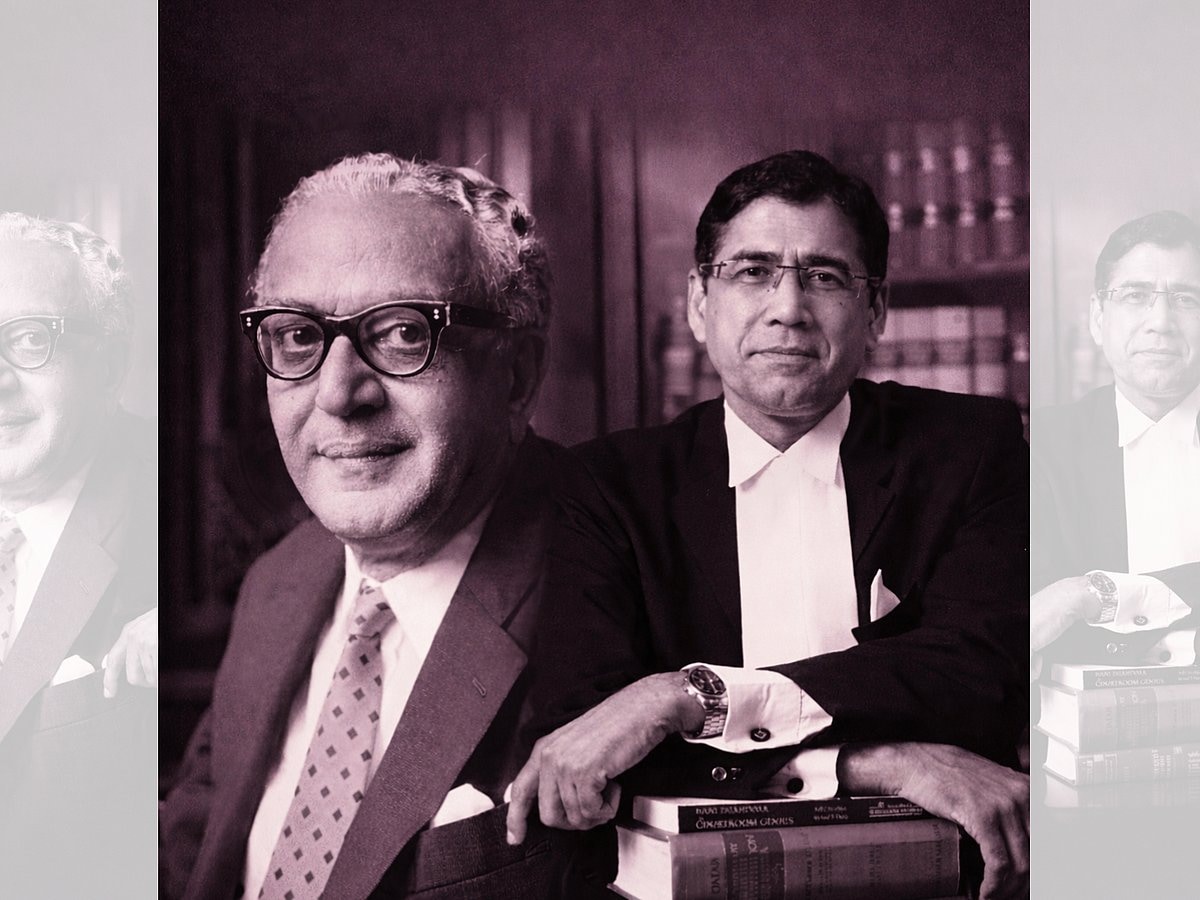
M. C. Chagla
 India
IndiaAlso known as: Mahommedali Currim Chagla
Birthday
September 30, 1900
Birth Sign
Libra
Birthplace
Mumbai, India
Age
Died at 80
About
Mahommedali Currim Chagla was an Indian jurist, diplomat, and cabinet minister. He served as Chief Justice of the Bombay High Court from 1947 to 1958, then as India's ambassador to the United States and the United Kingdom, and later as Minister of Education and briefly Minister of External Affairs under Prime Minister Indira Gandhi. His judgments helped shape Indian constitutional law, and his autobiography Roses in December remains a respected reflection on law and public life. Today he is remembered as a figure of judicial integrity and diplomatic skill.
Early Life & Background
Chagla was born into a Gujarati Muslim family in Bombay, where his father ran a business. He attended local schools before traveling to London to study law at Lincoln's Inn, where he was called to the Bar in the early 1920s. Returning to India, he built a legal practice in Bombay, working as a junior to some of the most eminent lawyers of the era. Those formative years gave him a deep grounding in both British and Indian jurisprudence. He also served as Vice-Chancellor of the University of Bombay before his judicial appointment.
Career Growth
In 1947, Chagla was appointed Chief Justice of the Bombay High Court, a position he held for eleven years. His court delivered several landmark rulings on constitutional matters, including cases on fundamental rights and federalism. After retiring from the bench in 1958, he became India's ambassador to the United States, serving until 1961, and then High Commissioner to the United Kingdom from 1961 to 1963. Prime Minister Indira Gandhi brought him into her cabinet as Minister of Education in 1963, where he oversaw policy developments in higher education. He briefly took charge of the External Affairs portfolio in 1966–1967. Throughout his career, he represented India at the United Nations General Assembly and the Security Council.
Career Timeline
Public Image & Style
Chagla is remembered as a principled and independent-minded jurist. His judgments were noted for their clarity and respect for individual rights. As a diplomat, he was seen as a skilled representative of India's interests during the Cold War. He had no public fandom in the modern sense, but among legal scholars and historians, he is regarded as a model of judicial rectitude. His writing style, both in judgments and in his autobiography, is admired for its precision and moral seriousness.
Fame & Fandom (iFAMOUS Rankings)
M. C. Chagla commands a legacy defined by institutional reverence rather than the fervor of pop-culture fandom. As a distinguished jurist, diplomat, and statesman, his public image rests on judicial integrity and diplomatic skill rather than celebrity worship or organized fan campaigns. There is no formal name for any fanbase, as the concept of a fandom does not apply to a figure whose influence was exercised through the bench and the cabinet rather than the stage. The devotion shown to him is academic and professional, manifested in the annual moot court competitions held at the M. C. Chagla Memorial Government Law College and the continued study of his writings among legal scholars. His story is one of verified historical milestones, such as his tenure as Chief Justice of the Bombay High Court and his service as Ambassador to the United States, which have become part of India's legal folklore. Recent commemorations of his birth anniversary highlight his enduring relevance as a guardian of civil liberties, yet these events serve as tributes from law students and historians rather than gatherings of adoring crowds. The iFANN Global Fame Engine has evaluated his standing based on global media coverage, search volume, and consumption signals worldwide. M. C. Chagla is currently evaluated as unranked, holding no placement in the published Global Top 1,000 or any Top-100 scope list. Consequently, no specific numerical rank or score is assigned to his current standing.
Interesting Facts and Legends
His autobiography Roses in December takes its title from a Persian proverb about finding beauty in adversity. He also wrote The Individual and the State, a collection of essays on liberty and governance. His son Iqbal Chagla became one of India's most respected senior advocates before passing away in January 2025. Chagla was one of the few Indian Muslims to hold such high judicial and diplomatic offices in post-independence India. He was known for his punctuality and for writing judgments in longhand. Historical accounts often describe him as a Titan Among the Nationalists due to his refusal to compromise on civil liberties while serving as a key figure in the independence movement. This narrative frames his transition from the bench to high-level diplomacy as a reflection of his versatility as a complete statesman. The ongoing National Moot Court Competitions held in his name serve as the primary ritual of his legacy, where law students uphold the values he championed rather than engaging in typical fan rituals. A widely retold story from his later years highlights how his 125th birth anniversary in September 2025 sparked renewed reflection on his contributions to the rule of law.
Family & Personal Life
Chagla married Mariam Chagla in the early 1920s. The couple had four children: three sons and a daughter. His son Iqbal Chagla followed him into law, becoming a senior advocate at the Bombay High Court and Supreme Court. Chagla often credited his family's support for his ability to balance demanding public roles.
Notable Connections
Relationships & Dating History
Chagla married Mariam Chagla in the early 1920s. The marriage lasted until her death. They had four children together. He did not remarry after being widowed. As of his death in 1981, he was widowed.
- MarriedMariam Chagla1922 - presentMarried in the early 1920s; had four children together. Mariam predeceased him.
Death & Aftermath
Died
February 9, 1981 (aged 80)
Death Place
Mumbai
Cause of Death
Natural causes
Mahommedali Currim Chagla spent his final days in Mumbai, the city where he had served as the first Indian Chief Justice of the Bombay High Court and maintained a long public career. He passed away on February 9, 1981, at the age of eighty, with no official record of foul play or legal inquiry attached to the event. The circumstances suggest a natural end consistent with his advanced years, though specific medical details were not made public. Tributes from the legal community emerged shortly after, with peers like Nani Palkhivala recalling the integrity that defined his time on the bench.
While immediate funeral arrangements are not documented in available records, his legacy was institutionalized through the establishment of the Chief Justice M. C. Chagla Memorial Trust. This body organizes an annual moot court competition for law students, with the thirty-third iteration scheduled for 2026. A dedicated memorial also stands within the Government Law College in Mumbai, ensuring his contributions to constitutional law remain visible to new generations. His son Iqbal Chagla, who followed him into the profession as a senior advocate, carried forward the family name until his own death in January 2025.
Net Worth (Estate Value)
Awards & Accolades
View 5 records, honours and achievementsKnown For
Chief Justice of the Bombay High Court
1947–1958 · Chief Justice
Ambassador to the United States
1958–1961 · Ambassador
High Commissioner to the United Kingdom
1961–1963 · High Commissioner
Minister of Education, India
1963–1966 · Minister
Minister of External Affairs, India
1966–1967 · Minister
Keywords
Sources
Quick Facts
- Profession
- jurist, diplomat, politician
- Born
- September 30, 1900
- Birthplace
- Mumbai, India
- Died
- February 9, 1981
- Gender
- Male
- Birth Sign
- Libra
Personal Details
- Full Name
- Mahommedali Currim Chagla
- Spouse
- Mariam Chagla
- Children
- 4 (including Iqbal Chagla)
- Education
- Lincoln's Inn, London (called to the Bar); University of Bombay
Frequently Asked Questions
Who was M. C. Chagla?
What is M. C. Chagla famous for?
When did M. C. Chagla die?
What books did M. C. Chagla write?
Was M. C. Chagla related to Iqbal Chagla?
Join the community
fans discussing