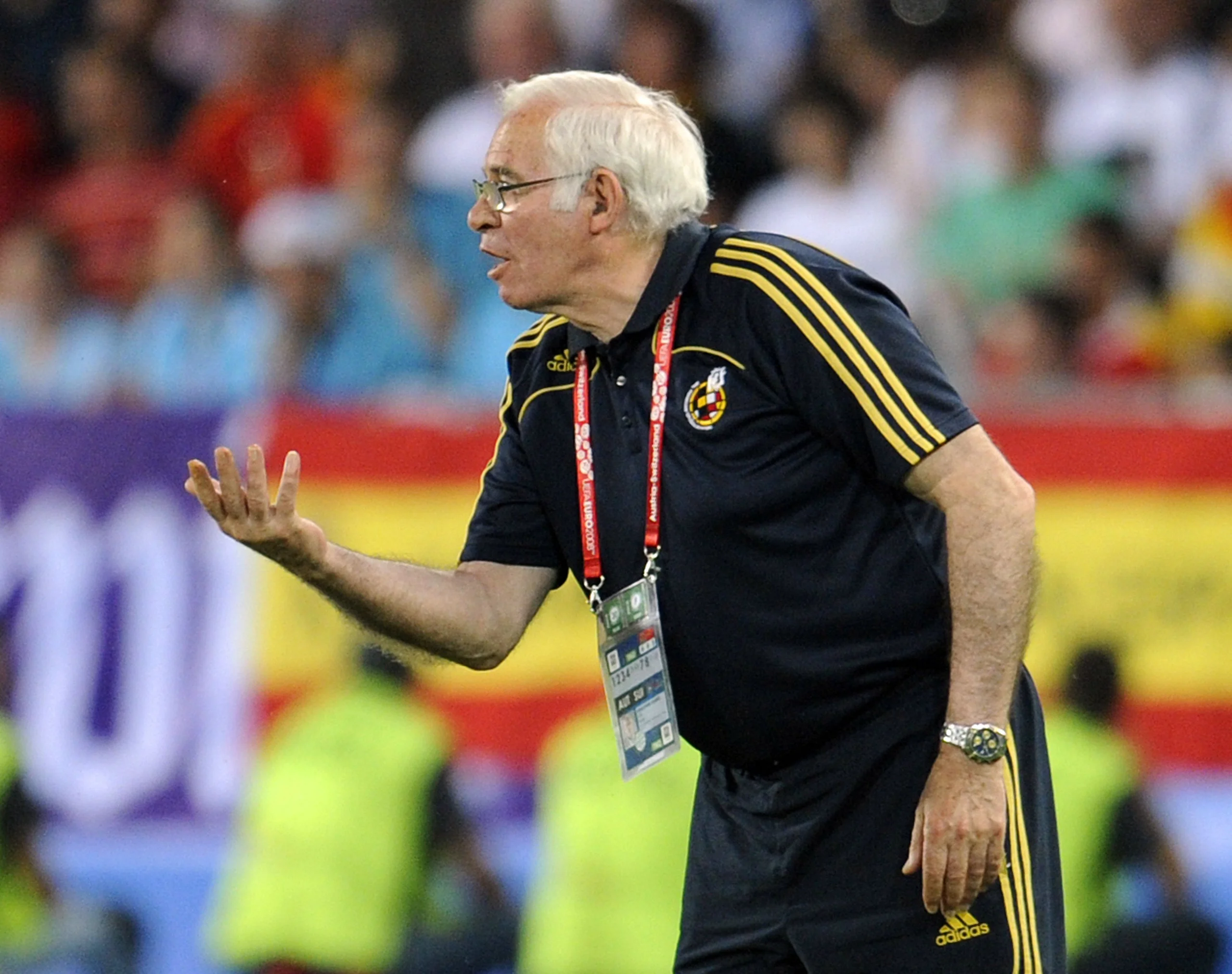
Luis Aragonés
 Spain
Spainassociation football player•association football coach
Also known as: El Mago, Don Luis, El Sabio de Hortaleza
Birthday
July 28, 1938
Birth Sign
Sagittarius
Birthplace
Hortaleza, Madrid, Spain
Age
Died at 75
Height
5 ft 10 in (178 cm)
About
Luis Aragonés Suárez was a towering figure in Spanish football whose life and career spanned nearly five decades. Born in the working-class district of Hortaleza, he passed away on February 1, 2014, leaving behind a legacy that fundamentally altered the trajectory of both club and international football in Spain. He is universally remembered as "El Mago" (The Magician) or "Don Luis," titles earned through his deep connection to Atlético Madrid and his transformative work with the national team.
Aragonés spent the bulk of his playing career at Atlético Madrid, where he became a legend between 1964 and 1974. As a forward, he scored 123 goals in 265 La Liga appearances, helping the club win four league titles and reach the 1974 European Cup Final. He also played briefly for Real Madrid and earned 11 caps for Spain, scoring three goals. After retiring, he transitioned into management, achieving even greater success by guiding Atlético to the Intercontinental Cup in 1974 and winning the Copa del Rey twice.
His crowning achievement came as head coach of the Spain national team, a role he took in 2004. Aragonés guided Spain to victory at the 2008 European Championship, ending the country's 44-year wait for a major international trophy. That triumph, built on a possession-based style blended with physical aggression, laid the foundation for Spain's subsequent golden era. After the tournament, he managed Fenerbahçe in Turkey before returning to Atlético Madrid for a final stint until 2013.
Early Life & Background
Born on July 28, 1938, in the humble neighborhood of Hortaleza, a suburb of Madrid, Luis Aragonés grew up in an environment where football was not just a pastime but a lifeline. His family was working-class, and the streets of his hometown served as his first training ground. Before achieving fame, Aragonés worked various manual jobs to support himself, including laboring as a bricklayer and working as a mechanic. These early years forged a competitive spirit and a practical approach to life that would later define his coaching style.
He attended local schools in Hortaleza, where his passion for the game began to take shape. Street football in the narrow alleys of his neighborhood honed his technical skills and tactical intuition. His first steps toward a professional career began with amateur clubs in the Madrid region, leading to his debut for Atlético Madrid's youth system. Despite his modest background, his talent shone through, eventually earning him a spot on the senior squad. This period was marked by relentless hard work and a refusal to accept mediocrity, traits that would become his trademarks throughout his life.
The journey from a bricklayer in Hortaleza to a professional footballer was not easy. It required immense dedication and a belief in his own abilities despite the odds stacked against someone from his background. His breakthrough came when he joined Atlético Madrid's senior team, where he quickly established himself as a key player. This early struggle and eventual success set the stage for a career that would see him become one of the most influential figures in Spanish football history.
Career Growth
Aragonés's managerial career began almost immediately after his retirement as a player, and he achieved success right away. He led Atlético Madrid to the Intercontinental Cup victory against Independiente in 1974, becoming the first Spanish manager to win the title. He also won the Copa del Rey with the club in 1976 and 1985. During the 1970s and 1990s, he coached numerous top Spanish clubs including Barcelona, Valencia, Sevilla, and Rayo Vallecano, though his tenure at Atlético remained the most defining.
In 2004, Aragonés was appointed manager of the Spanish national team, inheriting a squad plagued by "quarter-final syndrome." He transformed the team into a dominant force, blending possession-based play with physical aggression. In 2008, he led Spain to victory at the UEFA European Championship, ending a 44-year major trophy drought. The tournament featured a hybrid style centered around players like Xavi, Andrés Iniesta, and Fernando Torres.
After Euro 2008, he briefly managed Fenerbahçe in Turkey, his only coaching job outside Spain, before returning to Atlético Madrid in 2011. In this final stint, he laid the groundwork for Diego Simeone's future successes. Aragonés retired from managing in 2013, leaving behind a legacy of tactical innovation and leadership that continues to influence Spanish football today.
Career Timeline
Public Image & Style
Aragonés was portrayed as a rugged, anti-establishment figure. His signature style included a tracksuit, a cap, and a perpetual look of intense focus. Media portrayed him as a blunt, unfiltered leader who spoke directly to supporters, often clashing with the establishment when their passion wavered. He was known for his emotional outbursts on the sidelines, which became part of his charm and authenticity.
His public image was that of a man who put heart above technique, valuing character and determination over raw talent. This philosophy resonated deeply with fans and players alike, making him a beloved figure in Spanish football. Even after his death, his image remains iconic, representing the spirit of grit and resilience that defined his career.
Fame & Fandom (iFAMOUS Rankings)
Luis Aragonés stands as the 88th most famous person from Spain, a standing confirmed by the iFANN Global Fame Rankings and holding steady through recent cycles. This placement reflects his enduring status as the architect of modern Spanish football, where his influence transcends statistics to become a cultural touchstone. The rankings track global attention across media coverage, search patterns, and consumption signals worldwide, capturing how his legacy continues to resonate decades after his passing.
While he never commanded a formalized fan club with an official name like those found in other sports, the reverence for Aragonés among Spanish supporters is profound and deeply personal. Fans rarely refer to him by a single moniker, instead honoring him with titles that capture his transformative impact: "El Mago" (The Magician), "Don Luis," or simply "The Man Who Changed Spain's History." His relationship with the public was defined by a blunt, unfiltered authenticity; he spoke directly to supporters, often clashing with the establishment when their passion wavered. Following his death in February 2014, this organic devotion manifested spontaneously, with murals rising at the Vicente Calderón Stadium and moments of silence echoing across the nation. The most significant collective tribute remains the narrative of the "Euro 2008 Miracle," where fans view his appointment as the catalyst that finally ended a forty-four-year trophy drought for the national team. There were no organized campaigns or billboard projects initiated while he was alive, yet the atmosphere during his matches, particularly at the Calderón, was electric enough that crowds chanted his name until his retirement.
Interesting Facts and Legends
Luis Aragonés was affectionately known as "El Sabio de Hortaleza" (The Sage of Hortaleza), reflecting his reputation for tactical wisdom. He was famous for his explosive temper, often throwing his coat on the pitch or shouting at referees, yet this was balanced by a deep affection for his players. One verified anecdote involves his rigorous standards regarding Cesc Fàbregas; in 2016, Fàbregas revealed that Aragonés had questioned his attitude toward the national team, highlighting the manager's demand for total commitment over technical skill alone.
Famously, Aragonés refused to sell key players like Fernando Torres under financial pressure, prioritizing squad chemistry over short-term profit. This decision helped maintain the core group that would go on to dominate European football. Another pillar of his lore is his tenure at Atlético Madrid, where he famously refused to sell players to save the club from ruin. His tactical innovation involved blending the technical "tiki-taka" style with a more physical, aggressive approach, creating a unique hybrid that dominated Europe.
Notable Quotes
“Football is not just about technique; it's about heart.”
“I don't care if you are the best player in the world if you don't give everything for the shirt.”
“We are going to win. We have to believe.”
Family & Personal Life
Luis Aragonés was married to María José Suárez for many years until his death. The couple met in their youth in Madrid, and their relationship was described as stable and supportive throughout his turbulent career. They had children together, though the exact number and names are kept out of the public eye to protect their privacy. Reports indicate he had at least one daughter who has occasionally appeared at tribute events.
Aragonés remained devoted to his family and his club, Atlético Madrid, which he considered his second home. His private life was generally low-key compared to his public persona, but his family was always there to support him. After his passing, his wife and children continued to honor his memory through the Luis Aragonés Foundation, which supports youth football development and cancer research.
Notable Connections
Fernando Torres, Xavi Hernandez, Andrés Iniesta, Diego Simeone, Pep Guardiola.
Relationships & Dating History
Luis Aragonés was a private man regarding his romantic life, rarely discussing his relationships in detail during his lifetime. However, public records and biographies confirm one primary long-term partnership. He was married to María José Suárez for many years until his death. The couple met in their youth in Madrid, and their relationship was described as stable and supportive throughout his turbulent career.
There are no credible reports of other marriages, engagements, or high-profile flings. He remained devoted to his family and his club, Atlético Madrid, which he considered his second home. His "single status" post-retirement was defined by his dedication to managing and mentoring young players rather than a public dating life. As of his death in 2014, Aragonés was widowed, with his wife surviving him. He left behind a legacy of loyalty and love for his family, which mirrored his commitment to the sport.
- MarriedMaría José Suárez1960 - 2014Met in their youth in Madrid; stayed together until his death.
Death & Aftermath
Died
February 1, 2014 (aged 75)
Death Place
Madrid, Spain
Cause of Death
Acute myeloid leukaemia
Luis Aragonés Suárez died on February 1, 2014, in Madrid, Spain, at the age of 75. He had been battling acute myeloid leukaemia for some time and passed away peacefully surrounded by his family. The club Atlético Madrid and his family confirmed the diagnosis, which was widely known through interviews in the months leading up to his final days. Tributes poured in immediately from across the football world and Spanish political sphere. UEFA President Michel Platini, Prime Minister Mariano Rajoy, and former players like Xavi and Andrés Iniesta offered their condolences. The Spanish Football Federation and Atlético Madrid held moments of silence during matches, while fans gathered spontaneously outside the Vicente Calderón Stadium for a vigil that lasted several days.
His funeral took place on February 3, 2014, at the San José Cemetery in Hortaleza, Madrid. Thousands attended, including King Juan Carlos I, Queen Sofía, Pep Guardiola, and Carlo Ancelotti. Eulogies highlighted his explosive temper and tactical genius before he was laid to rest in a private burial within the cemetery grounds. A memorial mural depicting him in his iconic tracksuit was later unveiled near the stadium. Posthumous honors included renaming the Atlético Madrid training complex to the Ciudad Deportiva Luis Aragonés. His family established the Luis Aragonés Foundation to support youth football development and cancer research.
Net Worth (Estate Value)
$4 Million
iFANN Editorial Team estimate
As Luis Aragonés passed away in 2014, his net worth is now part of his estate. Estimates vary based on asset liquidation, royalties, and posthumous earnings. The iFANN Editorial Team's analysis of Aragonés's earnings, ventures and assets points to roughly $4 million USD as of 2026.
His wealth sources include high earnings from managing top Spanish clubs and the national team. He owned properties in Madrid and Hortaleza, which contribute to the estate's value. Ongoing revenue comes from book deals, documentaries, and licensing of his image. The Luis Aragonés Foundation manages funds for charitable causes, which may impact the estate's financial structure. While specific details of his peak earning power remain private, the consistent value of his brand and the enduring popularity of his legacy ensure the estate remains substantial.
Awards Won (9)
Luis Aragonés won numerous prestigious awards throughout his career, particularly as a manager. He led Spain to victory at the 2008 UEFA European Championship, ending a 44-year trophy drought. As a manager, he won the Intercontinental Cup in 1974 and the Copa del Rey in 1976 and 1985. As a player, he won four La Liga titles with Atlético Madrid. He also received the Order of Sports Merit from the Spanish government and was inducted into the Spanish Football Hall of Fame.
2008 · Manager
Spain National Team
1974 · Manager
Atlético Madrid
Known For
UEFA Euro 2008
2008 · Manager of Spain
Atlético Madrid
1964 · Player and Manager
Intercontinental Cup
1974 · Manager of Atlético Madrid
Keywords
Sources
Quick Facts
- Profession
- association football player, association football coach
- Born
- July 28, 1938
- Birthplace
- Hortaleza, Madrid, Spain
- Died
- February 1, 2014
- Death Place
- Madrid, Spain
- Gender
- Male
- Birth Sign
- Sagittarius
Personal Details
- Full Name
- Luis Aragonés Suárez
- Height
- 5 ft 10 in (178 cm)
- Spouse
- María José Suárez
- Children
- At least one daughter
- Education
- Local schools in Hortaleza
Frequently Asked Questions
How did Luis Aragonés die?
What was Luis Aragonés' biggest achievement?
Did Luis Aragonés have any children?
Which club was Luis Aragonés most associated with?
Was Luis Aragonés married?
Similar People
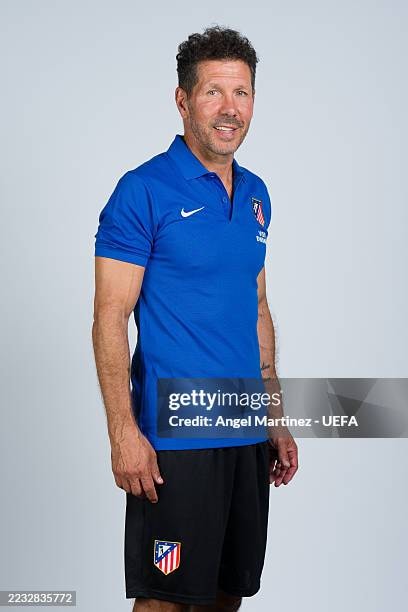
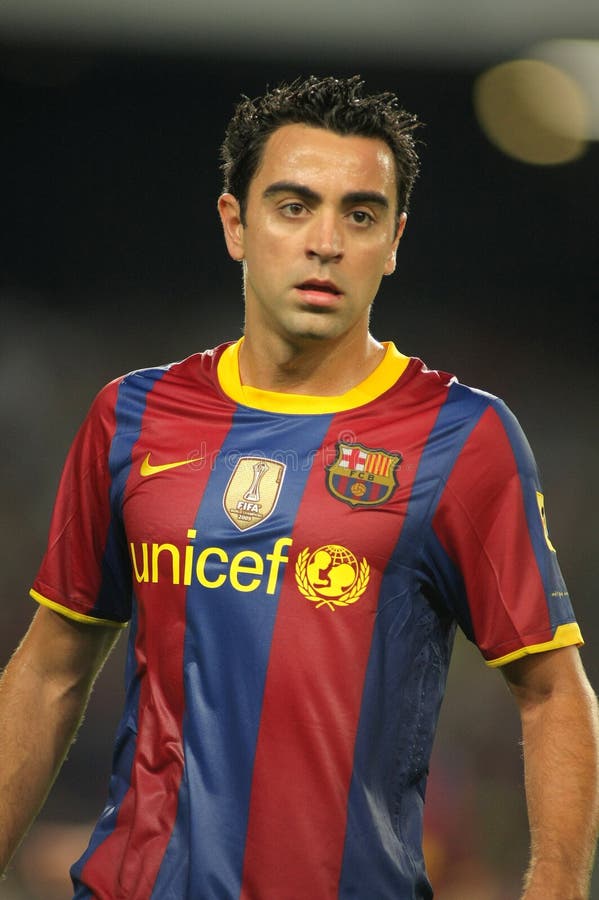


Join the community
fans discussing