 Brazil
About
Maria Lucélia dos Santos is a Brazilian actress, director, and producer whose career spans over four decades. She first captured international attention in 1976 when she starred as the lead in the Rede Globo telenovela A Escrava Isaura (Isaura, The Slave Girl). The show was broadcast in more than 80 countries, making her a global household name and a symbol of Brazilian television's golden era.
Santos continues to be recognized for her cultural impact, particularly in Asia where her performance remains legendary. In 2026, she appeared at the Shanghai Film Festival to celebrate the legacy of her work and a remastered revival of the series that introduced her to new audiences. Her enduring status as a cultural ambassador bridges Brazil with nations across Eastern Europe and Asia.
Early Life & Background
Born into a working-class family in Santo André, an industrial city in the ABC region of São Paulo, Maria Lucélia dos Santos grew up during a period of rapid urbanization in Brazil. Her father worked as a carpenter while her mother managed the household. Unlike many peers who pursued formal acting training immediately, Santos initially worked as a model to support her family before entering the theater scene.
She attended the Teatro Popular de Arte (TPA) in São Paulo, where she honed her craft in stage productions. Her early interest in social justice themes would later inform her choice of roles, particularly those addressing slavery and human rights. Her breakthrough came not through film school but through the vibrant Brazilian television industry of the 1970s, which was undergoing a golden age under Rede Globo. The casting directors for the adaptation of Bertha Lutz's novel were looking for someone who could embody both grace and resilience, qualities Santos possessed in abundance.
Career Growth
Santos's career trajectory shifted from local fame to international legend with her casting as the titular character in A Escrava Isaura in 1976. Directed by Walter Avancini, the series was an adaptation of Bertha Lutz's novel. Santos's performance as Isaura, a beautiful enslaved woman who fights for her freedom and love against the cruelty of her master, resonated deeply with audiences globally. The show was exported to over 80 nations, including the Soviet Union, China, Poland, and throughout Latin America.
In China, the broadcast became a phenomenon; it was estimated that hundreds of millions watched the show, creating a rare cultural bridge between Brazil and the People's Republic of China. Families gathered around televisions to watch episodes, and Santos's face became one of the first recognizable Brazilian images in Chinese households. Following this massive success, she continued to work in high-profile Brazilian productions. In 1981, she starred in Engraçadinha, another popular telenovela.
She transitioned into cinema with roles in films such as Little Missy (1986), Carmem (1987), and Kuarup (1989). Her versatility allowed her to move seamlessly between comedy, drama, and historical epics. In the 1990s, she expanded her role behind the camera, directing and producing several projects. Notable works include Brasileiras e Brasileiros (1990) and Casa Grande (2014), the latter receiving critical acclaim. In 2026, she appeared at the Shanghai Film Festival, celebrating the legacy of Isaura alongside a remastered revival of the series.
Career Timeline
Public Image & Style
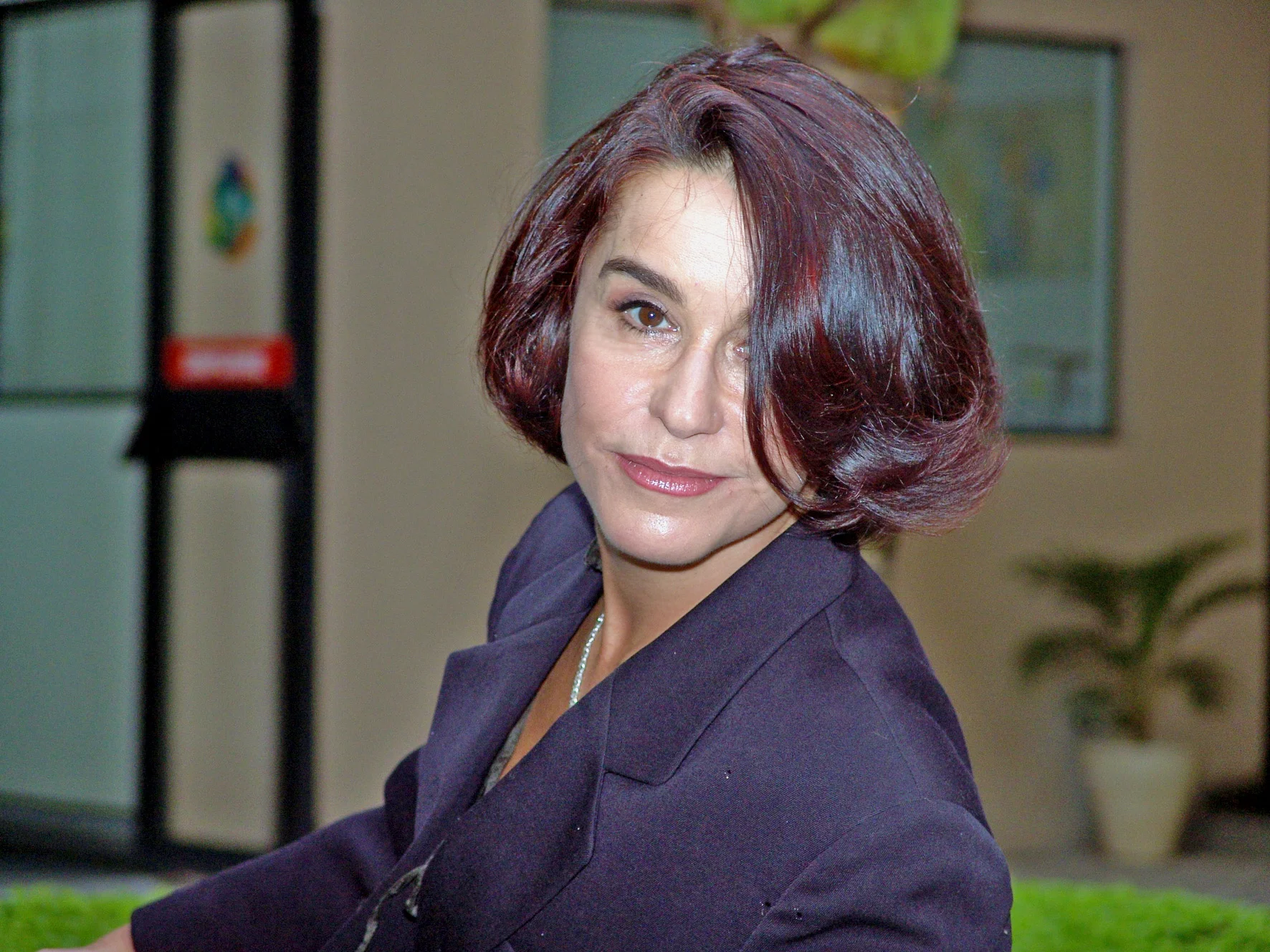
Lucélia Santos is known for her classic beauty and timeless elegance, which suited the dramatic roles she played in the 1970s and 1980s. Her public persona is defined by humility and grace, especially in her interactions with fans in China where she has traveled extensively. She is often described as a cultural ambassador rather than just a celebrity, reflecting her dedication to fostering international ties through her art.
Her style on screen ranged from the tragic nobility of Isaura to the comedic charm of Engraçadinha. Off-screen, she prefers a modest lifestyle, focusing on mentoring new talent and participating in cultural events. Media coverage often highlights her dignified presence and her ability to remain grounded despite decades of global recognition.
Fame & Fandom (iFAMOUS Rankings)
Lucélia Santos remains a towering figure in global television, her legacy anchored by a performance that transcended borders decades ago. Her cultural footprint is so vast that she currently holds the distinction of being the 76th most famous person in Telenovelas, a position reflected in the iFANN Global Fame Rankings. This ranking places her just below her standing in the previous cycle, yet her influence continues to ripple through media coverage and consumption signals worldwide.
The depth of her connection with audiences is rare; she is not just an actress but a symbol of a specific era of Brazilian television's golden age. Though her fanbase does not operate under a formal, organized name like those seen in modern digital celebrity cultures, their devotion is characterized by a generational warmth that spans continents. In China and Eastern Europe specifically, her face became a familiar sight in homes across Asia and beyond, creating a bridge between cultures without the need for official campaigns or rituals. The sheer scale of this affection is evident in her continued recognition, as confirmed by recent appearances at major film festivals celebrating this historical milestone alongside remastered versions of her classic work.
Interesting Facts and Legends
Lucélia Santos made history as the first foreign actress to receive China's prestigious Golden Eagle Award, an honor that validates her beloved status among hundreds of millions of Chinese viewers. This achievement occurred after the 1976 telenovela A Escrava Isaura became a global phenomenon, broadcasting to over 80 countries including Russia and Ukraine. In China specifically, the show was so legendary that its airing in the 1980s caused families to congregate around televisions, creating a rare shared national experience that bridged cultural gaps between Brazil and China.
A widely retold story from her time in China involves her visiting the country approximately 25 times over four decades to maintain these deep cultural ties. Fans often recount how the broadcast of her shows turned quiet evenings into communal events, with entire neighborhoods gathering to watch episodes together. This phenomenon was so significant that it is often cited as the moment Brazilian culture truly entered the consciousness of the Chinese public.
Notable Quotes
“When I went to China, I realized that my character was not just a story; she was a symbol of hope for millions of people.”
“Television has the power to cross borders and touch hearts in ways that words alone cannot.”
Family & Personal Life
Santos married conductor John Neschling in 1982. The couple met through mutual connections in the Brazilian arts scene. Neschling, a renowned classical musician and former conductor of the São Paulo Symphony Orchestra, provided a stable partnership for Santos during her peak fame. They have been married for over four decades, making their union one of the longest-standing marriages in the Brazilian entertainment industry.
There are no public records of children from this marriage, though Santos has occasionally referenced her close-knit family life in interviews. She maintains a low profile regarding her personal life, rarely giving interviews about her marriage or private struggles. The couple resides in São Paulo, away from the constant glare of the spotlight despite her international fame.
Notable Connections
John Neschling (Husband), Walter Avancini (Director), Glória Pires (Co-star).
Relationships & Dating History
Lucélia Santos married conductor John Neschling in 1982. The couple met through mutual connections in the Brazilian arts scene. Neschling, a renowned classical musician and former conductor of the São Paulo Symphony Orchestra, provided a stable partnership for Santos during her peak fame. They have been married for over four decades, making their union one of the longest-standing marriages in the Brazilian entertainment industry.
There are no public records of children from this marriage, though Santos has occasionally referenced her close-knit family life in interviews. As of 2026, she remains married to John Neschling. There are no widely reported prior romantic relationships or divorces; her public dating history is characterized by her long-term commitment to her husband.
- MarriedJohn Neschling1982 - presentCurrentMet through mutual connections in the arts; married for over 40 years.
Salary, Net Worth In 2026
$4 Million
iFANN Editorial Team estimate
iFANN Editorial Team research estimates Lucélia Santos's net worth at approximately $4 million as of 2026. Her wealth stems from a diverse portfolio built over a career spanning forty years. While her initial fame was massive, her income stream now primarily derives from occasional acting roles, directing fees, and residual payments rather than current blockbuster salaries.
Significant ongoing residuals come from the sale of A Escrava Isaura in international markets, particularly China and Russia, where the show remains a cultural staple. She also owns residential properties in Santo André and São Paulo, contributing to her real estate holdings. Income from production fees earned during her work as a director and producer on Brazilian television projects in the 1990s and 2000s adds to her financial stability. Occasional appearances in advertising campaigns, particularly those targeting older demographics or celebrating Brazilian culture, provide additional revenue streams.
Awards Won (2)
While specific award ceremonies like the Oscars or Emmys did not recognize her work due to the regional nature of telenovelas, Santos holds significant honors. She is the first foreign actress to receive China's prestigious Golden Eagle Award, specifically for her role in Isaura. She has also been recognized by the Brazilian government with the Order of Cultural Merit for her contributions to the arts. In 2026, she received special recognition at the Shanghai Film Festival for her historical contribution to global cinema.
1989 · Best Actress
A Escrava Isaura
1995 · Honorary Distinction
Contribution to Brazilian Arts
Known For
A Escrava Isaura
1976 · Isaura
Engraçadinha
1981 · Lead Role
Carmem
1987 · Carmem
Kuarup
1989 · Supporting Role
Keywords
Sources
Quick Facts
- Profession
- film director, television actor, stage actor
- Born
- May 20, 1957
- Birthplace
- Santo André, São Paulo, Brazil
- Gender
- Female
- Spouse
- John Neschling
- Birth Sign
- Taurus
Personal Details
- Full Name
- Maria Lucélia dos Santos
- Height
- 5 ft 7 in (1.70 m)
- Spouse
- John Neschling
- Children
- Education
- Teatro Popular de Arte (TPA), São Paulo
Filmography
28
Total
12
Film
16
TV
Frequently Asked Questions
Who is Lucélia Santos?
Is Lucélia Santos still alive?
What is Lucélia Santos' net worth?
Is Lucélia Santos married?
Why is Lucélia Santos famous in China?
Social Media
Similar People

Join the community
fans discussing