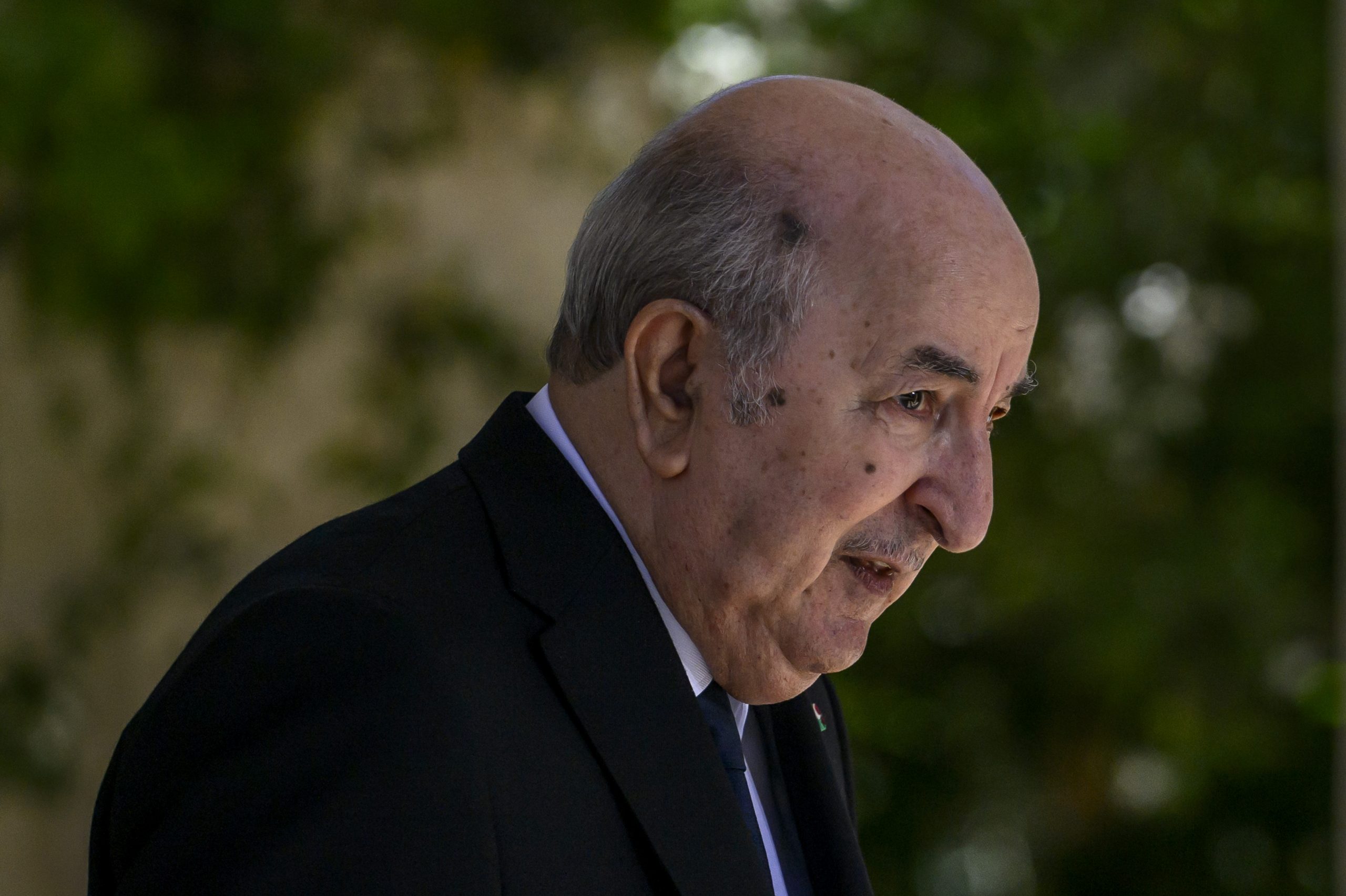
Louisa Hanoune
 Algeria
Also known as: Louiza Hanoune
Birthday
April 7, 1954
Birth Sign
Aries
Birthplace
Chekfa, Blida Province, Algeria
Age
72 years old
About
Louisa Hanoune is an Algerian lawyer and politician who has led the Workers' Party (Parti des Travailleurs) since 1990. She made history in 2004 as the first woman to run for president of Algeria, a first for the Arab world. Her political life has been defined by opposition to single-party rule, advocacy for workers' rights, and a consistent push for democratic pluralism.
Hanoune remains a central figure in Algeria's opposition, known for her willingness to engage with rival factions and her refusal to back down from state pressure. She has been imprisoned multiple times for her activism, yet continues to speak out on national and international issues. As of 2026, she leads the Workers' Party and remains an influential voice in Algerian politics, respected by supporters for her integrity and commitment to social justice.
Early Life & Background
Born in 1954 in the small commune of Chekfa, in the Blida province of central Algeria, Louisa Hanoune grew up in a modest household during the final years of French colonial rule. The violence and upheaval of the Algerian War of Independence shaped her early worldview, instilling a deep sense of injustice that would later fuel her political activism.
Details of her schooling are scarce, but she pursued a law degree, a path that ran parallel to her growing involvement in leftist politics. In the early 1980s, she joined the Trotskyist Social Workers Organisation, an illegal party at the time, drawn to its anti-authoritarian stance and focus on working-class struggle. Her activism quickly attracted the attention of the authorities, and she was imprisoned in the mid-1980s for her political activities. She was jailed again following the October Riots of 1988, which ultimately forced the National Liberation Front to abandon one-party rule and opened the door to a multiparty system.
These early experiences of prison and political repression hardened her resolve. When the Workers' Party was officially recognized in 1990, Hanoune emerged as one of its leading figures, ready to take her fight for democracy and workers' rights into the formal political arena.
Career Growth
Hanoune's breakthrough came in the early 1990s when she became the public face of the Workers' Party. During the Algerian Civil War, she was one of the few opposition voices in parliament who openly opposed the government's 'eradication' policy toward Islamist groups, instead advocating for dialogue. In January 1995, she signed the Sant'Egidio Platform, a peace initiative that included the Islamic Salvation Front, a move that won her international respect as a principled negotiator.
In 2004, she became the first woman to run for president of Algeria, a historic campaign that focused on social justice and anti-imperialism. She ran again in 2014 and 2019, the latter during the Hirak protest movement, when she called for 'audacity' in Algeria's political future. In 2020, she was released from prison after a period of solitary confinement, and in 2024 she announced another presidential bid, denouncing the 'unfair conditions' of the electoral environment.
In November 2025, she met with President Abdelmadjid Tebboune to discuss the country's reform agenda, signaling a complex but ongoing dialogue between the opposition and the presidency. Her career has been marked by a consistent refusal to compromise on her core principles, even as the political landscape around her has shifted.
Career Timeline
Public Image & Style
Louisa Hanoune is often described as a fearless, unyielding advocate for the working class and a champion of women's rights. Media portray her as 'anti-imperialist,' 'radical left-wing,' and a 'principle-driven negotiator.' Her signature style is professional and serious, typically seen in suits or formal dresses, projecting authority and statesmanship.
She is respected for her willingness to face imprisonment and solitary confinement for her beliefs, which has earned her a devoted following among opposition supporters and international leftist circles. While she maintains a presence on social media, her engagement is limited compared to younger politicians, used primarily to release official statements. Her public image is that of a seasoned political figure who prioritizes substance over spectacle.
Fame & Fandom
Louisa Hanoune commands a following defined not by merchandise sales or fan clubs, but by decades of ideological solidarity. Her supporters are members of the Workers' Party, left-wing activists, and feminist groups who view her as a martyr for democratic pluralism in Algeria. This political constituency mobilized with striking force during the 2019 Hirak protests, filling streets to demand her release from military detention. These rallies were driven by shared principles rather than celebrity worship, transforming her imprisonment into a rallying cry for the opposition. Her legacy rests on being the first woman to run for president in the Arab world, a feat that cemented her status as a trailblazer long before she became a global news figure. While pop stars rely on digital trends, Hanoune's influence is measured in parliamentary debates, labor strikes, and high-stakes negotiations with state officials. She engages her base through speeches and public statements on global issues, maintaining a direct line to citizens who see her as an unyielding voice against authoritarianism. Despite her enduring relevance, including recent meetings with President Tebboune and commentary on international visits, iFANN's Global Fame Engine has evaluated this person, but they do not currently hold a placement in the published rankings (Global Top 1,000 or a Top-100 scope list). Her fanbase has no formal name.
Interesting Facts and Legends
Louisa Hanoune speaks Arabic and French fluently while also engaging in political discourse in Tamazight, reflecting her deep connection to Algeria's Berber cultural heritage. She has endured periods of solitary confinement, particularly around 2019, which drew significant international attention to her case. Despite her long career, she has never held a government post, remaining a permanent outsider in Algerian politics. She has received solidarity from left-wing and feminist groups worldwide, who see her as an icon of progressive politics in the Arab world. In 2025, she issued a public statement regarding Pope Leo XIV's visit to Algeria, showing her continued engagement with global religious and political dynamics. A defining legend surrounds her arrest by the military court of Blida, where her detention triggered immediate mass protests and became a focal point of the broader Hirak movement. Another iconic moment occurred in 2004 when she made history as the first woman to run for president of Algeria, establishing a legacy as a feminist pioneer across the Arab world. Her 2024 presidential candidacy further reinforced her reputation as an unyielding activist who refuses to step back despite age and political pressure.
Notable Quotes
“We ran a real campaign and didn't pay people to fill the halls.”
“Algeria needs 'audacity'.”
“I am a woman who has spent her life fighting for the rights of the weak.”
Family & Personal Life
Public information about Louisa Hanoune's family is extremely limited. She has kept her personal life private, and no details about her parents, siblings, or any children have been shared in public sources. Her dedication to political activism appears to have taken precedence over family life, and she has rarely spoken about her background beyond acknowledging her modest upbringing in Chekfa. As of 2026, she lives in Algeria and remains unmarried, with no public record of a spouse or partner.
Notable Connections
Louisa Hanoune is closely associated with the Workers' Party (Parti des Travailleurs), which she has led for decades. She is also linked to international leftist and feminist movements, as well as the Sant'Egidio Community, which facilitated the 1995 peace platform. Her political allies include other opposition figures in Algeria who advocate for democratic reform.
Relationships & Dating History
Louisa Hanoune has kept her personal life extremely private, and there is no public record of any romantic relationships, marriages, or engagements. She has never publicly discussed a spouse or partner, and no credible sources have reported on her dating history. As of 2026, she is believed to be single, with her life dedicated entirely to her political work.
Salary, Net Worth In 2026
$150 Thousand
iFANN Editorial Team estimate
Louisa Hanoune's net worth is not publicly disclosed, and credible financial outlets do not provide estimates for her. Her income is believed to come primarily from her legal practice, representing clients in labor and political cases, as well as from her role as head of the Workers' Party, which operates largely on a volunteer basis. Per iFANN's editorial analysis, as of 2026, her net worth is estimated at around $150 Thousand, reflecting a modest lifestyle consistent with her focus on activism rather than personal wealth. She has no known investments or real estate holdings. Her financial situation stands in stark contrast to the ruling elite, underscoring her commitment to the working class.
Awards & Accolades
View 2 records, honours and achievementsKnown For
First woman to run for President of Algeria
2004 · Presidential candidate
Secretary-General of the Workers' Party
1990 · Party leader
Sant'Egidio Platform
1995 · Signatory
Keywords
Sources
Quick Facts
- Profession
- politician, lawyer
- Born
- +1954-04-07
- Birthplace
- Chekfa, Blida Province, Algeria
- Gender
- Female
- Birth Sign
- Aries
Personal Details
- Full Name
- Louiza Hanoune
- Education
- Law degree (details not publicly documented)
Frequently Asked Questions
How old is Louisa Hanoune in 2026?
What is Louisa Hanoune's net worth in 2026?
Is Louisa Hanoune still active in politics in 2026?
Why is Louisa Hanoune famous?
How does Louisa Hanoune compare to other Algerian opposition leaders?
Social Media
Join the community
fans discussing